Introduction
Sesame seeds are the small til of laddoo, tilgul and the winter tadka, and most kitchens use them by the spoonful without thinking about what that spoonful carries. This guide covers the sesame seeds benefits that matter most, the calcium story told honestly, the blood pressure research, and the five dishes where sesame seeds work best.
In this article
- The short answer
- What sesame seeds actually are
- Sesame seeds in numbers
- 10 benefits worth knowing
- Calcium and the whole versus hulled trap
- Blood pressure and the lignan research
- How to roast and use sesame seeds
- Five everyday ways to use them
- Buying and storing sesame seeds
- 5 expert tips
- Common mistakes to avoid
- Frequently asked questions
- Conclusion
The Short Answer
The sesame seeds benefits that matter most are calcium, iron and healthy fats in a tiny spoonful, with lignans that have real research behind them. A tablespoon of whole sesame seeds, about 9 g, gives roughly 88 mg of calcium, 1.3 mg of iron and 1.6 g of protein for about 52 kcal. The seeds are also a useful source of magnesium and zinc, they roast in a minute in a kadhai, and they suit winter cooking best, in laddoo, chutney and tadka.
What Sesame Seeds Actually Are
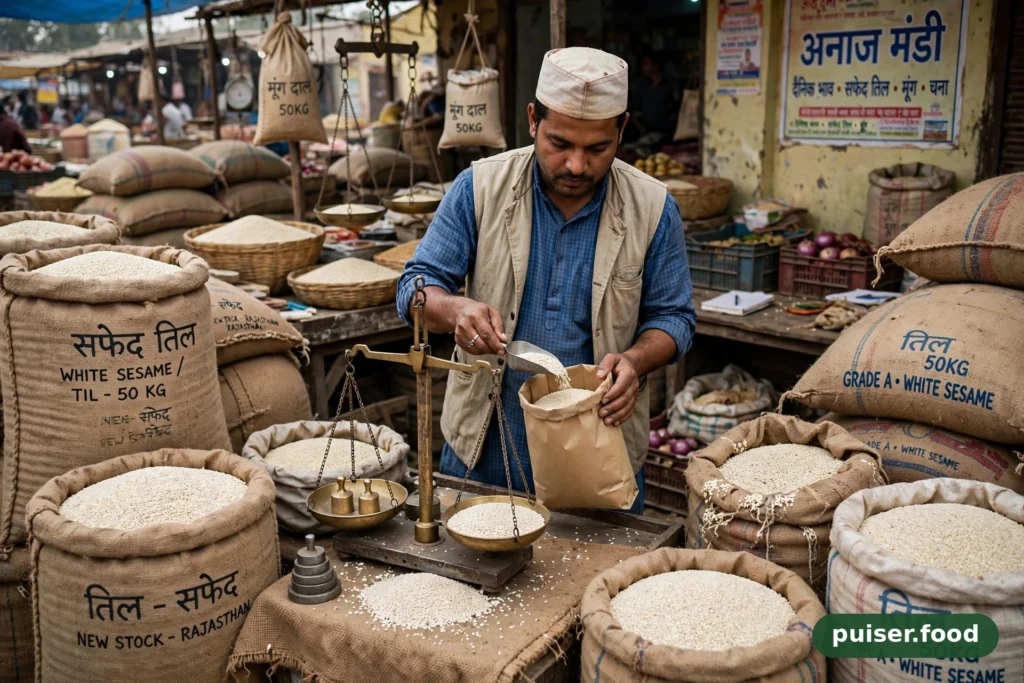
Sesame seeds, called til in Hindi, are the small flat seeds of Sesamum indicum, one of the oldest oilseeds in India, and they are the seeds of tilgul, til laddoo, til chikki and the Sankranti plate. The seeds come in white, black and brown forms, and they are sold whole, with the hull on, or hulled, with the hull removed. The whole white seed is the form this guide is about, and the difference between whole and hulled matters more for sesame than for almost any other seed.
That distinction matters, because most nutrition tables online quote the whole seed figure and then talk about the hulled seed in the packet. The 975 mg of calcium per 100 g is for whole, unhulled seeds, while hulled white kernels carry only about 60 mg per 100 g, about sixteen times less. The nutrition figures in this guide are for whole dried sesame seeds from USDA FoodData Central, with the basis stated for each number, and the hulled figure is named wherever it changes the story.
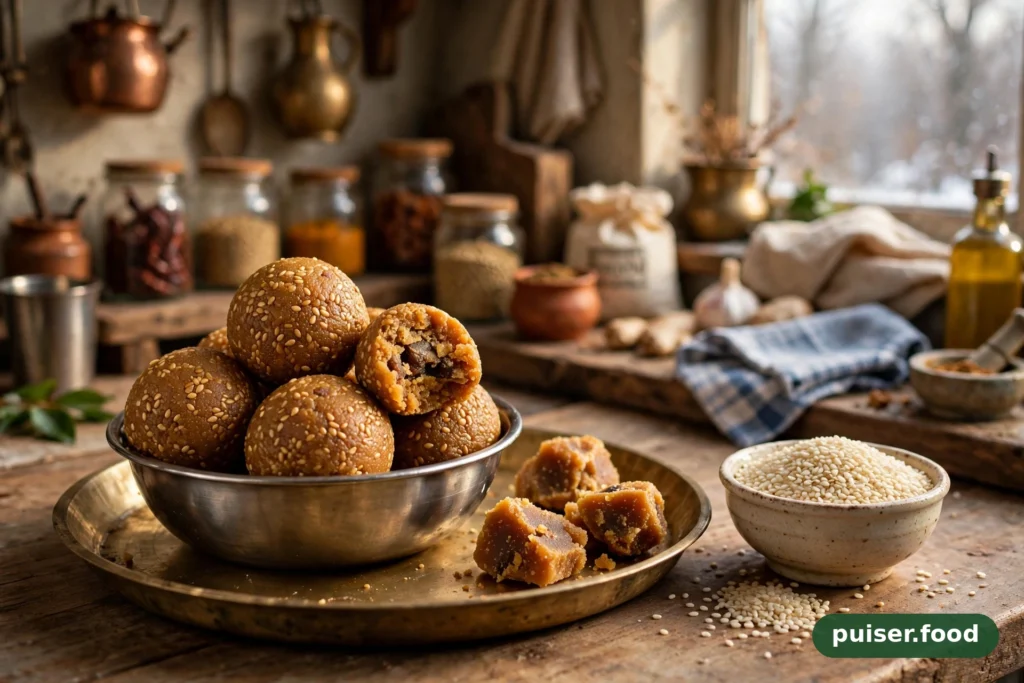
Sesame seeds are also the seeds of the winter kitchen. Tilgul is shared at Makar Sankranti with the words tilgul ghya, god god bola, take the sesame sweet and speak sweetly. Til laddoo with jaggery is the winter sweet, and sesame oil is the oil of the South Indian kitchen. Our flaxseed benefits guide covers another seed in the same kitchen, the one to reach for when omega 3 matters more than calcium.

Sesame Seeds in Numbers
The table below sets out the sesame seeds benefits in numbers, and it is honest about the disagreements. The calcium of whole dried sesame seeds is given as 975 mg per 100 g by USDA FoodData Central, and the iron as 14.6 mg. The protein is 17.7 g and the fat is 49.7 g, which is why the portion is a spoonful, not a bowl. This guide uses the USDA figures as its main record, and names the hulled figures where they differ.
| Nutrient (per 100 g) | Whole sesame seeds | Hulled white kernels |
|---|---|---|
| Energy | 573 kcal | About 600 kcal |
| Protein | 17.7 g | About 17 g |
| Fat | 49.7 g | About 50 g |
| Dietary fibre | 11.8 g | About 12 g |
| Calcium | 975 mg | About 60 mg |
| Iron | 14.6 mg | About 14 mg |
| Magnesium | 351 mg | About 350 mg |
| Zinc | 7.8 mg | About 8 mg |
Dry figures per USDA FoodData Central FDC #170150, whole dried sesame seeds, and USDA SR 12201 for hulled kernels. The calcium gap is the whole story: the hull holds most of the calcium, so hulled seeds lose about sixteen times as much. Protein, fat, iron and magnesium change little with hulling. Cooked figures are not used, because sesame seeds are eaten dry, roasted or ground, not boiled.
The second table shows what a real portion gives you. A tablespoon of sesame seeds is about 9 g, and the daily portion is 1 to 2 tablespoons, because the seeds are dense in fat and calories. The portion figures below use the USDA whole seed figures scaled to 9 g and 18 g, which is the honest way to get them.
| Portion | Energy | Protein | Calcium | Iron |
|---|---|---|---|---|
| 1 tbsp, about 9 g | About 52 kcal | About 1.6 g | About 88 mg | About 1.3 mg |
| 2 tbsp, about 18 g | About 103 kcal | About 3.2 g | About 176 mg | About 2.6 mg |
| 100 g, whole seeds | 573 kcal | 17.7 g | 975 mg | 14.6 mg |
Portion figures scaled from the USDA whole seed record. A tablespoon of hulled seeds gives only about 5 mg of calcium, against 88 mg for whole seeds, so the portion table applies to whole seeds only. The 100 g row is shown for comparison, not as a serving suggestion.
The third table compares sesame seeds with the other seeds of the Puiser seed series, so the choice is clear. Sesame wins on calcium and iron. Flax wins on fibre and omega 3, chia wins on fibre and calcium after sesame, pumpkin wins on protein and zinc, and sunflower wins on vitamin E. The differences are real, and the right seed depends on the nutrient you need.
| Quality, per 100 g dry | Sesame | Flaxseed | Chia seeds | Pumpkin seeds | Sunflower seeds |
|---|---|---|---|---|---|
| Energy | 573 kcal | 534 kcal | 486 kcal | 559 kcal | 584 kcal |
| Protein | 17.7 g | 18.3 g | 16.5 g | 30.2 g | 20.8 g |
| Fibre | 11.8 g | 27.3 g | 34.4 g | 6 g | 8.6 g |
| Calcium | 975 mg | 255 mg | 631 mg | 46 mg | 78 mg |
| Iron | 14.6 mg | 5.7 mg | 7.7 mg | 8.8 mg | 5.3 mg |
| Best use | Laddoo, tadka, chutney | Ground, in curd | Soaked, in water | Roasted, as snack | Roasted, as snack |
Comparison per USDA FoodData Central, whole dried seeds on the same basis: sesame FDC #170150, flaxseed FDC #169414, chia FDC #170554, pumpkin seeds and sunflower seeds FDC #170562. Figures are for whole seeds, not hulled or salted forms.
10 Benefits Worth Knowing
These are the ten sesame seeds benefits worth knowing, in the order that matters for an Indian kitchen. The first three are the nutrition facts. The rest are what those facts mean in practice, including the honest limits.
1. Calcium in a quantity few seeds match
At 975 mg of calcium per 100 g, a tablespoon of whole sesame seeds gives about 88 mg, and two tablespoons give about 176 mg, which is a useful share of the daily calcium most Indians eat. Calcium is needed for bones and teeth, and for muscle and nerve function. The catch is the hull, because hulled seeds give only about 5 mg per tablespoon, so the benefit belongs to whole seeds only.
2. Iron for energy and haemoglobin
At 14.6 mg of iron per 100 g, a tablespoon gives about 1.3 mg, which is a modest but real contribution of plant iron. Iron is needed to make haemoglobin, the molecule that carries oxygen in the blood, and iron deficiency is a leading cause of fatigue. Plant iron absorbs poorly on its own, so it counts for more with vitamin C in the meal, and grinding the seeds helps absorption.
3. Healthy fats, mostly unsaturated
At 49.7 g of fat per 100 g, sesame seeds are rich in fat, but most of it is unsaturated, the monounsaturated and polyunsaturated fats that support heart health. The fat is also why sesame oil is a cooking oil in its own right. The portion matters, because a tablespoon carries about 4.5 g of fat and 52 kcal, so the seeds are a condiment, not a snack by the bowl.
4. Magnesium and zinc for everyday function
At 351 mg of magnesium and 7.8 mg of zinc per 100 g, a tablespoon gives about 32 mg of magnesium and 0.7 mg of zinc, which are useful shares of the daily requirement. Magnesium supports muscle and nerve function, and zinc supports immunity and wound healing. The seeds are no substitute for medicine, but as part of an overall diet, they sit on the right side of the evidence.
5. Lignans with real research behind them
Sesame seeds carry sesamin and sesamolin, two lignans that are almost unique to sesame, and a 2018 systematic review in Critical Reviews in Food Science and Nutrition found that sesame lowered blood pressure in 5 of 7 trials in people with high blood pressure. That is a real finding, and it is the reason sesame appears in blood pressure research at all.
6. Fibre that keeps a small portion filling
At 11.8 g of fibre per 100 g, a tablespoon gives about 1.1 g, which is a modest contribution, but the fibre works with the fat and protein to keep a small portion satisfying. The fibre supports regular bowel movements and feeds the good bacteria in the gut. Flax and chia carry far more fibre, so sesame is not the seed to choose for fibre alone.
7. Protein in a small package
At 17.7 g of protein per 100 g, a tablespoon gives about 1.6 g, which is a small share on its own, but the protein adds up across the day when sesame appears in tadka, chutney and laddoo. The protein is not complete on its own, so it works best with dals and grains, which is exactly how it is eaten.
8. A winter food that warms the kitchen
The practical benefit is the simplest one. Sesame seeds are the winter seed of the Indian kitchen, in til laddoo with jaggery, in tilgul at Sankranti, and in til chikki. The seeds roast in a minute, they keep for months, and they turn a plain sweet into a winter food. For the cold months, that is a benefit worth having.
9. Skin and hair from the inside
Sesame seeds carry zinc, vitamin E in small amounts, and healthy fats, three nutrients that support skin and hair health. Sesame oil is also used on the skin in Ayurveda, and the seeds are a traditional food for hair health. The evidence for hair growth from sesame alone is weak, and the seeds are a useful part of a varied diet, not a treatment.
10. A seed that needs no cooking skill
The last benefit is ease. Dry roast a tablespoon in a kadhai for a minute until it pops and smells nutty, then sprinkle it on poha, upma, salads and sabzi, or grind it into chutney. It needs no soaking, no pressure cooker and no planning. For a busy kitchen, that is a benefit worth having.
Calcium and the Whole Versus Hulled Trap
Calcium is the first of the sesame seeds benefits, and it is the one that needs the honest version, because the headline figure is easy to get wrong. The 975 mg of calcium per 100 g is for whole, unhulled seeds, where the hull holds most of the calcium. Hulled white kernels, the bright white seeds in most packets, carry only about 60 mg per 100 g, about sixteen times less. A tablespoon of whole seeds gives about 88 mg of calcium, while a tablespoon of hulled seeds gives only about 5 mg.
The second catch is absorption. Oxalates and phytates in the seed bind much of that calcium and iron, so the body absorbs less than the label suggests. Grinding the seeds and lightly toasting them helps absorption, which is why til chutney and ground sesame in laddoo are better than whole seeds swallowed whole. The product on this site is whole unhulled til, so the calcium figure in this guide applies to it, and the packet should say so.
The honest limit is that sesame seeds alone do not meet daily calcium needs. Two tablespoons give about 176 mg, which is a useful share, but milk, curd, ragi and leafy greens carry far more per serving. Sesame seeds are a useful part of a calcium aware diet, not a treatment, and that distinction matters.
Blood Pressure and the Lignan Research
Blood pressure is the most researched of the sesame seeds benefits, and it deserves a closer look, because the finding is real but narrow. A 2018 systematic review in Critical Reviews in Food Science and Nutrition looked at trials of sesame in people with high blood pressure, and it found that sesame lowered blood pressure in 5 of 7 trials. The seeds carry sesamin and sesamolin, two lignans that are almost unique to sesame, and the review links those compounds with the effect.
The catch is the dose and the form. The trials used sesame oil, sesame seeds or sesame flour in amounts larger than a daily tablespoon, and they ran for weeks, not days. A tablespoon a day is a sensible habit, but it is not the trial dose, and it is not a substitute for blood pressure medicine. The review also found mixed results, with 2 of the 7 trials showing no clear effect, so the evidence is promising, not settled.
The honest limit is that single small trials quoted on spice seller pages, with claims like cholesterol down by a precise percentage, are not reliable. This guide uses only the 2018 systematic review finding above, because it is the verifiable source, and it does not use the trial percentage claims from seller pages.
How to Roast and Use Sesame Seeds
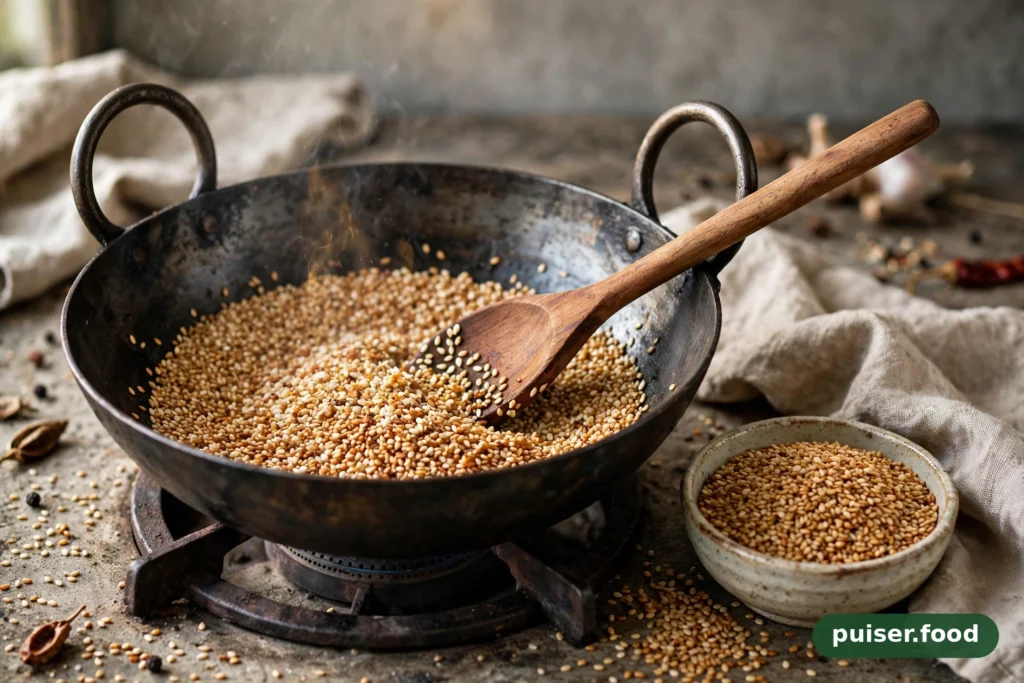
Getting the sesame seeds benefits is mostly a matter of a minute in a hot kadhai, and the method is simple once it becomes a habit. Heat a dry kadhai on medium flame, add a tablespoon of whole sesame seeds, and stir for about a minute until the seeds pop and smell nutty. Take them off the heat at once, because they burn quickly, and let them cool before grinding or sprinkling.
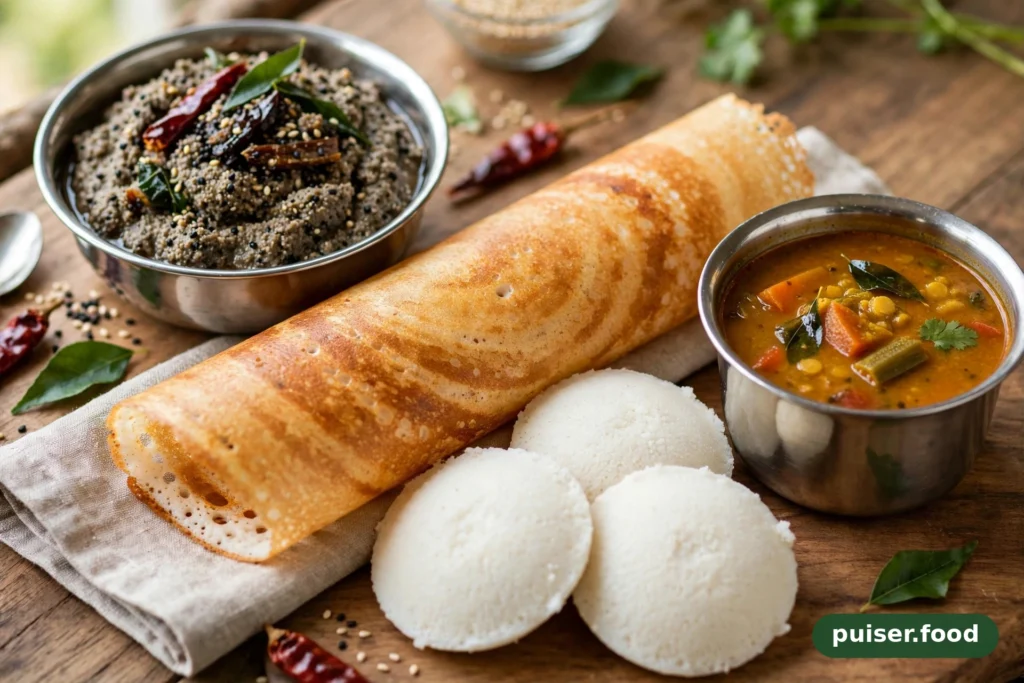
For til chutney, grind the roasted seeds with roasted chana dal, dried red chilli, garlic and salt, then temper with mustard seeds and curry leaves. For tahini, grind the roasted seeds with a little oil until smooth, then add lemon juice and garlic. For til laddoo, melt jaggery with a spoon of water, add the roasted seeds, shape into balls while warm, and let them set. For a tadka, add the seeds to hot oil with mustard seeds and curry leaves, and pour over dal or sabzi.
Two details make the difference. First, roast the seeds dry, with no oil, because oil makes them burn before they pop. Second, grind the seeds when you need them, because ground sesame goes stale faster than whole seeds, and the calcium absorbs better from ground seeds.
Five Everyday Ways to Use Them
Sesame seeds are more than the laddoo seed, and the sesame seeds benefits show up in five everyday dishes. First, til laddoo with jaggery, the winter sweet. Second, til chutney with roasted chana dal, the South Indian podi for idli and dosa. Third, til tadka on dal and sabzi, with mustard seeds and curry leaves. Fourth, sesame sprinkled on poha, upma and salads, the crunch that needs no cooking. Fifth, til chikki with jaggery and peanuts, the Sankranti sweet that keeps for weeks.
The seeds also work in tahini for hummus, in a sesame and peanut chutney, and in a dry roast with flaxseed for a seed mix. Our chia seeds benefits guide covers another seed in the same kitchen, the one to reach for when fibre matters more than calcium. Our pumpkin seeds benefits guide covers the protein seed of the series.
Buying and Storing Sesame Seeds
The sesame seeds benefits survive or die on whether the seeds are whole or hulled, so buy with your eyes open. Whole unhulled seeds are dull white or cream, with a visible hull, while hulled kernels are bright white and smooth. The packet should say whole or unhulled, and if it does not say, ask. Check for a fresh, nutty smell, and prefer a shop that turns its stock over quickly. Black sesame seeds are a different variety, with a stronger flavour, and they suit laddoo and chutney in the same way.
Price is low. Sesame seeds sell for about 500 to 700 rupees per kilo in India, which makes a 250 g pack about 125 to 175 rupees. A 250 g pack lasts about two weeks at a daily tablespoon, so the cost is roughly 10 rupees a day. Buy a small pack at a time and store it well, rather than a large pack that goes stale. Puiser’s own Organic Sesame Seeds are whole unhulled til at 145 rupees for 250 g.
Store dry sesame seeds in an airtight jar in a cool, dark place for about three months, or in the fridge for about six months. Roasted seeds keep for a week in an airtight jar. Ground sesame keeps for a few days, so grind only what you need. If the seeds smell rancid or look discoloured, throw them away.
5 Expert Tips
These five habits protect the sesame seeds benefits and keep the jar worth reaching for. First, buy whole unhulled seeds, every time, and check the packet says so. Second, roast a tablespoon at a time, because the seeds burn quickly. Third, grind the seeds before eating, because grinding helps the calcium absorb. Fourth, eat 1 to 2 tablespoons a day, not a bowl, because the seeds are dense in fat and calories. Fifth, try a small amount first, because sesame allergy is common.
Common Mistakes to Avoid
The most common mistake is buying hulled seeds and expecting the whole seed calcium, when hulled kernels carry only about 60 mg per 100 g. The second is eating a bowlful and calling it a health food, when the portion is a tablespoon. The third is burning the seeds in the kadhai, which turns them bitter. The fourth is storing ground sesame for weeks, when it goes stale in days. The fifth is quoting the 975 mg calcium figure for a hulled packet, which is the trap this guide warns about.
Frequently Asked Questions
What are the main sesame seeds benefits?
The main sesame seeds benefits are calcium, iron, healthy fats and lignans. A tablespoon of whole sesame seeds gives about 88 mg of calcium, 1.3 mg of iron and 1.6 g of protein for about 52 kcal. They roast in a minute, suit winter cooking, and work in laddoo, chutney and tadka.
How much sesame seeds should I eat in a day?
One to two tablespoons of sesame seeds a day, about 9 to 18 g, is a sensible portion for most adults. That gives about 88 to 176 mg of calcium and 52 to 103 kcal. Eat them as a condiment in tadka, chutney or laddoo, rather than by the bowlful.
Are whole sesame seeds better than hulled?
Yes, whole unhulled sesame seeds are far better for calcium, with 975 mg per 100 g against about 60 mg for hulled kernels. The hull holds most of the calcium, so hulled seeds lose about sixteen times as much. Protein, fat and iron change little with hulling, so the choice matters for calcium alone.
Are sesame seeds good for bones?
Sesame seeds are a useful part of a calcium aware diet, because a tablespoon of whole seeds gives about 88 mg of calcium. But two tablespoons give only about 176 mg, so milk, curd, ragi and leafy greens still matter more. Grinding the seeds helps the calcium absorb, and sesame alone does not meet daily needs.
Are sesame seeds good for blood pressure?
Sesame seeds may help blood pressure, because a 2018 systematic review found that sesame lowered blood pressure in 5 of 7 trials in people with high blood pressure. But the trials used larger amounts over weeks, and the evidence is promising, not settled. Sesame is not a substitute for blood pressure medicine.
Are sesame seeds good for weight loss?
Sesame seeds can help in small amounts, because the fat, fibre and protein keep a small portion satisfying, so a tablespoon works as a condiment. They carry about 52 kcal a tablespoon, so the calories add up fast by the bowlful. Weight loss still comes from the whole diet and activity, not from one seed.
Do sesame seeds cause allergy?
Yes, sesame allergy is common, and it can be serious. Try a small amount first if you have never eaten sesame, and stop if you notice itching, swelling or breathing difficulty. People with a known sesame allergy should avoid the seeds, the oil and foods that contain them, and carry their prescribed medicine.
Should I soak sesame seeds before eating?
No, sesame seeds need no soaking, unlike chia seeds or chickpeas. Dry roast them for a minute until they pop, then sprinkle or grind them. Grinding helps the calcium absorb, because oxalates and phytates in the seed bind some of it. Whole seeds swallowed without chewing give up less of their nutrition.
Are black sesame seeds better than white?
Black sesame seeds have a stronger, nuttier flavour and a little more iron and calcium in some tables, but the difference is small and the tables disagree. White whole seeds are the common form for laddoo and chutney, while black seeds suit the same dishes with a deeper flavour. Both are good foods, and the choice is mostly taste.
How do I store sesame seeds?
Dry sesame seeds keep for about three months in an airtight jar in a cool, dark place, or about six months in the fridge. Roasted seeds keep for a week in an airtight jar, and ground sesame keeps for only a few days. Throw the seeds away if they smell rancid or look discoloured.
Conclusion
Sesame seeds are the small til that asks for a minute in a hot kadhai and gives back a laddoo, a chutney, a tadka and a Sankranti sweet, all for a few rupees. A tablespoon gives useful calcium, iron, healthy fats and lignans, and a glycaemic load so small it barely registers. The sesame seeds benefits are real, but they are ordinary benefits, the kind that show up in a better winter kitchen rather than in a miracle. Buy whole seeds, roast them light, grind them fresh, and keep them on the daily rotation.
Disclaimer: This article is for general information only and is not medical advice. If you have a medical condition, are pregnant or breastfeeding, or take regular medication, talk to your doctor before changing your diet.