Introduction
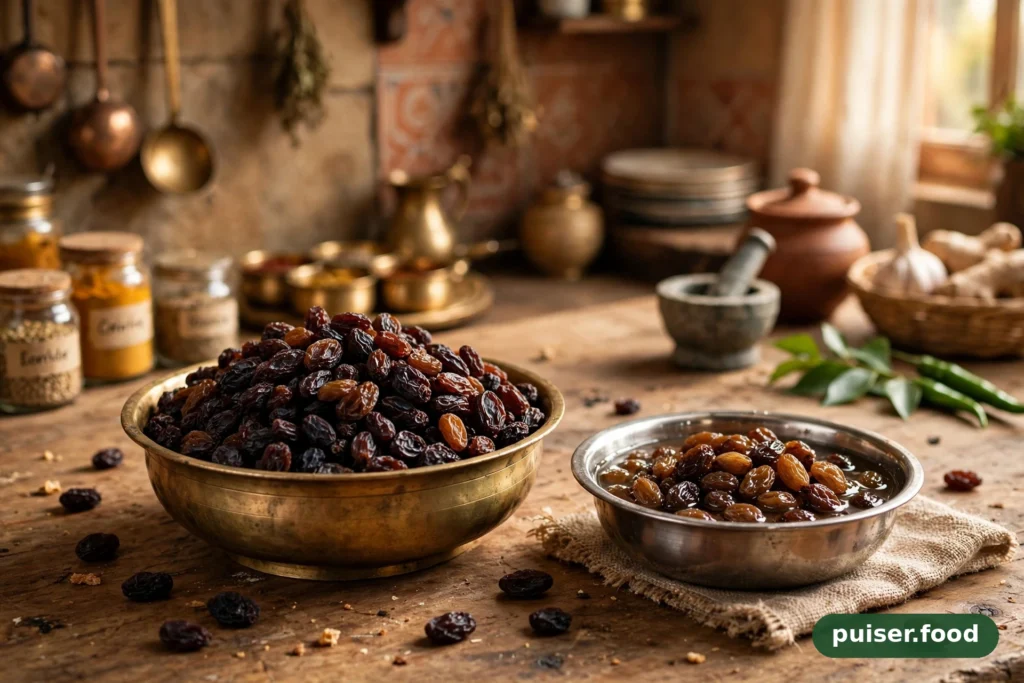
Raisins are the kishmish of the Indian kitchen, the small, sweet dried grapes that float in kheer, hide in poha and sit in the steel glass of water overnight. They taste like candy and carry the sugar to match, so the honest question is whether they earn their place as a health food or only as a sweet. This guide covers the raisins benefits that matter most, the potassium and iron numbers told honestly, the soaked raisins question with both views, and the five dishes where raisins work best.
In this article
- The short answer
- What raisins actually are
- Raisins in numbers
- 10 benefits worth knowing
- Iron, honestly
- Soaked raisins and raisin water, honestly
- Five everyday ways to use them
- Buying and storing raisins
- 5 expert tips
- Common mistakes to avoid
- Frequently asked questions
- Conclusion
The Short Answer
The raisins benefits that matter most are potassium, fibre and quick energy in a dried fruit that needs no cooking at all. A 100 g portion of dark seedless raisins gives about 749 mg of potassium and 3.7 g of fibre for about 299 kcal, and a small handful of 30 g gives about 90 kcal and 225 mg of potassium. Raisins are sugar dense, about 59 g of sugars per 100 g, so a small handful a day is the portion, and they suit the soaked handful, the kheer and the trail mix best.
What Raisins Actually Are
Raisins, called kishmish in Hindi, are dried grapes, and they are made by drying seedless green or black grapes in the sun or in a dryer until most of the water is gone and the sugars are concentrated. The grape is Vitis vinifera, the same vine that gives table grapes and wine, and the drying takes about two to three weeks in the sun, during which the grape shrinks to about a quarter of its size and turns dark and chewy. India grows its raisins in Maharashtra and Karnataka, around Sangli and Bijapur, and the fruit holds a place in Indian kitchens that no other dried fruit quite matches, in kheer, in pulao, in laddoos and in the soaked handful eaten first thing in the morning.
That raisins carry fibre and potassium with their sugar is the first thing to understand, because it is what separates a raisin from a sweet, and it is where the raisins benefits start. A raisin gives natural sugars with fibre, potassium, iron and copper attached, and the fibre slows the digestion a little, the potassium adds a mineral sugar lacks, and the fruit still tastes like toffee, which is why raisins work as a sweetener and a snack at once.
Raisins are also the fruit of the morning habit and the festival sweet, in the steel glass of soaked kishmish, in the kheer of every celebration, in the poha and upma of breakfast, and in the trail mix of a train journey. Our dates benefits guide covers the other sweet dried fruit of the same shelf, the one to reach for when the question is khajur rather than kishmish. Our jaggery versus sugar guide covers the sweetener question in full, the one to read when the choice is between raisins and jaggery in a recipe.
Raisins in Numbers
The table below sets out the raisins benefits in numbers, and it uses one basis throughout. The figures are from USDA FoodData Central, FDC #168165, for dark seedless raisins, per 100 g, and they are the figures this guide uses throughout. The potassium figure, 749 mg per 100 g, is the one that matters most, and it is the figure that separates raisins from sugar, so it can be checked two ways.
| Nutrient (per 100 g dark seedless) | Raisins |
|---|---|
| Energy | 299 kcal |
| Protein | 3.07 g |
| Fat | 0.46 g |
| Carbohydrates | 79.18 g |
| Dietary fibre | 3.7 g |
| Sugars | 59.19 g |
| Calcium | 50 mg |
| Iron | 1.88 mg |
| Magnesium | 32 mg |
| Phosphorus | 101 mg |
| Potassium | 749 mg |
| Sodium | 11 mg |
| Zinc | 0.22 mg |
| Copper | 0.318 mg |
| Vitamin B6 | 0.174 mg |
| Vitamin C | 2.3 mg |
| Folate | 5 mcg |
Figures per USDA FoodData Central FDC #168165, dark seedless raisins, per 100 g. The potassium, 749 mg per 100 g, is the standout mineral, and a portion of 30 g gives about 225 mg, which is about a sixteenth of the 3,500 mg a day that health bodies suggest adults aim for. The iron, 1.88 mg per 100 g, is the best of the dried fruits, and this guide covers below why the body absorbs so little of it, because raisins are often sold as an iron food and the number alone does not tell the story.
The second table shows what a real portion gives you. A small handful, about 30 g or a tablespoon and a half, gives about 90 kcal and 1.1 g of fibre, which is a sensible daily portion. A 100 g portion, about a small bowl, gives about 299 kcal and 59 g of sugars, which is about 15 teaspoons of sugar, and that is why the handful is the portion and the bowl is not.
| Portion | Energy | Sugars | Potassium | Price, at 290 rupees per 500 g |
|---|---|---|---|---|
| 100 g raisins | 299 kcal | 59.2 g | 749 mg | About 58 rupees |
| 1 small handful, about 30 g | About 90 kcal | About 17.8 g | About 225 mg | About 17 rupees |
| 1 tbsp, about 15 g | About 45 kcal | About 8.9 g | About 112 mg | About 9 rupees |
| 2 tbsp, about 30 g, soaked | About 90 kcal | About 17.8 g | About 225 mg | About 17 rupees |
Figures per USDA FDC #168165, scaled to the portion. Prices are worked out from seedless raisins at 290 rupees for 500 g, about 58 rupees per 100 g, so a small handful costs about 17 rupees and a 500 g pack gives about 17 handfuls. Golden raisins cost a little more, and black Afghan raisins cost far more, at about 620 rupees for 500 g, so the handful maths above is for the everyday dark raisin.
The third table compares raisins with the other sweet fruits of the Indian kitchen. Raisins win on potassium and iron, and no other dried fruit in the table beats them on both at once. Dates carry more fibre, fresh grapes carry far less sugar, and prunes carry more fibre but less iron.
| Food, per 100 g | Energy | Sugars | Fibre | Potassium | Best use |
|---|---|---|---|---|---|
| Raisins, dark seedless | 299 kcal | 59.2 g | 3.7 g | 749 mg | Kheer, poha, trail mix |
| Dates, Medjool | 277 kcal | 66.5 g | 6.7 g | 696 mg | Handful, laddoo, sweetener |
| Fresh grapes | 69 kcal | 18.1 g | 0.9 g | 191 mg | Fresh snack, salads |
| Prunes | 240 kcal | 38.1 g | 7.1 g | 732 mg | Digestion, stewed fruit |
Comparison per USDA FoodData Central, on the same basis: raisins FDC #168165, dates FDC #169655, grapes and prunes from the USDA entries. The sugar gap is the story of the table: drying concentrates everything, so raisins carry about three times the sugar of fresh grapes per 100 g, and the portion must shrink by the same amount.
10 Benefits Worth Knowing
These are the ten raisins benefits worth knowing, in the order that matters for an Indian kitchen. The first three are the nutrition facts. The rest are what those facts mean in practice, including the honest limits.
1. Fibre that keeps digestion moving
At 3.7 g of fibre per 100 g, raisins give a useful amount of fibre for a dried fruit, and that is the first of the raisins benefits, because a small handful gives about 1.1 g and the fibre adds bulk to the stool. The fibre feeds the good bacteria in the gut, and it is the reason raisins help with constipation when they are eaten daily with enough water. The fibre also slows the sugars down a little, so a raisin is digested more slowly than the same weight of sugar.
2. Potassium for blood pressure
At 749 mg of potassium per 100 g, raisins are one of the richest dried fruits for the mineral that helps regulate blood pressure, and a small handful gives about 225 mg. Potassium works against the sodium in the diet, so a potassium rich food is a useful part of a blood pressure friendly diet, and raisins carry very little sodium of their own, about 11 mg per 100 g. Raisins do not treat high blood pressure, but the potassium is one more reason the handful works as a daily habit.
3. Iron, with a catch the label hides
At 1.88 mg of iron per 100 g, dark raisins carry more iron than dates, prunes or fresh grapes, and a small handful gives about 0.56 mg. The catch is that the body absorbs very little of the iron in raisins, because the fruit carries compounds that block absorption, and a laboratory study by the US Department of Agriculture found low iron bioavailability in all three kinds of raisin it tested. The iron section below covers this in full, because the iron story is the one most often told wrongly about raisins.
4. Quick energy for the tiffin and the run
Raisins carry natural sugars that the body can use quickly, and they are the reason raisins sit in trail mix, in the school tiffin and in the pocket of a runner. A small handful gives about 90 kcal of quick energy, and the fibre in the fruit slows the release a little, so the energy lasts longer than the same calories from sugar. The energy is real, and it is also the reason the portion matters, because a bowl of raisins gives about 300 kcal and 59 g of sugars.
5. Antioxidants that dried fruit does well
Raisins carry phenols and other plant compounds that act as antioxidants in the body, and an older USDA measure put the antioxidant capacity of raisins at about 3,037 units per 100 g, against about 1,118 for fresh grapes. Drying concentrates the compounds along with the sugars, so the raisin carries more of them per bite than the grape it came from. Antioxidants are not a reason to eat raisins by the bowlful, but they are a real extra on top of the fibre and potassium.
6. Bone support from calcium and potassium
At 50 mg of calcium per 100 g, raisins give a small amount of the mineral that bones need, and a small handful gives about 15 mg. The potassium matters here too, because diets rich in potassium are linked with better bone health, and raisins carry more potassium than most dried fruits. The amounts are modest beside a glass of milk, but they add up across a varied diet, and raisins are one of the few sweet foods that carry either mineral at all.
7. A sweetener that replaces sugar in the kheer
Raisins work as a whole fruit sweetener, stirred into kheer, porridge, laddoos and cakes in place of some of the sugar, and the swap brings fibre and potassium where sugar brings nothing. The fruit sweetens as it cooks, and a handful in the kheer means a spoon less of sugar in the pot. That is a real advantage, and it is also a limit, because a raisin sweetened kheer is still a sweet dish, and the portion still matters.
8. Gut health, through fibre and a gentle laxative effect
At 3.7 g of fibre per 100 g, raisins feed the good bacteria in the gut, and the fruit has a mild laxative effect that Indian kitchens have used for generations, in soaked kishmish eaten first thing in the morning. The fibre supports regular digestion, and the soaked fruit is softer and easier to chew, which is why the morning habit suits older people. The gut story is a supporting role, not the headline, and this guide keeps it there.
9. A snack that travels and keeps
Raisins need no fridge, no cooking and no packet to open, and they keep for months in an airtight jar, which makes them one of the most practical snacks in the Indian kitchen. A small box of raisins goes into a lunchbox, a handbag, a desk drawer or a train journey, and the fruit is ready to eat at any of them. That ease is part of why raisins stay in the jar long after the festival cooking is done, and it is a benefit worth having for a busy household.
10. A fruit that works in sweet and savoury cooking
Raisins work in more dishes than any other dried fruit, in kheer, in poha, in upma, in pulao, in biryani and in the laddoo. The sweet chew suits sweet dishes best, and the fruit plumps up in cooking, which is why a handful in hot milk or rice tastes so much better than a handful from the jar. That range is part of why the price is worth paying, because the fruit does more than sit in the jar.
Iron, Honestly
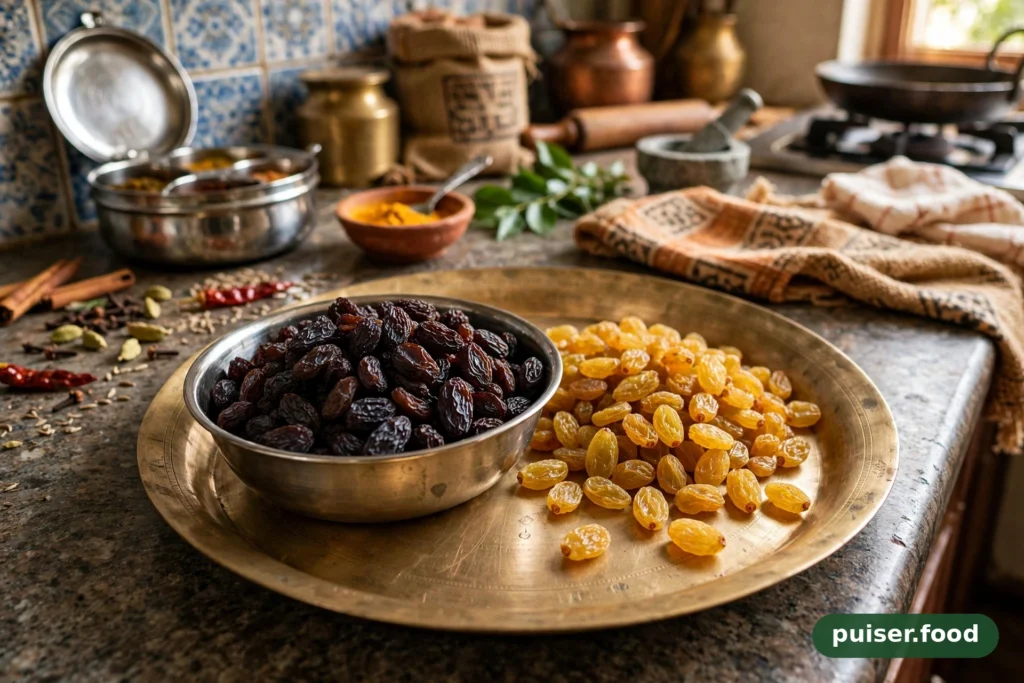
Iron is where the raisins benefits get told wrongly most often, and the honest version starts with the number. At 1.88 mg of iron per 100 g, dark raisins carry more iron than dates, and a small handful gives about 0.56 mg, which is about 3 percent of the 18 mg a day that adult women need. Golden raisins carry far less, about 0.98 mg per 100 g, so the dark raisin is the better buy for iron, and the colour on the packet matters.
The catch is absorption. A laboratory study by the US Department of Agriculture tested three kinds of raisin, golden, dipped and sun dried, and found low iron bioavailability in all three, because the fruit carries compounds that block the body from absorbing its own iron. That means the iron on the label is not the iron the body gets, and raisins are a poor choice as an iron remedy, whatever the packet claims. A bowl of dal or a portion of leafy greens gives far more usable iron, and raisins belong in an iron rich diet as a small extra, not as the source.
The honest limit is that iron from plant foods is always poorly absorbed, and the vitamin C in the meal helps. Eating raisins with amla, lemon or orange helps the body absorb a little more of the iron, and cooking them in a dish with tomatoes does the same. That is the level this guide keeps the claim at, because the evidence stops there, and the iron story is a supporting role, not the headline.
Soaked Raisins and Raisin Water, Honestly
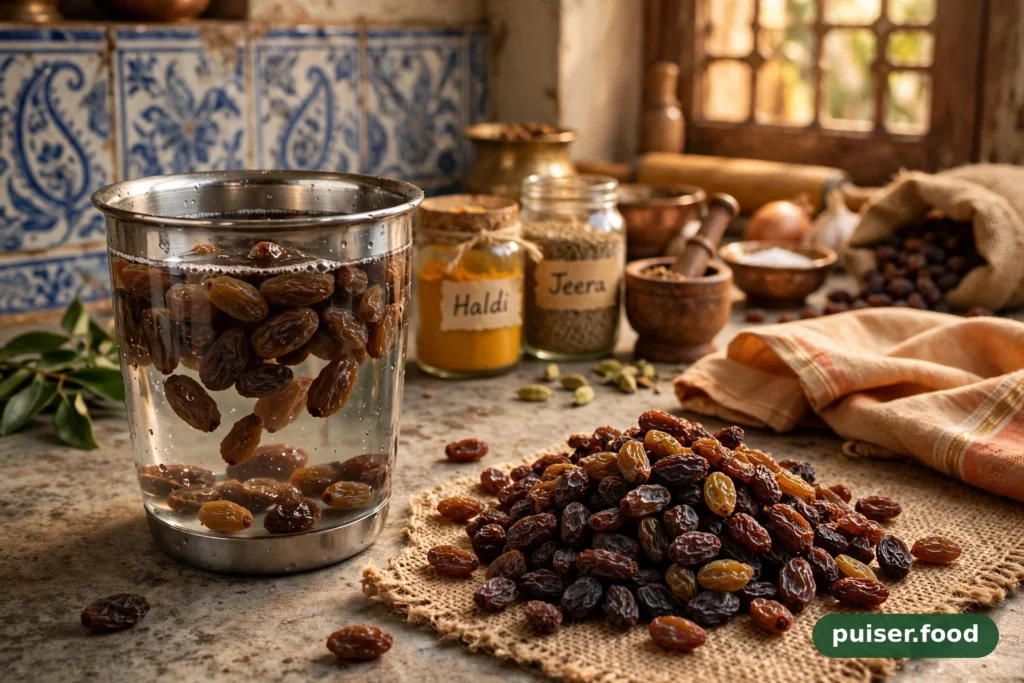
Soaked raisins are the morning habit of a million Indian kitchens, a handful left in a steel glass of water overnight and eaten first thing, and the raisins benefits of the habit are worth separating from the stories told about it. Soaking softens the fruit, makes it easier to chew and digest, and the water takes up a little of the sweetness, which is why soaked raisins suit older people and children. The fibre, potassium and sugars stay in the fruit, and soaking does not add nutrients that were not there before.
Raisin water is the stronger claim, and it is the one with no good evidence behind it. The water left after soaking is sometimes sold as a detox drink, a liver cleanser or a cure for acidity, and none of those claims has been tested in a proper trial. The water carries a little sugar and a little potassium, and drinking it is harmless, but it is not a detox, and the liver needs no drink to do its job. Eat the soaked raisins, drink the water if you like it, and do not expect either to cleanse anything.
The dental catch belongs here too, because raisins are sticky and sweet. The sugars cling to the teeth, and eating raisins through the day without rinsing is hard on enamel, especially for children. Rinse the mouth with water after eating raisins, and brush at night, and the fruit is a fine snack. That is the level this guide keeps the claim at, because the evidence stops there.
Five Everyday Ways to Use Them
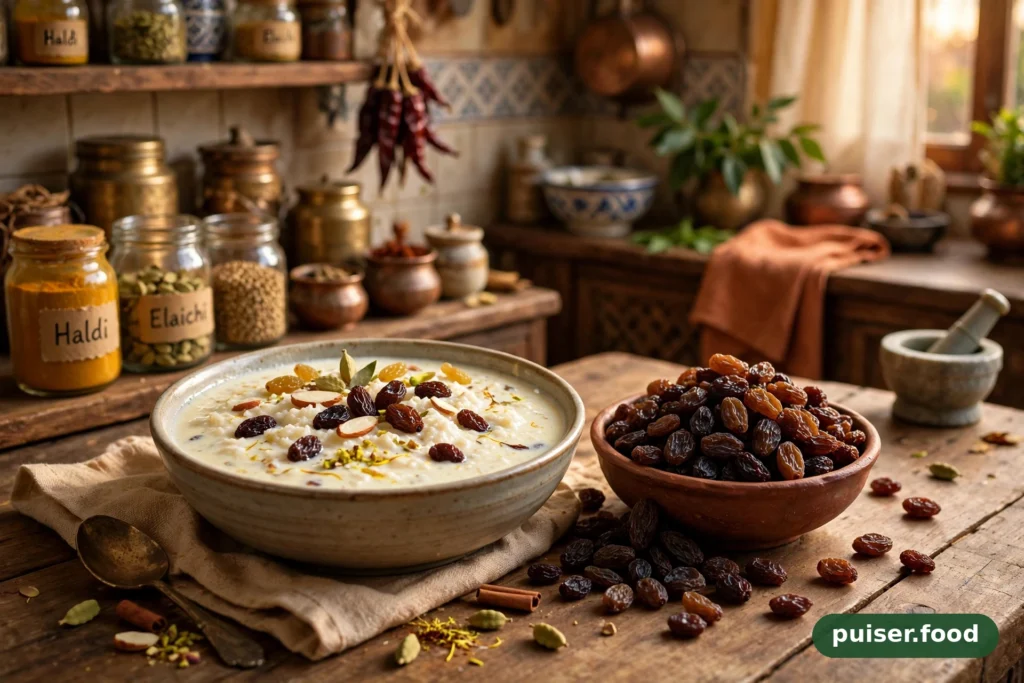
The raisins benefits show up in five everyday dishes. First, a soaked handful first thing in the morning, the habit that needs no cooking. Second, kheer, the rice pudding studded with raisins that plump up in the hot milk. Third, poha and upma, the breakfast dishes where a spoon of raisins sweetens the savoury base. Fourth, laddoo, the besan or atta sweet rolled with raisins and nuts. Fifth, trail mix, raisins with peanuts, makhana and seeds, the snack that travels in a pocket.
The fruit also works chopped into pulao and biryani, where it sweetens the rice, and in cakes and cookies, where it replaces some of the sugar. Our makhana benefits guide covers the low fat snack that pairs with raisins in the trail mix, the one to reach for when the mix needs crunch. Our dates benefits guide covers the other sweet dried fruit of the same shelf, the one to reach for when the laddoo needs a softer sweet.
Buying and Storing Raisins
The raisins benefits survive or die on whether the raisins are fresh, because old raisins dry out, turn hard and lose their soft chew. Good raisins are plump, soft and glossy, with unbroken skin and no white sugar crystals on the surface, and they should smell sweet and fruity, not sour or fermented. Golden raisins are treated with sulphur dioxide to keep their colour, so people with asthma or a sulphur sensitivity should buy the dark, sun dried kind instead.
Price is the honest catch. Seedless raisins sell for about 275 to 449 rupees per 500 g, and a 500 g pack gives about 17 handfuls, so a small handful costs about 17 rupees. Black Afghan raisins sell for about 620 rupees for 500 g, so the handful costs about 37 rupees, which is why the Afghan kind is a treat and the everyday kind is the daily raisin. Puiser has no raisins product yet, and the dates and makhana products are the better buy in this batch.
Store raisins in an airtight jar in a cool, dark place, and in the fridge once opened in summer, because the sugars attract moisture and the fruit can ferment in heat. They keep for about six months in a cool place, or about a year in the fridge. If the raisins smell sour, taste fermented or show mould, throw them away, because spoiled raisins are not worth eating. Raisins are also a choking risk for small children, so chop them fine for toddlers, and people with a grape allergy should try a small amount first.

5 Expert Tips
These five habits protect the fibre and potassium in raisins and keep the jar worth reaching for. First, buy a small pack at a time, and taste a raisin before you buy a kilo. Second, eat a small handful a day, not a bowlful, because the fruit is sugar dense and the portion is the whole story. Third, soak raisins overnight if you find them hard to chew, because the soaked fruit is softer and easier to digest. Fourth, rinse the mouth with water after eating raisins, because the sticky sugars cling to the teeth. Fifth, buy dark raisins for iron, because golden raisins carry about half as much.
Common Mistakes to Avoid
The most common mistake is eating a bowlful and calling it a health food, when the portion is a small handful and a bowlful carries about 300 kcal. The second is buying golden raisins and counting them as the iron food, when golden raisins carry about half the iron of dark raisins. The third is drinking raisin water as a detox, when no trial supports the claim and the water is only sweetened water. The fourth is eating raisins through the day without rinsing, when the sticky sugars sit on the teeth. The fifth is storing raisins on a warm shelf for months, when the fruit ferments and turns sour.
Frequently Asked Questions
What are the main raisins benefits?
The main raisins benefits are potassium, fibre and quick energy. A 100 g portion of dark seedless raisins gives about 749 mg of potassium and 3.7 g of fibre for about 299 kcal. A small handful gives about 225 mg of potassium, which is a useful share of the daily target.
How many raisins should I eat in a day?
A small handful of raisins a day, about 30 g or a tablespoon and a half, is a sensible portion for most adults. That gives about 90 kcal and 1.1 g of fibre. Eat them soaked, in kheer or in a trail mix, rather than by the bowlful, because the fruit is sugar dense.
Are raisins good for diabetes?
Raisins have a glycaemic index of about 64, which is medium to high, so a small handful has a real effect on blood sugar. Small studies found a handful a day did not worsen blood sugar control when eaten as part of a whole diet. But raisins do raise blood sugar, and they are not a treatment for diabetes.
Are raisins good for the heart?
Raisins may help the heart, because they carry potassium with very little sodium, and their fibre supports a healthy diet. The potassium helps regulate blood pressure as part of a whole diet. Raisins do not treat heart disease, and the benefit comes from the whole diet, not from one fruit.
Do soaked raisins help with constipation?
Soaked raisins can help with constipation, because their fibre adds bulk to the stool and the soaked fruit is softer and easier to digest. A small handful gives about 1.1 g of fibre, and eating them daily with enough water helps most people. Raisins are not a laxative, and persistent constipation deserves a doctor.
Are raisins good for anaemia?
Raisins carry more iron than dates, about 1.88 mg per 100 g, but the body absorbs very little of it, because the fruit carries compounds that block absorption. A small handful gives about 0.56 mg of iron, which is a small share of the daily need. Raisins are not a useful iron remedy on their own.
Which raisins are best, dark, golden or green?
Dark raisins are the best everyday buy, with more iron than golden raisins and no sulphur treatment. Golden raisins are treated with sulphur dioxide to keep their colour, and carry about half the iron. Green raisins sit in between on taste. The choice is mostly taste and price, and dark wins for everyday use.
Does raisin water detox the liver?
No, raisin water does not detox the liver, and no proper trial supports the claim. The water carries a little sugar and potassium, and drinking it is harmless, but the liver needs no drink to do its job. Eat the soaked raisins, drink the water if you like it, and do not expect a cleanse.
Are raisins better than sugar?
Raisins are better than sugar as a sweetener, because they carry fibre, potassium and iron where sugar carries nothing at all. A raisin sweetened kheer still contains sugar, only with fibre attached, so the portion still matters. Raisins are the better sweetener, not a free food.
How do I store raisins?
Raisins keep for about six months in an airtight jar in a cool, dark place, or about a year in the fridge, because their sugars attract moisture and the fruit can ferment in heat. Store them in the fridge once opened in summer. Throw the raisins away if they smell sour or show mould.
Conclusion
Raisins are the small kishmish that asks for nothing but a handful a day, and gives back a kheer, a poha, a laddoo and a trail mix, all for about 17 rupees a portion. A small handful gives useful potassium and fibre, and an iron story that is honest about absorption, and the fruit keeps well in a cool jar for months. The raisins benefits are real, but they are ordinary benefits, the kind that show up in a better everyday kitchen rather than in a miracle. Buy them fresh, store them cool, eat a handful a day, and keep them on the daily rotation.
Disclaimer: This article is for general information only and is not medical advice. If you have a medical condition, are pregnant or breastfeeding, or take regular medication, talk to your doctor before changing your diet.