Introduction
Makhana is the phool makhana of the Indian kitchen, the light, puffed seed that roasts in a kadhai with ghee, fills the fasting plate and now sits in the snack aisle beside the chips. It tastes of almost nothing on its own and carries the flavour of whatever it is roasted with, so the honest question is whether it earns its place as a health food or only as a light snack. This guide covers the makhana benefits that matter most, the fibre and protein numbers told honestly, the weight loss question with both views, and the five dishes where makhana works best.
In this article
- The short answer
- What makhana actually is
- Makhana in numbers
- 10 benefits worth knowing
- Weight loss and blood sugar, honestly
- Plain roasted versus flavoured, honestly
- Five everyday ways to use it
- Buying and storing makhana
- 5 expert tips
- Common mistakes to avoid
- Frequently asked questions
- Conclusion
The Short Answer
The makhana benefits that matter most are fibre, plant protein and a very low glycaemic index in a snack with almost no fat at all. A 100 g portion of makhana gives about 14.5 g of fibre and 9.7 g of protein for about 347 kcal, and a bowl of 30 g gives about 104 kcal and 4.4 g of fibre. Makhana is light, not filling in the way nuts are, so a bowl a day is the portion, and it suits the roasted snack, the kheer and the trail mix best.
What Makhana Actually Is
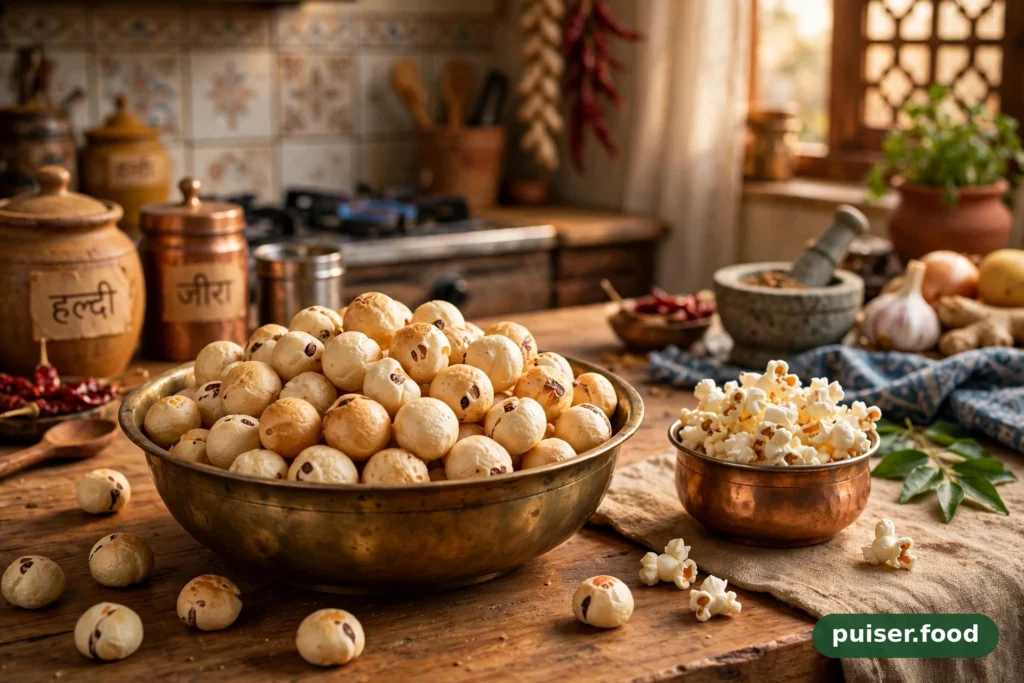
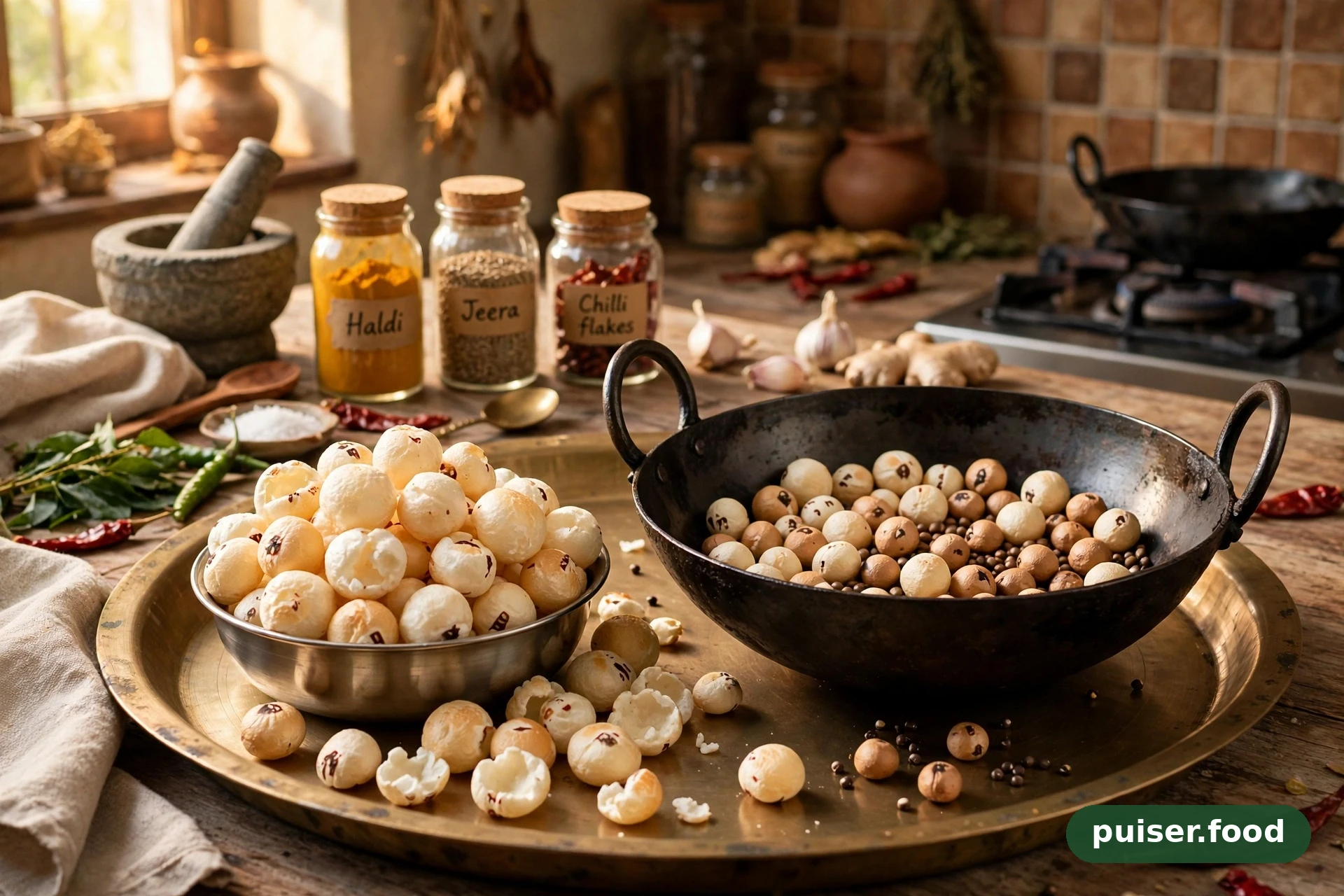
Makhana, called phool makhana in Hindi and fox nut in English, is the popped kernel of Euryale ferox, a thorny water lily that grows in the still ponds and wetlands of Bihar, in the Mithila region, and across South and East Asia. The plant grows in water, the seed is harvested from the pond, and the kernel is roasted until it pops, like popcorn, into a light, white puff. Mithila makhana carries a geographical indication tag, won in 2022, and the crop supports thousands of farming families in Bihar, where the ponds are harvested by hand.
That makhana carries fibre and protein with almost no fat is the first thing to understand, because it is what separates makhana from every other snack in the aisle, and it is where the makhana benefits start. A bowl of makhana gives 9.7 g of protein and 14.5 g of fibre per 100 g with only 0.1 g of fat, and the glycaemic index is quoted at about 37, which is very low for a snack food. The seed is also a fasting food, eaten on vrat days when grains are avoided, which is why it sits in the sattvic kitchen beside sabudana.
Makhana is also the snack of the evening kadhai and the fasting thali, roasted in ghee with salt and pepper, stirred into kheer, simmered in a curry, and mixed into a trail mix with peanuts and raisins. Our peanuts benefits guide covers the cheap protein nut that pairs with makhana in the trail mix, the one to reach for when protein per rupee matters. Our raisins benefits guide covers the sweet dried fruit of the same mix, the one to reach for when the question is kishmish rather than makhana.
Makhana in Numbers
The table below sets out the makhana benefits in numbers, and it uses one basis throughout. The figures are from USDA FoodData Central, FDC #168432, for lotus seeds, dried, per 100 g, and they are the figures this guide uses throughout. The fibre figure, 14.5 g per 100 g, is the one that matters most, and it is the figure that separates makhana from chips and biscuits, so it can be checked two ways.
| Nutrient (per 100 g) | Makhana |
|---|---|
| Energy | 347 kcal |
| Protein | 9.7 g |
| Fat | 0.1 g |
| Carbohydrates | 76.9 g |
| Dietary fibre | 14.5 g |
| Sugars | 0 g |
| Calcium | 60 mg |
| Magnesium | 67 mg |
| Phosphorus | 188 mg |
| Potassium | 500 mg |
| Sodium | About 1.6 mg |
| Folate | About 93 mcg |
Figures per USDA FoodData Central FDC #168432, lotus seeds, dried, per 100 g, with folate and sodium from Indian food composition values, which vary a little by source. The fat, 0.1 g per 100 g, is the standout number, and a bowl of 30 g gives about 104 kcal with almost no fat at all. The potassium, 500 mg per 100 g, is the standout mineral, and the sodium, about 1.6 mg per 100 g, is so low that the potassium to sodium ratio is one of the best of any snack food.
The second table shows what a real portion gives you. A bowl of 30 g, about a cup and a half, gives about 104 kcal, 2.9 g of protein and 4.4 g of fibre, which is a sensible daily portion. A single cup, about 18 g, gives about 62 kcal, which makes the cup a useful unit for counting, and a 100 g portion gives about 347 kcal, which is a lot of makhana to eat at once.
| Portion | Energy | Protein | Fibre | Price, at 295 rupees per 200 g |
|---|---|---|---|---|
| 100 g makhana | 347 kcal | 9.7 g | 14.5 g | About 148 rupees |
| 1 bowl, about 30 g | About 104 kcal | About 2.9 g | About 4.4 g | About 44 rupees |
| 1 cup, about 18 g | About 62 kcal | About 1.7 g | About 2.6 g | About 27 rupees |
| 2 tbsp, about 10 g, as garnish | About 35 kcal | About 1.0 g | About 1.5 g | About 15 rupees |
Figures per USDA FDC #168432, scaled to the portion. Prices are worked out from makhana at 295 rupees for 200 g, about 148 rupees per 100 g, so a bowl costs about 44 rupees and a 200 g pack gives about seven bowls. Makhana is dear beside peanuts, which cost about 5 rupees a handful, and the price is the honest catch of this snack, covered in full below.
The third table compares makhana with the other snacks of the Indian kitchen. Makhana wins on fat, and no other snack in the table comes close: chips carry about 35 g of fat per 100 g, peanuts about 49 g, and makhana about 0.1 g. Popcorn is the closest rival, with the same fibre, but it carries far more fat unless it is air popped with no oil.
| Snack, per 100 g | Energy | Protein | Fat | Fibre | Best use |
|---|---|---|---|---|---|
| Makhana | 347 kcal | 9.7 g | 0.1 g | 14.5 g | Roasted snack, kheer, curry |
| Popcorn, air popped | 387 kcal | 12.9 g | 4.5 g | 14.5 g | Evening snack, film night |
| Potato chips | 536 kcal | 7.0 g | 34.9 g | 4.8 g | Occasional snack only |
| Peanuts, raw | 567 kcal | 25.8 g | 49.2 g | 8.5 g | Chikki, chutney, snack |
Comparison per USDA FoodData Central, on the same basis: makhana FDC #168432, popcorn, chips and peanuts from the USDA entries. The fat gap is the story of the table: makhana carries about 0.1 g of fat per 100 g, chips carry about 350 times as much, and that is why makhana works as a daily snack and chips do not.
10 Benefits Worth Knowing
These are the ten makhana benefits worth knowing, in the order that matters for an Indian kitchen. The first three are the nutrition facts. The rest are what those facts mean in practice, including the honest limits.
1. Fibre that keeps digestion moving
At 14.5 g of fibre per 100 g, makhana is one of the richest snack foods for fibre, and that is the first of the makhana benefits, because a bowl gives about 4.4 g, which is about a seventh of the daily target. The fibre adds bulk to the stool and feeds the good bacteria in the gut, and it is the reason makhana helps with constipation when eaten daily with enough water. The fibre also slows the digestion of the bowl, so the snack keeps you full longer than the same weight of chips.
2. Plant protein for a snack
At 9.7 g of protein per 100 g, makhana carries more protein than any other common snack food except peanuts, and a bowl gives about 2.9 g. The protein is plant protein, and it is incomplete on its own, so makhana is not a protein food in the way dal or peanuts are, but it is a useful share of the day’s protein for a snack. Mixed with peanuts and seeds in a trail mix, the protein adds up, and the mix is a far better snack than makhana alone.
3. Almost no fat at all
At 0.1 g of fat per 100 g, makhana is the only common snack with almost no fat, and a bowl gives about 0.03 g. That is why makhana suits people watching their fat intake, and why it is the lightest snack in the Indian kitchen. The catch is that the fat is added back in the roasting, because makhana is usually roasted in ghee or oil, and a spoon of ghee adds about 14 g of fat to the bowl, so the plain figure and the roasted figure are different foods.
4. A very low glycaemic index
Makhana has a glycaemic index quoted at about 37, which is very low for a snack food, so a bowl has a small effect on blood sugar on its own, and the fibre slows the digestion of the carbohydrate it does carry. That makes makhana a sensible snack for people watching blood sugar, and it is the reason makhana is often recommended as a diabetes friendly snack. But makhana does not lower blood sugar, and the benefit is in what it replaces, not in the seed alone.
5. Potassium with almost no sodium
At 500 mg of potassium and about 1.6 mg of sodium per 100 g, makhana has one of the best potassium to sodium ratios of any snack food, and a bowl gives about 150 mg of potassium. Potassium helps regulate blood pressure, and it works against the sodium in the diet, so a potassium rich, sodium free food is a useful part of a blood pressure friendly diet. Plain roasted makhana keeps that ratio, and salted makhana loses it, because the salt is the sodium.
6. Calcium and magnesium for bones
At 60 mg of calcium and 67 mg of magnesium per 100 g, makhana gives small amounts of the two minerals that bones need, and a bowl gives about 18 mg of calcium and 20 mg of magnesium. The amounts are modest beside a glass of milk, but they add up across a varied diet, and makhana is one of the few snack foods that carries either mineral at all. The bone story is a supporting role, not the headline, and this guide keeps it there.
7. Antioxidants from the pond
Makhana carries kaempferol and quercetin, the plant compounds that act as antioxidants in the body, and studies of Euryale ferox seeds have found these compounds in meaningful amounts. The antioxidants are not a reason to eat makhana by the bowlful, but they are a real extra on top of the fibre and protein. The research here is early, and it comes from laboratory studies rather than trials in people, so this guide presents it as promising, not as proven.
8. Light, easy to digest and a fasting food
Makhana is light and easy to digest, which is why it is eaten on vrat days, when grains are avoided and the stomach is given a rest. The seed is sattvic, and it sits in the fasting kitchen beside sabudana and singhara, in kheer and in roasted snacks. That lightness is also why makhana suits older people and children, and why it is a good first snack after an illness, when heavy food does not sit well.
9. A snack that replaces chips honestly
Makhana replaces chips honestly, because a bowl of roasted makhana gives about 104 kcal with almost no fat, while the same weight of chips gives about 161 kcal with about 10 g of fat. The crunch is the same, the salt is the same, and the bowl is just as satisfying to eat in front of the television. That is a real advantage, and it is also a limit, because makhana is dearer than chips per bowl, and the price is the honest catch.
10. A seed that works in sweet and savoury cooking
Makhana works in more dishes than any other snack seed, in kheer, in curry, in chaat, in trail mix and in the roasted snack. The mild flavour takes on whatever it is cooked with, and the puff soaks up milk in kheer and gravy in curry without falling apart. That range is part of why the price is worth paying, because the seed does more than sit in the jar.
Weight Loss and Blood Sugar, Honestly
Weight loss is where the makhana benefits get argued about most, and the argument has two sides that are both true. A bowl of makhana gives about 104 kcal, against about 161 kcal for the same weight of chips, and the fibre keeps you full, so makhana is a better snack for weight loss than chips. But a bowl of makhana is light, and it is easy to eat three bowls without noticing, which is about 312 kcal, and the weight loss comes from the whole diet, not from one snack.
The catch is the roasting. Plain roasted makhana is a light snack, but makhana roasted in a spoon of ghee carries about 100 kcal more per bowl, and flavoured makhana from a packet carries oil, salt and sometimes sugar as well. The low glycaemic index, quoted at about 37, helps with blood sugar, because the carbohydrate is released slowly, and small studies in people with type 2 diabetes have used makhana as a replacement for refined snacks. But makhana does not lower blood sugar, and the benefit is in what it replaces, not in the seed alone.
The honest limit is that no snack causes weight loss on its own, and makhana is no exception. Makhana helps weight loss when it replaces chips, biscuits and fried snacks, and it does not help when it is eaten on top of them. That is the level this guide keeps the claim at, because the evidence stops there, and the fibre and protein are the real story, not a miracle.
Plain Roasted Versus Flavoured, Honestly
Plain roasted makhana is the traditional way to eat the seed, and the question is whether the flavoured packets keep the makhana benefits or lose them. The plain kind is roasted in a kadhai with a little ghee and salt, and it carries the nutrition of the seed with a spoon of fat added. The flavoured kind, peri peri, cheese, caramel and the rest, is roasted in oil and coated in flavouring, salt and sometimes sugar, and the packet can carry far more sodium and fat than the plain bowl.
What can be said honestly is this. A bowl of plain roasted makhana gives about 104 kcal with almost no fat beyond the roasting, while a bowl of flavoured makhana can give 150 kcal or more, with several hundred milligrams of sodium, and the flavouring is the difference. The plain kind is the better daily snack, and the flavoured kind is the better occasional snack, and the packet label is the way to tell them apart. Check the sodium per 100 g, and buy the packet with the shortest ingredient list.
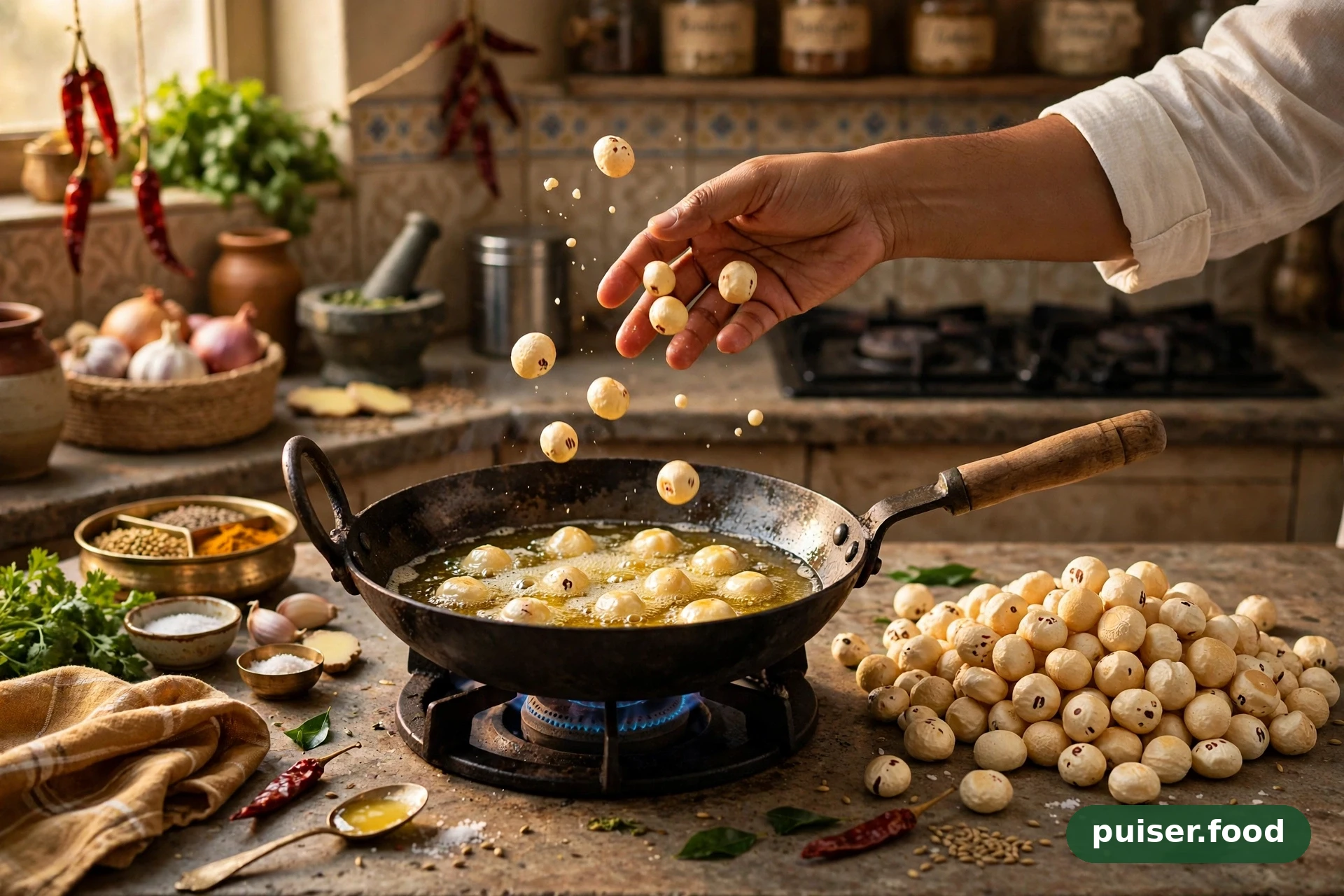
The ghee question belongs here too, because makhana is almost always roasted in ghee. A teaspoon of ghee adds about 45 kcal and 5 g of fat to the bowl, and a tablespoon adds about 135 kcal and 15 g of fat, which turns a fat free snack into a fatty one. Dry roasting in a kadhai with no fat keeps the bowl light, and a spray of oil is a middle path. This guide presents the ghee as a choice, not as a rule, and the bowl is still a better snack than chips either way.
Five Everyday Ways to Use It
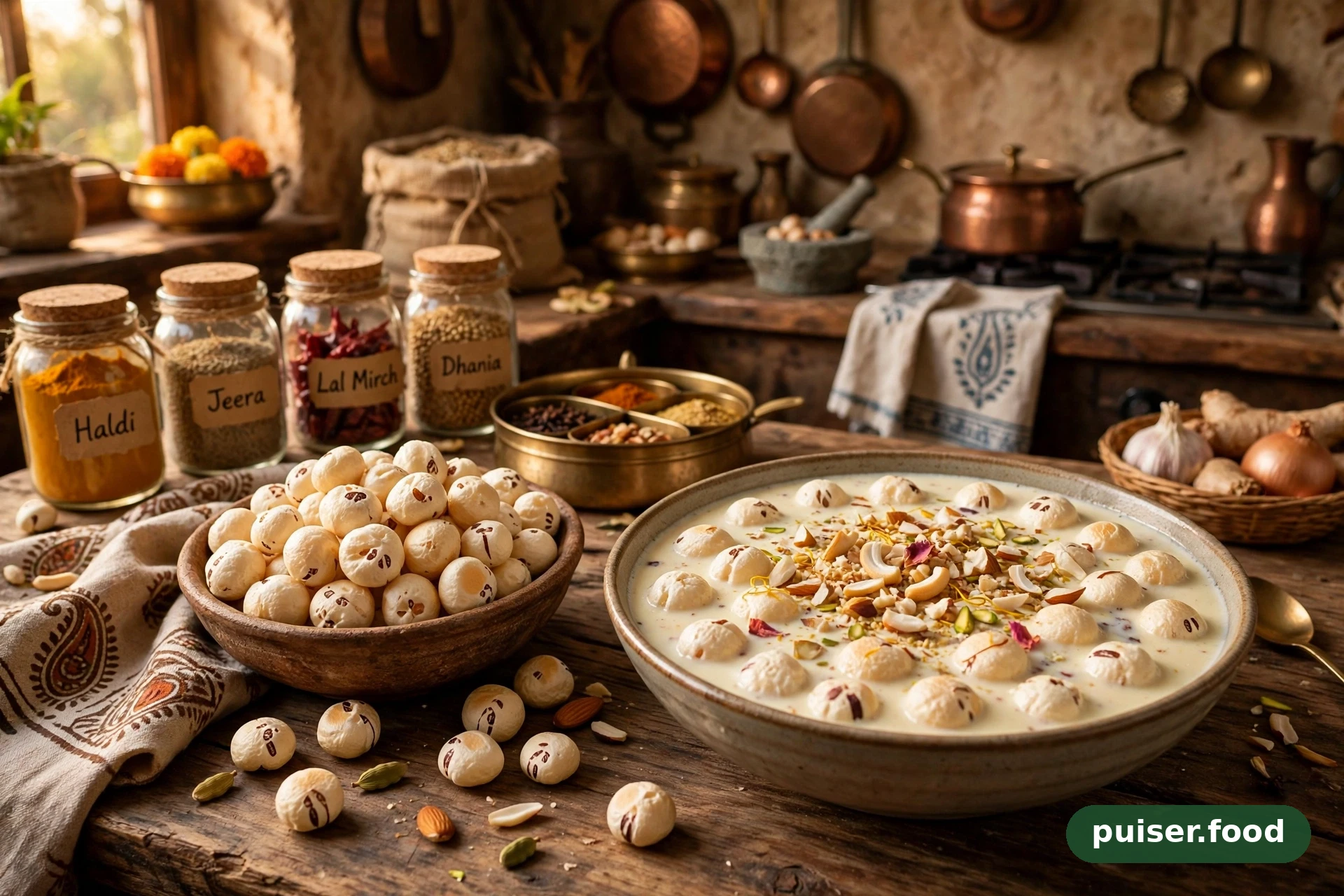
The makhana benefits show up in five everyday dishes. First, a bowl roasted in ghee with salt and pepper, the evening snack that needs no recipe. Second, makhana kheer, the seed simmered in milk with cardamom and a little sugar. Third, makhana curry, the seed simmered in a tomato and khoya gravy, the fasting feast. Fourth, trail mix, makhana with peanuts, raisins and seeds, the snack that travels in a pocket. Fifth, makhana chaat, the puff tossed with curd, chutney and sev, the evening street food made at home.
The seed also works ground into a powder for kheer and halwa, and as a garnish on pulao and salads, where the crunch suits the soft rice. Our peanuts benefits guide covers the cheap protein nut that pairs with makhana in the trail mix, the one to reach for when protein per rupee matters. Our raisins benefits guide covers the sweet dried fruit of the same mix, the one to reach for when the mix needs sweetness.
Buying and Storing Makhana
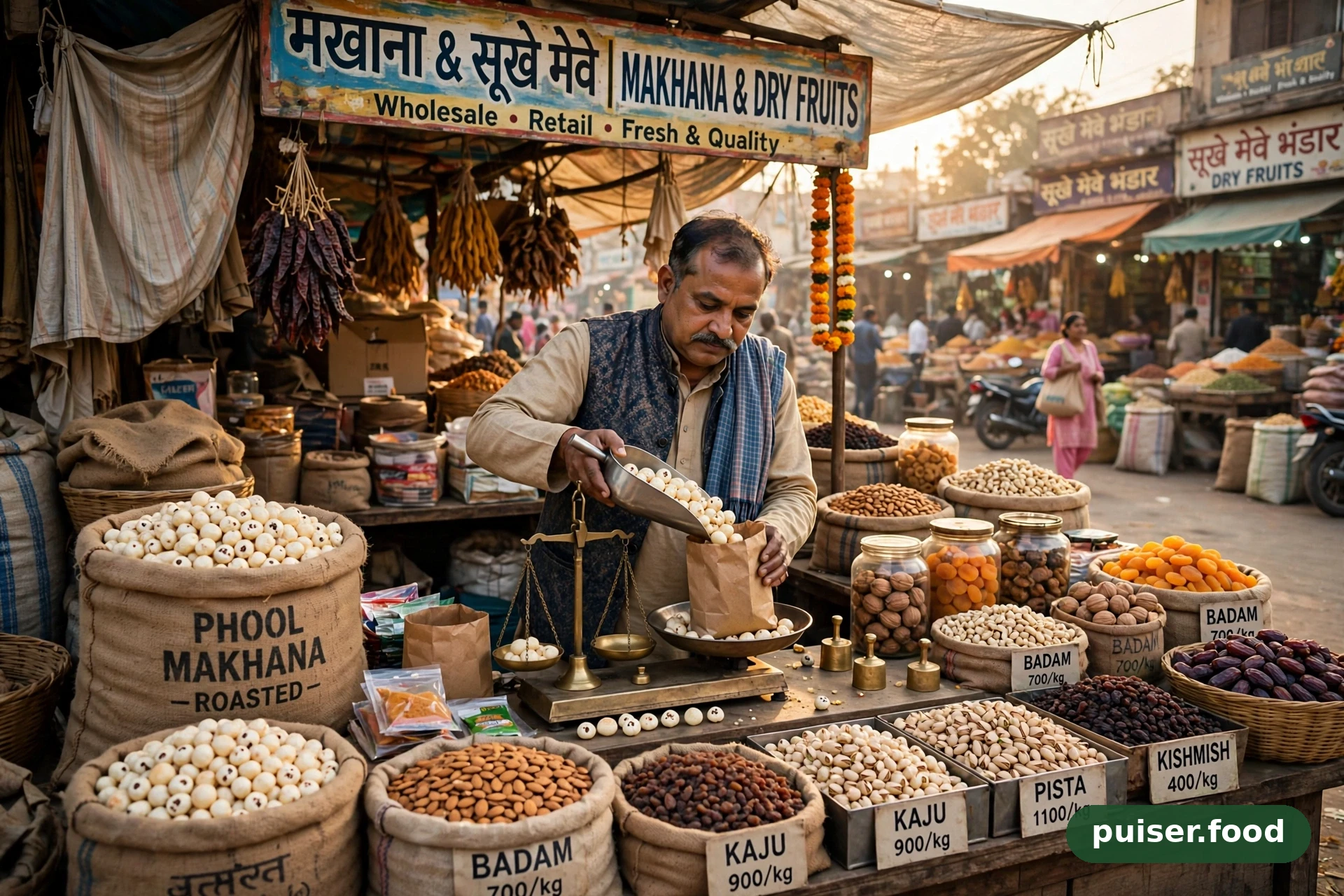
The makhana benefits survive or die on whether the makhana is fresh, because old makhana turns soft, chewy and stale, and loses its crisp puff. Good makhana is white, light and crisp, and it should snap cleanly between the fingers, not bend, and it should smell fresh and nutty, not stale or musty. Small, broken pieces are fine for kheer and curry, and big, whole pops are the ones to buy for roasting.
Price is the honest catch. Makhana sells for about 240 to 399 rupees per 200 g, and a 200 g pack gives about seven bowls, so a bowl costs about 44 rupees. That is dear beside peanuts at 5 rupees a handful, and it is the reason makhana is a daily snack for some and a weekly snack for others. Puiser’s new Organic Makhana, 200 g at 295 rupees, sits mid range in the market, and it is the product this article pairs with.
Store makhana in an airtight jar in a cool, dark place, because the puffs pick up moisture from the air and turn soft in a day. They keep for about six months in a cool place, and a quick roast in a kadhai brings stale makhana back to crispness. If the makhana smells musty, tastes stale or shows mould, throw it away, because spoiled makhana is not worth eating. Makhana is gluten free, and it suits most people, but people with a seed allergy should try a small amount first.
5 Expert Tips
These five habits protect the fibre and protein in makhana and keep the jar worth reaching for. First, buy a small pack at a time, and taste a pop before you buy a kilo. Second, dry roast makhana in a kadhai before you eat it, because the roast brings back the crispness and the flavour. Third, eat a bowl, about 30 g, a day, not three bowls, because the snack is light and the bowls add up. Fourth, roast with a teaspoon of ghee, not a tablespoon, because the fat is the difference between a light snack and a heavy one. Fifth, keep the jar airtight, because makhana turns soft in a day in humid air.
Common Mistakes to Avoid
The most common mistake is eating three bowls and calling it a weight loss food, when the portion is one bowl and three bowls carry about 312 kcal. The second is buying flavoured makhana and counting it as plain makhana, when the packet carries far more sodium and fat. The third is roasting in a tablespoon of ghee and calling the snack fat free, when the ghee is the fat. The fourth is storing makhana in an open packet, when the puffs turn soft in a day. The fifth is quoting makhana as a protein food, when a bowl gives about 2.9 g of protein, far too little to matter on its own.
Frequently Asked Questions
What are the main makhana benefits?
The main makhana benefits are fibre, plant protein and a very low glycaemic index. A 100 g portion of makhana gives about 14.5 g of fibre and 9.7 g of protein for about 347 kcal. A bowl gives about 4.4 g of fibre, which is a useful share of the daily target.
How many makhana should I eat in a day?
A bowl of makhana a day, about 30 g or a cup and a half, is a sensible portion for most adults. That gives about 104 kcal and 4.4 g of fibre. Eat it roasted, in kheer or in a trail mix, rather than by the packet, because the bowls add up fast.
Is makhana good for weight loss?
Makhana can help with weight loss, because a bowl gives about 104 kcal with almost no fat, against about 161 kcal for the same weight of chips. The fibre keeps you full, and the snack replaces chips honestly. Weight loss still comes from the whole diet and activity, not from one snack.
Is makhana good for diabetes?
Makhana has a glycaemic index quoted at about 37, which is very low, so a bowl has a small effect on blood sugar on its own. Small studies have used makhana as a replacement for refined snacks in people with type 2 diabetes. But makhana does not lower blood sugar, and it is not a treatment for diabetes.
Is makhana good for the heart?
Makhana may help the heart, because it carries potassium with almost no sodium, and its fibre supports a healthy diet. The potassium helps regulate blood pressure as part of a whole diet. Makhana does not treat heart disease, and the benefit comes from the whole diet, not from one seed.
Can I eat makhana during fasting?
Yes, makhana is a fasting food, eaten on vrat days when grains are avoided. The seed is sattvic, and it sits in the fasting kitchen beside sabudana and singhara. Roast it in ghee with salt, or simmer it in kheer, and it suits the fasting thali well.
Is flavoured makhana healthy?
Flavoured makhana is less healthy than plain roasted makhana, because the packet carries oil, salt and sometimes sugar on top of the seed. A bowl can give 150 kcal or more, with several hundred milligrams of sodium. Plain roasted makhana is the better daily snack, and flavoured is the better occasional snack.
Is makhana good for bones?
Makhana gives small amounts of calcium and magnesium, about 60 mg and 67 mg per 100 g, which support bone health as part of a varied diet. A bowl gives about 18 mg of calcium, which is modest beside a glass of milk. Makhana is a supporting food for bones, not the main source.
Is makhana better than popcorn?
Makhana and popcorn are close, with the same fibre per 100 g, but makhana carries almost no fat, while air popped popcorn carries about 4.5 g. Popcorn is cheaper per bowl, and makhana is lighter. The choice is mostly price and taste, and both beat chips by a long way.
How do I store makhana?
Makhana keeps for about six months in an airtight jar in a cool, dark place, because the puffs pick up moisture from the air and turn soft in a day. A quick roast in a kadhai brings stale makhana back to crispness. Throw the makhana away if it smells musty or shows mould.
Conclusion
Makhana is the small puff that asks for nothing but a bowl a day, and gives back a roasted snack, a kheer, a curry and a trail mix, all for about 44 rupees a portion. A bowl gives useful fibre and protein, and a blood sugar story that is honest about the roasting, and the seed keeps well in a cool jar for months. The makhana benefits are real, but they are ordinary benefits, the kind that show up in a better everyday kitchen rather than in a miracle. Buy it fresh, store it airtight, eat a bowl a day, and keep it on the daily rotation.
Disclaimer: This article is for general information only and is not medical advice. If you have a medical condition, are pregnant or breastfeeding, or take regular medication, talk to your doctor before changing your diet.