Introduction
Walnuts are the akhrot of the brain shaped shell, the nut that costs more than peanuts and gives back something no other common nut can, plant omega 3 in a handful. Most kitchens buy them for festivals and leave them in the jar the rest of the year, because the price puts them off. This guide covers the walnuts benefits that matter most, the ALA and heart numbers told honestly, the soaked versus raw question with both views, and the five dishes where walnuts work best.
In this article
- The short answer
- What walnuts actually are
- Walnuts in numbers
- 10 benefits worth knowing
- Heart health and the ALA evidence
- Soaked versus raw, honestly
- Five everyday ways to use them
- Buying and storing walnuts
- 5 expert tips
- Common mistakes to avoid
- Frequently asked questions
- Conclusion
The Short Answer
The walnuts benefits that matter most are plant omega 3 ALA, healthy fats and copper in a handful that covers the day’s ALA on its own. A 100 g portion of English walnuts gives about 15.2 g of protein, 65.2 g of fat and 9.1 g of ALA for about 654 kcal. A handful, about 28 g or 14 halves, gives about 185 kcal and 2.5 g of ALA, which covers the adult ALA intake of 1.1 g for women and 1.6 g for men. Walnuts are calorie dense, so a handful is the portion, and they suit salads, baking and the plain handful best.
What Walnuts Actually Are
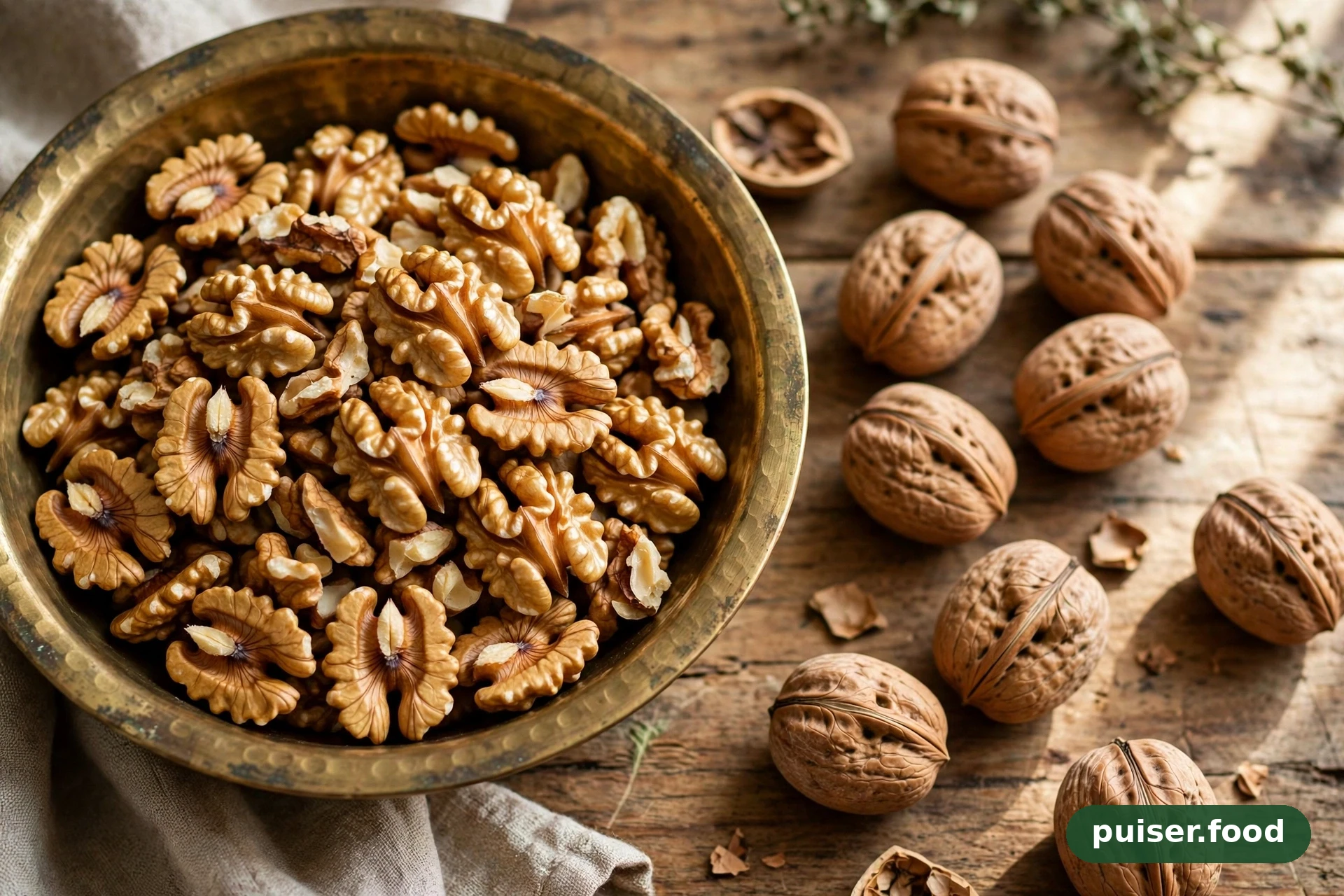
Walnuts, called akhrot in Hindi, are the kernels of Juglans regia, the English or Persian walnut tree, and they are the two lobed kernel inside a hard, wrinkled shell that looks, by chance, like a small brain. The nut is a drupe by botany, not a true nut, and it is grown in Kashmir and Himachal Pradesh in India, where the Kashmiri walnut is prized for its light colour and thin shell, and in California, which supplies most of the walnuts sold in Indian shops.
That walnuts are the only common nut rich in plant omega 3 is the first of the walnuts benefits, because it gives the nut a job no other nut in the jar can do. Almonds give vitamin E, peanuts give cheap protein, cashews give creaminess, and only walnuts give ALA in a meaningful amount, about 9.1 g per 100 g. The price is the honest catch, and that is where the walnuts benefits begin, in a nut that costs about 33 rupees a handful and earns it with a nutrient no cheaper nut carries.
Walnuts are also the nut of the festival plate and the winter sweet, in akhrot halwa, in the dry fruit mix of Diwali, and in the handful eaten with raisins after dinner. Our peanuts benefits guide covers the cheap protein nut of the same batch, the one to reach for when protein per rupee is the question. Our flaxseed benefits guide covers the other ALA food in the same kitchen, the seed to grind into curd.
Walnuts in Numbers
The table below sets out the walnuts benefits in numbers, and it uses one basis throughout. The figures are from USDA FoodData Central, FDC #170192, for English walnuts, raw, per 100 g, and they are the figures this guide uses throughout. The ALA figure, 9.08 g per 100 g, is the one that matters most, and it is the figure the California Walnut Commission quotes on its own fact sheet, so it can be checked two ways.
| Nutrient (per 100 g raw) | English walnuts |
|---|---|
| Energy | 654 kcal |
| Protein | 15.23 g |
| Fat | 65.21 g |
| Carbohydrates | 13.71 g |
| Dietary fibre | 6.7 g |
| Sugars | 2.61 g |
| Calcium | 98 mg |
| Iron | 2.91 mg |
| Magnesium | 158 mg |
| Potassium | 441 mg |
| Zinc | 3.09 mg |
| Copper | 1.59 mg |
| ALA, plant omega 3 | 9.08 g |
| Linoleic acid, omega 6 | 38.09 g |
Figures per USDA FoodData Central FDC #170192, English walnuts, raw, per 100 g. The fat is mostly polyunsaturated, about 47.2 g per 100 g, with about 8.9 g monounsaturated and 6.1 g saturated. The copper figure stands out too: 1.59 mg per 100 g is well above the daily requirement, and a handful gives about 0.45 mg. The vitamin E is low, about 0.7 mg per 100 g, so walnuts are not the nut to choose for vitamin E.
The second table shows what a real portion gives you. Walnuts are never eaten by the 100 g in one sitting, so the handful figures matter more than the 100 g ones, and they are the honest way to judge the food. A handful, about 28 g or 14 halves, gives about 185 kcal and 2.5 g of ALA, which covers the adult ALA intake on its own. Two handfuls give about 370 kcal, which is a meal in itself, so the portion is one handful, not two.
| Portion | Energy | Protein | ALA | Price, at 585 rupees per 500 g |
|---|---|---|---|---|
| 100 g kernels | 654 kcal | 15.2 g | 9.1 g | About 117 rupees |
| 1 handful, about 28 g, 14 halves | About 185 kcal | About 4.3 g | About 2.5 g | About 33 rupees |
| 2 handfuls, about 56 g | About 370 kcal | About 8.5 g | About 5.1 g | About 66 rupees |
| 1 tbsp chopped, about 7 g | About 46 kcal | About 1.1 g | About 0.6 g | About 8 rupees |
Figures per USDA FDC #170192, scaled to the portion. Prices are worked out from the Puiser shop price of 585 rupees for 500 g of kernels, about 117 rupees per 100 g, so a handful costs about 33 rupees and a 500 g pack gives about 18 handfuls. Kashmiri kernels cost more than California kernels, and in shell walnuts cost less per kilo because the shell is part of the weight.
The third table compares walnuts with the other nuts and seeds of the Puiser series, so the choice is clear. Walnuts win on ALA, and no other nut in the table comes close. Peanuts win on protein and on price, almonds win on vitamin E, and flaxseed wins on ALA and fibre, though it must be ground to be digested. The right choice depends on the nutrient you need, and walnuts are the choice when plant omega 3 is the question.
| Food, per 100 g dry | Protein | Fat | ALA | Vitamin E | Best use |
|---|---|---|---|---|---|
| Walnuts | 15.2 g | 65.2 g | 9.1 g | 0.7 mg | Handful, salads, baking |
| Peanuts, raw | 25.8 g | 49.2 g | Trace | 8.3 mg | Chikki, chutney, snack |
| Almonds | 21.2 g | 49.9 g | Trace | 25.6 mg | Soaked, badam milk, baking |
| Flaxseed | 18.3 g | 42.2 g | 22.8 g | 0.3 mg | Ground, in curd |
Comparison per USDA FoodData Central, on the same dry basis: walnuts FDC #170192, peanuts FDC #170567, almonds, flaxseed FDC #169414. Flaxseed carries more ALA than walnuts, but it must be ground, because whole flaxseed passes through undigested, while walnuts are eaten whole. Almonds carry almost no ALA, so they are not the nut to choose for omega 3.
10 Benefits Worth Knowing
These are the ten walnuts benefits worth knowing, in the order that matters for an Indian kitchen. The first three are the nutrition facts. The rest are what those facts mean in practice, including the honest limits.
1. Plant omega 3 no other nut can match
At 9.08 g of ALA per 100 g, walnuts are the only common nut with a meaningful amount of plant omega 3, and a handful gives about 2.5 g, which covers the adult ALA intake of 1.1 g for women and 1.6 g for men on its own. ALA is the plant omega 3, and the body converts only a small share of it to EPA and DHA, the fish omega 3s, so walnuts are not a substitute for fish, but for a vegetarian, they are the best nut source of omega 3 there is.
2. Heart health with real trial evidence
Walnuts have better heart evidence than most nuts, and the numbers are modest and honest. A 2018 meta analysis of 26 trials with 1,059 people found that walnut diets lowered LDL cholesterol by about 5.5 mg per dL, about 3.7 percent, and the WAHA trial, 708 older adults over 2 years, found LDL lower by 4.3 mg per dL. Those are small falls, and they come from eating walnuts as part of a whole diet, not from a handful alone, but they are real trial results, not a seller claim.
3. Copper and manganese in a small portion
At 1.59 mg of copper and 3.41 mg of manganese per 100 g, a handful gives about 0.45 mg of copper and 0.96 mg of manganese, which are useful shares of the daily requirement. Copper supports iron metabolism and the health of blood vessels, and manganese supports bone formation and the enzymes that protect cells. The amounts are small, but they add up across a varied diet, and walnuts are one of the richer everyday sources of both.
4. Polyunsaturated fats, mostly the good kind
At 65.21 g of fat per 100 g, walnuts are rich in fat, but most of it is polyunsaturated, about 47.2 g, with linoleic acid at 38.09 g and ALA at 9.08 g, and only about 6.1 g saturated. The fat is why walnuts are filling, and why the portion matters, because a handful carries about 18.5 g of fat and 185 kcal. The fat profile is the best of the common nuts, and it is the reason walnuts appear in heart research at all.
5. Fibre and protein that keep a handful filling
At 6.7 g of fibre and 15.23 g of protein per 100 g, a handful gives about 1.9 g of fibre and 4.3 g of protein, which is a modest but real contribution, and the fibre works with the fat and protein to keep a small portion satisfying. The fibre supports regular bowel movements and feeds the good bacteria in the gut. Flax and chia carry far more fibre, so walnuts are not the nut to choose for fibre alone.
6. Polyphenols in the thin brown skin
Walnuts carry polyphenols in the thin brown skin around the kernel, including ellagitannins, which the gut bacteria turn into urolithins, compounds that are being studied for their effects on inflammation and ageing. The skin is slightly bitter, and many people peel it off, but the polyphenols live there, so eating the kernel with its skin is the better choice. The evidence is early, and this guide does not present it as a proven benefit.
7. A nut that works in sweet and savoury cooking
Walnuts work in more dishes than any other expensive nut, in akhrot halwa, in cakes and brownies, in salads with apple and paneer, in chutney ground with green chilli, and in poha and upma for crunch. The mild, buttery flavour suits sweet and savoury alike, and the kernel chops cleanly without crumbling to dust. That range is part of why the price is worth paying, because the nut does more than sit in the jar.
8. Brain food by shape and by story
The walnut looks like a small brain, and the old doctrine of signatures said that foods that look like a body part must be good for it, which is not science, but the modern story is kinder to the nut than most old claims. The ALA, the polyphenols and the vitamin B6 are all nutrients the brain uses, and walnut eaters do better on some memory tests in observational studies, though no trial has shown that eating walnuts makes a person smarter. The shape is a coincidence, and the nutrition is real.
9. A winter food that keeps well
Walnuts are the winter nut of the Indian kitchen, in the dry fruit mix of Diwali, in the laddoo of the cold months, and in the handful eaten with raisins after dinner. The kernels keep for months in the shell, and for weeks shelled in the fridge, so a 500 g pack bought in winter lasts into spring. For the cold months, when fresh fruit is dear and the body wants dense food, that is a benefit worth having.
10. A snack that needs no cooking at all
The last benefit is ease. A handful of walnuts needs no soaking, no roasting and no recipe, though soaking overnight makes them softer and peeling easier. Crack the shell, eat the kernel, and the snack is ready. For a busy kitchen, or a desk drawer, that is a benefit worth having, and it is the reason walnuts stay in the jar long after the festival cooking is done.
Heart Health and the ALA Evidence
Heart health is the best studied of the walnuts benefits, and it deserves a closer look, because the finding is real but modest. A 2018 meta analysis pooled 26 trials with 1,059 people, and it found that diets including walnuts lowered LDL cholesterol, the bad cholesterol, by about 5.5 mg per dL, about 3.7 percent, against diets without them. The WAHA trial, the largest walnut trial, followed 708 older adults for 2 years, and it found LDL lower by 4.3 mg per dL in the walnut group, with no change in weight.
The catch is the dose and the form. The trials used about 30 to 60 g of walnuts a day, one to two handfuls, eaten as part of a whole diet rich in plant foods, and they ran for weeks to years, not days. A single handful is a sensible habit, but it is not the trial dose, and it is not a substitute for heart medicine. The ALA in walnuts is the plant omega 3, and the body converts only a small share of it to EPA and DHA, the fish omega 3s, so walnuts do not replace fish, and this guide says so plainly.
The honest limit is that a 3 to 4 percent fall in LDL is a small change, and it comes from the whole diet, not from one nut. Walnuts help the heart as part of a diet rich in vegetables, pulses, whole grains and unsaturated fats, and they do not undo a diet of fried food and sweets. That is the level this guide keeps the claim at, because the evidence stops there.
Soaked Versus Raw, Honestly
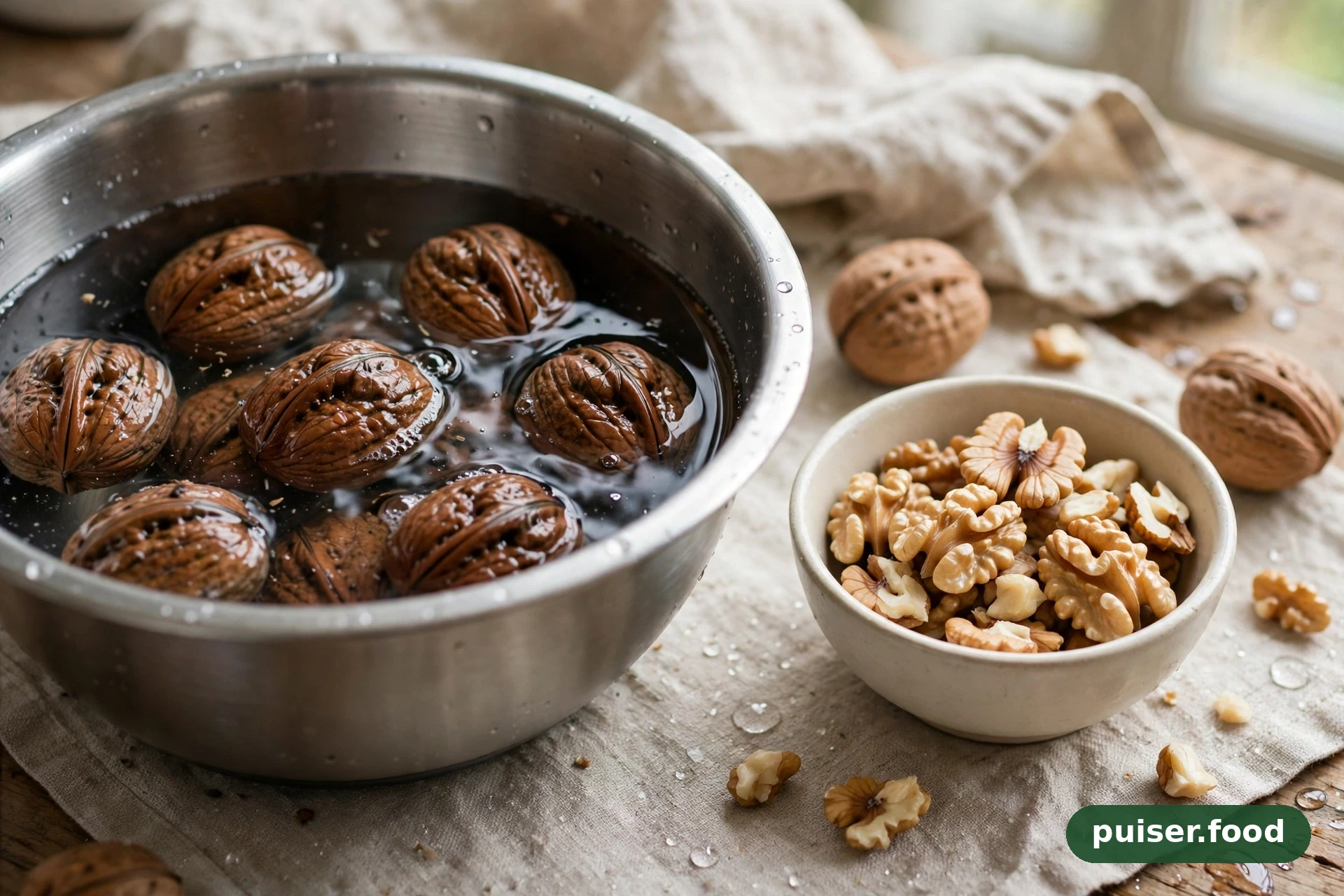
Soaked walnuts are the traditional way to eat akhrot in India, and the question is whether the soak does anything the science can see. The Ayurvedic view is that soaking overnight makes the nut easier to digest, reduces its heating nature, and lets the thin brown skin peel off, which makes the kernel softer and less bitter. The modern view is that soaking does reduce some phytates and tannins, which can block mineral absorption, but the gain is small, and no trial has measured a nutrient gain from soaking walnuts in people.
What can be said honestly is this. Soaking overnight in water and peeling the skin makes walnuts softer, milder and easier to chew, which matters for older people and children, and it may help a little with mineral absorption. Raw walnuts keep the polyphenols of the skin, which soaking and peeling remove, so the raw nut has a small advantage there. Both forms are good, and the choice is mostly taste and teeth, not nutrition, so eat them the way you like them, and do not pay extra for a soaked walnut sold as a health product.
The melatonin and sleep claim belongs here too, because it is often made for walnuts. Walnuts do contain melatonin, the sleep hormone, in small amounts, but the amounts are tiny, and the evidence that eating walnuts improves sleep is weak, from small and short studies. This guide presents the sleep claim as preliminary, not as a remedy, and the nut is not a treatment for poor sleep.
Five Everyday Ways to Use Them
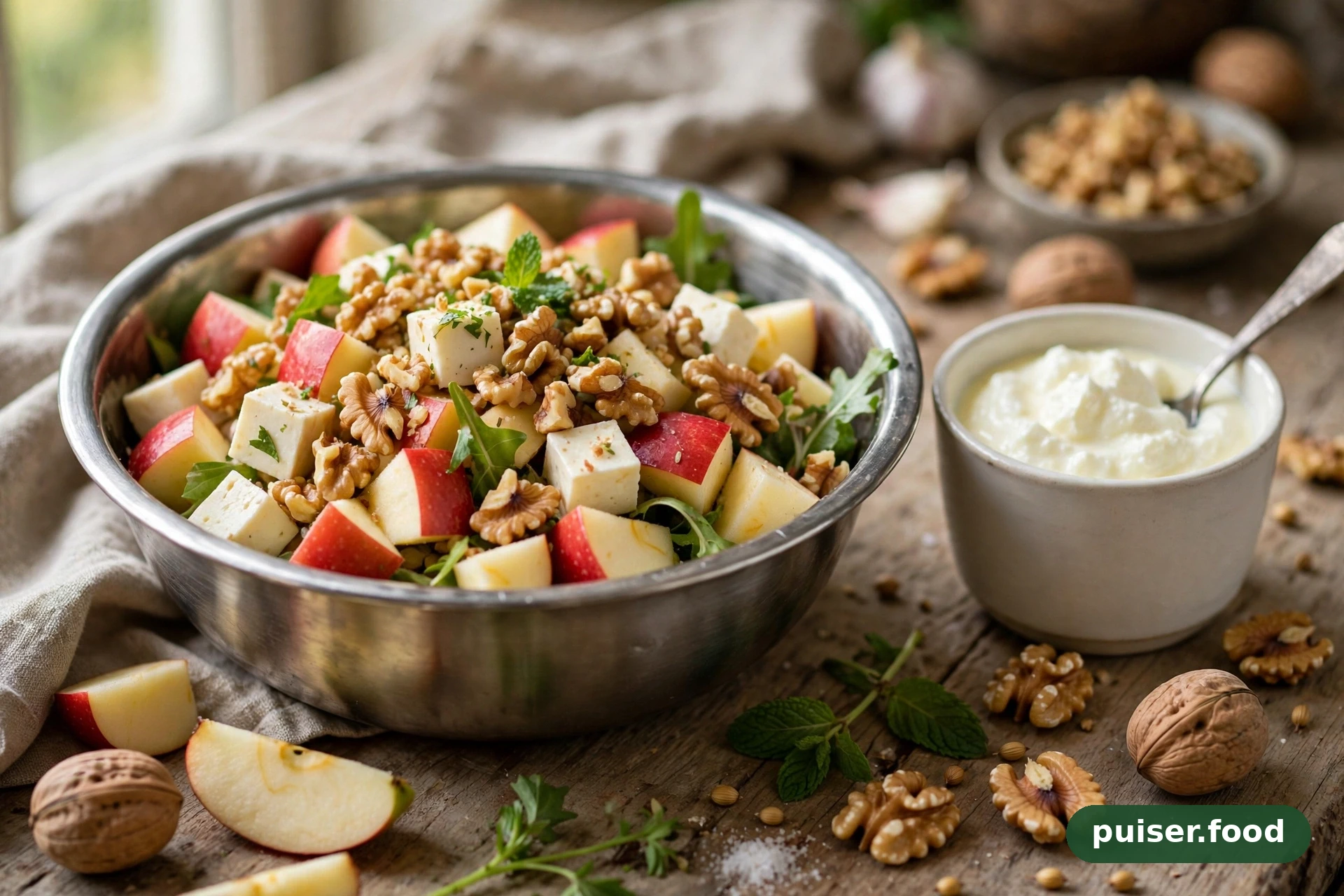
The walnuts benefits show up in five everyday dishes. First, a plain handful with raisins, the evening snack that needs no cooking. Second, akhrot halwa, the winter sweet of ground walnuts, milk and ghee. Third, a salad of chopped walnuts with apple, paneer and greens, the crunch that makes a salad a meal. Fourth, walnut chutney, ground with green chilli, curd and salt, eaten with idli, dosa or rice. Fifth, walnuts chopped into poha, upma, cakes and brownies, the baking nut that holds its texture.
The kernels also work ground into a sabzi gravy, in a walnut and date laddoo, and in a dry fruit mix with almonds and pistachios. Our peanuts benefits guide covers the cheap protein nut of the same batch, the one to reach for when protein per rupee is the question. Our sesame seeds benefits guide covers the calcium seed of the same kitchen, the one to reach for when calcium matters more than omega 3.
Buying and Storing Walnuts
The walnuts benefits survive or die on whether the walnuts are fresh, because the oils in walnuts turn rancid faster than the oils in other nuts. Kashmiri walnuts are lighter in colour, with a thin shell and a mild flavour, and they cost more than California walnuts, which are darker, plumper and cheaper. In shell walnuts cost less per kilo because the shell is part of the weight, and they keep longer, so they are the better buy if you have a nutcracker and the patience. Shelled kernels cost more, and they are the better buy if you eat them daily.
Price is the honest catch. Walnut kernels sell for about 446 to 897 rupees per 500 g in India, and a 500 g pack of kernels at 585 rupees gives about 18 handfuls, so a handful costs about 33 rupees. That is dear beside peanuts at 5 rupees a handful, and it is the reason walnuts are a daily handful for some and a festival nut for others. Buy a small pack at a time and store it well, rather than a large pack that goes stale. Puiser’s own Organic Walnuts are shelled kernels at 585 rupees for 500 g.
Store shelled walnuts in an airtight jar in the fridge once opened, because the oils turn rancid faster than other nuts, and they keep for about three months in the fridge, or about six months in the freezer. Walnuts in the shell keep for about six months in a cool, dark place. If the kernels smell bitter, painty or stale, or taste sharp and unpleasant, throw them away, because rancid walnuts are not worth eating.

5 Expert Tips
These five habits protect the walnuts benefits and keep the jar worth reaching for. First, buy a small pack at a time, and taste a kernel before you buy a kilo. Second, store shelled kernels in the fridge once opened, because the oils turn rancid fast. Third, eat a handful, about 28 g, a day, not a bowlful, because the nuts are dense in fat and calories. Fourth, keep the brown skin on when you can, because the polyphenols live there. Fifth, try a small amount first if you have never eaten walnuts, because tree nut allergy can be serious.
Common Mistakes to Avoid
The most common mistake is eating a bowlful and calling it a health food, when the portion is a handful and the bowlful carries about 650 kcal. The second is storing shelled walnuts on a warm shelf for months, when the oils turn rancid and the kernels taste bitter. The third is paying extra for soaked walnuts sold as a health product, when soaking is a matter of taste and the nutrient gain is unproven. The fourth is calling walnuts a source of fish omega 3, when they contain ALA, the plant kind, and no EPA or DHA. The fifth is quoting the melatonin story as a sleep remedy, when the evidence is weak and the amounts are tiny.
Frequently Asked Questions
What are the main walnuts benefits?
The main walnuts benefits are plant omega 3 ALA, healthy fats and copper. A 100 g portion of walnuts gives about 15.2 g of protein, 65.2 g of fat and 9.1 g of ALA for about 654 kcal. A handful gives about 2.5 g of ALA, which covers the adult daily intake on its own.
How many walnuts should I eat in a day?
About 28 g of walnuts a day, roughly 14 halves or a small handful, is a sensible portion for most adults. That gives about 185 kcal and 2.5 g of ALA. Eat them as a snack, in salads or in baking, rather than by the bowlful, because the nuts are dense in fat and calories.
Are walnuts good for the heart?
Walnuts may help the heart, because a 2018 meta analysis of 26 trials found walnut diets lowered LDL cholesterol by about 5.5 mg per dL, and the WAHA trial found a fall of 4.3 mg per dL over 2 years. The falls are small, and they come from eating walnuts as part of a whole diet.
Do walnuts contain omega 3?
Yes, walnuts are the only common nut rich in plant omega 3 ALA, with about 9.1 g per 100 g and 2.5 g in a handful. But walnuts contain no EPA or DHA, the fish omega 3s, and the body converts only a small share of ALA to EPA and DHA. Walnuts are not a substitute for fish.
Should I soak walnuts before eating?
Soaking walnuts overnight makes them softer, milder and easier to chew, and it may help a little with mineral absorption by reducing phytates. But no trial has measured a nutrient gain from soaking walnuts in people, and soaking and peeling removes the polyphenols of the brown skin. Both forms are good, and the choice is mostly taste.
Are walnuts good for the brain?
Walnuts carry ALA, polyphenols and vitamin B6, nutrients the brain uses, and walnut eaters do better on some memory tests in observational studies. But no trial has shown that eating walnuts makes a person smarter, and the brain shape of the kernel is a coincidence, not evidence. Walnuts are a good food for the brain.
Are walnuts good for weight loss?
Walnuts can help in small amounts, because the fat, fibre and protein keep a small portion satisfying, so a handful works as a snack. They carry about 185 kcal a handful, so the calories add up fast by the bowlful. Weight loss still comes from the whole diet and activity, not from one nut.
Do walnuts help you sleep?
Walnuts contain melatonin in small amounts, but the evidence that eating them improves sleep is weak, from small and short studies. The amounts are tiny, and the claim should be treated as preliminary, not as a remedy. Walnuts are not a treatment for poor sleep, and persistent sleep problems deserve a doctor.
Are Kashmiri walnuts better than California walnuts?
Kashmiri walnuts are lighter in colour, with a thinner shell and a milder flavour, and they cost more than California walnuts, which are darker, plumper and cheaper. The nutrition is close between the two, and the choice is mostly taste and budget. Both are English walnuts, Juglans regia, and both give the same ALA per handful.
How do I store walnuts?
Shelled walnuts keep for about three months in an airtight jar in the fridge, or about six months in the freezer, because their oils turn rancid fast. Walnuts in the shell keep for about six months in a cool, dark place. Throw the kernels away if they smell bitter or painty, or taste sharp and unpleasant.
Conclusion
Walnuts are the small akhrot that asks for nothing but a handful a day, and gives back a salad, a halwa, a chutney and a baking nut, all for about 33 rupees a handful. A handful gives useful ALA, healthy fats and copper, and a heart story with real trials behind it, and the nut keeps well in the fridge for months. The walnuts benefits are real, but they are ordinary benefits, the kind that show up in a better everyday kitchen rather than in a miracle. Buy them fresh, store them cold, eat a handful a day, and keep them on the daily rotation.
Disclaimer: This article is for general information only and is not medical advice. If you have a medical condition, are pregnant or breastfeeding, or take regular medication, talk to your doctor before changing your diet.