Introduction
Dried pears are the honeyed half of the Indian dry fruit shelf, the golden slice that turns up in a steel dabba on a train, in a pear halwa at a family dinner, and in a poached pear dessert. Nashpati dries into something soft, chewy and sweet, and it carries the sugar to match, so the question is whether it earns its place as a health food or only as a sweet. This guide covers the dried pears benefits that matter most, the potassium and fibre numbers told honestly, the vitamin C story, the sulfite and vitamin K cautions, and the five best Indian ways to eat it.
In this article
- The short answer
- What dried pears actually are
- Dried pears in numbers
- 10 dried pears benefits worth knowing
- The vitamin C, sulfite and vitamin K stories, honestly
- Sulfured versus unsulfured, halves versus rings versus diced
- Five everyday ways to use it
- Buying and storing dried pears
- 5 expert tips
- Common mistakes to avoid
- Frequently asked questions
- Conclusion
The Short Answer
The dried pears benefits that matter most are potassium, fibre and a little iron, in a dried fruit that needs no cooking at all. Dried pears give 533 mg of potassium and 7.5 g of fibre per 100 g, with 262 kcal and 62.2 g of sugars in the same weight. A small 30 g serving gives about 79 kcal, 18.7 g of sugars and 2.3 g of fibre, so a small handful a day is the portion. The vitamin C figure looks good on paper and means less than it seems, and the vitamin K figure matters on a blood thinner.
What Dried Pears Actually Are
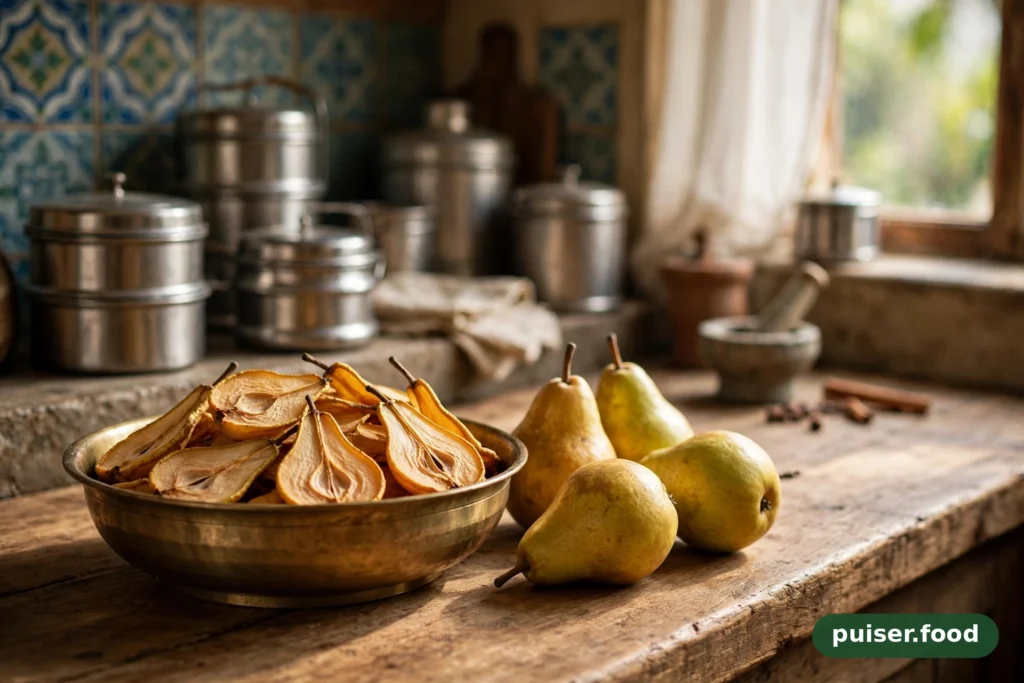
Dried pears are ripe pears, nashpati in Hindi, halved or sliced and dried until they turn golden, soft and chewy. Pears grow in the hills of Kashmir and Himachal Pradesh and reach the plains in winter, when the fruit is sweetest. A fresh pear is mostly water, 84 g in every 100 g, so drying takes the weight down and the sweetness up. What is left is a honeyed half that keeps for months in a jar and travels in a pocket.
That dried pears carry potassium and fibre with their sugar is the first thing to understand, because it is what separates a dried pear half from a sweet, and it is where the dried pears benefits start. A half gives natural sugars with fibre, potassium and iron attached, and the fibre slows digestion a little, so dried pears work as a snack and a garnish at once.
Dried pears are also the fruit of the Indian winter kitchen, in the pear halwa of a family dinner, in the kheer of a festival, in the trail mix of a train journey and in the tiffin of a school day. A poached pear with cinnamon and star anise shows the fruit at its best, soft and spiced and sweet without extra sugar. Our dried apples benefits guide covers the crisp slice that shares the shelf with pears, and our dried peaches benefits guide covers the softest stone fruit of the series. Our dried apricots benefits guide covers the tangy half from the same trail mix.
Dried Pears in Numbers
The numbers behind the dried pears benefits need a straight telling, because this time the USDA record is unusually clean. USDA FoodData Central holds a generic record for dried pears, FDC ID 2709208, “Pear, dried”, and the SR Legacy record, FDC ID 169121, “Pears, dried, sulfured, uncooked”, prints the same figures exactly. The two records agree on every nutrient, so this guide uses one table and cites both, with all figures per 100 g unless a portion is named.
| Nutrient, dried pears (per 100 g) | Amount |
|---|---|
| Energy | 262 kcal |
| Protein | 1.87 g |
| Fat | 0.63 g |
| Carbohydrates | 69.7 g |
| Fibre | 7.5 g |
| Sugars | 62.2 g |
| Water | 26.7 g |
| Sodium | 6 mg |
| Calcium | 34 mg |
| Iron | 2.1 mg |
| Magnesium | 33 mg |
| Phosphorus | 59 mg |
| Potassium | 533 mg |
| Zinc | 0.39 mg |
| Vitamin C | 7.0 mg |
| Vitamin A | 0.0 mcg RAE |
| Vitamin B6 | 0.072 mg |
| Folate | 0.0 mcg |
| Vitamin K | 20.4 mcg |
Two figures in that table do most of the work. Potassium at 533 mg per 100 g is the headline, more than four times the 116 mg in a fresh pear, and fibre at 7.5 g per 100 g is the second. The sugar figure, 62.2 g per 100 g, is the price of both. Iron at 2.1 mg per 100 g is the quiet surprise, and vitamin K at 20.4 mcg per 100 g needs a caution, told in full below.
| Nutrient (per 100 g) | Fresh pear (FDC 169118) | Dried pears (FDC 2709208 / 169121) |
|---|---|---|
| Energy | 57 kcal | 262 kcal |
| Water | 84.0 g | 26.7 g |
| Sugars | 9.75 g | 62.2 g |
| Fibre | 3.1 g | 7.5 g |
| Potassium | 116 mg | 533 mg |
| Vitamin C | 4.3 mg | 7.0 mg |
| Vitamin K | 4.4 mcg | 20.4 mcg |
| Iron | 0.18 mg | 2.1 mg |
| Calcium | 9 mg | 34 mg |
Drying takes out most of the water, from 84 g to 26.7 g per 100 g, and everything left behind reads about four and a half times higher. That is why the sugars jump from 9.75 g to 62.2 g and the potassium from 116 mg to 533 mg. Vitamin C is the exception. If drying lost nothing, it would have risen to about 20 mg. It sits at 7.0 mg instead, so most of it was lost to heat and air.
The portion table below turns the per 100 g figures into handfuls. One cup of dried pear halves weighs 180 g, far more than a serving, and carries 472 kcal and 112 g of sugars. The 30 g handful is the portion this guide uses everywhere.
| Portion of dried pears | Energy | Sugars | Fibre | Potassium |
|---|---|---|---|---|
| 30 g, a small handful | 79 kcal | 18.7 g | 2.3 g | 160 mg |
| 60 g, two handfuls | 157 kcal | 37.3 g | 4.5 g | 320 mg |
| 100 g, a full pack | 262 kcal | 62.2 g | 7.5 g | 533 mg |
| 180 g, one cup of halves | 472 kcal | 112 g | 13.5 g | 959 mg |
The form changes the cooking, not the nutrition. Halves, rings and diced pears from the same plain pack carry the same figures per 100 g. The sulfured kind keeps its gold and the unsulfured kind turns brown, and only a sweetened pack moves the figures, with added sugar pushing the sugars past 62 g. Read the ingredients, not the colour.
| Form | What it is | Sugars per 100 g | Best for |
|---|---|---|---|
| Halves, unsulfured | Pear halves dried with nothing added, brown as they dry | about 62 g | Snacking, trail mix, poaching |
| Halves, sulfured | Halves treated with sulfur dioxide to hold the golden colour | about 62 g | Halwa, kheer, gifting |
| Rings | Pears cored and sliced into rings, dried the same way | about 62 g | Oats, tiffin, garnish |
| Diced | Pears cut small, sold for baking and muesli | about 62 g plain, more if sweetened | Oats, kheer, baking |
| Sweetened | Dried pears with sugar added | higher, check the label | A sweet, not a health snack |
10 Dried Pears Benefits Worth Knowing
Here are the ten dried pears benefits worth knowing, in the order a home cook would care about them. Each one is tied to a number from the tables above or to a caution named in the text, and each one belongs to the plain dried kind, not the sweetened kind.
1. Potassium that actually counts
The first of the dried pears benefits is the potassium. Dried pears give 533 mg per 100 g, more than four times the 116 mg in a fresh pear, and a 30 g serving gives about 160 mg. Potassium helps the body balance fluids and supports healthy blood pressure.
2. Fibre in a sweet
The second of the dried pears benefits is the fibre. Dried pears give 7.5 g of fibre per 100 g, against 3.1 g in a fresh pear, and a 30 g serving gives about 2.3 g. The fibre mixes the soluble pectin pears are known for with the insoluble kind that keeps things moving, so a small handful keeps you full for longer than a sweet of the same size.
3. Vitamin C, kept honest
Raw pears give 4.3 mg of vitamin C per 100 g, and dried pears print 7.0 mg, which looks like a gain until the water is counted. A fresh pear is 84 g of water per 100 g, and drying takes most of it out, so every nutrient left behind reads higher. Vitamin C should have risen to about 20 mg if drying lost nothing. It sits at 7.0 mg instead, so most of it was lost to heat and air. Eat dried pears for potassium and fibre, and eat a fresh fruit for vitamin C.
4. Iron, small but real
Dried pears give 2.1 mg of iron per 100 g, against 0.18 mg in a fresh pear, and a 30 g serving gives about 0.6 mg. That is a small share of the day, and still the quiet surprise of the table, because most dried fruit gives far less. Iron helps the body make red blood cells and carry oxygen.
5. Quick energy that travels
Dried pears are mostly carbohydrate, 69.7 g per 100 g, and a 30 g serving gives about 79 kcal, which is quick energy in a light pack. A cup of dried pear halves weighs 180 g and gives 472 kcal, while a single fresh pear weighs about 178 g and gives 101 kcal. That is why the dried pack suits a train journey, a trek or a school tiffin.
6. A snack with almost no fat
Plain dried pears carry almost no fat, 0.63 g per 100 g, and no cholesterol, because they are a plant food with nothing added. The fat stays low in every plain form, halves, rings or diced, and only the sweetened kind changes the picture, in the sugar, not the fat.
7. Vitamin K in a handful
Dried pears give 20.4 mcg of vitamin K per 100 g, against 4.4 mcg in a fresh pear, and a 30 g serving gives about 6.1 mcg. Vitamin K helps blood clot and supports bone health. The figure is small in one handful and real in a whole pack, which is why the blood thinner story below matters, and one handful a day is steady and easy to count.
8. A snack that keeps for months
Dried pears keep for months in an airtight jar without a fridge, which makes them one of the best fruits for a train journey, a trek or a school tiffin. Fresh pears go soft in days, while the dried halves weigh almost nothing and keep their shape in a bag, and they soften again in a few minutes in warm water.
9. A small handful that satisfies a sweet craving
A 30 g serving gives about 79 kcal and 2.3 g of fibre, and the chew and the honeyed taste satisfy a sweet craving for longer than a biscuit of the same calories. Pears also carry sorbitol, a sugar alcohol the body absorbs slowly, which is one more reason a small serving sits gently.
10. A fruit that cooks well
Dried pears soften in heat and give their sweetness to the dish, which makes them one of the few dried fruits that cooks as well as it snacks. A handful of chopped halves in a halwa, in kheer or in oats adds sweetness without extra sugar, and the halves hold their shape in cooking better than raisins do.
The Vitamin C, Sulfite and Vitamin K Stories, Honestly
The vitamin C story is the part of the dried pears benefits that most often gets told wrong, so it deserves a straight telling, along with the sulfite and vitamin K stories beside it. None of the three is a reason to skip dried pears, only to buy the right pack and eat the right portion.
The vitamin C story
Fresh pears give 4.3 mg of vitamin C per 100 g, and dried pears print 7.0 mg. Read fast, that looks like drying adds vitamin C. It does not. A fresh pear is 84 g of water per 100 g, and dried pears hold only 26.7 g, so drying packs the same fruit into a third of the weight. Every nutrient left behind reads higher, and vitamin C is the one that rose least. If drying lost nothing, it would have risen past 20 mg. It sits at 7.0 mg instead, so most of it was lost to heat and air. Drying concentrates sugars and fibre, not vitamin C. Eat dried pears for potassium, fibre and iron, and eat a fresh pear or an amla for vitamin C.
The sulfite story
The second record in the USDA table is named “Pears, dried, sulfured, uncooked”, and the word sulfured is the whole story. Most dried pears are treated with sulfur dioxide before drying, and the sulfur keeps the halves golden instead of brown. It also keeps the colour bright on the shelf for months. The sulfur is the reason some people get a headache, a flushed face or a tight chest after dried fruit, and people with asthma feel it most. The fix is on the label. A pack that lists sulfur dioxide or sulfites is the sulfured kind, and a pack that lists only pears is unsulfured. Unsulfured halves turn brown in the jar, and the brown changes nothing about the taste. If dried fruit has ever troubled your breathing, buy unsulfured and eat a small piece first.
The vitamin K story
Dried pears give 20.4 mcg of vitamin K per 100 g, and a 30 g handful gives about 6.1 mcg, a small figure on its own. It matters because vitamin K helps blood clot, and blood thinner medicines like warfarin work by holding vitamin K back. WebMD flags this for dried pears. A steady small handful a day is easy for a doctor to plan around, while a whole 250 g pack in one sitting is not. If you take a blood thinner, keep the portion steady and ask your doctor before making dried pears a daily habit.
Sulfured Versus Unsulfured, Halves Versus Rings Versus Diced
The dried pears benefits do not change much between the pear varieties on the shelf, because the fruit is similar, but they change between the ways it is dried. Bartlett and Bosc pears dry into soft golden halves, and the Asian pear, the nashpati of the Indian hills, dries firmer and crisper. Kashmir and Himachal grow the pears that reach most Indian markets in winter. The variety matters less than the label, and the label matters most for sulfites and added sugar.
Sulfured halves stay golden for months, and unsulfured halves turn brown within weeks, and the brown is only colour. Rings dry faster than halves and suit oats and tiffin boxes, because they tear small without a knife. Diced pears are cut for baking and muesli, and they are the form most likely to carry added sugar, so read the ingredients. A pack that lists only pears is the plain kind in every form. A pack that lists sugar is a sweet, and a pack that lists sulfur dioxide is the sulfured kind. Buy the plainest pack, and pick the form that fits the dish.
Five Everyday Ways to Use It
The dried pears benefits show up best in five everyday dishes, each one using a small serving rather than a bowlful, with the dried pears at 30 g or less.
1. Pear halwa with cardamom and pistachio
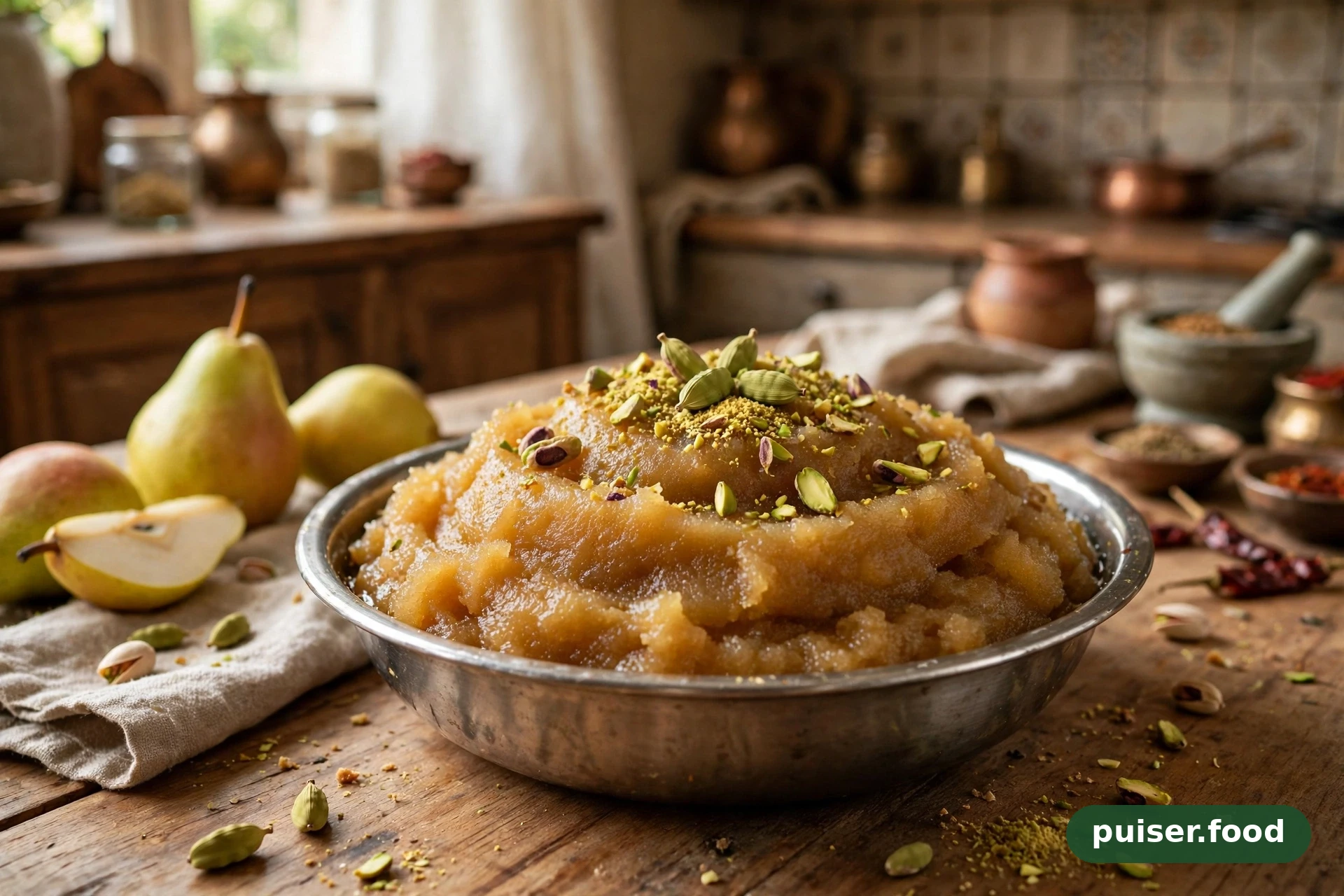
Simmer 30 g of dried pears, chopped small, in a kadhai with a spoon of ghee and a pinch of cardamom until the pieces soften and the ghee leaves the sides, then finish with chopped pistachios. The pears give the halwa its sweetness, so it needs less sugar than a halwa from fresh fruit. Serve warm, in a steel bowl.
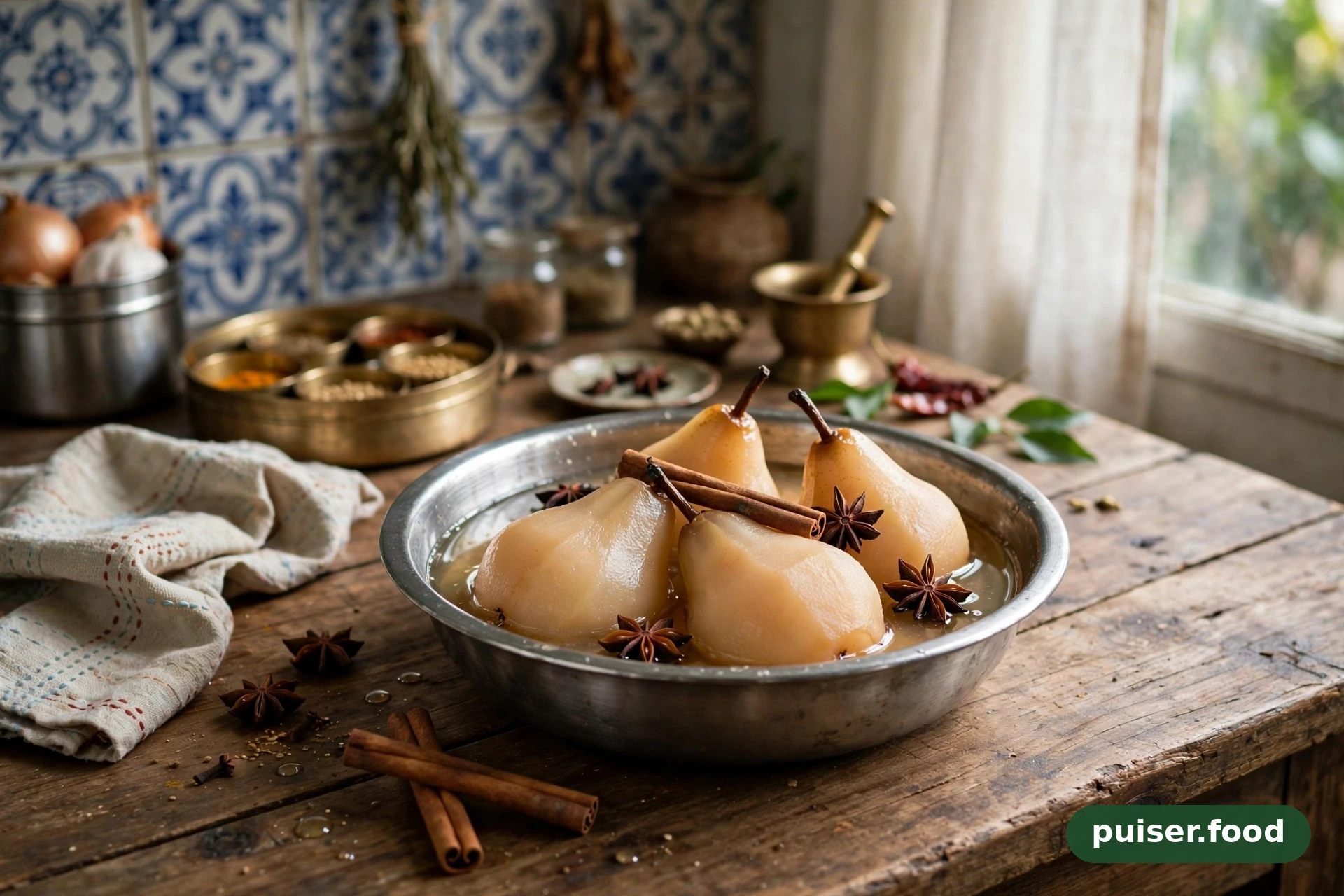
2. Poached pears with cinnamon and star anise
Poach whole dried pear halves in water with a cinnamon stick, two star anise and a spoon of honey for fifteen minutes, until the halves turn soft and the water turns into a light syrup. Serve warm in a steel bowl with the syrup spooned over, or chill the bowl for a summer dessert.
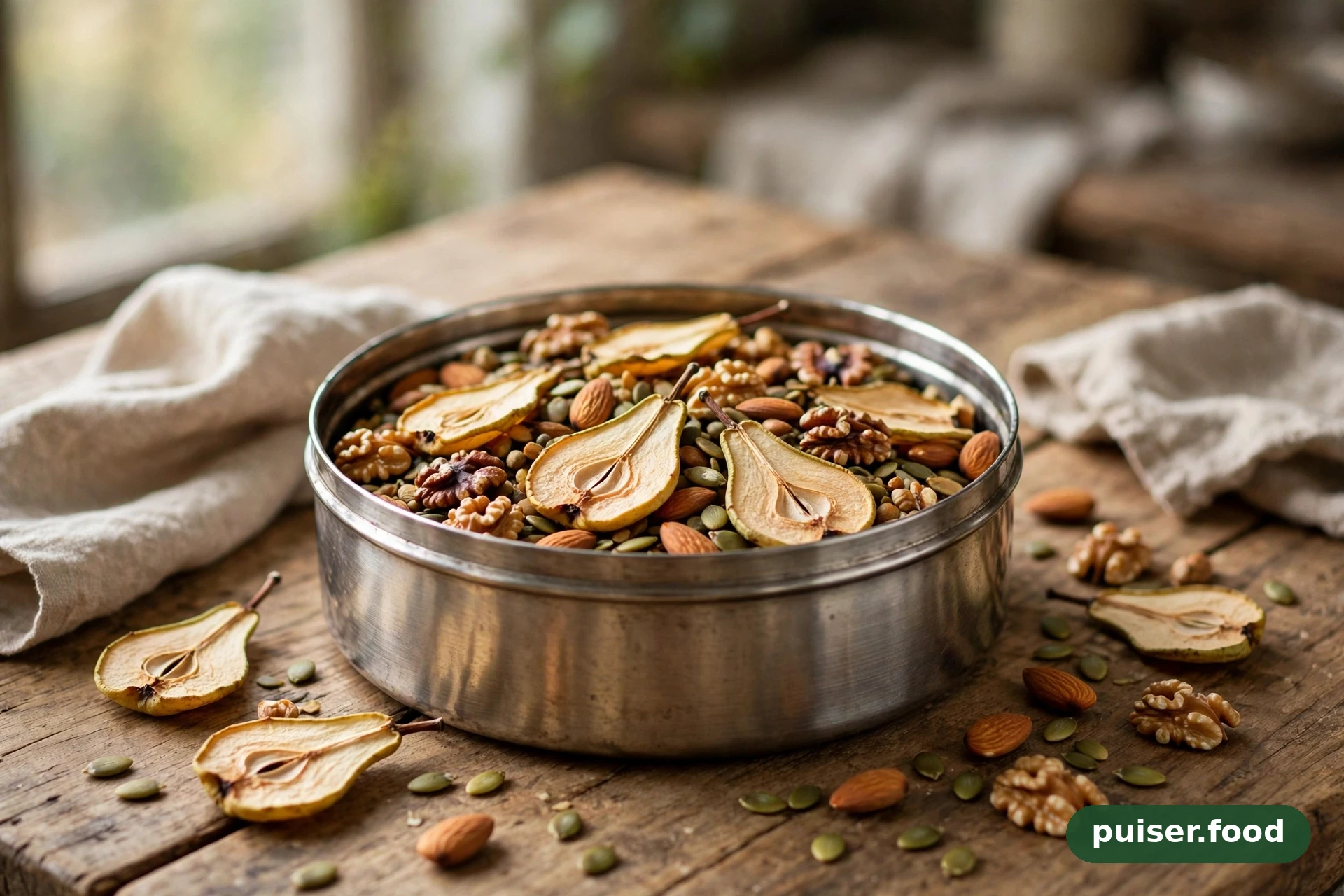
3. Trail mix dabba with almonds and walnuts
Mix 30 g of dried pear halves, torn small, with a handful of almonds and walnuts and a spoon of pumpkin seeds, and the mix travels well in a small dabba for a train journey or a desk. The pears give the chew and the sweetness, the nuts give the crunch. The dabba needs no fridge and keeps for a week.
4. Oats porridge with chopped dried pears
Stir 30 g of dried pears, chopped small, into a bowl of oats cooked in milk, with a pinch of cinnamon and no extra sugar, and the pieces soften in the heat and turn the oats sweet and fragrant. The bowl needs no jaggery or honey, because the pears carry the sweetness.
5. Kheer with dried pears and saffron
Simmer 30 g of dried pears, chopped small, in a pot of kheer with saffron and cardamom for the last ten minutes, and the pieces soften and give their sweetness to the milk, so the kheer needs less sugar than usual. Serve chilled, in small steel bowls.
Buying and Storing Dried Pears
The goodness in dried pears survives or dies on the label, so buy by the label, not by the price alone. The ingredients list should read pears, and a pack that lists sugar is a sweetened pack rather than a dried fruit. Check the sulfites too, because a pack that lists sulfur dioxide is the sulfured kind, and the unsulfured kind is the better buy for anyone with asthma. A plain pack prints about 62 g of sugars per 100 g, and a sweetened pack prints more.
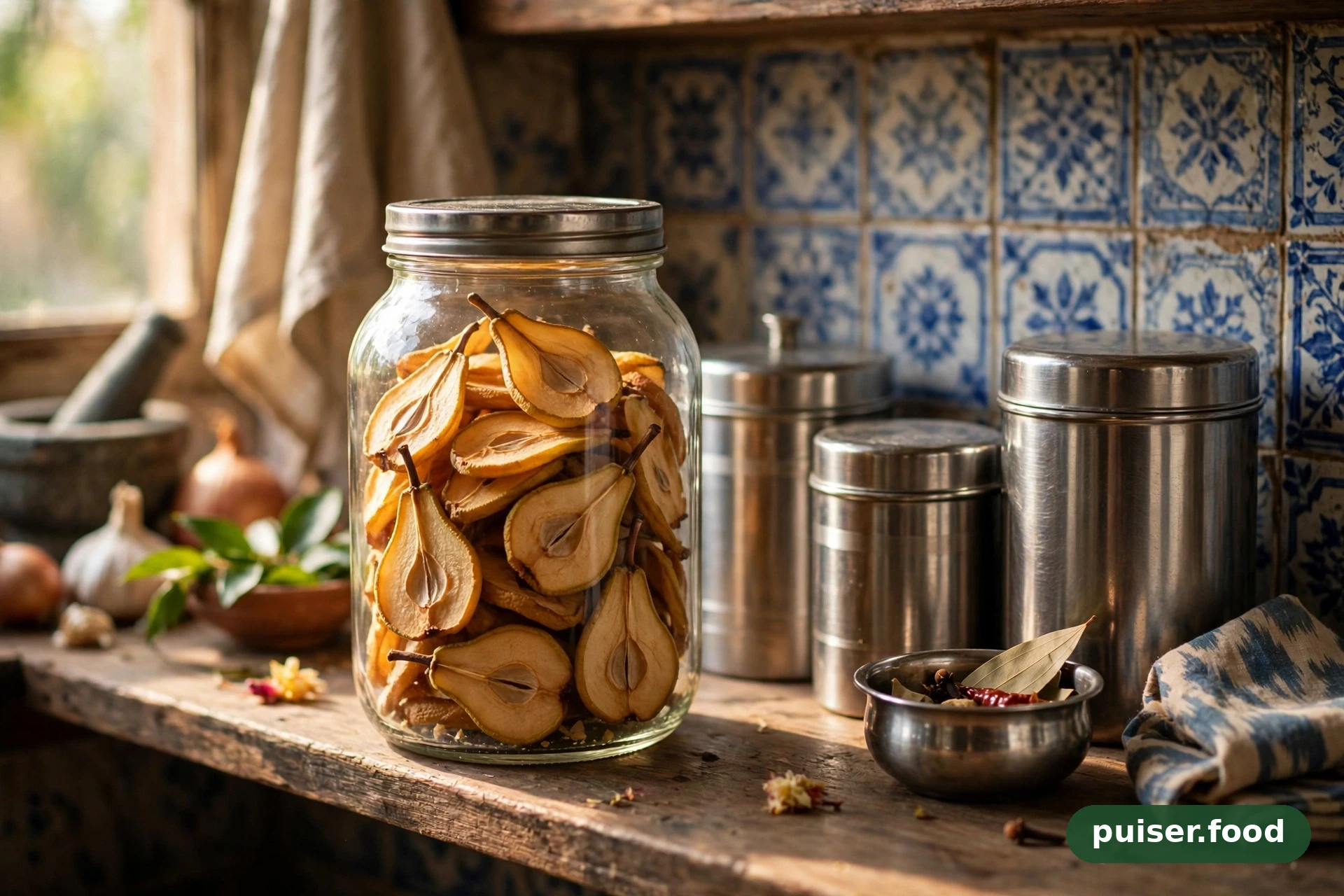
For the snack box, our Organic Dried Peaches is the plain dried kind in the Puiser shop, made for the halwa, the kheer and the trail mix. Store dried pears in an airtight jar in a cool, dark place, where they keep for months. Their sugars attract moisture, so a pack left open in a humid kitchen turns sticky and clumps. Throw the halves away if they smell sour, taste fermented or show mould.
5 Expert Tips
1. Count the handful. Count a small handful, about 30 g, into a small bowl and put the pack away, because a handful eaten from the pack is usually two, and the sugar adds up fast.
2. Soak before cooking. Soak dried pears in warm water for ten minutes before adding them to kheer or oats, so they soften and give their sweetness to the dish.
3. Pair with curd or nuts for protein. Eat dried pears with curd or nuts rather than alone, because the protein and fat slow the sugars down.
4. Buy unsulfured for sensitive eaters. Buy a one-ingredient unsulfured pack for children and for anyone with asthma, because sulfites can trouble sensitive eaters.
5. Keep the portion steady on blood thinners. Keep the handful the same size every day if you take a blood thinner, and ask your doctor before making dried pears a daily habit.
Common Mistakes to Avoid
Eating by the packful. The commonest mistake is treating dried pears like fresh pears and eating a whole 100 g pack, about 62 g of sugars. A small handful is the portion.
Buying the sweetened kind by mistake. The sweetened kind lists sugar in its ingredients and tastes like a sweet, and the plain kind lists pears alone. Check the ingredients before buying.
Expecting a vitamin C food. Dried pears print 7.0 mg of vitamin C per 100 g, and most of the fresh fruit’s vitamin C was lost in drying. Eat them for potassium and fibre, and eat a fresh fruit for vitamin C.
Storing in the open pack. A pack left open in a humid kitchen turns sticky, clumps and can ferment. Move the halves to an airtight jar on the day the pack is opened.
Ignoring the vitamin K figure. A whole 250 g pack carries about 51 mcg of vitamin K, which matters if you take a blood thinner. Keep the portion steady and ask your doctor.
Frequently Asked Questions
What are the main benefits of dried pears?
Dried pears benefits centre on potassium, fibre and iron, with dried pears giving 533 mg of potassium, 7.5 g of fibre and 2.1 mg of iron per 100 g. The benefits belong to the plain dried kind, not the sweetened kind, and the portion is a small 30 g handful a day.
Are dried pears healthy?
Dried pears are healthy in a small portion, because they are one ingredient with potassium, fibre and almost no fat, and no added sugar in the plain kind. The catch is the sugar. Dried pears print 62.2 g of sugars per 100 g, so a 30 g handful is a fruit serving, and a whole pack is a sweet.
Are dried pears good for diabetes?
Dried pears are sugar dense, with 62.2 g of sugars per 100 g, so a small serving affects blood sugar and counts as the sweet of the meal. People with diabetes can eat a 30 g handful with curd or nuts, which slows the sugars down. Ask your own doctor about portions before making them a daily habit.
What is the difference between sulfured and unsulfured dried pears?
Sulfured dried pears are treated with sulfur dioxide before drying, which keeps the halves golden for months. Unsulfured pears dry brown, and the colour is the only difference, because the nutrition is the same. People with asthma or a sulfite sensitivity should buy unsulfured, and check the ingredients list before buying.
How many dried pears can I eat in a day?
About 30 g a day, a small handful, is the daily portion this guide uses, with about 79 kcal, 18.7 g of sugars and 2.3 g of fibre. Eating more is fine on some days, but a whole 100 g pack carries 62.2 g of sugars, so count the handful rather than eating from the pack.
Are dried pears good for weight loss?
A 30 g handful, about 79 kcal, suits a weight loss diet better than a biscuit of the same calories, because the fibre makes it filling. The catch is the portion. Dried pears are sugar dense and the calories add up fast from the pack, so they work only when the handful is counted.
Do dried pears help with constipation?
Dried pears give 7.5 g of fibre per 100 g, and a 30 g serving gives about 2.3 g, so they help a fibre free diet a little. They are not a laxative, and a small serving will not fix a diet with no fibre at all. Drink water with the halves, because fibre works best with water.
Are dried pears good for pregnancy?
Dried pears give potassium, fibre and iron in useful amounts, and a small serving fits a healthy pregnancy diet. The caution is the sweetened kind, which carries added sugar, and packs with sulfites. Ask your own doctor about portions, and buy the plain one-ingredient kind.
Can children eat dried pears?
Children can eat dried pears in small servings, and the sweet chew makes them an easy tiffin fruit. Buy the plain unsweetened kind for children, and cut the halves small for young children, because the chewy pieces can be a choking risk. A small handful in a tiffin box is the right portion.
Do dried pears have side effects?
The main side effects are sugar, sulfites and vitamin K. Dried pears carry 62.2 g of sugars per 100 g, and sulfured packs carry sulfur dioxide, which can trouble people with asthma. The vitamin K, 20.4 mcg per 100 g, matters for blood thinner users, so ask your doctor about portions.
Conclusion
Dried pears earn their place in the snack box when the pack is plain and the portion is a small handful. The dried pears benefits, potassium and fibre and a little iron, make them a better sweet than a biscuit, and the honeyed halves travel well, keep for months and turn a halwa, a kheer or an oats bowl into a small treat. The fix is a label check, because the plainest pack is the best buy. Try a small handful in halwa, in kheer or over curd.
Disclaimer: This article is for general information only and is not medical advice. If you have diabetes, asthma, a sulfite sensitivity or take a blood thinner, talk to your doctor before making dried pears a daily habit.