Introduction
Brazil nuts are the quiet heavyweight of the Indian dry fruit shelf, the big cream kernel that looks like a nut, tastes like butter and carries more selenium than any other food on the shelf. One nut a day covers the selenium most adults need, and a second nut is already more than enough, so the portion matters more than the price. This guide covers the brazil nuts benefits that matter most, the selenium numbers told honestly, the soil story that makes every nut different, the selenosis risk of eating too many, and five Indian ways to eat them.
In this article
- The short answer
- What Brazil nuts actually are
- Brazil nuts in numbers
- 10 Brazil nuts benefits worth knowing
- The selenium, selenosis and allergy stories, honestly
- Whole versus halves, raw versus roasted, shelled versus in shell
- Five everyday ways to use it
- Buying and storing Brazil nuts
- 5 expert tips
- Common mistakes to avoid
- Frequently asked questions
- Conclusion
The Short Answer
The brazil nuts benefits that matter most come down to selenium, magnesium and healthy fats, in a nut where one piece a day is the portion. Brazil nuts give 1,917 mcg of selenium per 100 g, and a single 5 g kernel carries about 96 mcg on the USDA average, against a daily need of 55 mcg. One nut covers the day, and two nuts are plenty. Four or five nuts can push selenium past the 400 mcg daily upper limit, so more is not better here. It also gives 14.3 g of protein and 376 mg of magnesium per 100 g.
What Brazil Nuts Actually Are
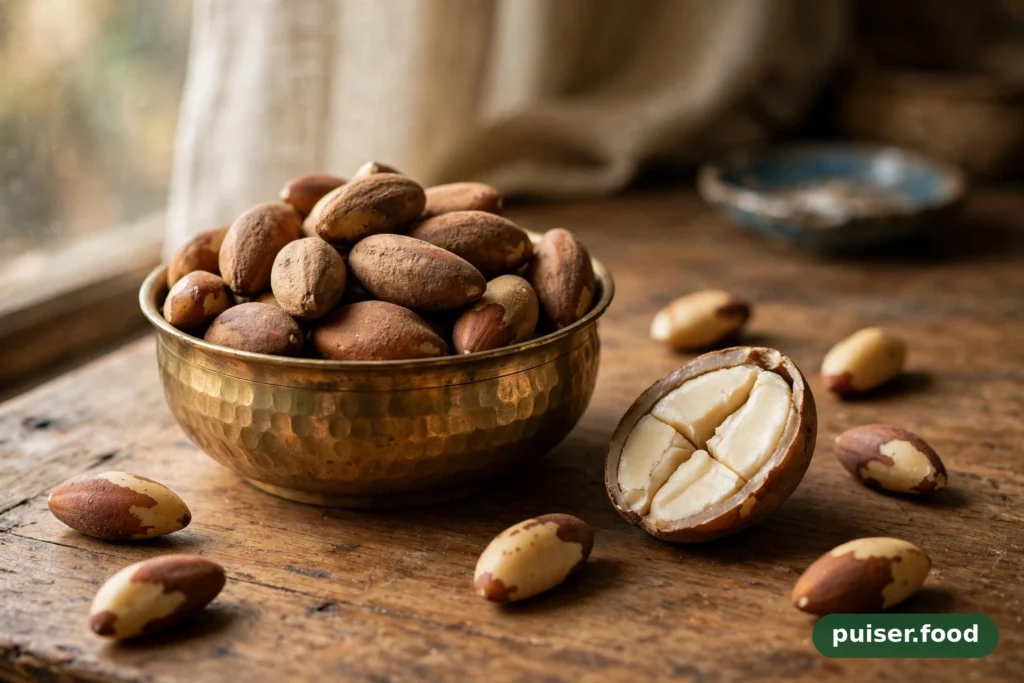
Brazil nuts are the seeds of the Bertholletia excelsa tree, a giant of the Amazon rainforest that grows to 50 metres and lives for centuries. The seeds grow inside a hard woody pod the size of a coconut, and each pod holds 12 to 24 triangular kernels packed like orange segments. The kernels are sold shelled in India, cream coloured and smooth, with a rich buttery taste. They are called nuts, but they are seeds, and a tree nut allergy still applies to them.
That a single Brazil nut carries a day of selenium is the first thing to understand, because it is what sets this nut apart from every other nut on the shelf, and it is where the brazil nuts benefits begin. A walnut gives 4.9 mcg of selenium per 100 g and an almond gives 2.5 mcg, while a Brazil nut gives 1,917 mcg, so the gap is not small, it is several hundred times. The selenium sits in the kernel with magnesium, copper and zinc, and the fat is mostly unsaturated, which is why one nut a day is a habit rather than a snack.
Brazil nuts reach Indian kitchens in the trail mix dabba, in the kheer of a festival, chopped over laddoos at Diwali and ground into nut butter for toast. They are newer on the Indian shelf than almonds and cashews, and they cost more per kilo, which suits the one nut portion. Our walnuts benefits guide covers the omega-3 nut that shares the trail mix, our almonds benefits guide covers the everyday Indian nut, our cashews benefits guide covers the creamy nut of kheer and curries, and our pistachios benefits guide covers the green nut of desserts and garnish.
Brazil Nuts in Numbers
The numbers behind the brazil nuts benefits need a straight telling, because this time the USDA record is strong and the catch is not the record but the range behind it. USDA FoodData Central holds the SR Legacy record for Brazil nuts, FDC ID 170569, “Nuts, brazilnuts, dried, unblanched”, and the FNDDS record, FDC ID 2707492, agrees on the selenium figure of 1,920 mcg per 100 g. All values are per 100 g unless a portion is named.
| Nutrient, Brazil nuts (per 100 g) | Amount |
|---|---|
| Energy | 659 kcal |
| Protein | 14.3 g |
| Fat | 67.1 g |
| Saturated fat | 16.1 g |
| Unsaturated fat (by difference) | about 51 g |
| Carbohydrates | 11.7 g |
| Fibre | 7.5 g |
| Magnesium | 376 mg |
| Copper | 1.74 mg |
| Zinc | 4.06 mg |
| Selenium | 1,917 mcg |
Two figures in that table do most of the work. Selenium at 1,917 mcg per 100 g is the headline, more than thirty times the 55 mcg an adult needs in a day, and magnesium at 376 mg per 100 g is the second. The fat figure, 67.1 g per 100 g, is the price of both, and most of it is unsaturated, with only 16.1 g saturated.
| Portion of Brazil nuts | Energy | Protein | Fat | Fibre | Magnesium | Selenium (average) |
|---|---|---|---|---|---|---|
| 1 nut, about 5 g | 33 kcal | 0.7 g | 3.4 g | 0.4 g | 19 mg | about 96 mcg |
| 2 nuts, about 10 g | 66 kcal | 1.4 g | 6.7 g | 0.8 g | 38 mg | about 192 mcg |
| 1 oz, 6 nuts, 28.35 g | 187 kcal | 4.1 g | 19.0 g | 2.1 g | 107 mg | 544 mcg |
| 100 g, about 20 nuts | 659 kcal | 14.3 g | 67.1 g | 7.5 g | 376 mg | 1,917 mcg |
The portion table is the whole point of this article. One nut gives about 33 kcal and covers the selenium day, and six nuts, a single ounce, give 187 kcal and 544 mcg of selenium, already past the 400 mcg upper limit. The portion is one or two nuts, not a handful.
| Nut (per 100 g) | Selenium | Selenium in a 30 g serving |
|---|---|---|
| Brazil nuts | 1,917 mcg | about 575 mcg |
| Cashews, raw | 19.9 mcg | about 6.0 mcg |
| Pistachios, raw | 7.0 mcg | about 2.1 mcg |
| Walnuts | 4.9 mcg | about 1.5 mcg |
| Almonds, raw | 2.5 mcg | about 0.8 mcg |
The comparison table shows the gap plainly. A 30 g serving of Brazil nuts carries about 575 mcg of selenium, while the same weight of cashews carries about 6 mcg and almonds less than 1 mcg. No other nut comes close, so Brazil nuts are counted in single nuts while every other nut is counted in handfuls.
| USDA sample (15 samples tested) | Selenium per 100 g | Selenium per nut (about 5 g) |
|---|---|---|
| Lowest sample | 136 mcg | about 7 mcg |
| Average | 1,917 mcg | about 96 mcg |
| Highest sample | 2,740 mcg | about 137 mcg |
The range table is the honest part. The USDA tested 15 samples of Brazil nuts and found selenium from 136 to 2,740 mcg per 100 g, which works out to about 7 to 137 mcg in a single nut. The soil where the tree grew decides the figure. No pack and no brand can print a per nut figure and mean it, so the one nut portion is a habit built on an average, not a guarantee.
10 Brazil Nuts Benefits Worth Knowing
Here are the ten benefits worth knowing, in the order a home cook would care about them. Each one is tied to a number from the tables above, and each one belongs to the plain raw nut, not to a salted or candied pack.
1. One nut covers your selenium for the day
The first of the brazil nuts benefits is the selenium itself. One nut carries about 96 mcg on the USDA average, against a daily need of 55 mcg, so a single nut covers the day with room to spare. Selenium helps the body make antioxidant enzymes that protect cells from damage, and it supports normal thyroid function.
2. Thyroid support in a single bite
Selenium is part of the enzymes that turn thyroid hormone into its active form, so the thyroid depends on a steady supply. One Brazil nut a day gives that supply, simpler and cheaper than a supplement. People with a thyroid condition should still follow their doctor, because a nut is food, not treatment, and too much selenium troubles the thyroid rather than helping it.
3. Heart-friendly fats
The third of the brazil nuts benefits is the fat profile. Most of the 67.1 g of fat per 100 g is unsaturated, with only 16.1 g saturated, and unsaturated fats in place of saturated fats support heart health as part of a balanced diet. Magnesium at 376 mg per 100 g helps too, and a one nut portion keeps the calories at about 33.
4. Magnesium in a small handful
Magnesium is the quiet second mineral in this nut. Brazil nuts give 376 mg per 100 g, and a single ounce gives about 107 mg, which is a useful share of the day. Magnesium helps muscles relax, supports normal blood pressure and plays a part in sleep, and Indian diets often run short of it. One or two nuts a day will not fix a low magnesium diet, but they add a real amount in a very small portion.
5. Copper and zinc for immunity
Copper at 1.74 mg and zinc at 4.06 mg per 100 g give this nut a small but real role in immunity. Copper helps the body make red blood cells and use iron, and zinc supports the immune system and wound healing. A one ounce serving gives about 0.5 mg of copper and 1.2 mg of zinc, though six nuts is already too much selenium, so the one nut portion is still the rule.
6. Protein that keeps you full
Protein at 14.3 g per 100 g is high for a nut, and it is one reason a single Brazil nut feels more filling than its size suggests. A nut chopped into oats or ground into nut butter adds protein to a breakfast that is mostly carbohydrate. The portion stays small, so the protein is a bonus, not the reason to eat them.
7. Antioxidant cover from selenium
Selenium is the mineral behind the body’s own antioxidant enzymes, the glutathione peroxidases, which mop up the free radicals that damage cells. A single nut a day keeps those enzymes supplied, and that is the mechanism behind most of the long term claims made for Brazil nuts. Take the antioxidant story as a good reason to eat one nut, not as a promise about disease.
8. Brain food fats
The brain runs on fat, and the unsaturated fats in Brazil nuts, with magnesium and selenium beside them, make one nut a sensible part of a brain friendly diet. Walnuts get more attention for this, and they deserve it, but Brazil nuts bring the same kind of fat with far more selenium. The evidence is general, so treat it as one good food among many, not as a brain tonic.
9. Bones: magnesium, copper and zinc
Magnesium, copper and zinc all play a part in bone health, and Brazil nuts carry all three in useful amounts. Magnesium helps the body use calcium, copper helps build the collagen that holds bone together, and zinc supports bone formation. A nut a day adds a little of each, and the calcium still has to come from milk, curd or greens.
10. Skin and hair, in the right dose
Selenium and zinc both support skin and hair, and a single nut a day gives enough of each to matter. The caution runs the other way too, because too much selenium is one of the few things that makes hair and nails brittle, and that is the first sign of selenosis. One or two nuts help, a handful a day for weeks can hurt, and the dose is the difference between the two.
The Selenium, Selenosis and Allergy Stories, Honestly
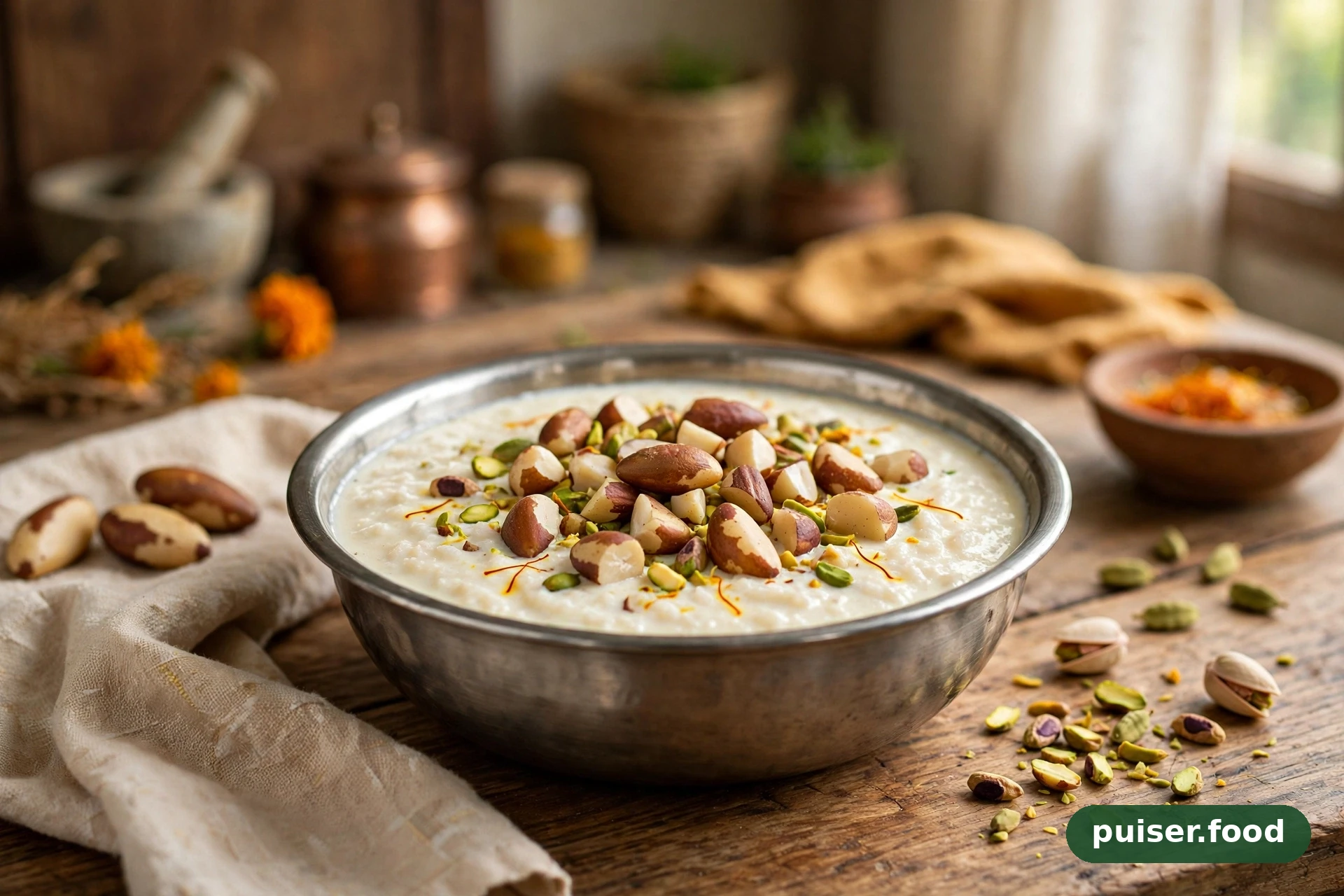
The selenium story is the part of the brazil nuts benefits that most often gets told wrong, so it deserves a straight telling, along with the selenosis risk, the seed story and the allergy caution beside it. None of the four is a reason to skip Brazil nuts, only to count the nuts.
The soil story
Brazil nut trees grow wild in the Amazon, and their roots reach deep into soil that holds very different amounts of selenium from one place to another. The USDA tested 15 samples and found selenium from 136 to 2,740 mcg per 100 g, a twenty fold gap, which works out to about 7 to 137 mcg in a single nut. A nut from one tree can carry twenty times the selenium of a nut from another, and nothing on the outside tells them apart. That is why no brand can print a per nut selenium figure and mean it. The average is about 96 mcg a nut, and the average is a guide, not a promise.
The selenosis story
Selenium is one of the few nutrients where the gap between enough and too much is small. An adult needs 55 mcg a day, and the tolerable upper limit is 400 mcg a day, which is about four average nuts. Eat a handful a day for weeks and the signs show up slowly, brittle hair and nails, a metallic taste, stomach upset, tiredness and dizziness. The condition is called selenosis, and it clears when the extra selenium stops. The fix is simple, one or two nuts a day and no selenium supplement on the same day, and children need even less, so keep the nuts out of easy reach.
Seeds, not nuts, and the allergy caution
Brazil nuts are seeds, not true nuts. They grow inside a woody pod on the Bertholletia excelsa tree, and the kernel is the seed of that tree. The name does not change the allergy advice, because a tree nut allergy still applies, and people allergic to walnuts or cashews should treat Brazil nuts with the same care. The allergy can be severe, so anyone with a nut allergy should ask their doctor before trying one, and a first taste should be a small piece, not a whole nut. Roasting does not remove the allergen.
Whole Versus Halves, Raw Versus Roasted, Shelled Versus In Shell
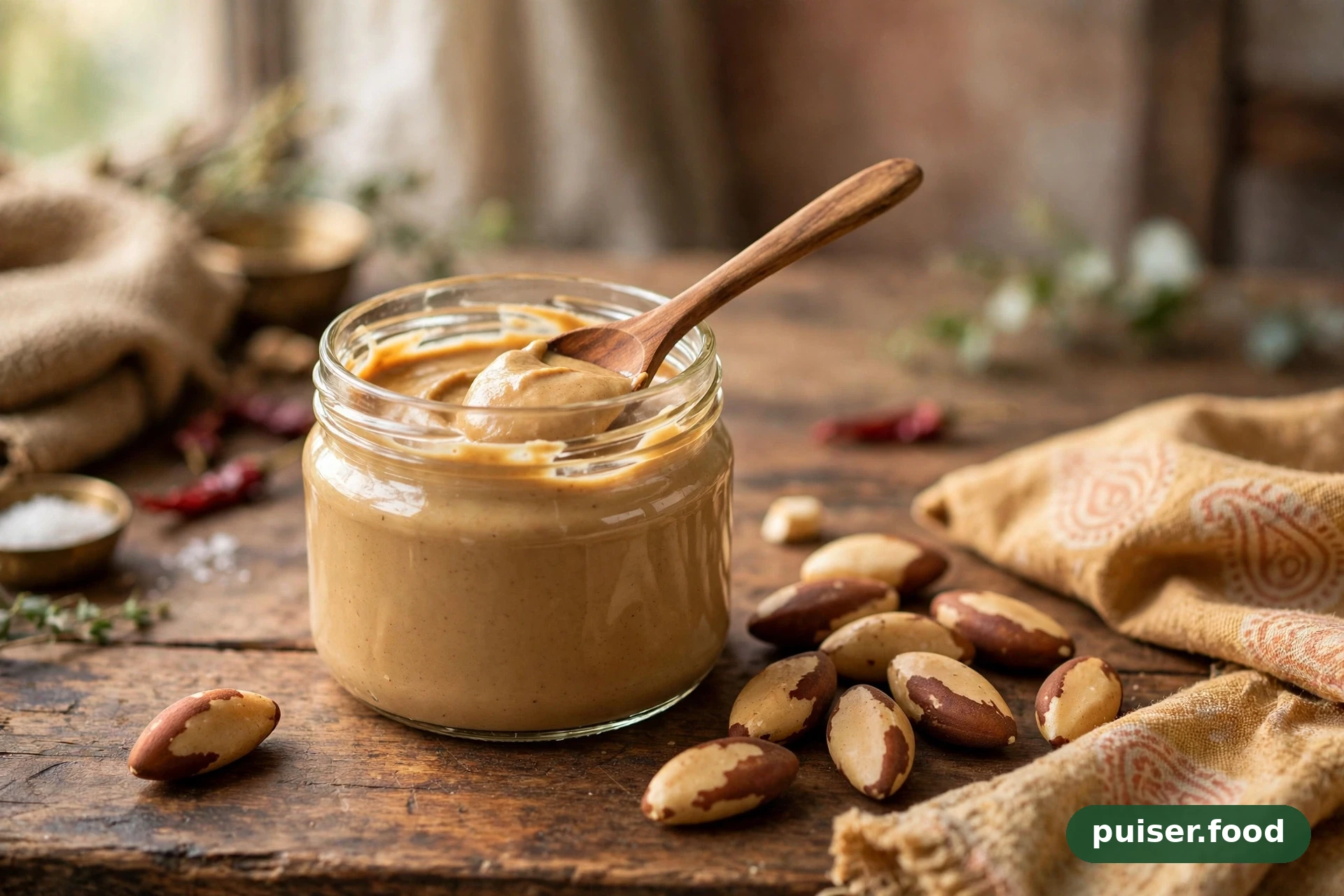
The brazil nuts benefits do not change much between the packs on the shelf, because the kernel is the same, but they change between the ways it is sold. Whole kernels keep longest, halves and pieces are cheaper and suit cooking, raw nuts keep the full nutrient profile, and roasted nuts taste richer and crunchier. Shelled nuts are the ones most Indian shops sell, and in shell nuts keep longer but need a cracker.
Raw is the better buy, because roasting adds nothing and can damage the delicate fats if the heat is high. Salted and honey coated packs are sweets, not health foods, and they add sodium or sugar to a nut that needs neither. A pack that lists only Brazil nuts is the plain kind in every form. A pack that lists salt, sugar or oil is a snack, and a stale or bitter pack has gone rancid and belongs in the bin.
Five Everyday Ways to Use It
The brazil nuts benefits show up best in five everyday dishes, each one using one or two nuts, chopped small so one nut flavours the whole dish.
1. Trail mix dabba with almonds and walnuts
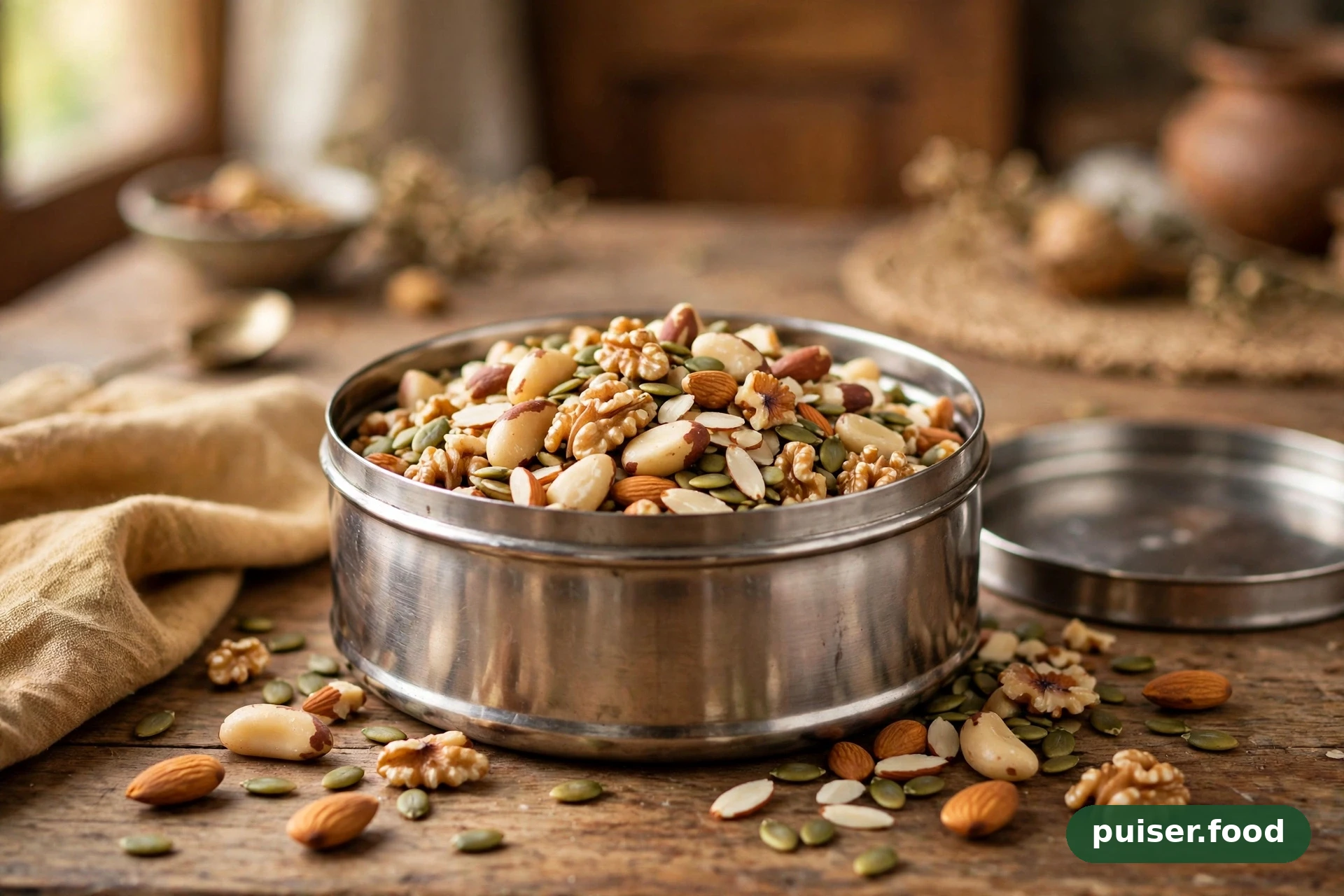
Mix one chopped Brazil nut with a handful of almonds and walnuts and a spoon of pumpkin seeds, and the mix travels well in a small dabba for a train journey or a desk. The Brazil nut gives the chew, the other nuts give the crunch. The dabba needs no fridge and keeps for a week.
2. Kheer topping with saffron and pistachio
Simmer a pot of kheer with saffron and cardamom, and finish it with one or two Brazil nuts chopped fine and scattered over the top, with pistachios beside them. The nuts stay crunchy against the soft rice. Serve chilled, in small steel bowls.
3. Brazil nut butter for toast and chapati
Grind shelled Brazil nuts in a mixer with a little oil until the paste turns smooth and glossy, then store it in a glass jar in the fridge. A spoon on toast or a chapati carries the selenium of a nut with the protein of the spread. The butter keeps for two weeks in the fridge, and a thin layer of oil on top is normal.
4. Oats topping with cinnamon and raisins
Stir a bowl of oats cooked in milk with a pinch of cinnamon, and finish it with one Brazil nut chopped fine scattered over the top, with a few raisins beside it. The nut gives the bowl crunch and richness, and the oats need no extra sugar. It takes no longer than plain oats.
5. Chopped into besan or atta laddoos
Chop one or two Brazil nuts fine and fold them into a batch of besan or atta laddoos with the other dry fruits, so each laddoo carries a little of the nut. The Brazil nut adds a buttery note against almonds and cashews, and the laddoos keep for two weeks in an airtight dabba. One laddoo a day is the portion, not three.
Buying and Storing Brazil Nuts
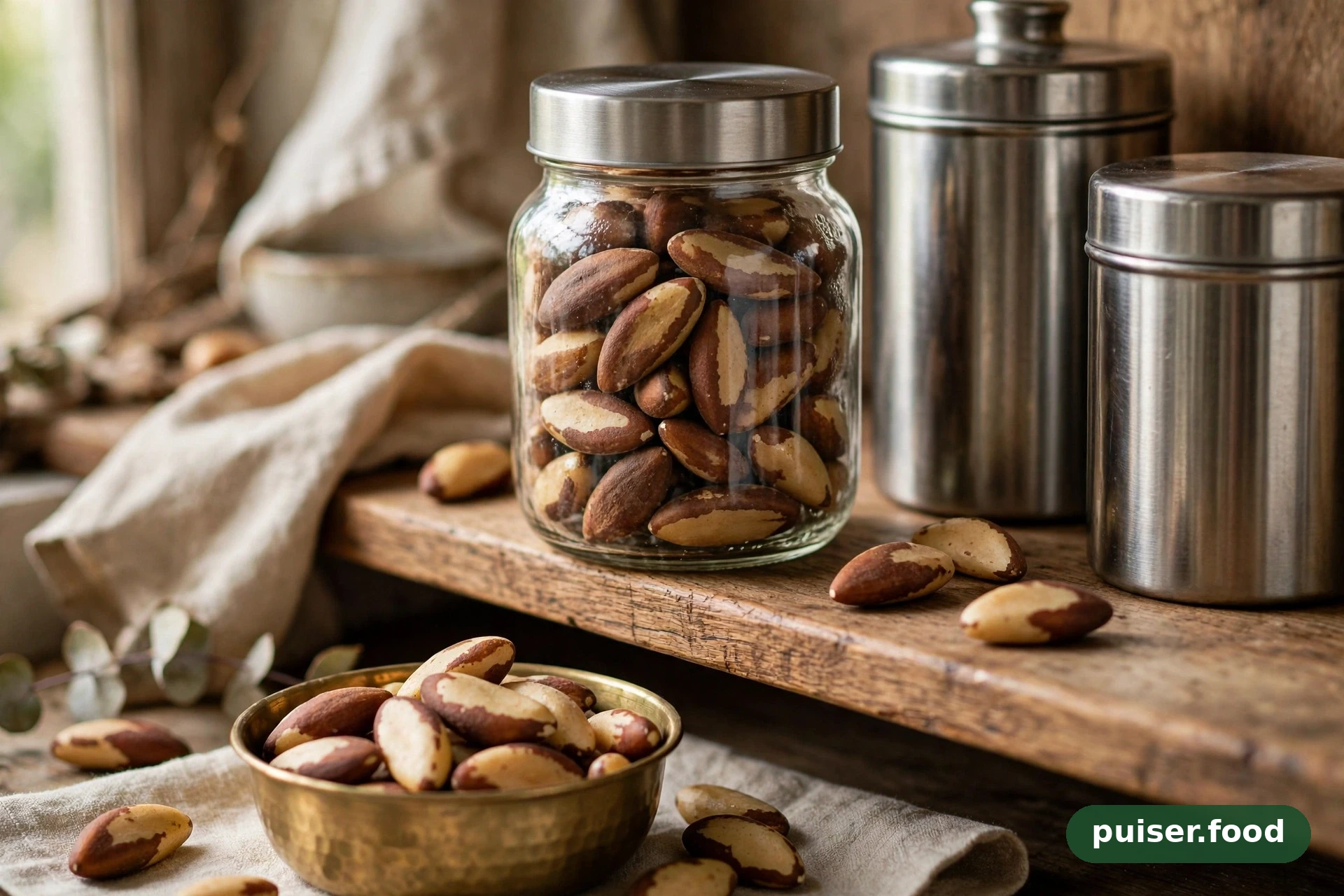
The brazil nuts benefits in the jar survive or die on freshness, so buy by the smell and the date, not by the price alone. The kernels should be cream coloured and smell faintly sweet, and a bitter taste or a stale smell means the fats have gone rancid. Buy small packs from a shop with fast turnover, because the high fat content turns quickly in Indian heat. For the snack box, our Organic Walnuts are the plain shelled kind in the Puiser shop, made for the trail mix, the kheer and the laddoo.
Store Brazil nuts in an airtight jar in the fridge, where they keep for months, or in the freezer for longer. A jar on a sunny shelf goes rancid in weeks, and the nuts pick up smells from nearby spices, so keep the jar closed and away from the masala dabba. Throw the nuts away if they taste bitter, smell stale or show mould.
5 Expert Tips
1. Count the nuts, not the handful. Count one or two nuts into a small bowl and put the pack away, because a handful from the pack is usually six, and six nuts already pass the selenium upper limit.
2. Chop, do not snack whole. Chop the nut fine and scatter it over kheer, oats or curd, so one nut flavours a whole bowl instead of disappearing in a single bite.
3. Skip the supplement on nut days. Do not take a selenium supplement on a day you eat Brazil nuts, because the nut already covers the day.
4. Buy small and keep them cold. Buy a small pack and store it in the fridge in an airtight jar, because the high fat content turns rancid fast in a warm kitchen.
5. Keep them away from children. Keep the jar out of children’s reach, because a child needs far less selenium than an adult and a handful is too much.
Common Mistakes to Avoid
Eating a handful a day. The commonest mistake is treating Brazil nuts like almonds and eating a handful a day, about six nuts and 544 mcg of selenium, past the 400 mcg upper limit.
Trusting a per nut selenium claim. No pack can promise a fixed selenium figure per nut, because the USDA found a twenty fold range between samples. Buy the nut, not the claim.
Eating them stale. Stale Brazil nuts taste bitter and carry rancid fats, and a pack left open in a warm kitchen turns in weeks. Smell the nuts before eating, and store them in the fridge.
Eating them with a selenium supplement. A selenium supplement plus two Brazil nuts a day can pass the upper limit without anyone noticing. Pick one source, not both.
Giving a handful to a child. A child needs far less selenium than an adult, and a handful can pass a child’s limit several times over. One nut, chopped small, is plenty, and ask your doctor first.
Frequently Asked Questions
What are the main benefits of Brazil nuts?
Brazil nuts benefits centre on selenium, magnesium and healthy fats, with Brazil nuts giving 1,917 mcg of selenium, 376 mg of magnesium and 14.3 g of protein per 100 g. The benefits belong to the plain raw nut, and the portion is one or two nuts a day, not a handful.
How many Brazil nuts can I eat in a day?
One or two Brazil nuts a day is the portion, with one nut carrying about 96 mcg of selenium on the USDA average, against a daily need of 55 mcg. Four or five nuts can pass the 400 mcg daily upper limit, so count the nuts rather than eating from the pack.
Are Brazil nuts good for thyroid?
Brazil nuts support normal thyroid function because selenium is part of the enzymes that activate thyroid hormone, and one nut a day gives a steady supply. They are food, not treatment, and people with a thyroid condition should follow their doctor, since too much selenium troubles the thyroid.
Can Brazil nuts cause selenium poisoning?
Yes, eating too many Brazil nuts can cause selenosis, with brittle hair and nails, stomach upset, a metallic taste, tiredness and dizziness. The upper limit is 400 mcg a day, about four average nuts. The signs clear when the extra selenium stops, but it takes weeks.
Why does selenium vary so much in Brazil nuts?
Selenium in Brazil nuts depends on the soil where the tree grew, and the USDA found 136 to 2,740 mcg per 100 g across 15 samples, about 7 to 137 mcg in a single nut. No brand can guarantee a per nut figure, so the one nut portion is built on an average, not a promise.
Are Brazil nuts good for weight loss?
One Brazil nut gives about 33 kcal and keeps you full for its size, so it suits a weight loss diet better than a biscuit. The catch is the portion, because six nuts give 187 kcal and too much selenium. Count one or two nuts, and skip the salted and honey coated packs.
Are Brazil nuts good for heart health?
Brazil nuts give mostly unsaturated fat, with only 16.1 g of saturated fat in 67.1 g of total fat per 100 g, plus 376 mg of magnesium. Unsaturated fats in place of saturated fats support heart health as part of a balanced diet, and the one nut portion keeps the calories low.
Can children eat Brazil nuts?
Children can eat Brazil nuts in very small servings, one nut chopped fine, because a child needs far less selenium than an adult and a handful can pass their limit several times over. Ask your doctor first, and keep the jar out of reach, since the nuts are also a choking risk for young children.
Are Brazil nuts a true nut?
No, Brazil nuts are the seeds of the Bertholletia excelsa tree, which grows wild in the Amazon, and the kernels grow inside a hard woody pod. The name does not change the allergy advice, because a tree nut allergy still applies, and people allergic to walnuts or cashews should ask their doctor first.
How should I store Brazil nuts?
Store Brazil nuts in an airtight jar in the fridge, where they keep for months, or in the freezer for longer. A jar on a sunny shelf goes rancid in weeks, and the nuts pick up smells from nearby spices. Throw them away if they taste bitter, smell stale or show mould.
Conclusion
Brazil nuts earn their place in the snack box when the portion is one or two nuts and the pack is plain. The brazil nuts benefits, selenium in a single nut and magnesium and healthy fats beside it, make them the most powerful nut on the shelf. Count the nuts, chop them over kheer or oats, and let one nut a day do the work. Try one nut in a trail mix dabba, over curd or in a laddoo.
Disclaimer: This article is for general information only and is not medical advice. If you have a nut allergy, a thyroid condition or take selenium supplements, talk to your doctor before making Brazil nuts a daily habit.