Introduction
Buckwheat is the fasting grain of the Indian kitchen, the dark flour behind kuttu ki roti on Navratri mornings and the nutty groat in a winter khichdi. Kuttu looks like a grain and cooks like one, yet it is a seed, and it carries no gluten at all. This guide covers the buckwheat benefits that matter most, the fibre and protein numbers told honestly, the rutin story, the allergy caution, and the five best Indian ways to eat it.
In this article
- The short answer
- What buckwheat actually is
- Buckwheat in numbers
- 10 buckwheat benefits worth knowing
- The rutin story, honestly
- Groats, flour and kasha, common and Tartary
- Five everyday ways to use it
- Buying and storing buckwheat
- 5 expert tips
- Common mistakes to avoid
- Frequently asked questions
- Conclusion
The Short Answer
The buckwheat benefits that matter most are fibre, protein and magnesium, in a seed that is naturally gluten free. Buckwheat groats give 10.0 g of fibre, 13.25 g of protein and 231 mg of magnesium per 100 g dry, with 343 kcal in the same weight. A 50 g dry serving gives about 172 kcal and 5.0 g of fibre, and it cooks into a full bowl. The rutin story is weaker than the labels suggest, and the allergy is rare yet real.
What Buckwheat Actually Is
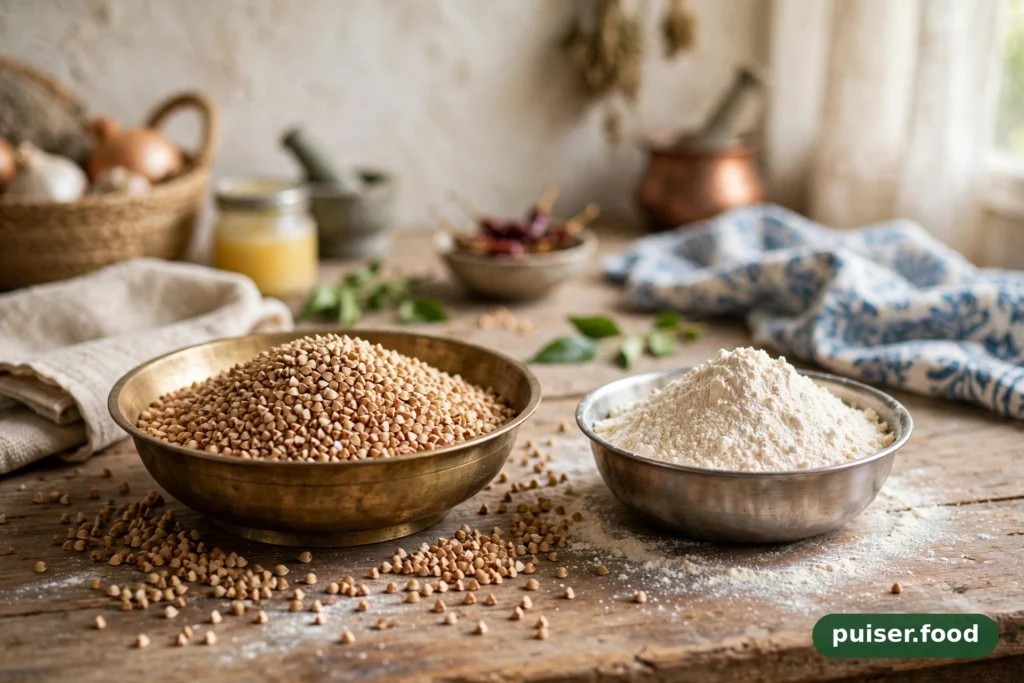
Buckwheat is the seed of a flowering plant, Fagopyrum esculentum, a cousin of rhubarb and sorrel rather than a cousin of wheat. The name misleads everyone at first. It is called wheat because the groats look like tiny wheat kernels and mill into a dark flour, yet the plant is no grass and the seed holds no gluten. Kuttu ka atta, the flour of the Indian fast, is milled from these groats, and it has fed fasting days for generations.
That buckwheat carries fibre and protein with its slow carbohydrate is the first thing to understand, because it is what separates the groat from white rice, and it is where the buckwheat benefits start. A bowl gives steady energy with minerals attached, and the fibre slows digestion a little, so buckwheat works as a meal and a fasting food at once.
Buckwheat is also the seed of the Indian fasting kitchen, in the kuttu ki roti of Navratri, in the poori of a vrat thali, in the khichdi of a winter lunch and in the porridge of a cold morning. It grows in the hills of Himachal Pradesh, Uttarakhand and Sikkim, where the short season suits it. Our ragi benefits guide covers the millet that shares the fasting shelf, and our foxtail millet benefits guide covers the lightest grain of the same thali. Our amaranth benefits guide covers the other fasting seed that cooks like a grain.
Buckwheat in Numbers
The numbers behind the buckwheat benefits need a straight telling, because the raw and cooked figures tell different stories. USDA FoodData Central holds a generic record for buckwheat groats, FDC ID 170286, “Buckwheat”, uncooked, in the SR Legacy set. Every figure in the main table comes from that one record, per 100 g of dry groats, and the cooked figures further down are marked as approximate, because cooking adds water and the weight triples.
| Nutrient, buckwheat groats, uncooked (per 100 g) | Amount |
|---|---|
| Energy | 343 kcal |
| Protein | 13.25 g |
| Fat | 3.4 g |
| Carbohydrates | 71.5 g |
| Fibre | 10.0 g |
| Sugars | 0.0 g |
| Water | 9.75 g |
| Sodium | 1 mg |
| Calcium | 18 mg |
| Iron | 2.2 mg |
| Magnesium | 231 mg |
| Phosphorus | 347 mg |
| Potassium | 460 mg |
| Zinc | 2.4 mg |
| Vitamin B6 | 0.21 mg |
| Folate | 30 mcg |
| Niacin | 7.02 mg |
Three figures in that table do most of the work. Fibre at 10.0 g per 100 g is the headline, protein at 13.25 g is the second, and magnesium at 231 mg is the third. The sugars read zero because the carbohydrate in buckwheat is starch, not sugar, and the fat stays low at 3.4 g. Zinc at 2.4 mg per 100 g is the quiet surprise, and folate at 30 mcg is useful for a grain-like food.
| Nutrient (per 100 g) | Dry groats (FDC 170286) | Cooked groats (approximate) |
|---|---|---|
| Energy | 343 kcal | about 92 kcal |
| Protein | 13.25 g | about 3.4 g |
| Carbohydrates | 71.5 g | about 19.9 g |
| Fibre | 10.0 g | about 2.7 g |
| Fat | 3.4 g | about 0.9 g |
| Weight | 100 g dry | about 300 g cooked |
Cooking changes the weight, not the nutrition in the pot. Dry groats absorb water and roughly triple in weight, so 100 g dry becomes about 300 g cooked, and the 343 kcal spreads across that bowl. The cooked column is scaled from the dry figures, so treat it as approximate. Never quote the dry 343 kcal for a cooked serving, because a cooked 100 g serving holds only about 92 kcal.
The portion table below turns the dry figures into bowls. A 50 g dry serving is the portion this guide uses everywhere, and it cooks into a full bowl of about 150 g.
| Portion of buckwheat | Energy | Protein | Fibre | Magnesium |
|---|---|---|---|---|
| 50 g dry, one serving | 172 kcal | 6.6 g | 5.0 g | 116 mg |
| 100 g dry, two servings | 343 kcal | 13.25 g | 10.0 g | 231 mg |
| 150 g cooked, one bowl | about 138 kcal | about 5.1 g | about 4.1 g | about 62 mg |
| 170 g dry, one cup | about 583 kcal | about 22.5 g | 17.0 g | about 393 mg |
One cup of dry groats weighs 170 g and carries about 583 kcal, far more than a serving, so the cup is a measure for the jar, not for the plate. The 50 g serving is the one to count, and it gives a full bowl once cooked.
| Food, dry per 100 g | Energy | Protein | Fibre | Calcium |
|---|---|---|---|---|
| Buckwheat groats (FDC 170286) | 343 kcal | 13.25 g | 10.0 g | 18 mg |
| Whole wheat flour | 340 kcal | 13.2 g | 10.7 g | 34 mg |
| White rice, raw | 365 kcal | 7.1 g | 1.3 g | 28 mg |
| Ragi flour | 328 kcal | 7.3 g | 11.5 g | 344 mg |
Buckwheat matches whole wheat on protein and fibre and beats white rice on both by a wide margin, while ragi wins on calcium and fibre. The table uses dry figures from USDA FoodData Central and the Indian Food Composition Tables, so it compares like with like. What the table cannot show is the gluten, because buckwheat has none and wheat has plenty.
10 Buckwheat Benefits Worth Knowing
Here are the ten buckwheat benefits worth knowing, in the order a home cook would care about them. Each one is tied to a number from the tables above or to a caution named in the text, and each one belongs to the plain groat and the plain flour, not to a sweetened mix.
1. Fibre that fills you up
The first of the reasons to eat buckwheat is the fibre. Buckwheat groats give 10.0 g of fibre per 100 g dry, and a 50 g serving gives about 5.0 g. The fibre mixes soluble and insoluble kinds, so a bowl keeps you full for longer than white rice of the same calories, and it feeds the gut in the slow way that whole grains do.
2. Protein with all nine essential amino acids
Buckwheat gives 13.25 g of protein per 100 g dry, and a 50 g serving gives about 6.6 g. The protein is unusually complete for a plant food, because it carries all nine essential amino acids, including lysine, which most grains lack. That makes a buckwheat bowl a better partner for dal and curd than a bowl of plain rice.
3. Rutin and quercetin, kept honest
Buckwheat is the richest common food source of rutin, a flavonoid, with quercetin beside it, and the two are often credited with protecting blood vessels. The honest version is that most of the evidence comes from lab and animal work, not from trials in people eating buckwheat, so the compounds add a small part to the buckwheat benefits, not a promise of a cure.
4. Magnesium in a useful amount
Buckwheat gives 231 mg of magnesium per 100 g dry, and a 50 g serving gives about 116 mg. Magnesium helps muscles relax and supports normal blood pressure, and it is one of the minerals Indian diets often fall short on. A bowl of buckwheat covers a good share of the day without any supplement.
5. Gluten free by nature, not by processing
Buckwheat holds no gluten because it is not wheat at all, and no processing is needed to take the gluten out. That makes kuttu flour a natural choice for anyone avoiding gluten, and it is why the flour has fed fasting days for so long. Buy flour milled in a clean mill, because a shared mill can leave wheat dust in the bag.
6. Steady energy after the meal
Buckwheat is mostly slow starch, 71.5 g of carbohydrate per 100 g dry with no sugars at all, and its glycaemic index sits in the mid 40s. That means a bowl raises blood sugar more slowly than white rice, which suits people watching their sugar. The fibre does part of that work, and the protein does the rest.
7. Potassium with very little fat
Buckwheat gives 460 mg of potassium per 100 g dry, and a 50 g serving gives about 230 mg, with only 3.4 g of fat in the same weight. Potassium helps the body balance fluids and supports healthy blood pressure, and the low fat keeps the bowl light. The combination suits a heart friendly thali without any special cooking.
8. Iron, zinc and folate in one bowl
Buckwheat gives 2.2 mg of iron, 2.4 mg of zinc and 30 mcg of folate per 100 g dry, and a 50 g serving gives about half of each. Iron helps the body make red blood cells and carry oxygen, zinc supports immunity, and folate matters for cell growth. Eat the bowl with a squeeze of lemon, because vitamin C helps the body absorb the iron.
9. A seed that keeps for months
Buckwheat groats keep for months in an airtight jar without a fridge, which makes them one of the best fasting foods to stock ahead of Navratri. The dry groats weigh little and travel well in a bag, and they cook in about fifteen minutes in boiling water. The flour keeps less well, so buy the groats and mill small batches at home when you can.
10. A fasting food that still feeds you
Kuttu is the classic vrat food, eaten on fasts when grains are set aside, and it earns that place because it feeds you properly. A bowl gives fibre, protein and magnesium with steady energy, so a fasting day on buckwheat feels very different from a fasting day on fried snacks. That is why the roti and the poori have lasted so many generations.
The Rutin Story, Honestly
The rutin story is the part of the buckwheat benefits that most often gets told wrong, so it deserves a straight telling, along with the allergy caution beside it. Neither is a reason to skip buckwheat, only to buy the right pack and know your own body.
The rutin story
Rutin is a flavonoid found in buckwheat in larger amounts than in almost any other common food, and Tartary buckwheat holds far more of it than the common kind. Lab studies show rutin strengthening blood vessel walls and calming inflammation in a dish, and animal studies show it helping blood pressure and blood sugar. Human trials are few and small, and none of them tested ordinary buckwheat meals the way Indians eat them. Rutin is a fair reason to choose whole groats over refined flour, and it is not a medicine. Anyone selling buckwheat as a cure for varicose veins or diabetes is selling past the evidence.
The allergy story
Buckwheat allergy is rare, and it is real. A small number of people react to buckwheat protein with itching, swelling, stomach cramps or trouble breathing, and severe reactions including anaphylaxis have been reported in sensitive people, mostly in countries where buckwheat is eaten daily. The allergy is uncommon in India, where buckwheat is a seasonal food, yet it exists, and it can appear suddenly in someone who ate kuttu for years. If buckwheat has ever made your mouth tingle or your skin itch, stop eating it and ask a doctor before trying it again.
Tartary versus common buckwheat
This guide is about common buckwheat, Fagopyrum esculentum, the mild groat sold as kuttu in Indian shops. Tartary buckwheat, Fagopyrum tataricum, is its bitter cousin, grown in the Himalayas and packed with far more rutin, and its flour tastes bitter enough that most cooks mix it with wheat flour. The two seeds differ in taste, in rutin and in price, so check the label when a pack claims high rutin, because that claim usually belongs to Tartary, not to the common groat in your roti.
Groats, Flour and Kasha, Common and Tartary
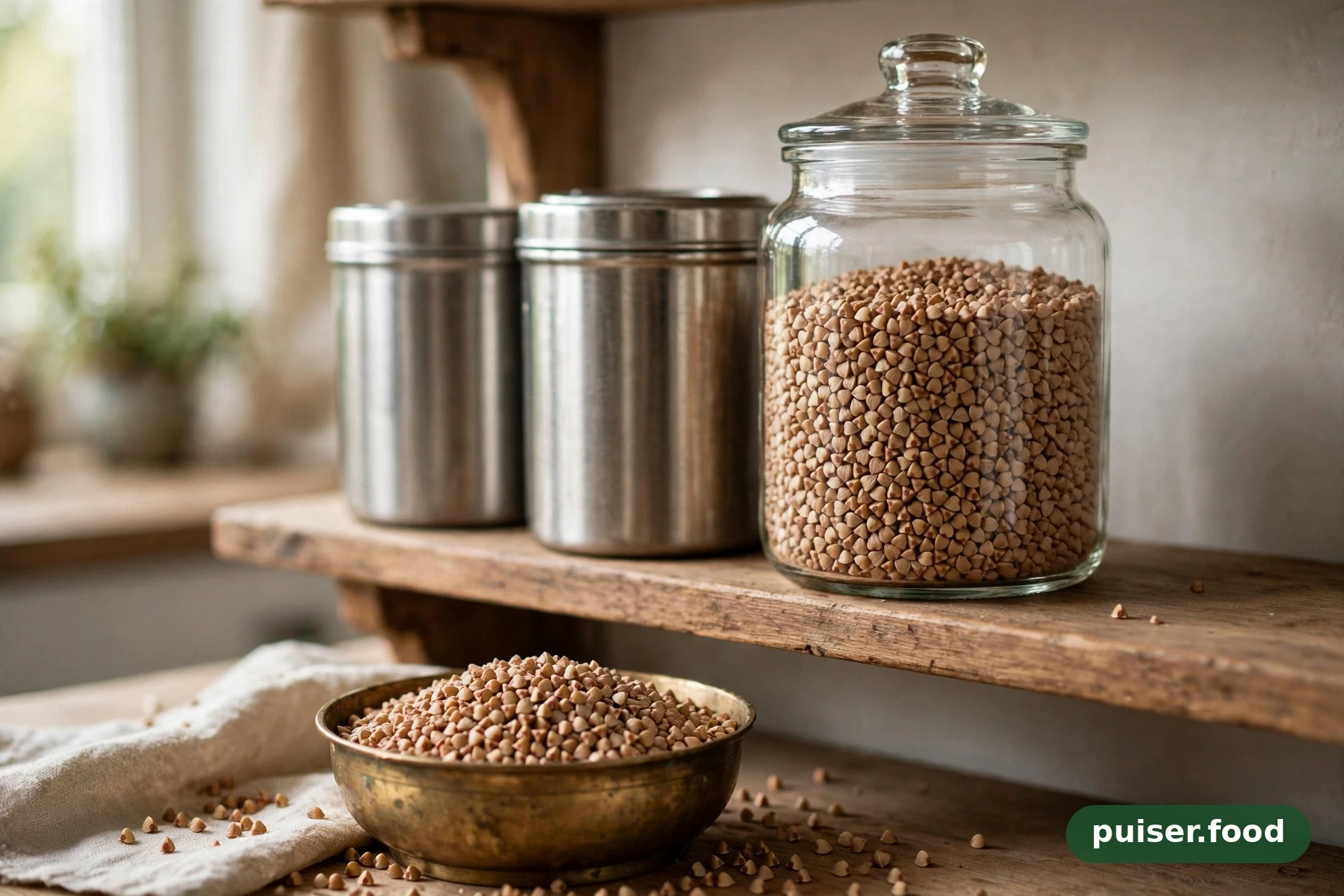
The buckwheat benefits do not change much between the groat forms on the shelf, because the seed is the same, but they change between the ways it is milled. Whole groats are the hulled seed, pale green and triangular, and they cook into a nutty bowl in about fifteen minutes. Kuttu flour is the same groat milled fine, dark and speckled, and it makes roti, poori and cheela. Kasha is the groat toasted until brown and nutty, and it cooks faster and tastes stronger than the raw groat.
Common buckwheat is the mild kind in most Indian shops, and Tartary is the bitter kind from the high Himalayas, sold in fewer places and at a higher price. The flour goes stale faster than the groats, because the ground seed meets air, so buy whole groats when you can and mill small batches. A pack that lists only buckwheat is the plain kind in every form, and a pack that lists wheat flour is a mix, so read the ingredients before buying.
Five Everyday Ways to Use It
The buckwheat benefits show up best in five everyday dishes, each one using a single serving of about 50 g dry groats or the flour from it, with the buckwheat at the centre of the plate.
1. Kuttu ki roti with curd and chutney
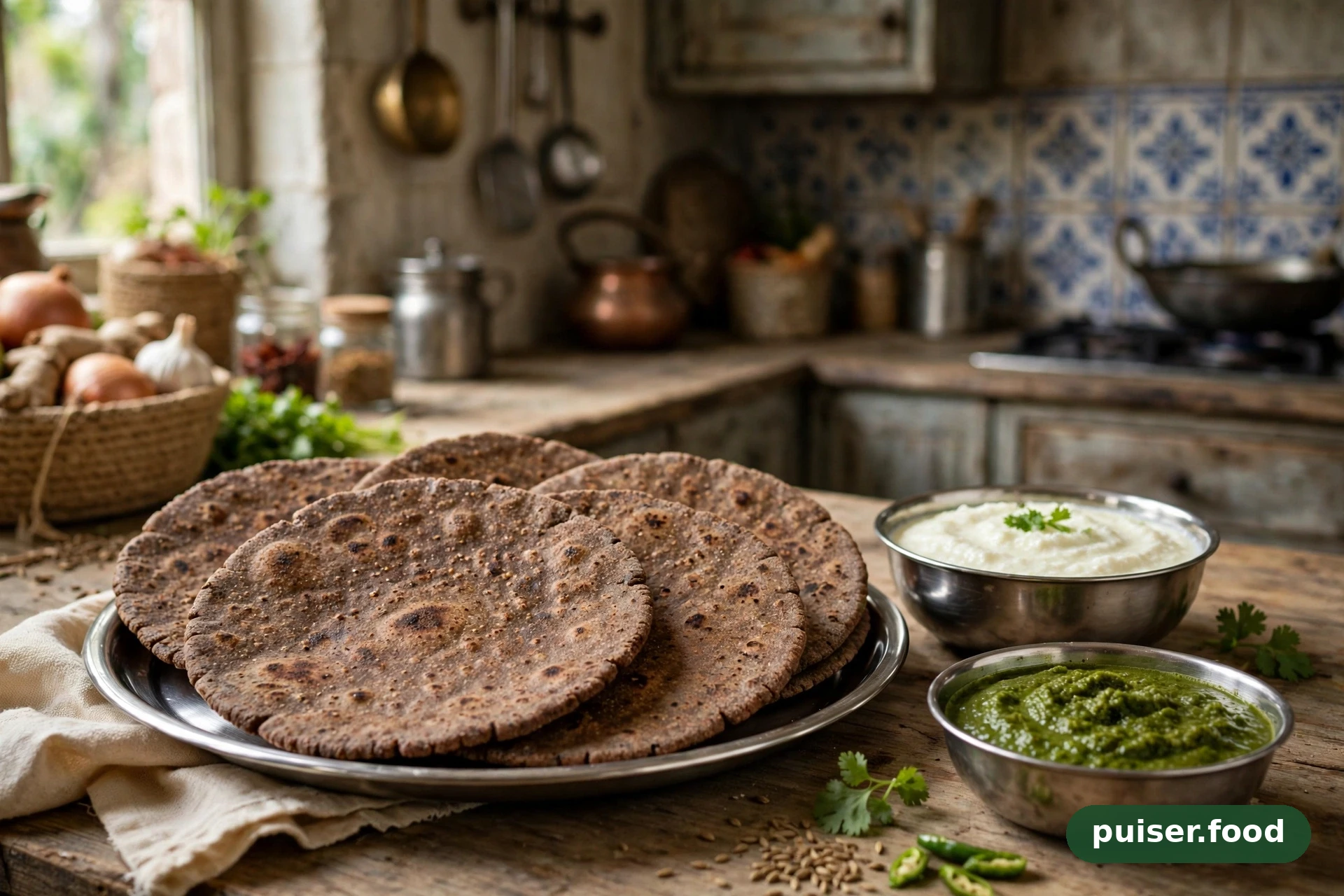
Knead kuttu flour with warm water and a pinch of salt into a soft dough, rest it a few minutes, then roll thick rotis on a dusted board and cook them on a hot tawa until brown spots appear. Kuttu dough cracks easily because it has no gluten, so roll gently and keep the rotis thick. Serve warm with curd and green chutney.
2. Kuttu ki poori for a vrat thali
Knead kuttu flour with mashed potato and warm water into a firm dough, roll small pooris, and fry them in hot oil until they puff and turn golden. The potato binds the dough where gluten would have, and the poori stays soft inside. Serve two pooris with aloo sabzi and curd for a fasting lunch.
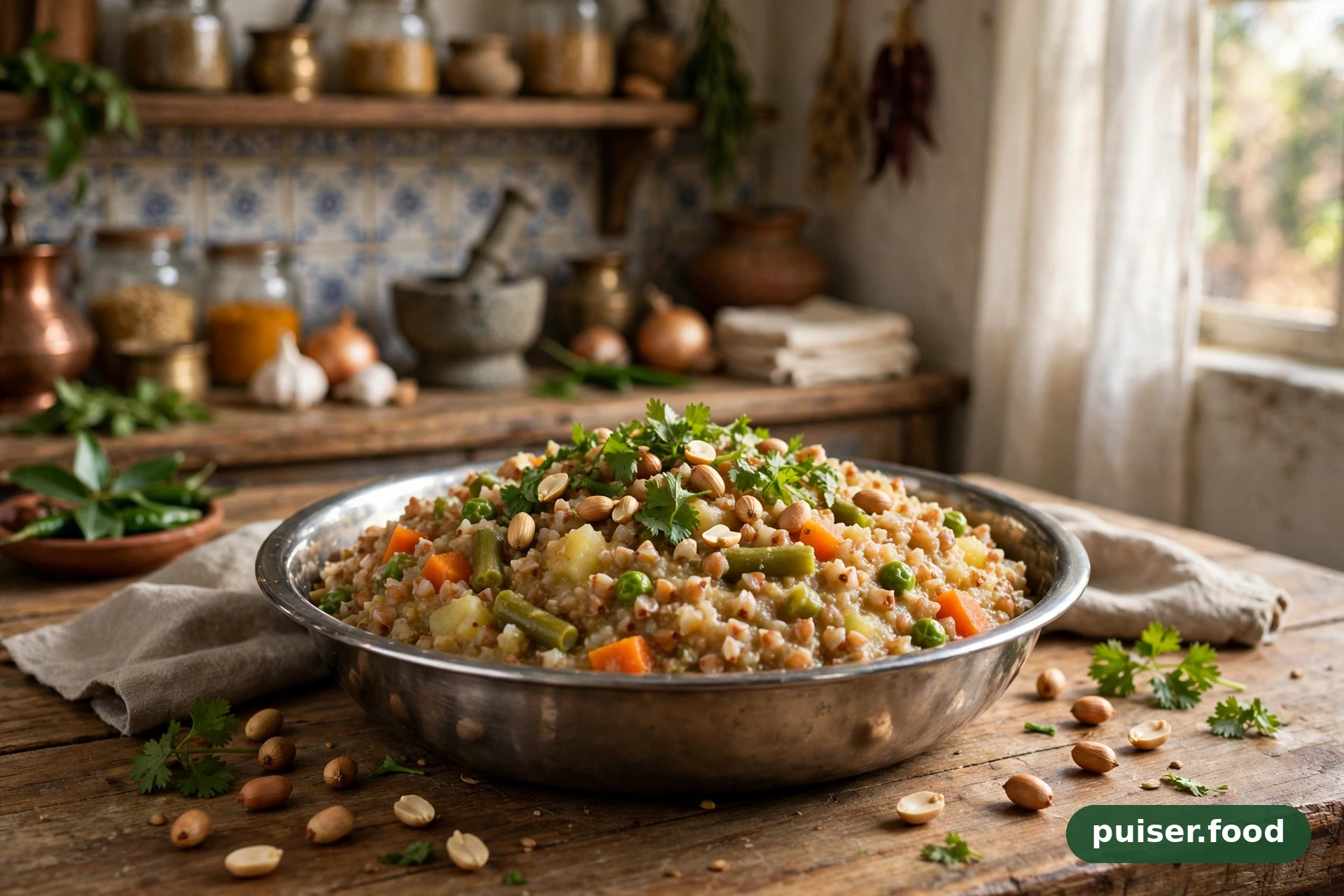
3. Buckwheat khichdi with vegetables and peanuts
Cook buckwheat groats with chopped potato, carrot and peas in a pressure cooker with cumin, ginger and green chilli, then finish with roasted peanuts and coriander. The groats hold their shape better than rice in khichdi, and the peanuts add crunch and protein. Serve hot with a spoon of curd.
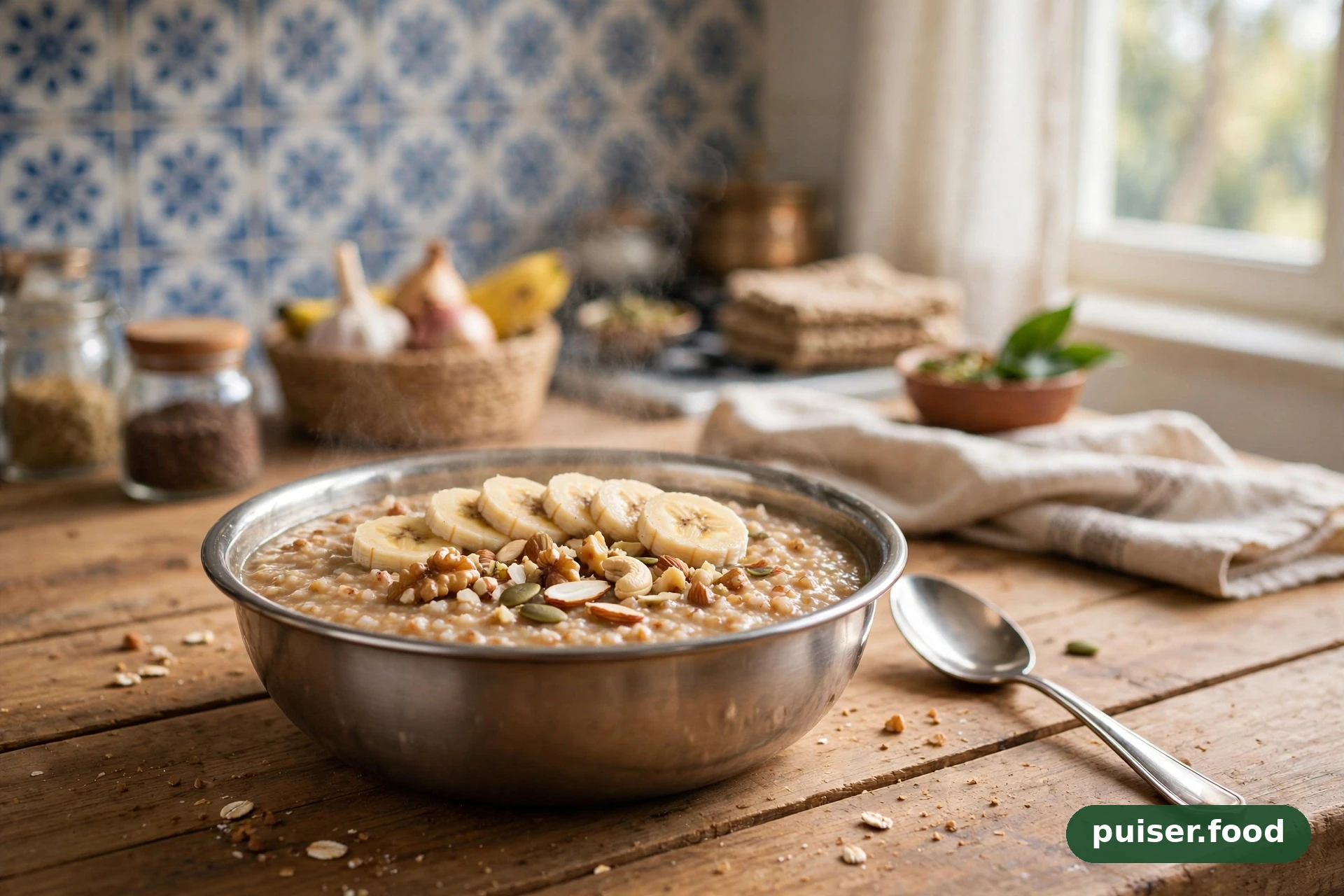
4. Buckwheat porridge with banana and nuts
Simmer buckwheat groats in milk until soft and creamy, then top the bowl with sliced banana, chopped almonds and a drizzle of honey. The groats soften in the milk and turn the porridge nutty and filling, and the bowl needs no sugar beyond the honey. Serve warm for a winter breakfast.
5. Buckwheat pancakes, or cheela, with onion and chilli
Whisk kuttu flour with water into a thin batter, stir in chopped onion, green chilli and coriander, then ladle it onto a hot greased tawa and cook until crisp at the edges. The cheela cooks fast and stays soft inside, and it takes the place of a besan cheela on a fasting day. Serve hot with curd.
Buying and Storing Buckwheat
The goodness in buckwheat survives or dies on the label, so buy by the label, not by the price alone. The ingredients list should read buckwheat, and a pack that lists wheat flour is a mix rather than a pure flour. Whole groats should look pale green and triangular, and flour should smell nutty, not stale. Our brown rice versus white rice guide covers the grain buckwheat most often replaces at lunch.
For the pantry shelf, our Organic Buckwheat Grain is the plain whole groat in the Puiser shop, and the buckwheat benefits above are measured from plain whole groats like these. Store groats in an airtight jar in a cool, dark place, where they keep for months. Flour goes stale faster, so keep it in the fridge once opened and use it within a few weeks. Throw the groats away if they smell musty or show mould.
5 Expert Tips
1. Rinse the groats first. Rinse buckwheat groats in two changes of water before cooking, because the rinse takes off dust and the bitter edge, and the groats cook cleaner.
2. Toast for a nuttier bowl. Toast dry groats in a kadhai for two minutes before adding water, because the toasting deepens the nutty flavour and keeps the grains separate.
3. Rest the roti dough. Rest kuttu dough for ten minutes before rolling, because the flour needs time to absorb the water, and rested dough cracks less on the board.
4. Pair with lemon for the iron. Eat a buckwheat bowl with lemon or amla, because the vitamin C helps the body absorb the iron in the groats.
5. Mill flour in small batches. Buy whole groats and mill flour in small batches at home, because fresh flour tastes nuttier and keeps its flavour far longer than a stale pack.
Common Mistakes to Avoid
Quoting dry figures for a cooked bowl. The commonest mistake is quoting 343 kcal for a cooked serving, when a cooked 100 g serving holds only about 92 kcal. Count the dry weight before cooking, not the bowl after.
Buying a wheat mix by mistake. The mixed flour lists wheat flour in its ingredients and is not gluten free, and the pure kind lists buckwheat alone. Check the ingredients before buying.
Rolling the roti too thin. Kuttu dough has no gluten, so a thin roti cracks on the board and tears on the tawa. Roll thick and handle the dough gently.
Storing flour in the open pack. A pack left open in a humid kitchen turns the flour stale and musty within weeks. Move the flour to an airtight jar, and keep it in the fridge once opened.
Believing the rutin cure. Rutin evidence comes mostly from lab and animal work, not from trials in people eating buckwheat meals. Eat the whole groat for its fibre and minerals, and treat rutin as a bonus, not a medicine.
Frequently Asked Questions
What are the main benefits of buckwheat?
Buckwheat benefits centre on fibre, protein and magnesium, with buckwheat groats giving 10.0 g of fibre, 13.25 g of protein and 231 mg of magnesium per 100 g dry. The benefits belong to the plain groat and plain flour, not to a sweetened mix, and the portion is a 50 g dry serving a day.
Is buckwheat gluten-free?
Buckwheat is gluten free by nature, because it is a seed, not a wheat, and it holds no gluten at all. The caution is the mill. Flour ground in a shared mill can pick up wheat dust, so buy flour labelled gluten free when it matters, and check the ingredients list before buying.
Is buckwheat good for diabetes?
Buckwheat suits a diabetes diet better than white rice, because its glycaemic index sits in the mid 40s and its 10.0 g of fibre per 100 g dry slows digestion. A 50 g dry serving cooks into a full bowl, so count the dry weight. Ask your own doctor about portions before making it a daily habit.
Is buckwheat good for weight loss?
A 50 g dry serving, about 172 kcal, suits a weight loss diet better than white rice of the same calories, because the fibre and protein keep you full for longer. The catch is the portion. Dry groats are calorie dense, so they work only when the serving is weighed, not poured from the jar.
How much buckwheat should I eat in a day?
About 50 g dry a day, one serving, is the daily portion this guide uses, with about 172 kcal, 6.6 g of protein and 5.0 g of fibre. It cooks into a full bowl of about 150 g. Eating more is fine on some days, but weigh the dry groats rather than guessing from the bowl.
Is buckwheat better than rice?
Buckwheat beats white rice on fibre and protein, with 10.0 g of fibre and 13.25 g of protein per 100 g dry against 1.3 g and 7.1 g for white rice. White rice wins on mild taste and price, and brown rice sits between the two. Choose buckwheat when fibre and steady energy matter most.
Can I eat buckwheat during fasting (vrat)?
Buckwheat is the classic vrat food, eaten on Navratri and other fasts when grains are set aside, because it is a seed rather than a grain. Kuttu ki roti and kuttu ki poori are the usual fasting dishes. Follow your own family fasting rules, because customs differ from home to home.
What is the difference between common and Tartary buckwheat?
Common buckwheat, Fagopyrum esculentum, is the mild groat sold as kuttu in Indian shops, and Tartary buckwheat, Fagopyrum tataricum, is its bitter Himalayan cousin. Tartary holds far more rutin and tastes bitter, so cooks often mix it with wheat flour. This guide covers the common kind.
Does buckwheat cause allergies?
Buckwheat allergy is rare, and it is real. A small number of people react to buckwheat protein with itching, swelling, stomach cramps or trouble breathing, and severe reactions including anaphylaxis have been reported in sensitive people. If buckwheat has ever made your mouth tingle, ask a doctor before eating it again.
How do I cook buckwheat groats?
Rinse the groats, then simmer one part groats in two parts water for about fifteen minutes, until the water is absorbed and the grains are tender. A 50 g dry serving cooks into a full bowl of about 150 g. Toast the groats first for a nuttier flavour, and rest the pot five minutes before serving.
Conclusion
Buckwheat earns its place in the pantry when the pack is plain and the portion is a weighed 50 g serving. The buckwheat benefits, fibre and protein and magnesium, make it a better bowl than white rice, and the groats keep for months, cook in about fifteen minutes and turn a roti, a khichdi or a porridge into a proper meal. The fix is a label check, because the plainest pack is the best buy. Try a bowl of khichdi, a roti with curd or a porridge with banana.
Disclaimer: This article is for general information only and is not medical advice. If you have diabetes, a buckwheat allergy or a gluten related condition, talk to your doctor before making buckwheat a daily habit.