Introduction
Anjeer is the fig of the Indian kitchen, the soft, chewy dried fruit that soaks overnight in a steel glass, sweetens a milkshake and sits in the dry fruit box at every festival. It tastes like honey and carries the sugar to match, so the honest question is whether it earns its place as a health food or only as a sweet. This guide covers the anjeer benefits that matter most, the fibre and calcium numbers told honestly, the soaked anjeer question with both views, and the five dishes where anjeer works best.
In this article
- The short answer
- What anjeer actually is
- Anjeer in numbers
- 10 benefits worth knowing
- Soaked anjeer and the laxative dose, honestly
- Afghani versus Indian figs
- Five everyday ways to use it
- Buying and storing anjeer
- 5 expert tips
- Common mistakes to avoid
- Frequently asked questions
- Conclusion
The Short Answer
The anjeer benefits that matter most are fibre, calcium and quick energy in a dried fruit that needs no cooking at all. A 100 g portion of dried figs gives about 9.8 g of fibre and 162 mg of calcium for about 249 kcal, and three figs, about 30 g, give about 75 kcal and 2.9 g of fibre. Anjeer is sugar dense, about 48 g of sugars per 100 g, so two or three figs a day is the portion, and they suit the soaked handful, the milkshake and the barfi best.
What Anjeer Actually Is
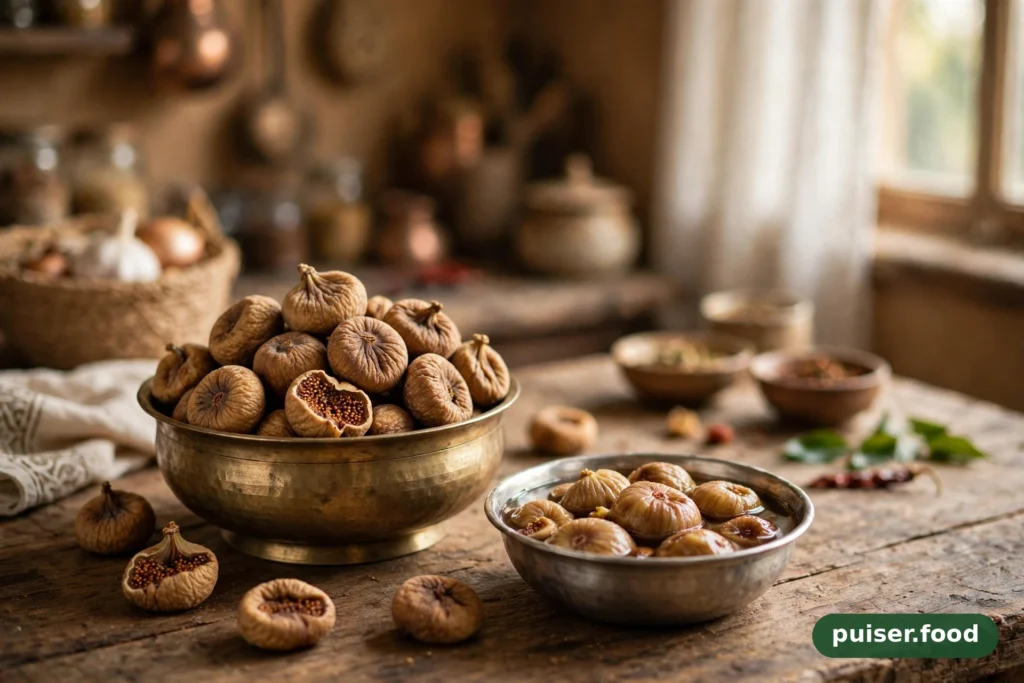
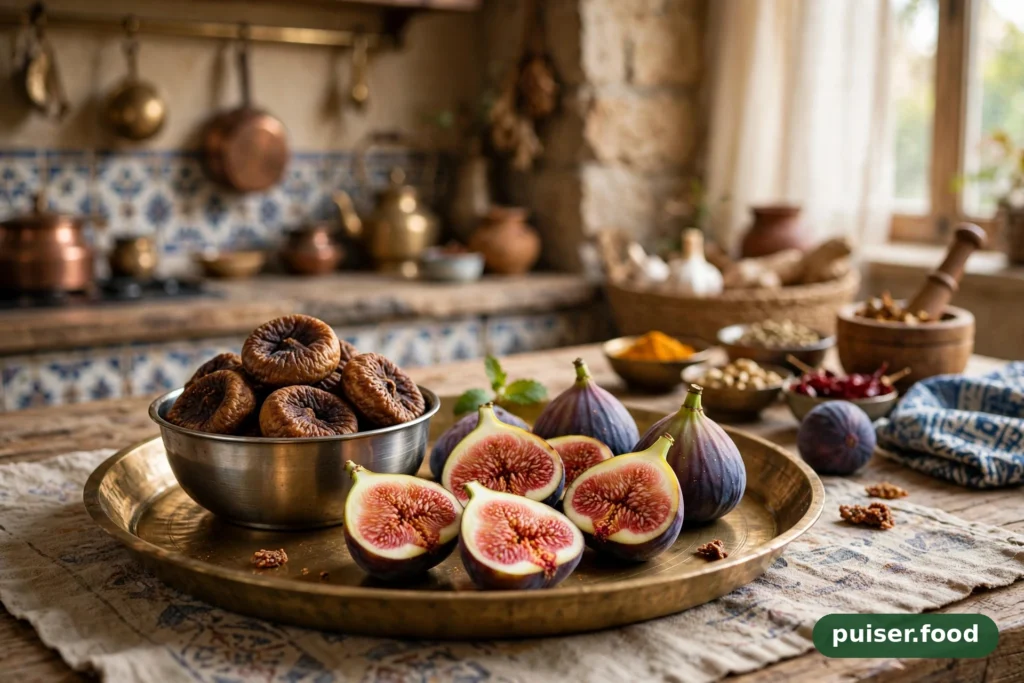
Anjeer, called fig in English, is the fruit of Ficus carica, a tree grown for thousands of years around the Mediterranean and West Asia, and the dried figs sold in India come mostly from Afghanistan, Turkey and Iran. The fruit is picked ripe and dried in the sun until it turns soft, dark and chewy, and it keeps for months without a fridge. India grows fresh figs too, in Maharashtra and Karnataka, but the dried fig is the one Indian kitchens know, in the soaked handful of the morning, in the milkshake, and in the dry fruit box of every festival.
That anjeer carries fibre and calcium with its sugar is the first thing to understand, because it is what separates a fig from a sweet, and it is where the anjeer benefits start. A fig gives natural sugars with fibre, calcium, iron and potassium attached, and the fibre slows the digestion a little, the calcium adds a mineral sugar lacks, and the fruit still tastes like honey, which is why anjeer works as a sweetener and a snack at once.
Anjeer is also the fruit of the morning habit and the winter kitchen, in the steel glass of soaked figs, in the anjeer badam milk of the evening, in the barfi of Diwali, and in the chopped figs of porridge and curd. Our dates benefits guide covers the other sweet dried fruit of the same shelf, the one to reach for when the question is khajur rather than anjeer. Our raisins benefits guide covers the small sweet fruit of the kheer, the one to reach for when the question is kishmish rather than anjeer.
Anjeer in Numbers
The table below sets out the anjeer benefits in numbers, and it uses one basis throughout. The figures are from USDA FoodData Central, FDC #174665, for figs, dried, uncooked, per 100 g, and they are the figures this guide uses throughout. The fibre figure, 9.8 g per 100 g, is the one that matters most, and it is the figure that separates anjeer from sugar, honey and jaggery, so it can be checked two ways.
| Nutrient (per 100 g dried figs) | Anjeer |
|---|---|
| Energy | 249 kcal |
| Protein | 3.3 g |
| Fat | 0.92 g |
| Carbohydrates | 63.9 g |
| Dietary fibre | 9.8 g |
| Sugars | 47.9 g |
| Calcium | 162 mg |
| Iron | 2.03 mg |
| Magnesium | 68 mg |
| Phosphorus | 67 mg |
| Potassium | 680 mg |
| Sodium | 10 mg |
| Zinc | 0.66 mg |
| Copper | 0.287 mg |
| Vitamin C | 1.2 mg |
Figures per USDA FoodData Central FDC #174665, figs, dried, uncooked, per 100 g. The calcium, 162 mg per 100 g, is the standout mineral, and a portion of three figs gives about 49 mg, which is about 5 percent of the 1,000 mg a day that adults are advised to eat. The iron, 2.03 mg per 100 g, is the best of the dried fruits beside raisins, and this guide covers below why the body absorbs so little of it, because anjeer is often sold as an iron food and the number alone does not tell the story.
The second table shows what a real portion gives you. Three dried figs, about 30 g, give about 75 kcal and 2.9 g of fibre, which is a sensible daily portion. A 100 g portion, about a small bowl, gives about 249 kcal and 48 g of sugars, which is about 12 teaspoons of sugar, and that is why the handful is the portion and the bowl is not.
| Portion | Energy | Fibre | Calcium | Price, at 295 rupees per 250 g |
|---|---|---|---|---|
| 100 g anjeer | 249 kcal | 9.8 g | 162 mg | About 118 rupees |
| 3 figs, about 30 g | About 75 kcal | About 2.9 g | About 49 mg | About 35 rupees |
| 1 fig, about 10 g | About 25 kcal | About 1.0 g | About 16 mg | About 12 rupees |
| 1 small bowl chopped, about 50 g | About 125 kcal | About 4.9 g | About 81 mg | About 59 rupees |
Figures per USDA FDC #174665, scaled to the portion. Prices are worked out from anjeer at 295 rupees for 250 g, about 118 rupees per 100 g, so three figs cost about 35 rupees and a 250 g pack gives about eight portions of three figs. Afghani figs cost far more, about 679 rupees for 500 g, so the handful maths above is for the everyday Indian fig, and the Afghani handful costs about twice as much.
The third table compares anjeer with the other sweet dried fruits of the Indian kitchen. Anjeer wins on fibre and calcium, and no other dried fruit in the table beats it on both at once. Dates carry more potassium, raisins carry a little more iron, and prunes carry less sugar, but the fig is the only one that leads on fibre and calcium together.
| Food, per 100 g | Energy | Sugars | Fibre | Calcium | Best use |
|---|---|---|---|---|---|
| Anjeer, dried figs | 249 kcal | 47.9 g | 9.8 g | 162 mg | Soaked handful, milkshake, barfi |
| Dates, Medjool | 277 kcal | 66.5 g | 6.7 g | 64 mg | Handful, laddoo, sweetener |
| Raisins, dark seedless | 299 kcal | 59.2 g | 3.7 g | 50 mg | Kheer, poha, trail mix |
| Prunes | 240 kcal | 38.1 g | 7.1 g | 43 mg | Digestion, stewed fruit |
Comparison per USDA FoodData Central, on the same basis: anjeer FDC #174665, dates FDC #169655, raisins FDC #168165, prunes from the USDA entry. The calcium gap is the story of the table: anjeer carries about 162 mg of calcium per 100 g, dates carry about 64 mg, and raisins carry about 50 mg, which is why the fig leads the dried fruit shelf on calcium, even if three figs alone are no substitute for milk.
10 Benefits Worth Knowing
These are the ten anjeer benefits worth knowing, in the order that matters for an Indian kitchen. The first three are the nutrition facts. The rest are what those facts mean in practice, including the honest limits.
1. Fibre that keeps digestion moving
At 9.8 g of fibre per 100 g, anjeer is the richest dried fruit for fibre, and that is the first of the anjeer benefits, because three figs give about 2.9 g, and the fibre adds bulk to the stool and feeds the good bacteria in the gut. The fibre is the reason anjeer helps with constipation when eaten daily with enough water, and it is the reason the soaked fig is the oldest home remedy in the Indian kitchen. The fibre also slows the sugars down a little, so a fig is digested more slowly than the same weight of sugar.
2. Calcium, the highest of any common fruit
At 162 mg of calcium per 100 g, anjeer carries more calcium than any other common fruit, dried or fresh, and three figs give about 49 mg. The calcium is the headline of the fig, and it is the reason anjeer is the dried fruit most often named for bones. The honest limit sits beside it: three figs give about 5 percent of the 1,000 mg a day that adults need, so the fig supports a calcium rich diet, and it does not replace milk, curd or ragi. The calcium story is real, and it is a supporting role, not the whole diet.
3. Potassium for blood pressure
At 680 mg of potassium per 100 g, anjeer is a useful source of the mineral that helps regulate blood pressure, and three figs give about 204 mg. Potassium works against the sodium in the diet, so a potassium rich food is a useful part of a blood pressure friendly diet, and anjeer carries very little sodium of its own, about 10 mg per 100 g. Anjeer does not treat high blood pressure, but the potassium is one more reason the handful works as a daily habit.
4. Iron, with a catch the label hides
At 2.03 mg of iron per 100 g, dried figs carry more iron than dates or prunes, and three figs give about 0.61 mg. The catch is that the body absorbs very little of the iron in figs, because the fruit carries compounds that block absorption, and the anjeer benefits for anaemia are often overstated on the packet for exactly that reason. A bowl of dal or a portion of leafy greens gives far more usable iron, and anjeer belongs in an iron rich diet as a small extra, not as the source. Eating figs with amla, lemon or orange helps the body absorb a little more of the iron.
5. Quick energy for the tiffin and the run
Anjeer carries natural sugars that the body can use quickly, and it is the reason figs sit in the school tiffin, in the gym bag and in the pocket of a runner. Three figs give about 75 kcal of quick energy, and the fibre in the fruit slows the release a little, so the energy lasts longer than the same calories from sugar. The energy is real, and it is also the reason the portion matters, because a bowl of figs gives about 249 kcal and 48 g of sugars.
6. Antioxidants that dried fruit does well
Anjeer carries polyphenols and other plant compounds that act as antioxidants in the body, and studies that compare dried fruits rank figs among the richest for total phenolic content. The dark colour of the dried fig comes from these compounds, and drying concentrates them along with the sugars, so the fig carries more of them per bite than the fresh fruit it came from. Antioxidants are not a reason to eat figs by the bowlful, but they are a real extra on top of the fibre and calcium.
7. Bone support from calcium and magnesium
At 162 mg of calcium and 68 mg of magnesium per 100 g, anjeer gives the two minerals that bones need together, and three figs give about 49 mg of calcium and 20 mg of magnesium. The amounts are modest beside a glass of milk, but they add up across a varied diet, and anjeer is the only dried fruit that carries this much calcium at all. The bone story is a supporting role, not the headline, and this guide keeps it there, because the portion, not the 100 g figure, is what the reader eats.
8. A sweetener that replaces sugar in the barfi
Anjeer works as a whole fruit sweetener, chopped into barfi, halwa, laddoos and cakes in place of some of the sugar, and the swap brings fibre and calcium where sugar brings nothing. The fruit sweetens as it cooks, and a handful of chopped figs in the barfi means a spoon less of sugar in the pot. That is a real advantage, and it is also a limit, because a fig sweetened barfi is still a sweet dish, and the portion still matters.
9. Gut health, through fibre and a gentle laxative effect
At 9.8 g of fibre per 100 g, anjeer feeds the good bacteria in the gut, and the fruit has a mild laxative effect that Indian kitchens have used for generations, in soaked anjeer eaten first thing in the morning. The fibre supports regular digestion, and the soaked fruit is softer and easier to chew, which is why the morning habit suits older people.
10. A fruit that works in sweet and savoury cooking
Anjeer works in more dishes than any other dried fruit, in milkshakes, in barfi, in halwa, in porridge, in salads and in the chutney. The honeyed flavour suits sweet dishes best, and the soft flesh blends cleanly into a paste without soaking, which is why fig paste has become a standard sugar swap in home baking.
Soaked Anjeer and the Laxative Dose, Honestly
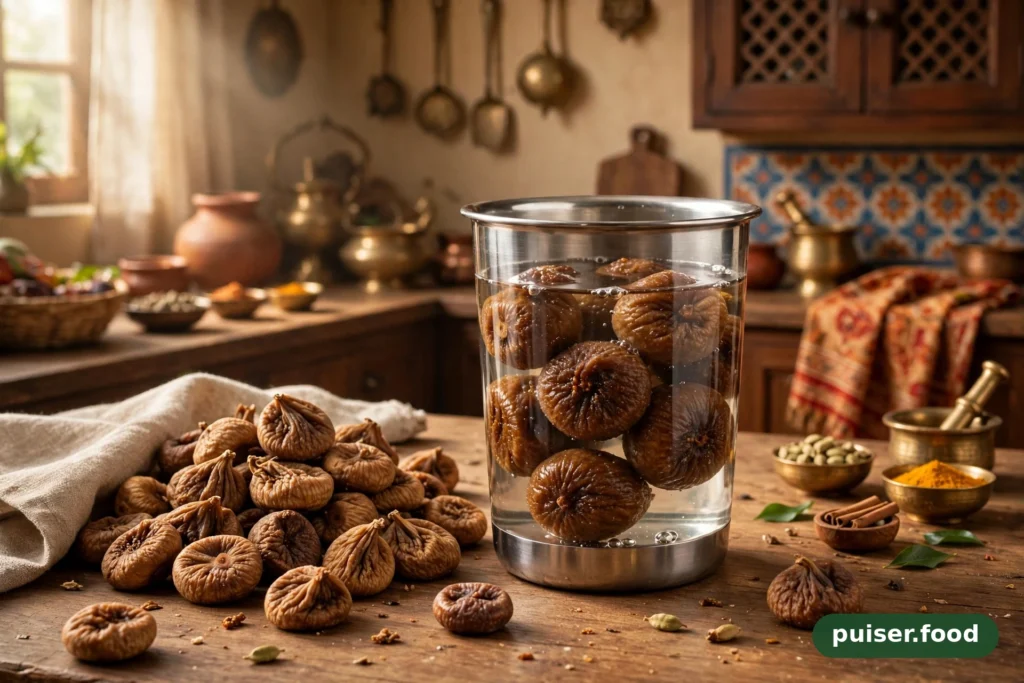
Soaked anjeer is the morning habit of a million Indian kitchens, two or three figs left in a steel glass of water overnight and eaten first thing, and the anjeer benefits of the habit are worth separating from the stories told about it. Soaking softens the fruit, makes it easier to chew and digest, and the water takes up a little of the sweetness, which is why soaked figs suit older people and children. The fibre, calcium and sugars stay in the fruit, and soaking does not add nutrients that were not there before.
The laxative dose is the part people get wrong. Two or three soaked figs a day help most people stay regular, because the fibre adds bulk and the fruit has a gentle laxative effect. More than four or five a day commonly loosens the stools, and a bowlful can cause cramps and diarrhoea, so the dose that helps and the dose that hurts are only a fig or two apart. Start at two a day, drink enough water with them, and do not raise the dose because the first day felt slow.
The water left after soaking is sometimes sold as a health drink, and it is the claim with no good evidence behind it. The water carries a little sugar and a little potassium, and drinking it is harmless, but it is not a detox, and it does not cleanse anything.
Afghani Versus Indian Figs
Afghani figs, also sold as Afghani anjeer, are the large, soft, pale figs from Afghanistan, and they are the dearest at about 679 rupees for 500 g. Indian figs are smaller, darker and firmer, grown in Maharashtra and Karnataka, and they cost far less, about 295 rupees for 250 g. Turkish figs sit between them on price, large and golden, and they are the ones most often sold loose in the market. The nutrition barely changes between the three, so the choice is mostly one of taste, texture and price.
For daily eating, the Indian fig is the right buy, because it is soft enough when soaked, sweet enough for a milkshake, and cheap enough to eat three a day without thinking about the price. For a gift box or a stuffed fig, the Afghani kind is the right buy, because no other fig looks or tastes as rich. For cooking, the Indian fig is the right buy, because it holds its shape in barfi and does not turn to mush. Fresh figs are a different fruit altogether, soft and perishable, at about 74 kcal per 100 g, and they suit the salad and the cheese plate, not the jar.
The dried fig also comes in two forms that confuse buyers. The soft, moist fig in a sealed pack is the one to buy, and the hard, dry fig in an open sack is the one to avoid, because it has lost its moisture and its flavour. Some cheap figs are coated in sugar syrup to make them shine, so buy figs with no added sugar, no glucose and no preservatives listed. The milky sap of the fresh fig tree can irritate skin, but dried figs carry no such risk.
Five Everyday Ways to Use It
The anjeer benefits show up in five everyday dishes. First, two or three soaked figs first thing in the morning, the habit that needs no cooking. Second, anjeer badam milk, figs blended with hot milk, almonds and a little cardamom. Third, anjeer barfi, figs cooked with khoya and nuts and set into squares, with no sugar at all. Fourth, chopped figs stirred into porridge, curd and oats, the garnish that sweetens a plain bowl. Fifth, anjeer milkshake, figs blended with cold milk and a pinch of saffron.
Our apricots benefits guide covers the golden dry fruit of the same shelf, the one to reach for when the question is khubani rather than anjeer. Our makhana benefits guide covers the low fat snack that pairs with figs in the trail mix, the one to reach for when the mix needs crunch.

Buying and Storing Anjeer
The anjeer benefits survive or die on whether the figs are fresh, because old figs dry out, turn hard and lose their soft chew. Good figs are plump, soft and glossy, with unbroken skin and no white sugar crystals on the surface, and they should smell sweet and honeyed, not sour or fermented. Many cheap figs in India are coated in glucose syrup to make them shine, so buy figs with no added sugar, no glucose and no preservatives listed.
Price is the honest catch. Indian figs sell for about 295 rupees for 250 g, and a 250 g pack gives about eight portions of three figs, so three figs cost about 35 rupees. Afghani figs sell for about 679 rupees for 500 g, so three Afghani figs cost about 41 rupees, which is why the Afghani kind is a treat and the Indian kind is the daily fig. Puiser’s new Organic Anjeer, 250 g at 295 rupees, sits at the value end of the market, and it is the product this article pairs with.
Store figs in an airtight jar in a cool, dark place, and in the fridge once opened in summer, because the sugars attract moisture and the fruit can ferment in heat. They keep for about six months in a cool place, or about a year in the fridge. If the figs smell sour, taste fermented or show mould, throw them away. Figs are also a choking risk for small children, so chop them fine for toddlers, and people with a fig allergy should try a small amount first.

5 Expert Tips
Five habits protect the fibre and calcium in anjeer. First, buy a small pack at a time, and taste a fig before you buy a kilo. Second, eat two or three figs a day, not eight, because the fruit is sugar dense and the portion is the whole story. Third, soak figs overnight if you find them hard to chew, because the soaked fruit is softer and easier to digest. Fourth, eat figs with nuts, because the fat and protein slow the sugars down and keep the snack filling. Fifth, store figs in the fridge in summer, because heat turns them sour and sticky.
Common Mistakes to Avoid
The most common mistake is eating eight figs and calling it a health food, when the portion is two or three figs and eight figs carry about 200 kcal. The second is buying sugar coated figs and counting them as plain fruit, when the coating is added sugar. The third is quoting figs as a calcium replacement for milk, when three figs give about 49 mg of calcium, far too little to matter on its own. The fourth is eating five or six soaked figs and wondering why the stomach is loose, when the laxative dose starts at four or five. The fifth is storing figs on a warm shelf, when the fruit ferments and turns sour.
Frequently Asked Questions
What are the main anjeer benefits?
The main anjeer benefits are fibre, calcium and quick energy. A 100 g portion of dried figs gives about 9.8 g of fibre and 162 mg of calcium for about 249 kcal. Three figs give about 2.9 g of fibre and 49 mg of calcium, which is a useful share of the daily target.
How many anjeer should I eat in a day?
Two or three anjeer a day, about 30 g, is a sensible portion for most adults. That gives about 75 kcal and 2.9 g of fibre. Eat them soaked, in a milkshake or in barfi, rather than by the bowlful, because the fruit is sugar dense.
Are anjeer good for diabetes?
Anjeer are sugar dense, about 48 g of sugars per 100 g, so they do raise blood sugar. Two or three figs, eaten whole as part of a whole diet, have a smaller effect than the same weight of sugar. People with diabetes should count figs as the sweet of the meal and ask their own doctor.
Are anjeer good for the heart?
Anjeer may help the heart, because they carry potassium and magnesium with very little sodium, and their fibre supports a healthy diet. The potassium helps regulate blood pressure as part of a whole diet. Anjeer do not treat heart disease, and the benefit comes from the whole diet, not from one fruit.
Do anjeer help with constipation?
Anjeer can help with constipation, because their fibre adds bulk to the stool and the fruit has a gentle laxative effect. Two or three soaked figs give about 2.9 g of fibre, and eating them daily with enough water helps most people. More than four or five a day commonly loosens the stools, so start low.
Are anjeer good for anaemia?
Anjeer carry more iron than dates, about 2.03 mg per 100 g, but the body absorbs very little of it, because the fruit carries compounds that block absorption. Three figs give about 0.61 mg of iron, which is a small share of the daily need. Anjeer are not a useful iron remedy on their own.
Which anjeer is best, Afghani or Indian?
Afghani anjeer are larger, softer and sweeter, but cost about 679 rupees for 500 g. Indian anjeer are smaller and firmer, at about 295 rupees for 250 g. The nutrition differences are small, so the choice is mostly taste and price, and Indian figs win for everyday use.
Are soaked anjeer better than dry anjeer?
Soaked anjeer are softer and easier to chew and digest, which suits older people and children. The fibre, calcium and sugars stay in the fruit, and soaking does not add nutrients that were not there before. The water left after soaking is harmless to drink, but it is not a detox.
Are anjeer better than sugar?
Anjeer are better than sugar as a sweetener, because they carry fibre, calcium and potassium where sugar carries nothing at all. A fig sweetened barfi still contains sugar, only with fibre attached, so the portion still matters. Anjeer are the better sweetener, not a free food.
How do I store anjeer?
Anjeer keep for about six months in an airtight jar in a cool, dark place, or about a year in the fridge, because their sugars attract moisture and the fruit can ferment in heat. Store them in the fridge once opened in summer. Throw the figs away if they smell sour or show mould.
Conclusion
Anjeer is the small fig that asks for nothing but two or three a day, and gives back a soaked handful, a milkshake, a barfi and a garnish, all for about 35 rupees a portion. Three figs give useful fibre and calcium, and a laxative story that is honest about the dose, and the fruit keeps well in a cool jar for months. The anjeer benefits are real, but they are ordinary benefits, the kind that show up in a better everyday kitchen rather than in a miracle. Buy them fresh, store them cool, soak two a night, and eat three a day.
Disclaimer: This article is for general information only and is not medical advice. If you have a medical condition, are pregnant or breastfeeding, or take regular medication, talk to your doctor before changing your diet.