Introduction
Apricots are the khubani of the Indian kitchen, the golden dried fruit that sweetens khubani ka meetha, fills the trail mix and sits in the dry fruit box beside the figs and dates. They taste like honeyed plums and carry the sugar to match, so the honest question is whether they earn their place as a health food or only as a sweet. This guide covers the apricots benefits that matter most, the potassium and vitamin A numbers told honestly, the sulphured apricots question with both views, and the five dishes where apricots work best.
In this article
- The short answer
- What apricots actually are
- Apricots in numbers
- 10 benefits worth knowing
- Vitamin A and the eyes, honestly
- Sulphured versus unsulphured, honestly
- Five everyday ways to use them
- Buying and storing apricots
- 5 expert tips
- Common mistakes to avoid
- Frequently asked questions
- Conclusion
The Short Answer
The apricots benefits that matter most are potassium, fibre and vitamin A in a dried fruit that needs no cooking at all. A 100 g portion of dried apricots gives about 1,162 mg of potassium and 180 mcg of vitamin A for about 241 kcal, and three apricots, about 30 g, give about 72 kcal and 349 mg of potassium. Apricots are sugar dense, about 53 g of sugars per 100 g, so a small handful a day is the portion, and they suit the soaked handful, the trail mix and the khubani ka meetha best.
What Apricots Actually Are
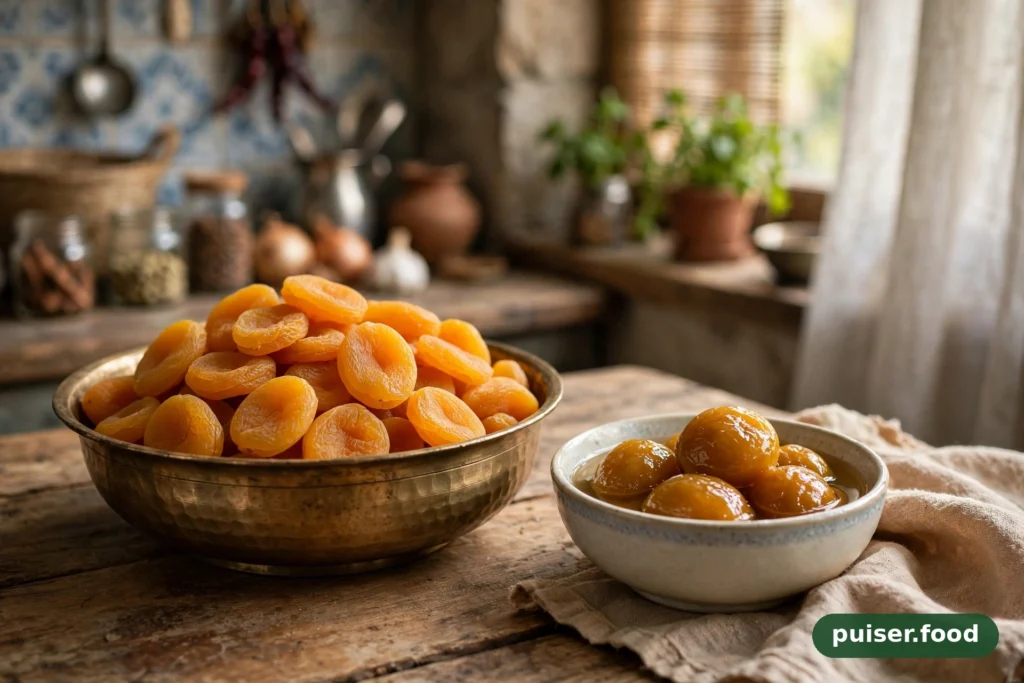
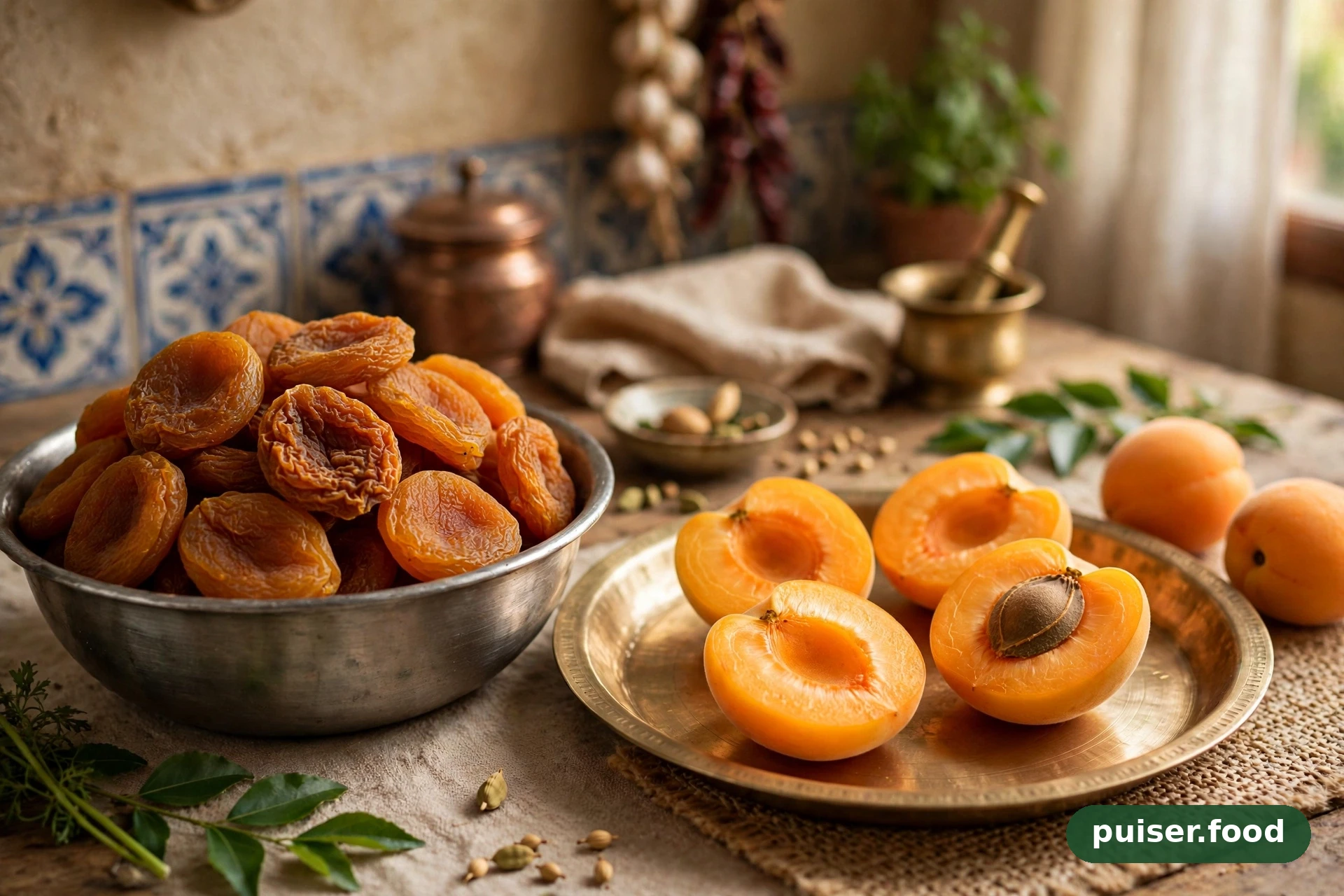
Apricots, called khubani in Hindi, are the fruit of Prunus armeniaca, a small stone fruit grown for thousands of years across Central Asia, and the dried apricots sold in India come mostly from Turkey, Afghanistan and the orchards of Kashmir and Ladakh. The fruit is picked ripe, the stone is taken out, and the halves are dried in the sun until they turn golden and chewy, and they keep for months without a fridge. Kashmiri khubani is the whole fruit dried with its stone still inside, and it is the one Indian kitchens know best, in khubani ka meetha, in the trail mix, and in the dry fruit box of every festival.
That apricots carry fibre, potassium and vitamin A with their sugar is the first thing to understand, because it is what separates an apricot from a sweet, and it is where the apricots benefits start. An apricot gives natural sugars with fibre, potassium, iron and vitamin A attached, and the fibre slows the digestion a little, the potassium adds a mineral sugar lacks, and the fruit still tastes like honey, which is why apricots work as a sweetener and a snack at once.
Apricots are also the fruit of the Hyderabadi dessert and the Kashmiri kitchen, in khubani ka meetha with custard, in the trail mix of a train journey, in the pulao of a feast, and in the porridge of breakfast. Our anjeer benefits guide covers the calcium rich fig of the same shelf, the one to reach for when the question is anjeer rather than khubani. Our dates benefits guide covers the other sweet dried fruit of the same shelf, the one to reach for when the question is khajur rather than khubani.
Apricots in Numbers
The table below sets out the apricots benefits in numbers, and it uses one basis throughout. The figures are from USDA FoodData Central, FDC #173941, for apricots, dried, sulfured, uncooked, per 100 g, and they are the figures this guide uses throughout. The potassium figure, 1,162 mg per 100 g, is the one that matters most, and it is the figure that separates apricots from sugar, honey and jaggery, so it can be checked two ways.
| Nutrient (per 100 g dried apricots) | Apricots |
|---|---|
| Energy | 241 kcal |
| Protein | 3.4 g |
| Fat | 0.5 g |
| Carbohydrates | 63 g |
| Dietary fibre | 7.3 g |
| Sugars | 53 g |
| Calcium | 55 mg |
| Iron | 2.66 mg |
| Magnesium | 32 mg |
| Phosphorus | 71 mg |
| Potassium | 1,162 mg |
| Sodium | 10 mg |
| Vitamin A, RAE | 180 mcg |
| Beta-carotene | 2,163 mcg |
| Vitamin E | 4.33 mg |
| Niacin | 2.589 mg |
| Copper | 0.34 mg |
Figures per USDA FoodData Central FDC #173941, apricots, dried, sulfured, uncooked, per 100 g. The potassium, 1,162 mg per 100 g, is the standout mineral, and a portion of three apricots gives about 349 mg, which is about a tenth of the 3,500 mg a day that health bodies suggest adults aim for. The iron, 2.66 mg per 100 g, is the best of the dried fruits, and this guide covers below why the body absorbs so little of it, because apricots are often sold as an iron food and the number alone does not tell the story.
The second table shows what a real portion gives you. Three dried apricots, about 30 g, give about 72 kcal and 2.2 g of fibre, which is a sensible daily portion. A 100 g portion, about a small bowl, gives about 241 kcal and 53 g of sugars, which is about 13 teaspoons of sugar, and that is why the handful is the portion and the bowl is not.
| Portion | Energy | Fibre | Potassium | Price, at 395 rupees per 500 g |
|---|---|---|---|---|
| 100 g apricots | 241 kcal | 7.3 g | 1,162 mg | About 79 rupees |
| 3 apricots, about 30 g | About 72 kcal | About 2.2 g | About 349 mg | About 24 rupees |
| 1 apricot, about 10 g | About 24 kcal | About 0.7 g | About 116 mg | About 8 rupees |
| 1 small bowl chopped, about 50 g | About 121 kcal | About 3.7 g | About 581 mg | About 40 rupees |
Figures per USDA FDC #173941, scaled to the portion. Prices are worked out from dried apricots at 395 rupees for 500 g, about 79 rupees per 100 g, so three apricots cost about 24 rupees and a 500 g pack gives about 17 handfuls of three apricots. Kashmiri whole khubani costs far more, about 650 rupees for 500 g, so the handful maths above is for the everyday Turkish apricot, and the Kashmiri handful costs about 40 rupees.
The third table compares apricots with the other sweet dried fruits of the Indian kitchen. Apricots win on potassium, and no other dried fruit in the table comes close on that mineral. Anjeer carries more fibre and calcium, raisins carry a little more iron, and dates carry more sugars, but the apricot is the only one that leads on potassium and vitamin A together.
| Food, per 100 g | Energy | Sugars | Fibre | Potassium | Best use |
|---|---|---|---|---|---|
| Apricots, dried | 241 kcal | 53 g | 7.3 g | 1,162 mg | Khubani ka meetha, trail mix |
| Anjeer, dried figs | 249 kcal | 47.9 g | 9.8 g | 680 mg | Soaked handful, milkshake, barfi |
| Dates, Medjool | 277 kcal | 66.5 g | 6.7 g | 696 mg | Handful, laddoo, sweetener |
| Raisins, dark seedless | 299 kcal | 59.2 g | 3.7 g | 749 mg | Kheer, poha, trail mix |
Comparison per USDA FoodData Central, on the same basis: apricots FDC #173941, anjeer FDC #174665, dates FDC #169655, raisins FDC #168165. The potassium gap is the story of the table: apricots carry about 1,162 mg of potassium per 100 g, dates carry about 696 mg, and raisins carry about 749 mg, which is why the apricot leads the dried fruit shelf on potassium, even if three apricots alone are a small share of the day.
10 Benefits Worth Knowing
These are the ten apricots benefits worth knowing, in the order that matters for an Indian kitchen. The first three are the nutrition facts. The rest are what those facts mean in practice, including the honest limits.
1. Fibre that keeps digestion moving
At 7.3 g of fibre per 100 g, apricots give a useful amount of fibre for a dried fruit, and that is the first of the apricots benefits, because three apricots give about 2.2 g, and the fibre adds bulk to the stool and feeds the good bacteria in the gut. The fibre is the reason apricots help with constipation when eaten daily with enough water. The fibre also slows the sugars down a little, so an apricot is digested more slowly than the same weight of sugar.
2. Potassium, the highest of the dried fruits
At 1,162 mg of potassium per 100 g, apricots carry more potassium than any other common dried fruit, and three apricots give about 349 mg. Potassium works against the sodium in the diet, so a potassium rich food is a useful part of a blood pressure friendly diet, and apricots carry very little sodium of their own, about 10 mg per 100 g. Apricots do not treat high blood pressure, but the potassium is one more reason the handful works as a daily habit.
3. Vitamin A for the eyes
At 180 mcg of vitamin A per 100 g, dried apricots are the only dried fruit with a meaningful amount of the vitamin that eyes need, and three apricots give about 54 mcg. The vitamin A comes from beta-carotene, 2,163 mcg per 100 g, which the body turns into vitamin A as it needs it. The eyes section below covers why the portion keeps this honest, because three apricots give only about 6 percent of the 900 mcg a day that adult men need, and the fruit supports eye health, it does not fix eyesight.
4. Iron, with a catch the label hides
At 2.66 mg of iron per 100 g, dried apricots carry more iron than dates, raisins or figs, and three apricots give about 0.8 mg. The catch is that the body absorbs very little of the iron in apricots, because the fruit carries compounds that block absorption, and the apricots benefits for anaemia are often overstated on the packet for exactly that reason. A bowl of dal or a portion of leafy greens gives far more usable iron, and apricots belong in an iron rich diet as a small extra, not as the source. Eating apricots with amla, lemon or orange helps the body absorb a little more of the iron.
5. Quick energy for the tiffin and the run
Apricots carry natural sugars that the body can use quickly, and it is the reason they sit in trail mix, in the school tiffin and in the pocket of a runner. Three apricots give about 72 kcal of quick energy, and the fibre in the fruit slows the release a little, so the energy lasts longer than the same calories from sugar. The energy is real, and it is also the reason the portion matters, because a bowl of apricots gives about 241 kcal and 53 g of sugars.
6. Vitamin E and the skin
At 4.33 mg of vitamin E per 100 g, dried apricots carry more of the vitamin than any other common dried fruit, and three apricots give about 1.3 mg. Vitamin E acts as an antioxidant in the body, and it supports skin health as part of a varied diet. The amount is modest beside a handful of almonds, but it is a real extra on top of the potassium and fibre, and it is one more reason the apricot earns its place in the dry fruit box.
7. Bone support from potassium and calcium
At 55 mg of calcium per 100 g, apricots give a small amount of the mineral that bones need, and three apricots give about 17 mg. The potassium matters here too, because diets rich in potassium are linked with better bone health, and apricots carry more potassium than most dried fruits. The amounts are modest beside a glass of milk, but they add up across a varied diet, and apricots are one of the few sweet foods that carry either mineral at all.
8. A sweetener that replaces sugar in the meetha
Apricots work as a whole fruit sweetener, simmered into khubani ka meetha, stirred into porridge and kheer, and chopped into cakes in place of some of the sugar, and the swap brings fibre and potassium where sugar brings nothing. The fruit sweetens as it cooks, and a handful in the meetha means a spoon less of sugar in the pot. That is a real advantage, and it is also a limit, because an apricot sweetened dessert is still a sweet dish, and the portion still matters.
9. Gut health, through fibre and a gentle laxative effect
At 7.3 g of fibre per 100 g, apricots feed the good bacteria in the gut, and the fruit has a mild laxative effect that Indian kitchens have used for generations, in soaked khubani eaten first thing in the morning. The fibre supports regular digestion, and the soaked fruit is softer and easier to chew, which is why the morning habit suits older people.
10. A fruit that works in sweet and savoury cooking
Apricots work in more dishes than any other dried fruit, in khubani ka meetha, in pulao, in tagines, in chutneys, in trail mix and in the porridge. The honeyed flavour suits sweet dishes best, and the soft flesh plumps up in cooking, which is why a handful in hot milk or rice tastes so much better than a handful from the jar.
Vitamin A and the Eyes, Honestly
Vitamin A is where the apricots benefits get told wrongly most often, and the honest version starts with the number. At 180 mcg of vitamin A per 100 g, dried apricots carry more of the vitamin than any other dried fruit, and three apricots give about 54 mcg, which is about 6 percent of the 900 mcg a day that adult men need, and about 8 percent of the 700 mcg that adult women need. The beta-carotene, 2,163 mcg per 100 g, is the form the body turns into vitamin A, and the body only turns as much as it needs, so the fruit is safe in a way that vitamin A pills are not.
The catch is the dose. No one eats 100 g of apricots a day, and three apricots give a small share of the day, so the eye story is a supporting role, not the headline. Vitamin A supports normal vision and the health of the eye surface, and a diet short of it can harm the eyes over time, but eating apricots does not sharpen eyesight or fix weak eyes. Fresh apricots carry less vitamin A than dried ones, because drying concentrates everything, and the glycaemic index of fresh apricots, about 34, is lower than the dried fruit, which is why fresh apricots suit people watching blood sugar better.
Eye health comes from the whole diet, from leafy greens, carrots, eggs and milk as well as apricots, and no single fruit carries it.
Sulphured Versus Unsulphured, Honestly
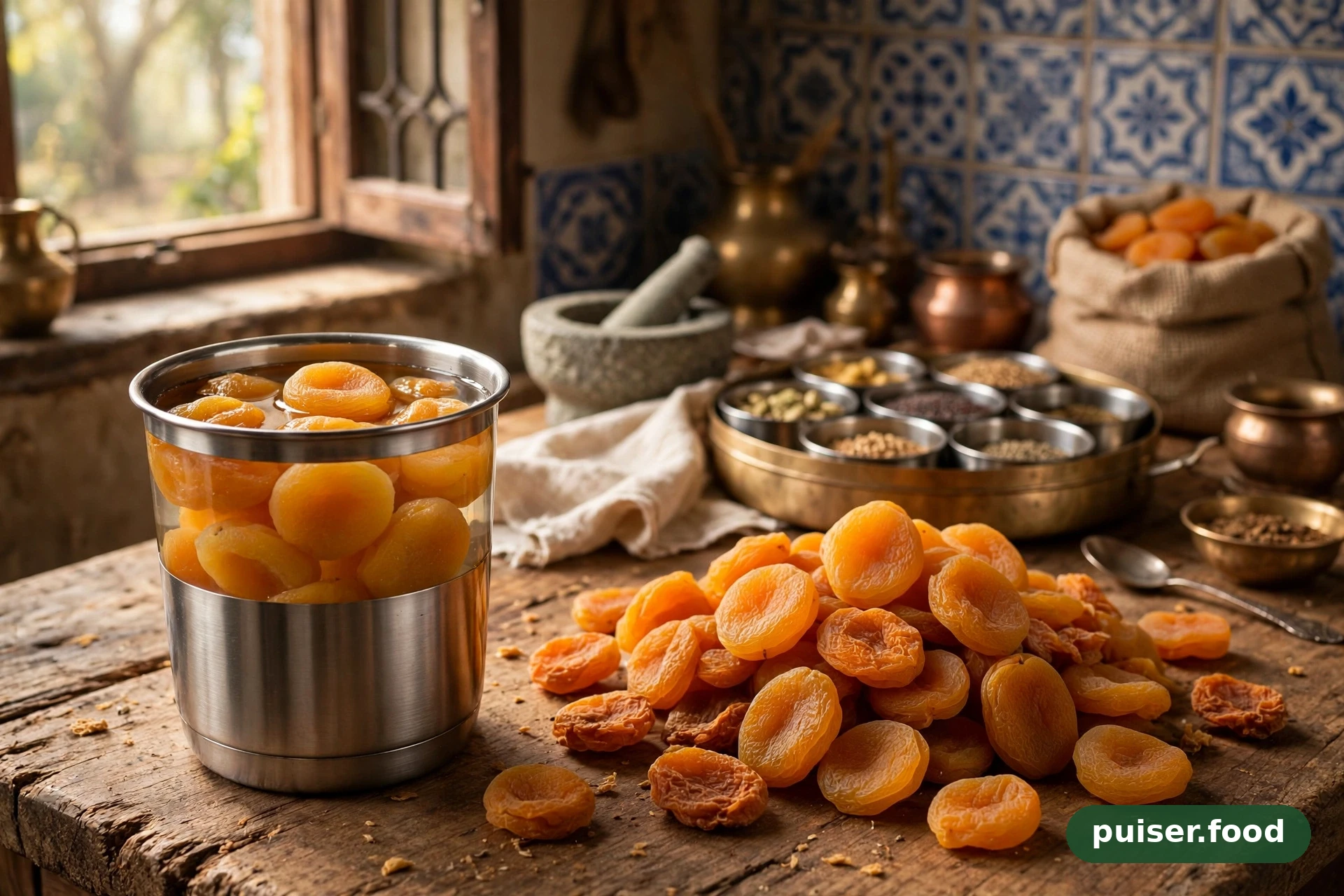
The bright orange apricot in the market is sulphured, treated with sulphur dioxide to keep its colour, and the brown apricot is unsulphured, dried in the sun with nothing added. The nutrition barely changes between the two, so the choice is mostly one of colour, taste and sensitivity. The sulphured kind looks prettier and keeps longer, and the unsulphured kind tastes deeper and more like the fruit.
Sulphur dioxide can trigger asthma and sensitivity in some people, and the bright orange colour is the sign to look for. People with asthma or a sulphur sensitivity should buy the brown, unsulphured kind instead, and rinse sulphured apricots in warm water before eating them, which washes some of the sulphur away. The kernels belong here too: the stone inside a Kashmiri khubani holds a kernel that contains amygdalin, and the kernels must not be eaten raw in quantity, because amygdalin can release cyanide in the body. A kernel or two in a cooked dish is the traditional use, and a handful of raw kernels is not.
For daily eating, the unsulphured apricot is the right buy, because it is the fruit with nothing added, and it is the one Puiser sells. For a gift box, the sulphured kind is the right buy, because no other apricot looks as bright. For cooking, either kind works, because the colour fades in the pot and the flavour is what matters. Buy apricots with no added sugar, and check the packet for sulphur dioxide if the colour is bright orange.
Five Everyday Ways to Use Them
The apricots benefits show up in five everyday dishes. First, a small handful of three apricots, the snack that needs no cooking. Second, khubani ka meetha, apricots simmered in water with sugar and served with custard, the Hyderabadi dessert. Third, trail mix, apricots with peanuts, makhana and seeds, the snack that travels in a pocket. Fourth, porridge and curd, chopped apricots stirred into the morning bowl, the garnish that sweetens a plain breakfast. Fifth, apricot chutney, apricots cooked with vinegar and spices, the tangy side that suits kebabs and pulao.
Our prunes benefits guide covers the dried plum of the same shelf, the one to reach for when the question is digestion rather than potassium. Our raisins benefits guide covers the small sweet fruit of the kheer, the one to reach for when the mix needs sweetness rather than gold.

Buying and Storing Apricots
The apricots benefits survive or die on whether the apricots are fresh, because old apricots dry out, turn hard and lose their soft chew. Good apricots are plump, soft and glossy, with unbroken skin and no white sugar crystals on the surface, and they should smell sweet and fruity, not sour or fermented. Bright orange apricots are treated with sulphur dioxide to keep their colour, so people with asthma or a sulphur sensitivity should buy the brown, sun dried kind instead.
Price is the honest catch. Dried apricots sell for about 336 to 849 rupees per 500 g, and a 500 g pack gives about 17 handfuls, so a small handful costs about 24 rupees. Kashmiri whole khubani sells for about 650 rupees for 500 g, so the handful costs about 38 rupees, which is why the Kashmiri kind is a treat and the everyday Turkish kind is the daily apricot. Puiser’s new Organic Dried Apricots, 500 g at 395 rupees, sits between the budget packs and the premium Kashmiri ones, and it is the product this article pairs with.
Store apricots in an airtight jar in a cool, dark place, and in the fridge once opened in summer, because the sugars attract moisture and the fruit can ferment in heat. They keep for about six months in a cool place, or about a year in the fridge. If the apricots smell sour, taste fermented or show mould, throw them away, because spoiled apricots are not worth eating. Apricots are also a choking risk for small children, so chop them fine for toddlers, and people with a stone fruit allergy should try a small amount first.
5 Expert Tips
These five habits protect the fibre and potassium in apricots and keep the jar worth reaching for. First, buy a small pack at a time, and taste an apricot before you buy a kilo. Second, eat a small handful a day, not a bowlful, because the fruit is sugar dense and the portion is the whole story. Third, soak apricots overnight if you find them hard to chew, because the soaked fruit is softer and easier to digest. Fourth, rinse sulphured apricots in warm water before eating them, because the rinse washes some of the sulphur away. Fifth, buy brown unsulphured apricots where you can, because they carry no sulphur dioxide at all.
Common Mistakes to Avoid
The most common mistake is eating a bowlful and calling it a health food, when the portion is a small handful and a bowlful carries about 241 kcal. The second is buying bright orange apricots and ignoring the sulphur, when the colour is the sign of sulphur dioxide. The third is eating the kernels raw, when the kernels contain amygdalin and must not be eaten in quantity. The fourth is quoting apricots as an iron food for anaemia, when three apricots give about 0.8 mg of iron, far too little to matter on its own. The fifth is storing apricots on a warm shelf for months, when the fruit ferments and turns sour.
Frequently Asked Questions
What are the main apricots benefits?
The main apricots benefits are potassium, fibre and vitamin A. A 100 g portion of dried apricots gives about 1,162 mg of potassium and 180 mcg of vitamin A for about 241 kcal. Three apricots give about 349 mg of potassium, which is a useful share of the daily target.
How many apricots should I eat in a day?
Three apricots a day, about 30 g, is a sensible portion for most adults. That gives about 72 kcal and 2.2 g of fibre. Eat them soaked, in a trail mix or in khubani ka meetha, rather than by the bowlful, because the fruit is sugar dense.
Are apricots good for diabetes?
Apricots have a glycaemic index of about 34 for fresh fruit, but dried apricots are sugar dense, about 53 g of sugars per 100 g, so they do raise blood sugar. Three dried apricots, eaten as part of a whole diet, have a smaller effect than the same weight of sugar. Count them as the sweet of the meal.
Are apricots good for the heart?
Apricots may help the heart, because they carry potassium with very little sodium, and their fibre supports a healthy diet. The potassium helps regulate blood pressure as part of a whole diet. Apricots do not treat heart disease, and the benefit comes from the whole diet, not from one fruit.
Do apricots help with constipation?
Apricots can help with constipation, because their fibre adds bulk to the stool and the soaked fruit is softer and easier to digest. Three apricots give about 2.2 g of fibre, and eating them daily with enough water helps most people. Apricots are not a laxative, and persistent constipation deserves a doctor.
Are apricots good for anaemia?
Apricots carry more iron than dates, about 2.66 mg per 100 g, but the body absorbs very little of it, because the fruit carries compounds that block absorption. Three apricots give about 0.8 mg of iron, which is a small share of the daily need. Apricots are not a useful iron remedy on their own.
Which apricots are best, sulphured or unsulphured?
Unsulphured apricots are the best everyday buy, brown and sun dried with nothing added, and they suit people with asthma or a sulphur sensitivity. Sulphured apricots are bright orange and keep their colour longer, but the sulphur dioxide can trigger asthma. The nutrition differences are small, so the choice is mostly colour and sensitivity.
Can apricots improve eyesight?
Apricots support eye health, because they carry vitamin A and beta-carotene, but they do not sharpen eyesight or fix weak eyes. Three apricots give about 54 mcg of vitamin A, which is about 6 percent of what adult men need each day. Eye health comes from the whole diet, not from one fruit.
Are apricots better than sugar?
Apricots are better than sugar as a sweetener, because they carry fibre, potassium and vitamin A where sugar carries nothing at all. An apricot sweetened dessert still contains sugar, only with fibre attached, so the portion still matters. Apricots are the better sweetener, not a free food.
How do I store apricots?
Apricots keep for about six months in an airtight jar in a cool, dark place, or about a year in the fridge, because their sugars attract moisture and the fruit can ferment in heat. Store them in the fridge once opened in summer. Throw the apricots away if they smell sour or show mould.
Conclusion
Apricots are the small khubani that asks for nothing but three a day, and gives back a meetha, a trail mix, a porridge and a chutney, all for about 24 rupees a portion. Three apricots give useful potassium and fibre, and a vitamin A story that is honest about the portion, and the fruit keeps well in a cool jar for months. The apricots benefits are real, but they are ordinary benefits, the kind that show up in a better everyday kitchen rather than in a miracle. Buy them fresh, store them cool, eat three a day, and keep them on the daily rotation.
Disclaimer: This article is for general information only and is not medical advice. If you have a medical condition, are pregnant or breastfeeding, or take regular medication, talk to your doctor before changing your diet.