Introduction
Dried pineapple is the golden ring of the Indian dry fruit shelf, the sweet and sour fruit that turns a trail mix tropical and studs a cake. It tastes like sunshine and carries the sugar to match, so the honest question is whether it earns its place as a health food or only as a sweet. This guide covers the dried pineapple benefits that matter most, the vitamin C and potassium numbers told honestly, the bromelain story with both views, and the five best dishes.
In this article
- The short answer
- What dried pineapple actually is
- Dried pineapple in numbers
- 10 benefits worth knowing
- The bromelain story, honestly
- Rings versus chunks versus sugar infused
- Five everyday ways to use it
- Buying and storing dried pineapple
- 5 expert tips
- Common mistakes to avoid
- Frequently asked questions
- Conclusion
The Short Answer
The dried pineapple benefits that matter most are vitamin C, potassium and zero sodium, in a dried fruit that needs no cooking at all. A 100 g portion of dried pineapple gives about 31.1 mg of vitamin C and 365 mg of potassium for about 347 kcal, and a small handful of 30 g gives about 104 kcal and 9.3 mg of vitamin C. Dried pineapple is sugar dense, about 77.1 g of sugars per 100 g, the highest of the whole dried fruit series, so a small handful a day is the portion, and it suits the trail mix, the oats bowl and the fried rice.
What Dried Pineapple Actually Is
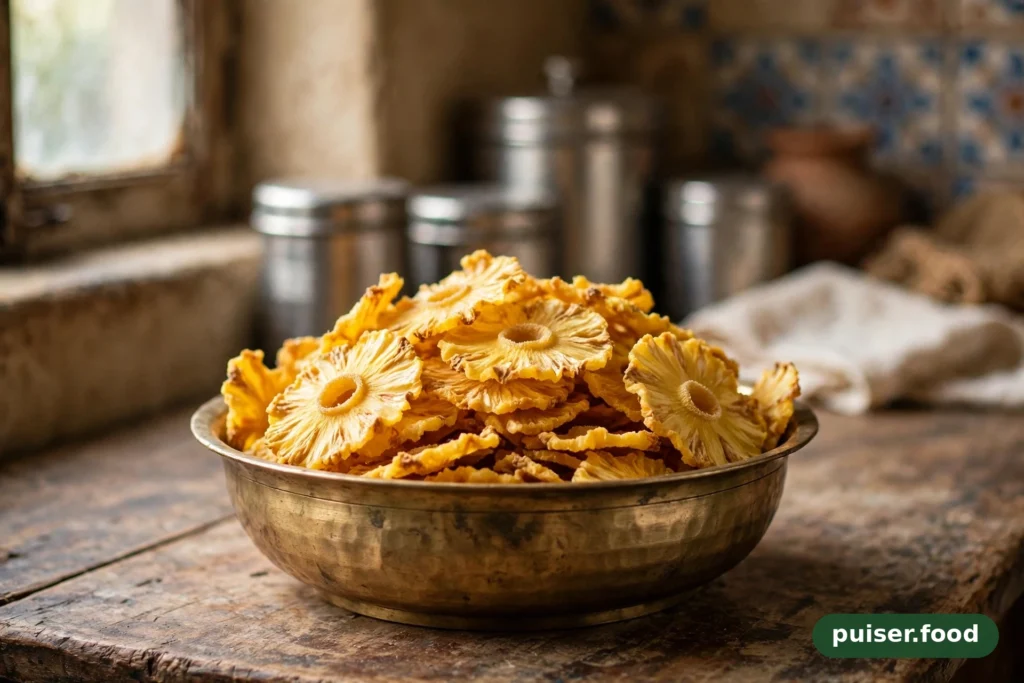
Dried pineapple is the dried flesh of Ananas comosus, the pineapple, a tropical fruit grown in India in Kerala, Karnataka, West Bengal and the north east, and in Thailand, the Philippines and Costa Rica abroad. The fresh fruit is sweet and sour with a sharp edge, so it dries well, but most dried pineapple sold in India is sugar infused, which means the rings are soaked in sugar syrup and then dried until they turn soft, golden and chewy, and they keep for months without a fridge. India grows plenty of fresh pineapple, yet most dried pineapple on the shelf is imported, and it holds a growing place in Indian kitchens, in trail mixes, in cakes and in fried rice.
That dried pineapple carries vitamin C and potassium with its sugar is the first thing to understand, because it is what separates a pineapple ring from a sweet, and it is where the dried pineapple benefits start. A pineapple ring gives natural sugars with vitamin C, potassium and folate attached, and the vitamin C supports immunity, the potassium supports a healthy diet, and the fruit still tastes like a tropical sweet, so dried pineapple works as a snack and a garnish at once.
Dried pineapple is also the fruit of the trail mix and the baking tray, in the oats of a winter morning, in the trail mix of a train journey and in the cake of a Sunday bake. Our dried mango benefits guide covers the other tropical dried fruit of the same shelf, the one to reach for when the question is aam rather than pineapple. Our dried cranberries benefits guide covers the tart red berry of the same shelf, the one to reach for when the question is cranberry rather than pineapple.
Dried Pineapple in Numbers
The table below sets out the dried pineapple benefits in numbers, and it uses one basis throughout. The figures are from USDA FoodData Central, FDC #2709210, for pineapple, dried, per 100 g. The sugar figure, 77.1 g per 100 g, is the one that matters most, and it makes dried pineapple the sweetest of the whole series.
| Nutrient (per 100 g) | Amount |
|---|---|
| Energy | 347 kcal |
| Protein | 1.22 g |
| Fat | 0.71 g |
| Carbohydrates | 84.1 g |
| Fibre | 2.4 g |
| Sugars | 77.1 g |
| Sodium | 0 mg |
| Calcium | 32 mg |
| Iron | 0.16 mg |
| Magnesium | 35 mg |
| Phosphorus | 13 mg |
| Potassium | 365 mg |
| Vitamin C | 31.1 mg |
| Folate | 24 mcg |
| Choline | 14.6 mg |
The portion table below turns those 100 g figures into handfuls people actually eat. A 30 g handful is about two tablespoons, and it is the portion this guide uses everywhere, because a whole 100 g pack is a lot of sugar for one sitting. The USDA serving is one cup, 160 g, which gives 555 kcal, so a cup is far too much for one sitting.
| Portion | Energy | Fibre | Sugars | Vitamin C |
|---|---|---|---|---|
| 30 g handful (2 tbsp) | 104 kcal | 0.7 g | 23.1 g | 9.3 mg |
| 40 g | 139 kcal | 1.0 g | 30.8 g | 12.4 mg |
| 100 g | 347 kcal | 2.4 g | 77.1 g | 31.1 mg |
The comparison table below puts dried pineapple beside cranberries and raisins, on the four numbers that matter most. Pineapple carries the most sugar of the three and the least fibre, while raisins carry far more potassium and iron, and cranberries carry the most fibre.
| Per 100 g | Dried pineapple | Dried cranberries | Raisins |
|---|---|---|---|
| Fibre | 2.4 g | 5.3 g | 3.7 g |
| Sugars | 77.1 g | 72.6 g | 59.2 g |
| Potassium | 365 mg | 49 mg | 749 mg |
| Iron | 0.16 mg | 0.39 mg | 1.88 mg |
10 Benefits Worth Knowing
Here are the ten dried pineapple benefits worth knowing, in the order a home cook would care about them. Each one is tied to a number from the tables above or to a study named in the text.
1. Vitamin C that counts
The first of the dried pineapple benefits is the vitamin C, 31.1 mg per 100 g, about 78 percent of the Indian recommended intake of 40 mg a day. A 30 g handful gives 9.3 mg, about a quarter of the day’s need, and that vitamin C does real work, supporting the immune system and helping the body make collagen for skin and gums. Dried pineapple carries a strong vitamin C figure for a dried fruit, higher than blueberries at 23.8 mg and cherries at 19.3 mg per 100 g, and that is its strongest number.
2. Potassium for a healthy diet
Dried pineapple carries 365 mg of potassium per 100 g, a solid figure for a dried fruit, far more than cranberries at 49 mg and about half of raisins at 749 mg. A 30 g handful gives about 110 mg of potassium, a useful share in a food that needs no cooking, and potassium helps the body balance fluids and supports healthy blood pressure as part of a whole diet.
3. Zero sodium
Dried pineapple carries 0 mg of sodium per 100 g, which is no salt at all, and that makes it a rare sweet that adds nothing to the day’s salt. Most packaged sweets carry salt along with their sugar, so a sweet with zero sodium is a small but real advantage for people watching their salt. The fruit is still sugar dense, so the portion has to stay small.
4. Folate for cell growth
Dried pineapple carries 24 mcg of folate per 100 g, a modest but real figure for a dried fruit, and folate is the vitamin the body uses to make new cells and healthy red blood cells. A 30 g handful gives about 7 mcg, a small share of the day, and it adds to the folate from dal, greens and whole grains rather than replacing them. Folate matters most in pregnancy, and a small handful of dried pineapple adds a little of it to the day.
5. Bromelain, the enzyme with a thinner story
Bromelain is the group of enzymes in pineapple that break down protein, and it is the reason fresh pineapple juice is used to tenderise meat and the reason pineapple is said to aid digestion. Drying weakens the enzymes, because heat breaks them down, so the dried fruit carries far less active bromelain than the fresh one, and the full story is in the bromelain section below. Eat dried pineapple for its vitamin C and flavour.
6. Quick energy for active days
Dried pineapple gives 347 kcal per 100 g, almost all of it from fast carbohydrates, which makes it a quick energy food for a trek, a long day of travel or the hour before a workout. A 30 g handful gives about 104 kcal, enough to lift a flagging afternoon without a heavy meal, and the chew slows the eating down so the energy lasts a little longer than a sweet drink. The same fast sugars are the reason the portion stays small on a quiet day.
7. Vitamin C that helps iron from dal
Iron from plant foods is hard for the body to absorb, and vitamin C is the nutrient that helps most. A spoon of dried pineapple in a meal with dal or palak adds vitamin C to the plate, and the vitamin C helps the body take up the iron in the dal, a practical trick in a vegetarian kitchen. The pineapple itself carries only 0.16 mg of iron per 100 g, so it is the helper, not the source.
8. Magnesium for muscles
Dried pineapple carries 35 mg of magnesium per 100 g, a modest figure, and magnesium is the mineral the body uses for muscle function and for turning food into energy. A 30 g handful gives about 11 mg, a small share of the day, and it adds to the magnesium from nuts, seeds and whole grains rather than replacing them. The figure is not large enough to sell the fruit on.
9. A sweet that travels well
Dried pineapple keeps for about six months in an airtight jar without a fridge, and it is light, tough and hard to crush, which makes it one of the best dried fruits for a train journey, a trek or a school tiffin. Fresh pineapple is heavy, juicy and quick to spoil, while the dried rings weigh almost nothing. That is a practical benefit, the kind that matters on the road rather than in a study.
10. A small handful that satisfies a tropical craving
A 30 g handful gives about 104 kcal and 0.7 g of fibre, and the sweet and sour chew satisfies a craving for a tropical sweet for longer than a biscuit of the same calories. The flavour is strong, so a small amount goes a long way, and the portion is easy to measure, two tablespoons in a small bowl, so the craving ends without the pack emptying.
The Bromelain Story, Honestly
The bromelain story is the part of the dried pineapple benefits that gives pineapple its health reputation, so it deserves a straight telling. Bromelain is a group of protein digesting enzymes found in the stem and fruit of the pineapple, and it is strong enough that fresh pineapple juice is used to tenderise meat, because the enzymes break down the tough protein fibres. Supplement studies have looked at bromelain for digestion, for swelling after surgery and for joint pain, and the results are early and mixed, with small trials and no clear dose, and the evidence is far thinner than the marketing suggests.
Heat is the weak point. Bromelain is an enzyme, which is a protein, and heat breaks proteins down, so hot air drying cuts the active bromelain in the fruit, and the dried rings carry far less of it than the fresh fruit. Freeze drying keeps more of it, because it uses cold instead of heat, but most Indian packs are hot air dried, and the label does not say how much active enzyme is left. The vitamin C survives drying better than the enzymes, which is why the vitamin C figure in this guide is solid and the enzyme story is not.
The honest version is this. Fresh pineapple may help digestion a little, because its bromelain is active, but dried pineapple is a weaker version of that story, and no trial has tested dried pineapple for digestion. Eat dried pineapple for its vitamin C, its potassium and its flavour, and eat fresh pineapple when the digestion story is what you are after.
Rings Versus Chunks Versus Sugar Infused
The dried pineapple benefits do not change much between rings and chunks, because the fruit is the same, but they change a lot between sugar infused and unsweetened packs. Most Indian packs are sugar infused, which means the pineapple is soaked in sugar syrup before drying, and the figures in this guide are for the dried fruit as the USDA records it, which is already sweet. A sugar infused pack carries even more sugar than the figures here, so check the added sugars line.
Unsweetened packs exist, usually online, and they carry no added sugar, so they are the better buy for blood sugar, but they are chewy and sharply sour, and they suit cooking and baking, where sugar is added anyway. Freeze dried pineapple is a different product again. It is light, crisp and keeps most of its vitamin C, because freeze drying uses cold instead of heat, but it costs far more per 100 g and crushes easily, so it suits a smoothie or a garnish better than a trail mix.
Sulphured versus unsulphured is the other choice. Bright yellow rings are usually sulphured, which means sulphur dioxide was used to keep the colour, and the sulphur is safe for most people but can trouble those with asthma or a sulphite sensitivity. Brown rings are usually unsulphured, and they look less pretty but they are the safer buy for a sensitive eater. For everyday use, a brown unsulphured pack is fine, and the label check matters more than the variety: sugar listed first means candied, and a deep golden colour means the rings were dried well.
Five Everyday Ways to Use It
The dried pineapple benefits show up best in five everyday dishes, each one using a small handful rather than a bowlful, and each portion below is for one serving, with the pineapple at 30 g or less.
1. Trail mix with cashews and coconut
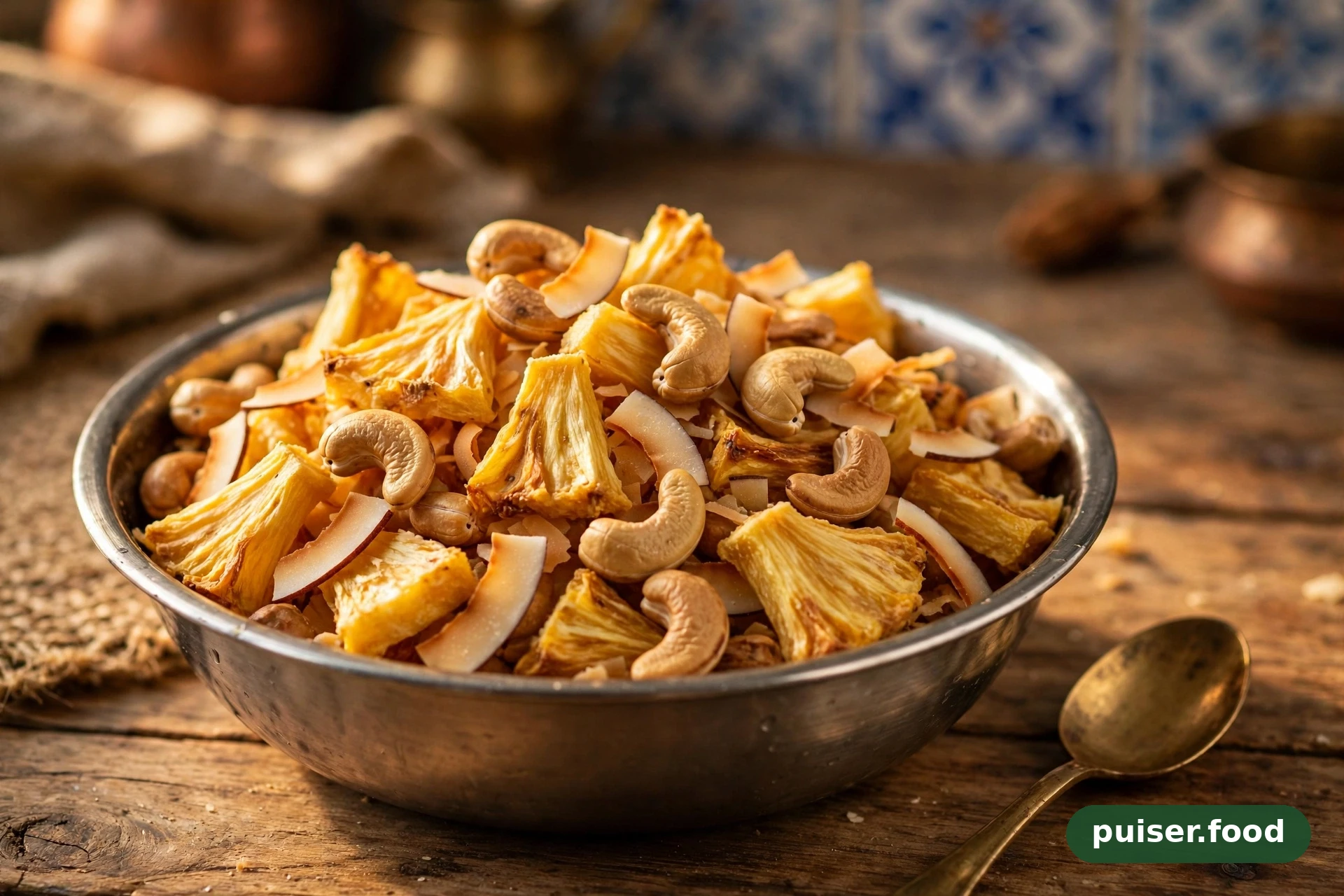
Mix 30 g of dried pineapple, chopped small, with a handful of cashews and a spoon of coconut chips, and the mix travels well in a small box for a train journey or a desk. The pineapple gives the tropical sweetness, the cashews give the crunch and the fats, and the coconut gives the aroma, so the mix feels like a holiday and eats like a snack. Our cashews benefits guide covers the nut that makes this snack filling rather than just sweet.
2. Oats porridge with coconut
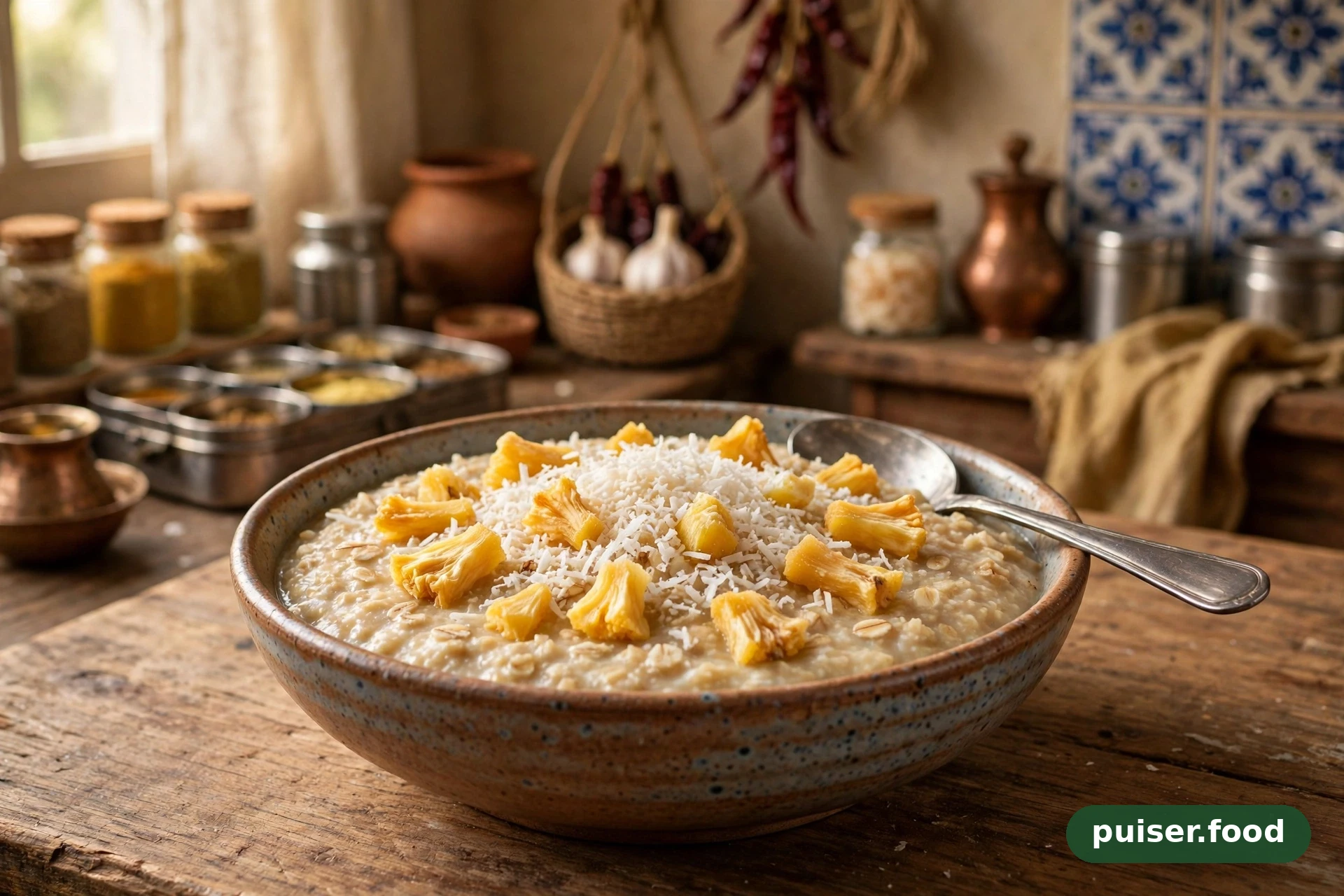
Stir 30 g of dried pineapple into a bowl of oats cooked in milk, with a spoon of desiccated coconut and no extra sugar, and the pineapple softens in the heat and turns the oats golden. The fibre of the oats makes up for the low fibre of the pineapple, and the bowl needs no jaggery or honey. This is the breakfast where dried pineapple earns its keep.
3. Curd smoothie with banana
Blend 30 g of dried pineapple, soaked in warm water for ten minutes, with a bowl of thick curd and half a banana, and the smoothie is sweet, sour and creamy at once. The curd gives the protein, the pineapple gives the vitamin C, and the banana gives the body. Soak the pineapple first, because dry rings will not blend smooth.
4. Pineapple fried rice
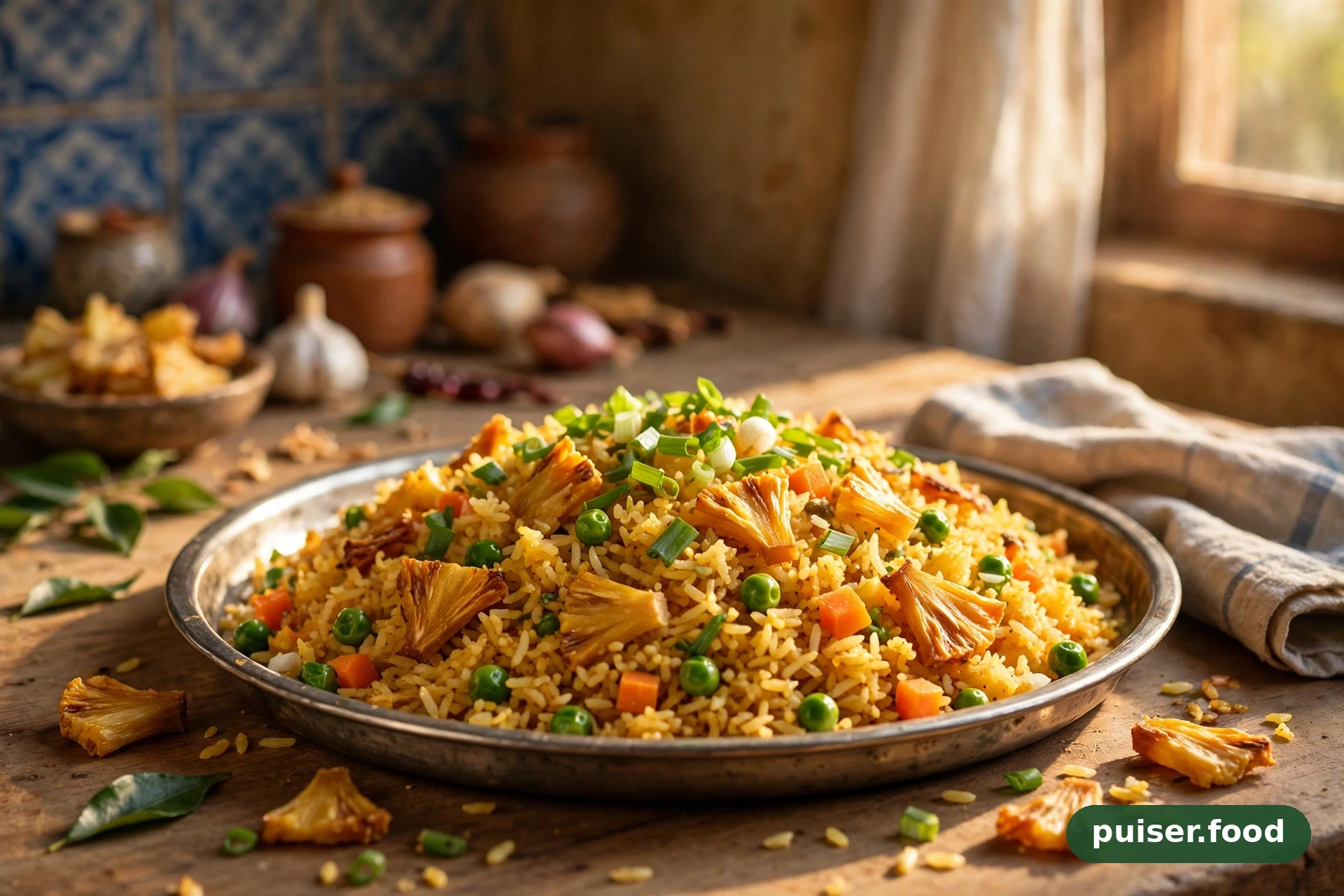
Toss 30 g of dried pineapple, chopped small, into a pan of fried rice with peas, carrots, spring onion and a little soya sauce, and the pineapple gives the rice a sweet and sour lift against the salt of the sauce. The fruit works in fried rice the way fresh pineapple does in a Thai style dish, as a small sweet contrast, and the portion stays small because the rice is the meal. Soak the pineapple in warm water first, so it softens before it meets the pan.
5. Green salad with paneer and pineapple
Toss 30 g of dried pineapple into a salad of greens, cucumber, crumbled paneer and chopped walnuts, with a lemon and olive oil dressing, and the pineapple gives the salad a tropical note against the salt of the paneer. The fruit works in a salad the way mango does, as a small sweet contrast, and the portion stays small because the salad is the meal.
Buying and Storing Dried Pineapple
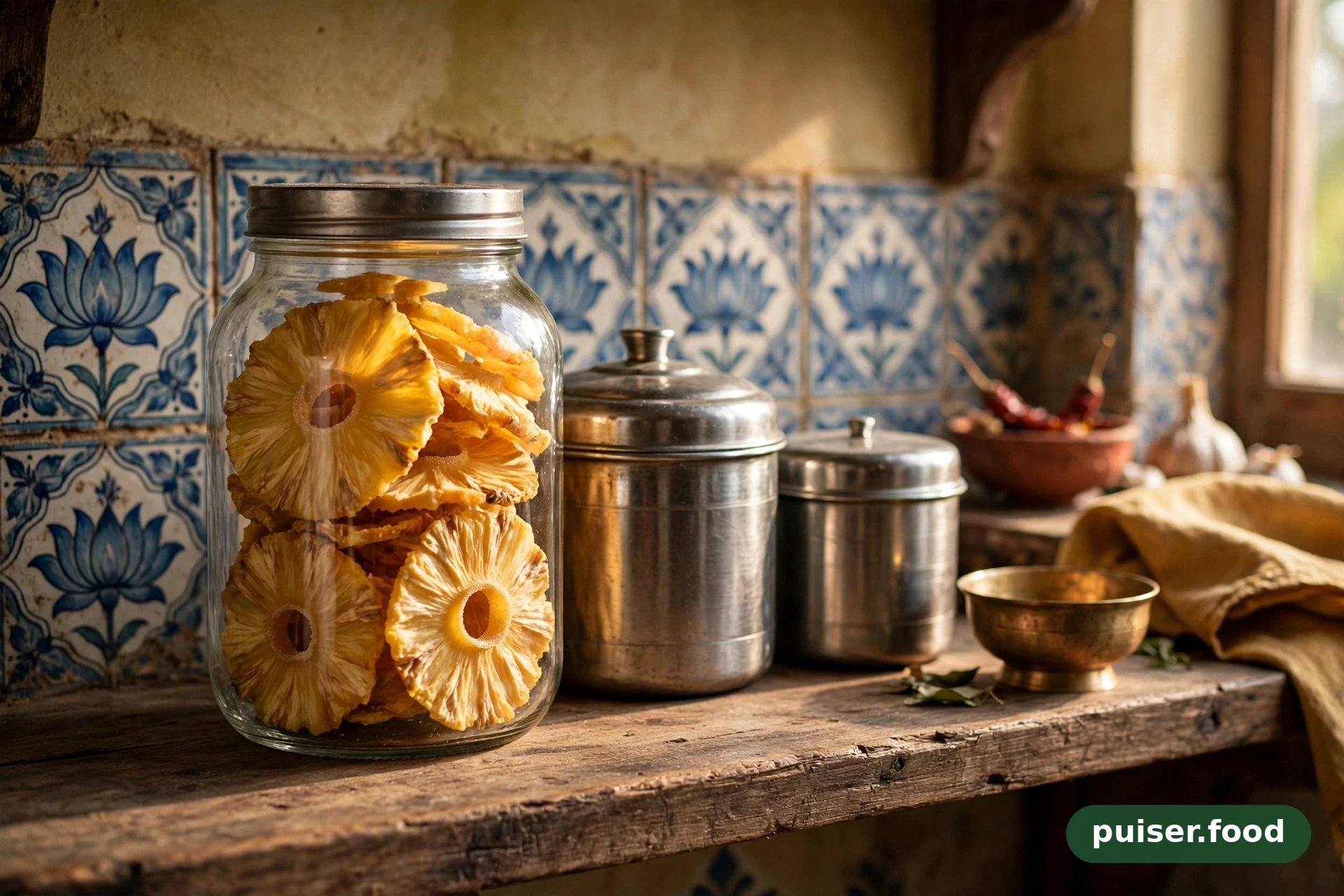
The dried pineapple benefits survive or die on the label, so buy by the label, not by the price alone. The ingredients list should read pineapple, and a pack that lists sugar first is a candied sweet rather than a dried fruit. Bright yellow rings are usually sulphured, and brown rings are usually unsulphured, so pick brown if asthma or a sulphite sensitivity is a concern. The market range for a 250 g pack runs from about ₹186 to about ₹416, so a pack at ₹295 sits in the honest middle of the range.
Store dried pineapple in an airtight jar in a cool, dark place, where it keeps for about six months, or in the fridge, where it keeps for about a year. Its sugars attract moisture, so a pack left open in a humid kitchen will turn sticky and clump, and in summer the fridge is safer once the pack is opened. Throw the pineapple away if it smells sour, tastes fermented or shows mould. A 250 g pack at ₹295 works out to about ₹35 for a 30 g handful, less than a cutting chai, and it is worth measuring rather than eating from the pack.
5 Expert Tips
1. Chop before cooking. Chop dried pineapple small before adding it to fried rice, a cake or a salad, so every bite gets pineapple.
2. Soak before blending. Soak dried pineapple in warm water for ten minutes before blending it into a smoothie, because dry rings will not blend smooth.
3. Pair with curd for protein. Eat dried pineapple with curd or nuts rather than alone, because the protein and fat slow the sugars down and keep the snack filling for longer.
4. Buy unsweetened for cooking. Buy unsweetened pineapple for cooking and baking, where sugar is added anyway, and keep the sugar infused pack for snacking.
5. Measure the handful. Measure two tablespoons into a small bowl and put the pack away, because a handful eaten from the pack is usually two, and the sugar adds up fast.
Common Mistakes to Avoid
Eating by the bowlful. The commonest mistake is treating dried pineapple like fresh pineapple and eating a whole bowl, about 100 g and 77.1 g of sugars, the highest sugar figure in the whole series. A small handful is the portion.
Buying sugar infused as plain dried. Most Indian packs are sugar infused, with sugar making up much of the weight, and they are closer to a sweet than to a dried fruit. Check the added sugars line, and if sugar comes first, put the pack back.
Expecting the bromelain to help digestion. A handful of dried pineapple will not fix a heavy meal, because heat drying cuts the active bromelain and no trial has tested dried pineapple for digestion.
Storing in the open pack. A pack left open in a humid kitchen turns sticky, clumps and can ferment. Move the pineapple to an airtight jar on the day the pack is opened.
Putting it in kheer. Pineapple acid and bromelain curdle milk, so dried pineapple in a kheer or a milk pudding will split the milk and spoil the dish. Keep it for oats, fried rice and baking, and use raisins or dates in kheer.
Frequently Asked Questions
What are the main dried pineapple benefits?
The main dried pineapple benefits are vitamin C, potassium and zero sodium. A 100 g portion gives about 31.1 mg of vitamin C and 365 mg of potassium for about 347 kcal. A small handful gives about 9.3 mg of vitamin C.
How much dried pineapple should I eat in a day?
A small handful of dried pineapple a day, about 30 g or two tablespoons, is a sensible portion for most adults. That gives about 104 kcal and 9.3 mg of vitamin C. Eat it in a trail mix, salad or oats, rather than by the bowlful.
Does dried pineapple help digestion?
Dried pineapple may help digestion a little, because pineapple carries bromelain, an enzyme that breaks down protein. Heat drying cuts the active bromelain, so the dried fruit is a weaker version of the fresh one. No trial has tested dried pineapple for digestion, so eat it for vitamin C, not enzymes.
Is dried pineapple good for diabetes?
Dried pineapple is sugar dense, about 77.1 g of sugars per 100 g, the highest of the whole series, so a handful has a real effect on blood sugar. The fibre is low, only 2.4 g per 100 g, so the sugars arrive fast. People with diabetes should count pineapple as the sweet of the meal and ask their doctor.
Is dried pineapple good for the heart?
Dried pineapple may help the heart, because its potassium and zero sodium support a healthy diet, and potassium helps the body balance fluids. The benefit comes from the whole diet, not from one fruit. Dried pineapple does not treat heart disease, so keep the portion small.
Does dried pineapple help with constipation?
Dried pineapple helps only a little with constipation, because its fibre is low, only 2.4 g per 100 g, and a small handful gives just 0.7 g. It adds some bulk to the stool, but prunes and dates are far better for this. Eat pineapple for its vitamin C and flavour, not for fibre.
Is dried pineapple better than raisins?
Dried pineapple carries more vitamin C than raisins, about 31.1 mg per 100 g, and less fibre, 2.4 g against 3.7 g. Raisins carry far more potassium and iron, about 749 mg and 1.88 mg against 365 mg and 0.16 mg. Pineapple carries far more sugar, 77.1 g against 59.2 g, so the choice depends on what the meal needs.
Is unsweetened dried pineapple better?
Unsweetened dried pineapple carries no added sugar, so it is the better buy for blood sugar, but it is chewy and sharply sour, and hard to eat plain. It suits cooking and baking, where sugar is added anyway. Sugar infused pineapple is soaked in syrup before drying, and its sugars are far higher than the figures in this guide.
Is dried pineapple safe for children?
Dried pineapple is safe for children in small amounts, about a tablespoon for a young child, and it makes a better snack than a biscuit. It is soft and small, but young children should eat it sitting down and supervised. Its acid can sore the mouth in large amounts, and its sugars are sticky, so rinse the mouth after eating.
How do I store dried pineapple?
Dried pineapple keeps for about six months in an airtight jar in a cool, dark place, or about a year in the fridge, because its sugars attract moisture and the fruit can ferment in heat. Store it in the fridge once opened in summer. Throw the pineapple away if it smells sour or shows mould.
Conclusion
The dried pineapple benefits are real, and they are simple: vitamin C that counts, potassium that supports a healthy diet, and zero sodium, with a bromelain story that is thinner in the dried fruit than in the fresh one. The catch is just as simple, 77.1 g of sugars per 100 g, the highest of the whole series, so the portion is a small handful, not a bowlful. Buy an unsulphured pack, check the sugar on the label, measure two tablespoons, and the pineapple earns its place in the jar.
Disclaimer: This article is for general information only and is not medical advice. If you have diabetes, asthma, a sulphite sensitivity, or any health condition, talk to your doctor before changing your diet.