Introduction
Dried mango is the aam of the Indian trail mix, the soft, chewy golden slice that tastes like summer and sits in the lunchbox, the desk drawer and the dry fruit box of every festival. It tastes like toffee and carries the sugar to match, so the honest question is whether it earns its place as a health food or only as a sweet. This guide covers the dried mango benefits that matter most, the vitamin C and fibre numbers told honestly, the sweetened question with both views, and the five dishes where dried mango works best.
In this article
- The short answer
- What dried mango actually is
- Dried mango in numbers
- 10 benefits worth knowing
- Sweetened versus unsweetened, honestly
- Alphonso versus Totapuri versus Kesar
- Five everyday ways to use it
- Buying and storing dried mango
- 5 expert tips
- Common mistakes to avoid
- Frequently asked questions
- Conclusion
The Short Answer
The dried mango benefits that matter most are vitamin C, folate and quick energy in a dried fruit that needs no cooking at all. A 100 g portion of sweetened dried mango gives about 42.3 mg of vitamin C and 2.4 g of fibre for about 319 kcal, and a small handful of 30 g gives about 96 kcal and 12.7 mg of vitamin C. Dried mango is sugar dense, about 66 g of sugars per 100 g, so a small handful a day is the portion, and it suits the trail mix, the oats and the muffin best.
What Dried Mango Actually Is
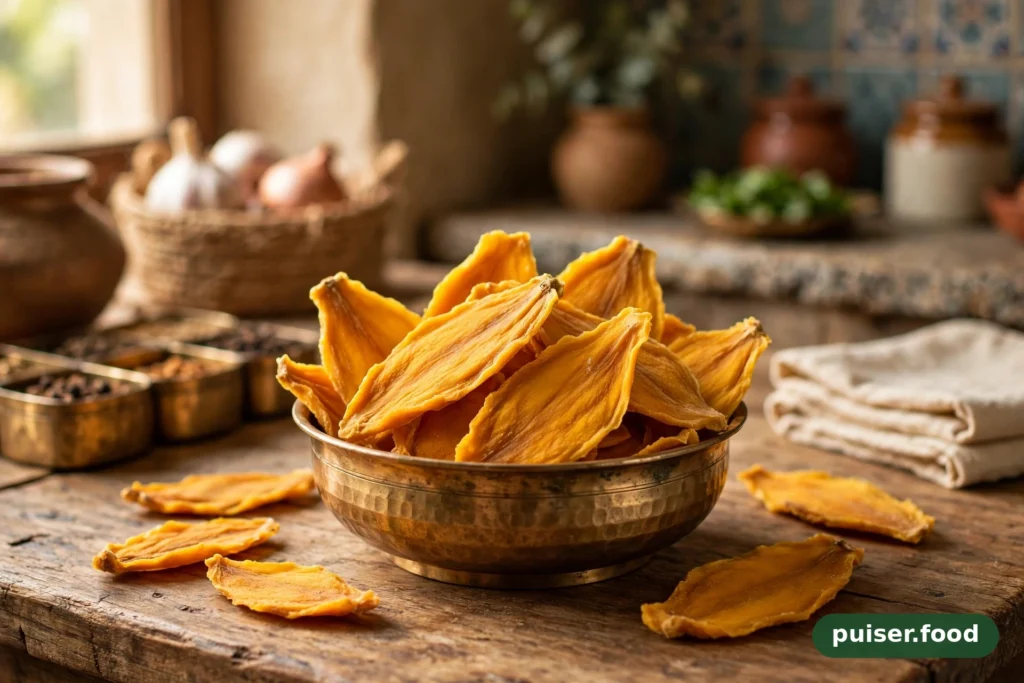
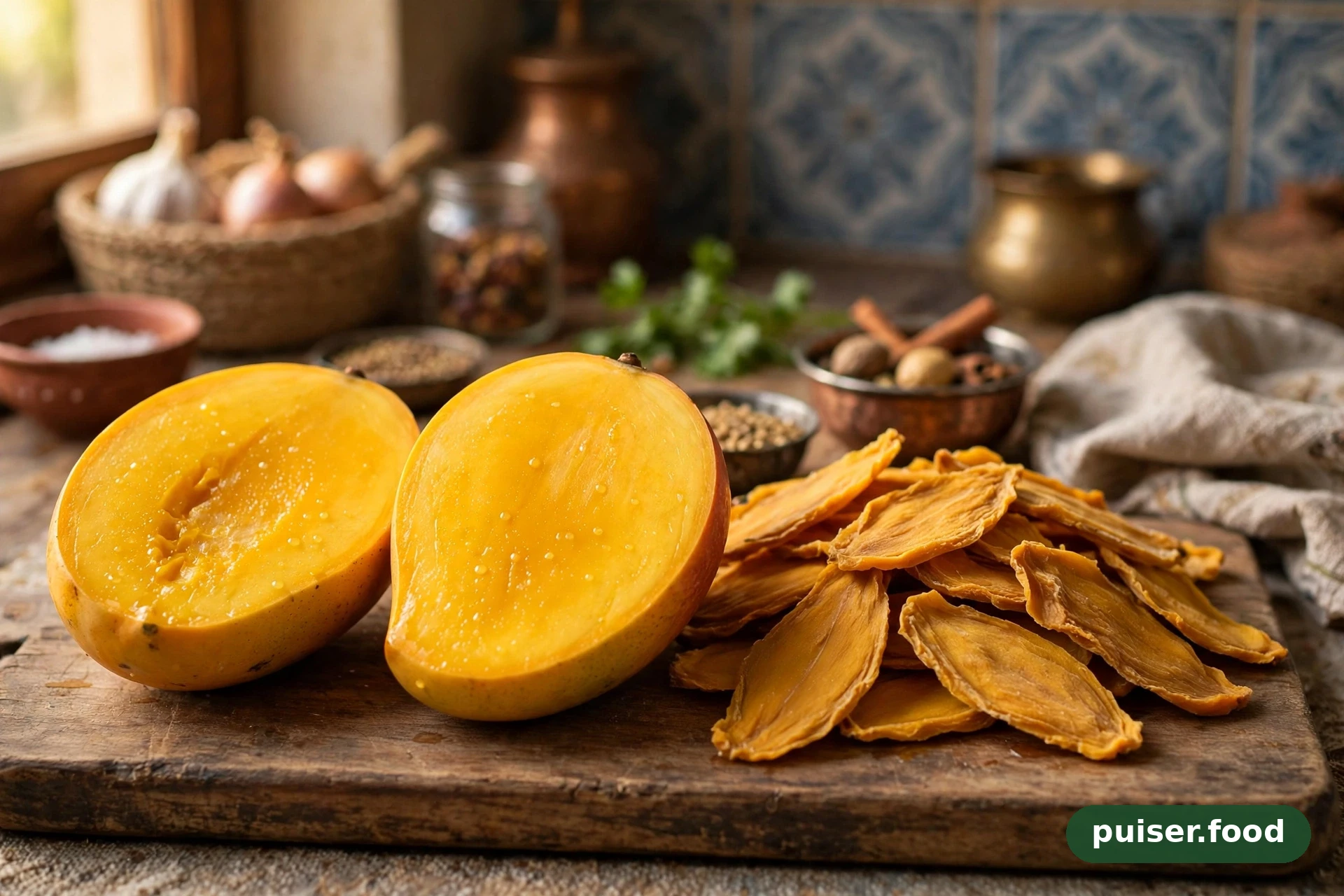
Dried mango is the ripe mango, Mangifera indica, sliced thin and dried in the sun or in a dryer until most of the water is gone and the sugars are concentrated, and it is the fruit India knows best, grown in Maharashtra, Uttar Pradesh, Andhra Pradesh and Gujarat. The mango is picked ripe, peeled, sliced and dried until it turns soft, golden and chewy, and it keeps for months without a fridge. India dries mostly Totapuri and Kesar for the market, while Alphonso, the king of mangoes, is dried in smaller lots for the premium pack, and the fruit holds a place in Indian kitchens that no other dried fruit quite matches, in the trail mix, in the oats, in the baking and in the lunchbox of every summer.
That dried mango carries vitamin C and folate with its sugar is the first thing to understand, because it is what separates a mango slice from a sweet, and it is where the dried mango benefits start. A mango slice gives natural sugars with vitamin C, folate, vitamin B6 and potassium attached, and the vitamin C supports the immune system, the folate supports cell growth, and the fruit still tastes like summer, which is why dried mango works as a snack and a garnish at once.
Dried mango is also the fruit of the lunchbox and the baking tray, in the trail mix of a train journey, in the oats of a winter morning, in the muffins of a Sunday, and in the salad of a summer lunch. Our anjeer benefits guide covers the calcium rich fig of the same shelf, the one to reach for when the question is anjeer rather than aam. Our apricots benefits guide covers the golden dry fruit of the same shelf, the one to reach for when the question is khubani rather than aam.
Dried Mango in Numbers
The table below sets out the dried mango benefits in numbers, and it uses one basis throughout. The figures are from USDA FoodData Central, FDC #169091, for mango, dried, sweetened, per 100 g, and they are the figures this guide uses throughout. The vitamin C figure, 42.3 mg per 100 g, is the one that matters most, and it is the figure that separates dried mango from every other dried fruit in this series, so it can be checked two ways.
| Nutrient (per 100 g sweetened dried mango) | Dried Mango |
|---|---|
| Energy | 319 kcal |
| Protein | 2.45 g |
| Fat | 1.18 g |
| Carbohydrates | 78.6 g |
| Dietary fibre | 2.4 g |
| Sugars | 66.3 g |
| Calcium | 0 mg |
| Iron | 0.23 mg |
| Magnesium | 20 mg |
| Phosphorus | 50 mg |
| Potassium | 279 mg |
| Sodium | 162 mg |
| Vitamin C | 42.3 mg |
| Vitamin A, RAE | 67 mcg |
| Folate | 68 mcg |
| Vitamin B6 | 0.3 mg |
Figures per USDA FoodData Central FDC #169091, mango, dried, sweetened, per 100 g. The vitamin C, 42.3 mg per 100 g, is the standout vitamin, and a portion of 30 g gives about 12.7 mg, which is about a third of the 40 mg a day that adults are advised to eat. The iron, 0.23 mg per 100 g, is negligible, and this guide says so plainly below, because dried mango is sometimes sold as an iron food and the number does not support the claim.
The second table shows what a real portion gives you. A small handful, about 30 g or seven slices, gives about 96 kcal and 19.9 g of sugars, which is a sensible daily portion. A 40 g portion, about nine slices, gives about 128 kcal and 26.5 g of sugars, which is about 7 teaspoons of sugar, and that is why the handful is the portion and the bowl is not.
| Portion | Energy | Sugars | Vitamin C | Price, at 295 rupees per 250 g |
|---|---|---|---|---|
| 100 g dried mango | 319 kcal | 66.3 g | 42.3 mg | About 118 rupees |
| 1 small handful, about 30 g | About 96 kcal | About 19.9 g | About 12.7 mg | About 35 rupees |
| About 9 slices, 40 g | About 128 kcal | About 26.5 g | About 16.9 mg | About 47 rupees |
| 1 slice, about 5 g | About 16 kcal | About 3.3 g | About 2.1 mg | About 6 rupees |
Figures per USDA FDC #169091, scaled to the portion. Prices are worked out from dried mango at 295 rupees for 250 g, about 118 rupees per 100 g, so a small handful costs about 35 rupees and a 250 g pack gives about eight handfuls. Fresh mango, by contrast, gives only about 60 kcal and 13.7 g of sugars per 100 g, with 1.6 g of fibre and 36.4 mg of vitamin C, which shows how much the drying concentrates the sugars.
The third table compares dried mango with the other sweet dried fruits of the Indian kitchen. Dried mango carries the most vitamin C of the table and the least fibre, and no other dried fruit in it is as low in fibre. Raisins carry more potassium and iron, apricots carry more fibre and potassium, and fresh mango carries far less sugar.
| Food, per 100 g | Energy | Sugars | Fibre | Potassium | Best use |
|---|---|---|---|---|---|
| Dried mango, sweetened | 319 kcal | 66.3 g | 2.4 g | 279 mg | Trail mix, oats, baking |
| Raisins, dark seedless | 299 kcal | 59.2 g | 3.7 g | 749 mg | Kheer, poha, trail mix |
| Apricots, dried sulfured | 241 kcal | 53.0 g | 7.3 g | 1,162 mg | Handful, khubani ka meetha |
| Fresh mango | 60 kcal | 13.7 g | 1.6 g | 168 mg | Fresh snack, lassi, salads |
Comparison per USDA FoodData Central, on the same basis: dried mango FDC #169091, raisins FDC #168165, apricots FDC #173941, fresh mango FDC #169910. The vitamin C gap is the story of the table: dried mango carries about 42.3 mg of vitamin C per 100 g, raisins carry about 2.3 mg, and apricots carry almost none, which is why the mango slice leads the dried fruit shelf on vitamin C, even if the sugars are nearly as high as dates.
10 Benefits Worth Knowing
These are the ten dried mango benefits worth knowing, in the order that matters for an Indian kitchen. The first three are the nutrition facts. The rest are what those facts mean in practice, including the honest limits.
1. Vitamin C that survives the drying
At 42.3 mg of vitamin C per 100 g, dried mango is the best dried fruit for vitamin C, and that is the first of the dried mango benefits, because a small handful gives about 12.7 mg, about a third of the daily target. Vitamin C supports the immune system and helps the body make collagen for skin and gums, and it survives the drying far better than the vitamin C in most other dried fruits. The vitamin C is the headline of the mango slice, and it is the reason dried mango is the dried fruit most often named for immunity.
2. Fibre, modest but real
At 2.4 g of fibre per 100 g, dried mango gives a modest amount of fibre for a dried fruit, and a small handful gives about 0.7 g. The fibre adds bulk to the stool and feeds the good bacteria in the gut, and it is the reason dried mango helps with digestion when eaten daily with enough water. The fibre is the lowest of the dried fruit series, so this guide says so plainly, and dried mango is not the fruit to reach for when fibre is the goal.
3. Vitamin A and eye support, with a catch
At 67 mcg of vitamin A RAE per 100 g, dried mango gives a useful amount of the vitamin that eyes need, and a small handful gives about 20 mcg. The catch is that heat drying cuts beta-carotene, the main carotenoid in mango, by 60 percent or more, so the dried slice carries far less of the eye nutrient than the fresh fruit. Dried mango still gives some vitamin A, and the vitamin C beside it supports eye health too, but the fresh mango eye story weakens in the dried fruit, and this guide keeps it there.
4. Folate and B6 for everyday cell work
At 68 mcg of folate and 0.3 mg of vitamin B6 per 100 g, dried mango gives useful amounts of two B vitamins that the body uses to build cells and make energy from food. A small handful gives about 20 mcg of folate and 0.09 mg of B6, which is a small share of the daily need, but it adds up across a varied diet. Folate matters most in pregnancy, when the body needs more of it, and dried mango is one of the few sweet snacks that carries any at all.
5. Quick energy for the tiffin and the run
Dried mango carries natural sugars that the body can use quickly, and it is the reason mango slices sit in trail mix, in the school tiffin and in the pocket of a runner. A small handful gives about 96 kcal of quick energy, and the fibre in the fruit slows the release a little, so the energy lasts longer than the same calories from sugar. The energy is real, and it is also the reason the portion matters, because a bowl of dried mango gives about 319 kcal and 66 g of sugars.
6. Antioxidants, led by mangiferin
Dried mango carries mangiferin, a polyphenol found in mangoes, along with gallic acid, quercetin and carotenoids that act as antioxidants in the body. The antioxidants protect cells from the damage of free radicals, and mangoes are among the richest fruits for polyphenols, though drying lowers them below the fresh fruit. Antioxidants are not a reason to eat mango slices by the bowlful, but they are a real extra on top of the vitamin C and folate.
7. Iron, honestly almost none
Dried mango is sometimes sold as an iron food, and the number does not support the story: at 0.23 mg of iron per 100 g, a handful gives about 0.07 mg, which is nothing beside the 18 mg a day that adult women need. One secondary source claims 1.2 mg, but the USDA record says 0.23 mg, and this guide uses the USDA figure. Dried mango still belongs in an iron rich diet, because the vitamin C in the meal helps the body absorb iron from other foods, but the slice itself is not the iron source.
8. Skin support, through vitamin C
At 42.3 mg of vitamin C per 100 g, dried mango supports skin health in the ordinary way vitamin C does, by helping the body make collagen, the protein that keeps skin firm and helps wounds heal. The beta-carotene beside it may also help the skin, though drying cuts it sharply, so the vitamin C does most of the work. The skin story is a supporting role, not the headline, and this guide keeps it there, because the portion, not the 100 g figure, is what the reader eats.
9. A snack that travels and keeps
Dried mango needs no fridge, no cooking and no packet to open, and it keeps for months in an airtight jar, which makes it one of the most practical snacks in the Indian kitchen. A small box of mango slices goes into a lunchbox, a handbag, a desk drawer or a train journey, and the fruit is ready to eat at any of them. That ease is part of why dried mango stays in the jar long after the summer is done, and it is a benefit worth having for a busy household.
10. A fruit that works in sweet and savoury cooking
Dried mango works in more dishes than any other tropical fruit, in trail mix, in oats, in muffins, in salads and in chutneys. The sweet chew suits sweet dishes best, and the slices soften in warm water, which is why a few soaked slices lift a chutney or a lassi. That range is part of why the price is worth paying, because the fruit does more than sit in the jar.
Sweetened Versus Unsweetened, Honestly
The dried mango benefits for skin and immunity rest mostly on vitamin C, and the sweetened question is where buyers get confused. Most dried mango sold in India is sweetened, with sugar added during drying, and the USDA record for sweetened dried mango gives 66.3 g of sugars per 100 g. The unsweetened record gives nearly the same sugars, 66.3 g, because mango itself is sweet and drying concentrates what is already there, so unsweetened is barely lower in sugar and the label is a small comfort, not a real difference.
The real difference is the sulphur. Bright yellow dried mango is often treated with sulphur dioxide to keep its colour, and people with asthma or a sulphur sensitivity should buy the brown, unsulphured kind instead. The brown slices look duller, and they taste the same, and they are the safer buy for sensitive eaters. Check the label for sulphur dioxide, and pick the pack with the shortest ingredient list.
Aam papad is not dried mango, and the confusion costs buyers money. Aam papad is mango pulp mixed with sugar, cooked and dried into sheets, and it is usually sweeter than dried mango with little fibre. Dried mango is sliced fruit, dried whole, with the fibre of the fruit still in it. Both are sweets, and the slice is the better buy when the goal is the fruit itself.
Alphonso Versus Totapuri Versus Kesar
Alphonso is the sweetest and the dearest mango, grown in Ratnagiri and Devgad, and dried Alphonso slices cost far more than any other kind. Totapuri is the firm, tangy mango of Andhra Pradesh and Karnataka, and it is the one most often dried for the market, because it holds its shape and dries evenly. Kesar, the saffron mango of Gujarat, sits between them on sweetness and price, and it is the one most often sold as premium dried mango in Indian shops.
The dried mango benefits barely change between Alphonso and Totapuri, because the fruit is the same and only the variety differs, so the choice is mostly one of taste, texture and price. For daily eating, Totapuri is the right buy, because it is firm, chewy and cheap enough to eat a handful a day without thinking about the price. For a gift box, Alphonso is the right buy, because no other mango tastes as rich. For cooking, Totapuri is the right buy, because it holds its shape in baking and does not turn to mush.
Five Everyday Ways to Use It
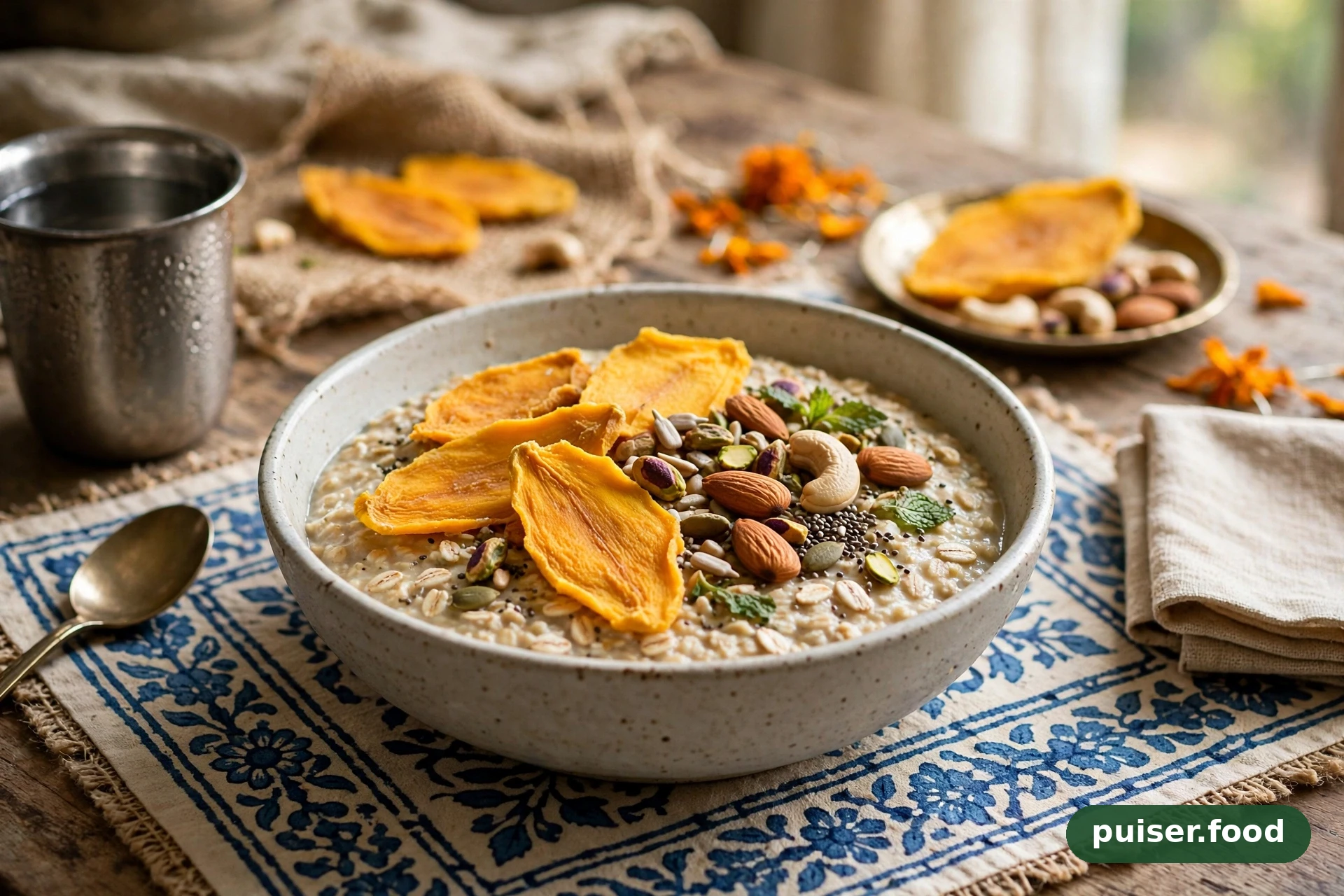
The dried mango benefits show up in five everyday dishes. First, trail mix, mango slices with peanuts, makhana and seeds, the snack that travels in a pocket. Second, oats and curd, the breakfast bowl where a few chopped slices sweeten the plain base. Third, muffins and cookies, the baking where mango slices replace some of the sugar. Fourth, a green salad, where a few slices sweeten the leaves and the lemon dressing. Fifth, chutney and lassi, where slices soaked in warm water soften and lift the dish.
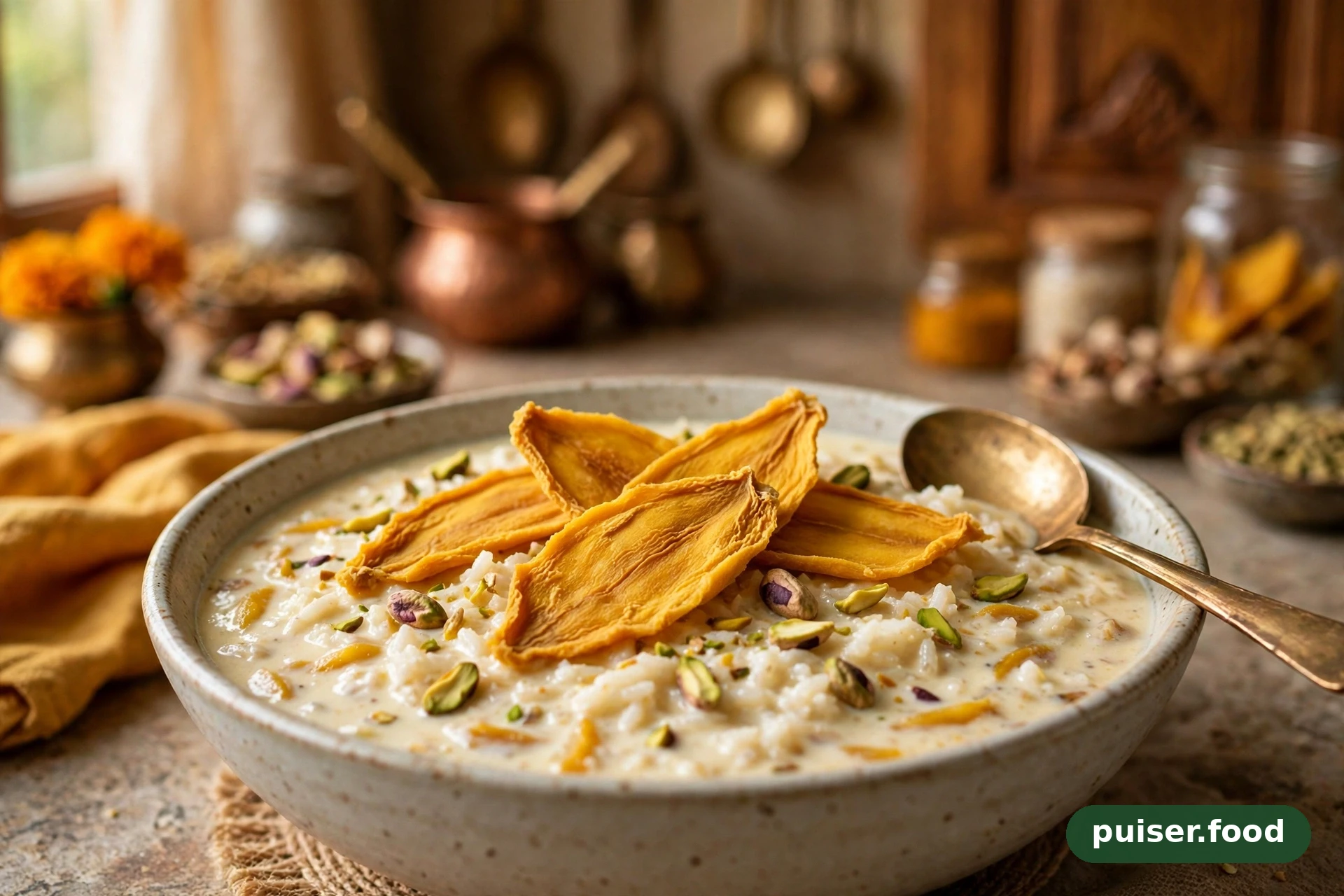
The fruit also works chopped into pulao, where it sweetens the rice, and in kheer, where it plumps up in the hot milk. Our dried cranberries benefits guide covers the tart red berry of the same trail mix, the one to reach for when the mix needs tartness rather than sweetness. Our prunes benefits guide covers the dried plum of the same shelf, the one to reach for when the question is digestion rather than aam.
Buying and Storing Dried Mango
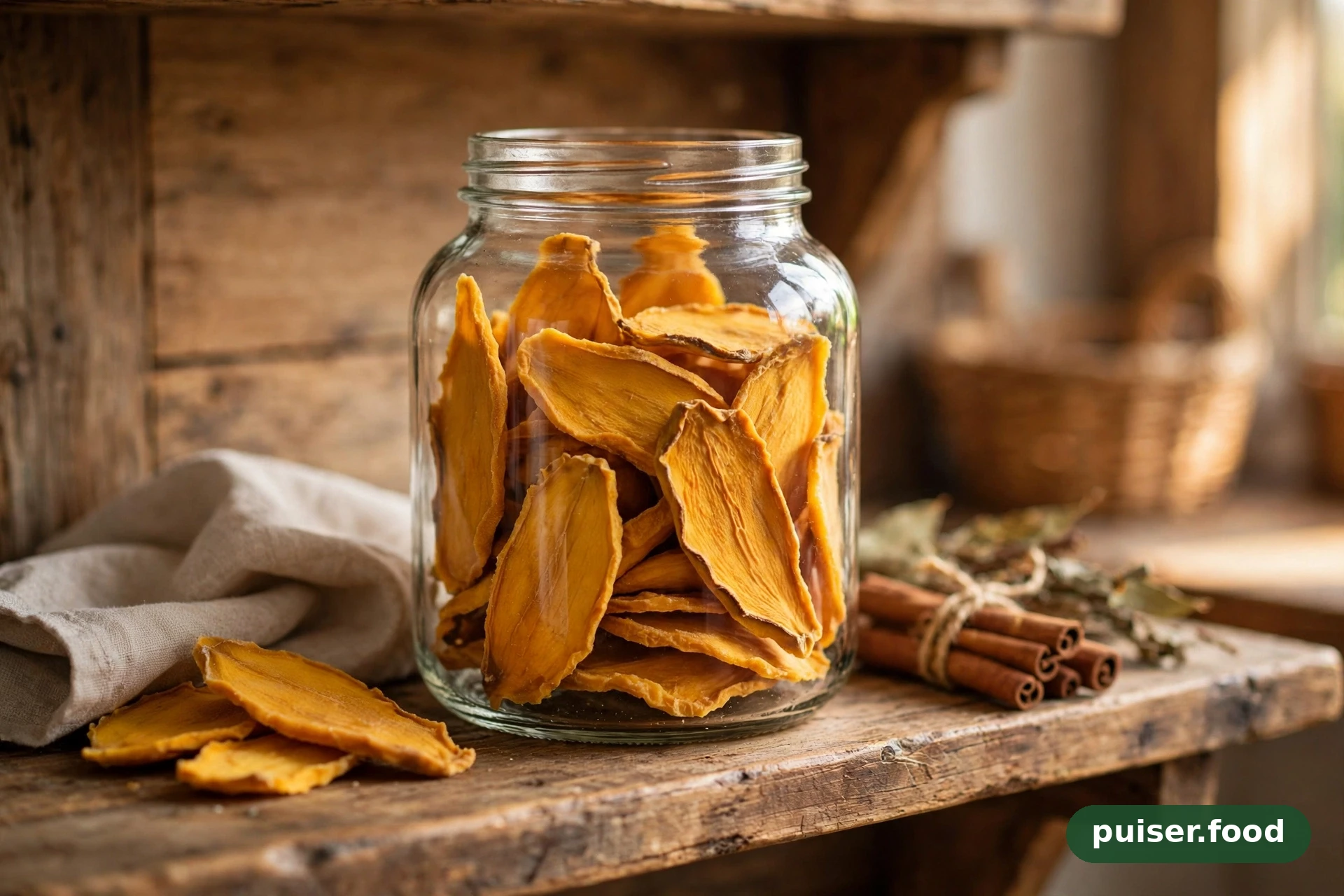
The dried mango benefits survive or die on whether the slices are fresh, because old slices dry out, turn hard and lose their soft chew. Good slices are soft, pliable and golden, with unbroken edges and no white sugar crystals on the surface, and they should smell sweet and mango like, not sour or fermented. Bright orange slices are often sulphured, so buy the brown, unsulphured kind where possible, and check the label for added sugar.
Price is the honest catch. Sweet dried mango slices sell for about 205 to 314 rupees per 250 g, and a 250 g pack gives about eight handfuls, so a small handful costs about 35 rupees. Imported brands cost far more, about 3,000 rupees for 250 g, which is why the imported pack is a gift and the Indian pack is the daily slice. Puiser’s new Organic Dried Mango, 250 g at 295 rupees, sits near the top of the Indian range, and it is the product this article pairs with.
Store mango slices in an airtight jar in a cool, dark place, and in the fridge once opened in summer, because the sugars attract moisture and the fruit can ferment in heat. They keep for about six months in a cool place, or about a year in the fridge. If the slices smell sour, taste fermented or show mould, throw them away, because spoiled mango is not worth eating. Dried mango is also a choking risk for small children, so chop the slices fine for toddlers.
5 Expert Tips
Five habits protect the vitamin C in dried mango. First, buy a small pack at a time, and taste a slice before you buy a kilo. Second, eat a small handful a day, not a bowlful, because the fruit is sugar dense and the portion is the whole story. Third, soak slices in warm water for ten minutes before adding them to chutney or lassi, because the soaked fruit is softer and blends better. Fourth, mix mango slices with nuts and seeds, because the fat and protein slow the sugars down and keep the snack filling. Fifth, buy brown unsulphured slices where possible, because the bright orange kind is often treated with sulphur dioxide.
Common Mistakes to Avoid
The most common mistake is eating a bowlful and calling it a health food, when the portion is a small handful and a bowlful carries about 319 kcal and 66 g of sugars. The second is buying unsweetened mango and counting it as low sugar, when the sugars are nearly the same as the sweetened kind. The third is quoting dried mango as an iron food, when a handful gives about 0.07 mg of iron, far too little to matter. The fourth is buying aam papad and counting it as dried mango, when aam papad is pulp plus sugar with little fibre. The fifth is storing mango slices on a warm shelf for months, when the fruit ferments and turns sour.
Frequently Asked Questions
What are the main dried mango benefits?
The main dried mango benefits are vitamin C, folate and quick energy. A 100 g portion gives about 42.3 mg of vitamin C and 2.4 g of fibre for about 319 kcal. A small handful gives about 12.7 mg of vitamin C, which is about a third of the daily target.
How many dried mango slices should I eat in a day?
A small handful of dried mango a day, about 30 g or seven slices, is a sensible portion for most adults. That gives about 96 kcal and 19.9 g of sugars. Eat them in a trail mix, oats or muffins, rather than by the bowlful, because the fruit is sugar dense.
Is dried mango good for diabetes?
Dried mango is sugar dense, about 66 g of sugars per 100 g, so a small handful has a real effect on blood sugar. The fibre slows the sugars down a little, but the portion must stay small. People with diabetes should count mango slices as the sweet of the meal and ask their own doctor.
Is dried mango good for the skin?
Dried mango may help the skin, because its vitamin C helps the body make collagen, the protein that keeps skin firm and helps wounds heal. The beta-carotene beside it may also help, though drying cuts it sharply. The skin benefit comes from the whole diet, not from one fruit.
Is dried mango better than aam papad?
Dried mango is better than aam papad as a fruit, because it is sliced mango dried whole, with the fibre of the fruit still in it. Aam papad is mango pulp mixed with sugar, cooked and dried into sheets, and it is usually sweeter with little fibre. Both are sweets, and the slice is the better buy.
Is unsweetened dried mango healthier?
Unsweetened dried mango is barely lower in sugar than the sweetened kind, because mango itself is sweet and drying concentrates what is already there. Both give about 66 g of sugars per 100 g. The real difference is the sulphur: bright yellow slices are often sulphured, and brown unsulphured slices suit sensitive eaters better.
Does dried mango help with constipation?
Dried mango can help with constipation a little, because its fibre adds bulk to the stool, but at 2.4 g per 100 g it carries the least fibre of the dried fruit series. A small handful gives about 0.7 g of fibre. Dried mango is not a fibre food, and persistent constipation deserves a doctor.
Is dried mango good for anaemia?
Dried mango is not a useful iron food, because at 0.23 mg of iron per 100 g a handful gives about 0.07 mg, which is nothing beside the daily need. Dried mango still belongs in an iron rich diet, because its vitamin C helps the body absorb iron from other foods, but the slice itself is not the iron source.
Which mango is best for drying, Alphonso or Totapuri?
Alphonso is the sweetest and dearest mango for drying, and its slices cost far more than any other kind. Totapuri is firm and tangy, and it is the one most often dried for the market, because it holds its shape and dries evenly. The nutrition differences are small, so the choice is mostly taste and price.
How do I store dried mango?
Dried mango keeps for about six months in an airtight jar in a cool, dark place, or about a year in the fridge, because its sugars attract moisture and the fruit can ferment in heat. Store the slices in the fridge once opened in summer. Throw them away if they smell sour or show mould.
Conclusion
Dried mango is the small golden slice that asks for nothing but a handful a day, and gives back a trail mix, an oats bowl, a muffin and a chutney, all for about 35 rupees a portion. A small handful gives useful vitamin C and folate, and a sugar story that is honest about the sweetness, and the fruit keeps well in a cool jar for months. The dried mango benefits are real, but they are ordinary benefits, the kind that show up in a better everyday kitchen rather than in a miracle. Buy them fresh, store them cool, eat a handful a day, and keep them on the daily rotation.
Disclaimer: This article is for general information only and is not medical advice. If you have a medical condition, are pregnant or breastfeeding, or take regular medication, talk to your doctor before changing your diet.