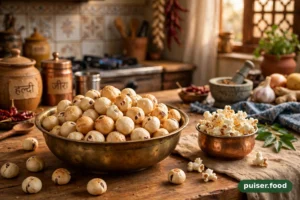
Millets for daily diet is one of the simplest upgrades an Indian kitchen can make, and it does not need a new diet plan. Millets are the small grains India ate for centuries before rice and wheat took over: ragi, bajra, jowar, foxtail, little millet, kodo and barnyard. They are high in fibre, naturally gluten free, and they grow with far less water than paddy. This guide shows which millet to start with, how to cook it, and five easy swaps that work in a normal week.
In this article
What millets are
Millets are a group of small-seeded cereal grains grown across India, Africa and Asia for thousands of years. The five you will meet most in India are ragi (finger millet), bajra (pearl millet), jowar (sorghum), foxtail millet and little millet, with kodo and barnyard millet close behind. They are not one grain. Each has its own taste, texture and cooking time, and each suits different dishes. Ragi is usually eaten as flour, bajra and jowar as rotis, and foxtail and little millet as whole grains in place of rice.
What they share is a strong nutrition profile for a grain. They are naturally gluten free, which matters for anyone avoiding gluten, though packaged flour can pick up wheat during milling, so check the label if you have coeliac disease. They are high in fibre, which keeps you full longer, and they carry useful amounts of iron, magnesium and B vitamins. They are good grains, not miracle foods, and they work best as part of a varied diet rather than as a replacement for everything else.
Why millets are back
Millets were pushed aside by rice and wheat for reasons of policy and convenience rather than nutrition. Government procurement and the public distribution system favoured rice and wheat, and those grains are easier to cook and easier to buy. Millets came back into conversation after the United Nations declared 2023 the International Year of Millets, and after the Indian government began promoting them as Shree Anna, the mother of all grains. Rising interest in diabetes-friendly food and in traditional diets helped too.
The honest version is that millets do not cure diabetes, do not cause weight loss on their own, and are not a different category of food from other whole grains. What they do is give you more fibre and minerals per bite than white rice, a steadier release of energy, and a grain that grows with far less water in a warming country. That is enough reason to eat them, without any bigger claim.
The main millets at a glance
Start with the millet that matches the dish you already cook. Foxtail and little millet are the easiest for beginners, because they are mild, cook quickly and replace rice in most dishes. Ragi is the nutrition standout, with calcium high enough to stand comparison with dairy, which makes it valuable for children, older adults and anyone not eating dairy. Bajra and jowar suit rotis and winter meals, and they are the most filling of the group.
| Millet | Indian names | Best for | Standout nutrition |
|---|---|---|---|
| Ragi, finger millet | Ragi, nachni, mandua | Porridge, dosa, roti, malt | Calcium about 344 mg per 100 g |
| Bajra, pearl millet | Bajra, sajje, kambu | Roti, khichdi, winter meals | Iron about 8 mg per 100 g |
| Jowar, sorghum | Jowar, jola, cholam | Bhakri, roti, porridge | Fibre about 7.6 g per 100 g |
| Foxtail millet | Kangni, thinai, navane | Upma, pulao, khichdi, curd rice | Protein about 12.3 g per 100 g |
| Little millet | Kutki, samai, chama | Upma, pulao, rice replacement | Mild, quick cooking, easy to digest |
| Kodo millet | Kodon, varagu, arikelu | Khichdi, pulao, upma | High fibre, slow to digest |
| Barnyard millet | Jhangli, kuthiraivali, udalu | Upma, khichdi, fasting meals | Fastest cooking, light on the stomach |
How millets compare with rice and wheat
The table below uses approximate values per 100 grams raw from the Indian Food Composition Tables 2017. Millets beat white rice clearly on fibre and minerals, and they hold their own against whole wheat on protein while adding more fibre. Ragi stands out for calcium, bajra for iron, and foxtail for protein. The gap is real but not magic. A millet meal is better than a white rice meal, and a varied diet with several grains is better than either on its own.
| Grain, per 100 g raw | Protein | Fibre | Calcium | Iron |
|---|---|---|---|---|
| Ragi, finger millet | 7.3 g | 11.5 g | 344 mg | 3.9 mg |
| Bajra, pearl millet | 11.6 g | 11.5 g | 42 mg | 8.0 mg |
| Jowar, sorghum | 10.4 g | 7.6 g | 25 mg | 4.1 mg |
| Foxtail millet | 12.3 g | 6.7 g | 31 mg | 2.8 mg |
| Whole wheat | 11.8 g | 11.2 g | 39 mg | 5.1 mg |
| White rice, milled | 6.8 g | 0.4 g | 10 mg | 0.7 mg |
Millets for daily diet: the five easy ways
The easiest way to bring millets for daily diet into your kitchen is to start with breakfast and one-pot meals, where millets forgive a beginner. Rotis come later, once you have had a few wins elsewhere. Here are the five swaps that work best.
1. Ragi porridge for breakfast
Cook ragi flour with water or milk into a warm porridge, and add fruit, nuts or a spoon of jaggery. It takes ten minutes, it is filling until lunch, and it is the gentlest introduction to millets for children and older adults. Ragi malt, made from sprouted ragi flour, is the same idea in a drink, and it is a traditional weaning food in South India.
2. Foxtail millet upma
Use foxtail or little millet in place of semolina for upma. Roast the grain lightly, add the usual tadka and vegetables, and cook with two cups of water per cup of millet. It tastes close enough to rava upma that the family will not object, and it carries far more fibre. Our organic foxtail millet is stone-milled and unpolished, which is what you want for upma.
3. Millet khichdi
Cook foxtail, little or kodo millet with moong dal, vegetables and mild spices for a one-pot khichdi. It is the most forgiving millet dish, because the dal softens the grain and the spices carry the flavour. Serve it with curd and pickle, the way you would serve a dal khichdi, and it feels like a normal meal rather than a health project.
4. Ragi in dosa and idli batter
Replace a quarter of the rice in your dosa or idli batter with soaked ragi, or add ragi flour to the batter. Fermentation and soaking improve mineral absorption and soften the flavour, so the dosa tastes almost the same and carries more calcium and iron. This is the easiest way to feed millets to a family that loves dosa, because nothing about the meal changes.
5. Millet flour in rotis, blended first
Mix bajra or jowar flour with wheat flour for rotis, starting at one part millet to three parts wheat, and increase the millet as you get used to the taste. Millet flours have no gluten, so the dough needs hot water, patient kneading and a gentler hand, and the rotis are patted rather than rolled. Expect the first attempts to be poor. That is normal, and it is why roti comes last in this list, not first.
| Easy way | Millet to use | Meal | Why it works |
|---|---|---|---|
| Ragi porridge | Ragi flour | Breakfast | Ten minutes, filling, gentle for all ages |
| Upma | Foxtail or little millet | Breakfast | Tastes like rava upma, more fibre |
| Khichdi | Foxtail, little or kodo | Lunch or dinner | One pot, dal softens the grain |
| Dosa and idli | Ragi | Breakfast or dinner | Fermentation improves absorption |
| Blended roti | Bajra or jowar flour | Lunch or dinner | Start at one part millet, increase slowly |

Cooking basics
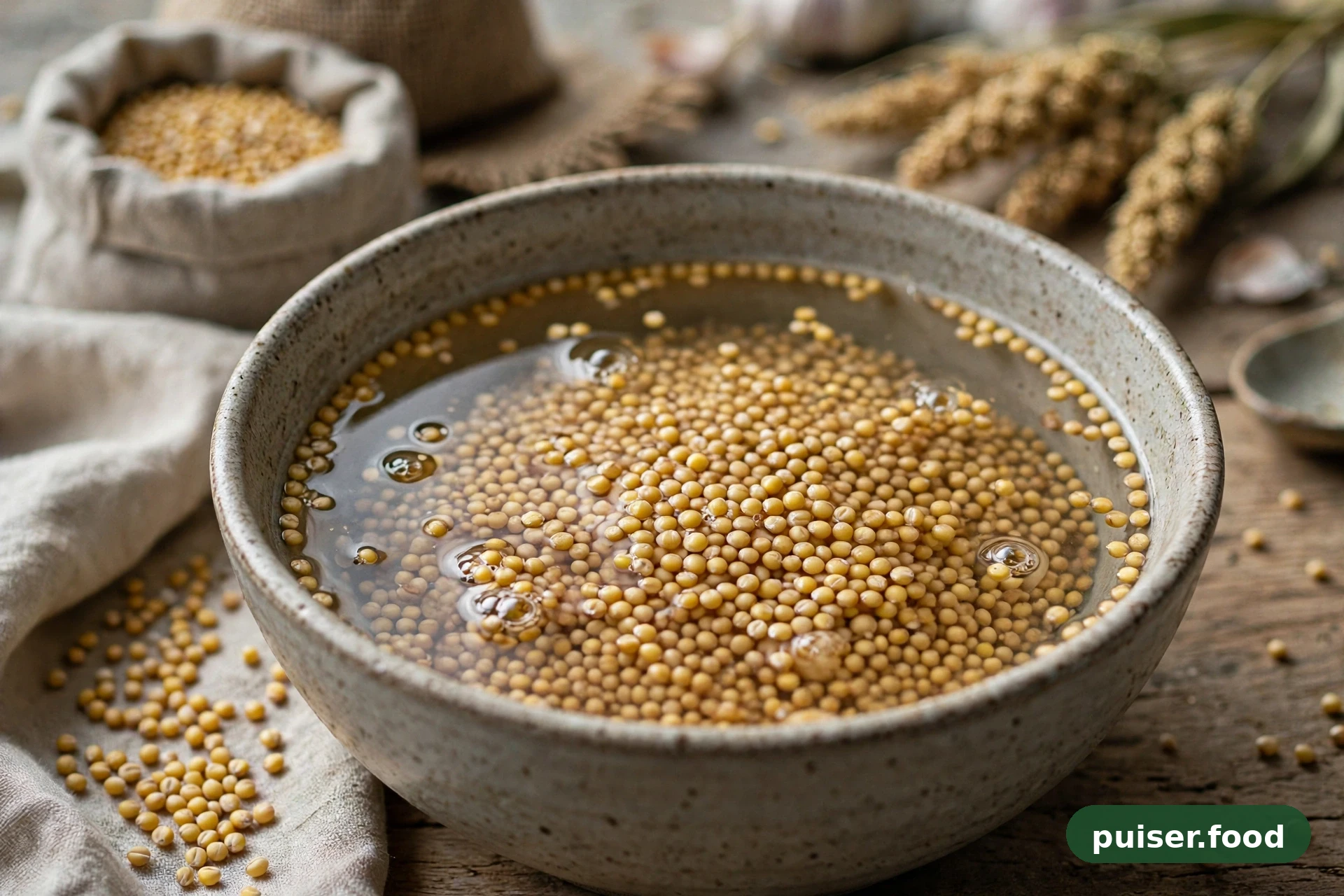
Cooking is where millets for daily diet succeeds or fails, so get the basics right. Rinse whole millets well, then soak them for at least thirty minutes, and for several hours if you have time. Soaking reduces phytates, which improves mineral absorption, and it softens the grain so it cooks evenly. Skipping the soak is the commonest reason people complain that millets feel heavy. A typical starting point is one cup of millet to two cups of water. Bring to a boil, cover, and simmer for fifteen to twenty minutes until the water is absorbed, then rest for five minutes and fluff with a fork.
Cooking times and water ratios vary by type, so follow the packet when it gives one. Finger millet is normally used as flour, so cook it as porridge or in rotis and dosa rather than as whole grains. Whole bajra and jowar need longer soaking and cooking than foxtail or little millet, so do not treat them the same.
| Millet | Soak | Water per cup | Cook time |
|---|---|---|---|
| Foxtail millet | 30 minutes | 2 cups | 15 to 18 minutes |
| Little millet | 30 minutes | 2 cups | 15 minutes |
| Barnyard millet | 30 minutes | 2 cups | 10 to 12 minutes |
| Kodo millet | 2 to 4 hours | 2.5 cups | 20 minutes |
| Bajra, whole | 6 to 8 hours | 3 cups | 30 to 40 minutes |
| Jowar, whole | 6 to 8 hours | 3 cups | 30 to 40 minutes |
| Ragi flour | None, use as flour | As porridge | 8 to 10 minutes |

Starting slowly
When you shop for millets for daily diet, buy small packs of two or three varieties and start with two or three millet meals a week. A sudden large increase in fibre causes bloating and discomfort, and that is the reason most people quit after one try. Rotate between two or three millets rather than eating only one, because each has a different nutrition profile and a different taste, and variety keeps the habit alive. Keep portion sizes the same as you would use for rice or wheat. A millet meal does not need a larger serving to fill you, and larger servings only add the bloating you are trying to avoid.
A simple first week looks like this: ragi porridge on Monday, foxtail upma on Wednesday, millet khichdi on Friday. That is three millet meals in a week, each one easy, and none of them a roti. Add dosa batter in the second week, and try a blended roti in the third. By the end of a month, millets are a normal part of the week rather than a project.
A steady millets for daily diet routine is two or three millet meals a week, and it works because it is easy to keep. Add one new millet dish each week rather than changing everything at once, and let the family get used to the taste before you try a harder dish like roti.
Buying millets
Buy whole grains, not polished ones, and buy coarse rather than fine when you have the choice. Unpolished millets keep their bran, which is where much of the fibre sits, and polished millet is closer to white rice than most people realise. Our guide to unpolished dal vs polished dal makes the same point for pulses. Buy small amounts at first, because millet flour turns bitter if stored too long, and whole grains keep for months in an airtight jar in a cool dark cupboard. Check for stones and husk before cooking, rinse well, and store in glass jars with the name and date on the label.
Price is not a barrier. Millets are usually cheaper than basmati rice and close to the price of ordinary rice, and they are widely available in Indian grocery stores and online. If you want a flour to start with, our organic ragi flour is stone-ground and unpolished. Our guide to eating organic on a budget shows how to fit millets into a weekly shop without spending more.

Mistakes to avoid
The biggest mistake with millets for daily diet is replacing every grain at once. A sudden switch to all millet meals causes bloating, puts the family off, and ends the experiment in a week. The second mistake is skipping the soak, which leaves the grain hard and heavy. The third is cooking millet like white rice without adjusting water and time, which gives a dry or mushy result and a bad first impression.
Other mistakes are easy to fix. Eating only one millet replaces one monotony with another, so rotate two or three. Buying polished millet defeats the purpose, because the bran holds much of the fibre. Storing flour for months lets it turn bitter, so buy small packs. And expecting millets to treat diabetes or cause weight loss on their own is a misunderstanding. They support a healthy diet, they do not replace one.
Expert tips
Soak whole millets for several hours before cooking, and rinse well, because soaking reduces phytates and improves mineral absorption. Start with the easiest dishes, khichdi, upma and porridge, and add roti only after a few wins. Blend millet flour with wheat flour at first, one part millet to three parts wheat, and increase slowly. Pair millets with dal, curd, vegetables or nuts, because a grain alone is not a balanced meal. Add a vitamin C food like lemon, amla or tomato to a millet meal, which helps the body absorb the iron. Our amla benefits guide explains why that pairing works. And keep portions the same as rice, because millets are more filling and larger servings only add discomfort.
FAQs
Can I eat millets every day?
Yes, millets can be part of a daily diet, and many Indian households have eaten them daily for generations. A varied diet is best, so rotate two or three millets and other whole grains rather than eating one grain every day. Start with two or three millet meals a week and increase slowly as your digestion adjusts.
How do I start millets for daily diet without changing every meal?
Start with millets for daily diet in two or three meals a week, not every meal. Pick the easiest swaps first: ragi porridge for breakfast, foxtail upma, or millet khichdi. Add dosa batter in the second week and blended roti in the third. Small changes that succeed beat a big switch that fails.
Which millet is best for beginners?
Foxtail and little millet are the easiest to start with. They are mild in flavour, cook quickly, and replace rice in most dishes without changing the meal. Ragi porridge is also gentle for beginners. Save bajra and jowar rotis for later, because the dough is harder to handle without gluten.
Do millets help with diabetes?
Millets have a lower glycaemic index than white rice and more fibre, which means steadier blood sugar after a meal. That makes them a sensible choice for people watching blood sugar. They do not treat or cure diabetes, and anyone with diabetes should follow their doctor or dietitian rather than changing grains alone.
Are millets gluten free?
Millets are naturally gluten free, which makes them suitable for people avoiding gluten. Packaged flour can pick up wheat during milling, so check the label for a gluten free claim if you have coeliac disease. Whole grains are safer than flour, because they are less likely to be contaminated.
Do I need to soak millets before cooking?
Yes, soaking whole millets for at least thirty minutes, and for several hours when you have time, is worth doing. Soaking reduces phytates, improves mineral absorption, shortens cooking time and makes the grain easier to digest. Skipping the soak is the commonest reason people find millets heavy.
Can children eat millets daily?
Yes, children can eat millets daily in normal portions. Ragi porridge is a traditional weaning food in South India, and millet khichdi and dosa suit children well. Start with small portions and one millet at a time, and keep the rest of the meal balanced with dal, vegetables, curd or egg.
Why do millets cause bloating?
Millets are high in fibre, and a sudden large increase in fibre causes bloating and gas, especially if you were eating mostly white rice before. Start with two or three millet meals a week, soak the grain well, drink enough water, and increase slowly. The discomfort usually settles within a week or two.
Which millet has the most calcium?
Ragi, finger millet, has the most calcium of any millet, about 344 mg per 100 grams raw, which is several times the calcium in whole wheat. That makes it valuable for children, older adults and anyone not eating dairy. Sprouting ragi and pairing it with vitamin C foods improves calcium and iron absorption further.
Are millets good for weight loss?
Millets can support weight loss because their fibre keeps you full longer and their energy releases slowly, which means fewer cravings between meals. They do not cause weight loss on their own. Portion size and the rest of the diet matter more than the grain, and a millet meal with too much ghee is still a heavy meal.
Conclusion
Millets for daily diet works best as a slow swap, not a sudden switch. Start with ragi porridge, foxtail upma or millet khichdi, two or three times a week, soak the grain, and rotate two or three millets. The fibre, minerals and steady energy are real, and the cooking is easier than most people expect once the first week is behind them. If you want to go deeper, our foxtail millet and ragi flour are good places to start, and our budget guide and unpolished dal guide show how to build the rest of the plate around them.