
Introduction
Amla benefits go far beyond its sharp, sour taste. Amla, also called Indian gooseberry, is one of the richest natural sources of vitamin C, and it has been part of Indian kitchens and Ayurvedic practice for thousands of years. Modern research is catching up, with trials looking at cholesterol, blood sugar and inflammation. This guide covers what amla is, the 10 best-supported benefits, how to eat it every day, and who should be careful with it.
In this article
- What is amla?
- Amla nutrition
- 10 amla benefits
- How to eat amla every day
- Amla side effects and who should be careful
- How to buy and store amla
- Common mistakes to avoid
- Frequently asked questions
- Conclusion
What is amla?
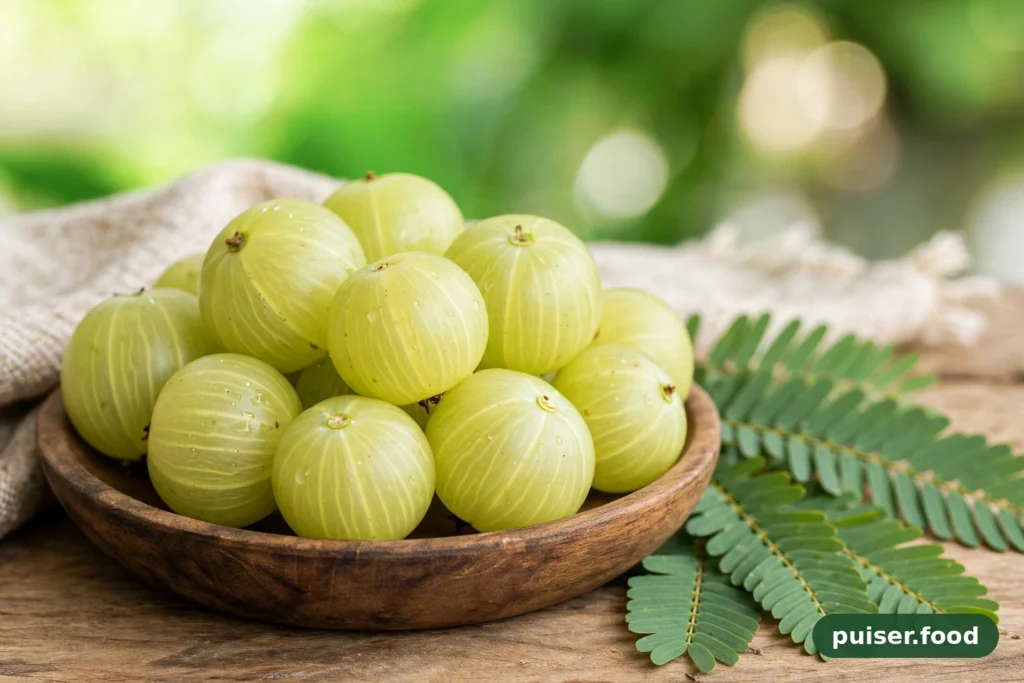
Amla is the fruit of Phyllanthus emblica, also written Emblica officinalis, a small tree native to India. The fruit is round, pale green and translucent, with a sharp sour taste. That sourness is why amla is usually eaten with a pinch of salt, made into pickle or murabba, or mixed into juice and powder.
In Ayurveda, amla is called amalaki and is classed as a rasayana, a rejuvenative food. It is one of the three fruits in triphala, and a key ingredient in chyawanprash. The Charaka Samhita praised amalaki as a supreme rejuvenative, which is why it still turns up in Indian homes every winter.
Fresh amla is seasonal in India, roughly from October to March. Outside the season, most people use dried amla, powder, juice or murabba. Vitamin C falls when the fruit is dried or cooked, but amla holds on to more of it than most fruits because its tannins protect the vitamin from heat, so the dried powder still keeps the amla benefits.

Amla nutrition
Amla is a low-calorie fruit with an unusual amount of vitamin C. The figures below are for 100 g of raw amla, from the Indian Food Composition Tables 2017.
| Nutrient | Amount per 100 g |
|---|---|
| Calories | 58 kcal |
| Protein | 0.5 g |
| Total fat | 0.1 g |
| Carbohydrates | 13.7 g |
| Fibre | 4.3 g |
| Vitamin C | 252 mg |
The vitamin C figure needs a note, because published values vary a lot. The ICMR National Institute of Nutrition lists 252 mg per 100 g, while other analyses of different varieties report 440 mg to over 600 mg. Variety, ripeness and testing method all move the number. Even at the lower figure, amla gives about five times the vitamin C of an orange, which has around 53 mg per 100 g. A single fresh amla gives roughly a full day’s vitamin C.
Amla also carries smaller amounts of calcium and iron, and it is rich in polyphenols, the plant compounds behind much of its antioxidant activity. The main ones are hydrolyzable tannins, especially emblicanin A and B, plus gallic acid, ellagic acid and flavonoids such as quercetin and kaempferol. These compounds are behind many of the amla benefits researchers study. At 58 kcal per 100 g, it is one of the lowest-calorie fruits.
10 amla benefits backed by research
The amla benefits below are the ones with the best support, from human trials where they exist and from nutrition science where they do not. Where the evidence is thin, this guide says so. Amla is a food, not a medicine.
1. Very high in vitamin C
Vitamin C is the headline nutrient in amla. A single fresh fruit covers roughly a day’s need, far more than an orange or lemon. Vitamin C helps the body make collagen, absorb iron from plant foods, and protect cells from damage. Amla’s tannins shield its vitamin C from heat, so the dried powder keeps some.
2. Supports immunity
Immunity is where amla’s vitamin C does its most visible work. It supports immune cells and helps the skin and gut lining act as barriers. Amla also supplies zinc and iron in small amounts, and its polyphenols add antioxidant cover. Amla will not stop colds, but it gives the immune system what it needs. A mug of turmeric milk with amla powder stirred in makes a good winter drink.
3. Helps digestion
Amla has a long record as a digestive aid in Ayurveda, and its fibre explains it. With 4.3 g of fibre per 100 g, amla adds bulk that keeps digestion moving, and its soluble fibre feeds gut bacteria. Start small if your stomach is sensitive, since amla has a mild laxative effect at higher doses.
4. May lower cholesterol
This is the benefit with the strongest trial evidence. A 2023 review in BMC Complementary Medicine and Therapies pooled nine trials with 535 participants. Against placebo, amla lowered LDL cholesterol by about 15 mg/dL and triglycerides by about 22 mg/dL. A second review of five trials agreed. The reviewers urged caution, since the trials were small, but the direction was consistent.
5. May support healthy blood sugar
The same 2023 reviews found that amla lowered fasting blood glucose. The effect is modest, and it comes mostly from trials that used extracts rather than the whole fruit. Amla is a sensible food for people watching blood sugar, but it is not a replacement for medicine, and anyone on diabetes treatment should check their sugar when they start.
6. Good for skin
Skin is the amla benefit people notice first. Vitamin C is needed to make collagen, the protein that keeps skin firm, and amla’s antioxidants help protect skin cells from sun and pollution. Eating it beats rubbing raw juice on your face, which can irritate skin. The change is gradual and modest.

7. Good for hair
Amla oil is a classic Indian hair treatment, amla infused in coconut oil. Its vitamin C and iron support normal hair health, and the oil conditions hair and scalp. Direct proof that amla grows hair is thin, mostly from laboratory and animal work, so see it as gentle support rather than a cure for hair fall. Warm cold pressed coconut oil with amla is the traditional base.
8. Supports liver health
The liver is where amla’s antioxidants may matter most. Laboratory and animal studies show its gallic acid and tannins protect liver cells from oxidative damage, and in some models it compared well with silymarin, the milk thistle compound used for liver support. Human evidence is still early, and no trial has shown amla treats liver disease.
9. May ease inflammation
Inflammation is the finding that held up best across the amla trials. In the 2023 review of nine trials, amla lowered hs-CRP, a blood marker of inflammation, by about 1.70 mg/L, and the studies agreed almost completely, which is unusual in nutrition research. Chronic low-grade inflammation is linked with heart disease and diabetes, so a food that nudges it down is worth eating.
10. Can help with weight management
Amla will not cause weight loss by itself, and no trial has shown that. It can still help a weight-loss diet because it is low in calories, high in fibre, and adds strong flavour without fat. A fruit or two, or a glass of diluted juice, fills a gap between meals. Try amla pickle or chutney with millets or dal instead of a sweetened amla drink.
How to eat amla every day
Amla is sour enough that most people need a plan for it. The simplest way is to eat one or two fresh fruits a day, sliced with a little salt. If the sourness is too much, juice and powder are easier, and murabba and pickle turn amla into something you look forward to. The table covers the common forms and the usual daily amounts.
| Form | Usual daily amount | How to take it |
|---|---|---|
| Fresh fruit | 1 to 2 fruits | Sliced, with a pinch of salt |
| Juice | 20 to 30 ml diluted in water | Morning, mixed with warm water |
| Powder | 1 to 2 teaspoons (3 to 5 g) | Stirred into warm water or a smoothie |
| Murabba | 1 piece | Sweet preserve, watch the sugar |
| Pickle | 1 to 2 pieces with a meal | Salty and spicy, with dal and roti |
| Chyawanprash | 1 teaspoon | Traditional jam, contains sugar |
| Hair oil | As needed | Amla infused in oil, massaged into the scalp |

Morning is the usual time, and many people take amla juice or powder on an empty stomach, which is said to help absorption. That does not suit everyone, so if amla gives you acidity, take it with or after breakfast instead. A little desi ghee on your roti with amla pickle shows how it fits into an ordinary Indian meal. Start small if you are new to it. That is the simplest way to get the full amla benefits every day.

Amla side effects and who should be careful
Amla is safe for most people at food-level amounts, the one or two fruits or a spoon of powder a day that Indian homes have used for years. Problems mostly show up at high doses or with concentrated extracts.
The most common complaint is acidity and heartburn, especially when amla is taken pure or on an empty stomach. Large amounts can also loosen the bowels, since amla is mildly laxative. Its acidity can bother sensitive teeth, so rinse your mouth after eating it.
Amla can lower blood sugar a little, which is good news for most people but a real caution for anyone on diabetes medicine, since the two can add up and push sugar too low. It may also slow blood clotting slightly, so people on blood thinners should ask a doctor first, and supplements are usually stopped two weeks before planned surgery. Amla contains oxalates, so people with a history of kidney stones should keep to moderate amounts. Pregnant and breastfeeding women can eat amla as food, but concentrated extracts have not been studied enough in pregnancy.
How to buy and store amla
Buy amla in season, roughly from October to March, when it is cheapest and freshest. Buying in season is the cheapest way to get the full amla benefits. Pick fruits that are firm, pale green and unblemished.
Fresh amla keeps for about a week or two in the fridge, in a bag or box, away from moisture. Dried amla and powder keep for several months in an airtight jar in a cool, dark place, and they are the practical choice outside the season. Fresh juice is best used the same day. Murabba and pickle keep for months in a clean, dry jar.
Common mistakes to avoid
Most of the amla benefits are lost through small, avoidable mistakes.
Eating too much at once. More than five or six fresh fruits in a day can cause acidity, cramps or loose stools. One or two fruits is the usual amount.
Drinking sweetened amla juice. Many bottled amla juices are loaded with sugar, which cancels out the point of drinking them. Check the label, or make it fresh and dilute it yourself.
Taking it on an empty stomach when you have acidity. If amla burns, take it with food instead of pushing through.
Buying amla candy and thinking it counts. Amla candy is mostly sugar with a little amla, so it is a sweet, not a health food.
Expecting it to replace medicine. Amla can support cholesterol, blood sugar and immunity, but it does not treat disease. Anyone on medicine for diabetes or clotting should ask a doctor before taking amla extracts.
Buying poor quality powder. Cheap powders are sometimes cut with fillers. Buy from a brand you trust, check that the label lists only amla, and prefer powder that smells fresh and sour.
Frequently asked questions
What are the main amla benefits?
Amla benefits include very high vitamin C, better immunity, smoother digestion, and support for skin and hair. Research also links amla with lower cholesterol, triglycerides and blood sugar, though the evidence is still growing. It is low in calories and high in fibre, so it fits easily into a daily diet.
How many amla should I eat in a day?
One to two fresh amla fruits a day is the usual amount for adults. If you use juice, 20 to 30 ml diluted in water is enough. For powder, one to two teaspoons, about 3 to 5 g, is the common daily amount. Start with less if you are new to it.
Can I eat amla every day?
Yes, most adults can eat amla every day in food-level amounts, such as one or two fruits, a small glass of diluted juice, or a teaspoon of powder. Daily use is traditional in Indian homes. If you take diabetes or blood-thinning medicine, ask your doctor first.
Is amla good for hair?
Amla is traditionally used for hair, usually as oil made by infusing amla in coconut oil, or as a hair rinse. Its vitamin C and iron support normal hair health, but there is little proof that amla grows hair. Think of it as gentle support, not a cure for hair fall.
Does amla help with weight loss?
Amla will not cause weight loss on its own, and no trial has shown that directly. It can still help a weight-loss diet because it is low in calories, high in fibre, and adds flavour without fat. One or two fruits, or diluted juice, beat sweetened amla drinks.
Can diabetics eat amla?
Diabetics can usually eat amla, and some trials found it lowered fasting blood sugar. That is also the reason for caution: amla may add to the effect of diabetes medicine and push sugar too low. Check your blood sugar when you start, and ask your doctor before taking extracts.
What is the best time to eat amla?
Morning is the usual time, and many people take amla juice or powder on an empty stomach for better absorption. That does not suit everyone. If amla gives you acidity, take it with or after breakfast instead. Avoid it late at night if you get acidity.
Is amla powder as good as fresh amla?
Fresh amla is the better choice because it keeps the most vitamin C and fibre. Good quality powder is still useful, especially outside the amla season, and it keeps well in a jar. Buy powder with no added sugar or colour, from a brand that lists only amla on the label.
Who should avoid amla?
Most people can eat amla, but a few groups should be careful. People on diabetes medicine or blood thinners should ask a doctor first, as amla can add to those drugs’ effects. Those with kidney stones, severe acidity, or surgery coming up should check before taking amla regularly.
Does amla help with skin?
Amla may help skin because vitamin C is needed to make collagen, the protein that keeps skin firm, and its antioxidants help protect skin cells from damage. The effect is gradual and modest. Eating amla works better for skin than rubbing raw juice on your face, which can irritate it.
Conclusion
Amla benefits are real, but they are modest and work over time, not overnight. One or two fruits a day, or a spoon of powder in warm water, gives you remarkable vitamin C, good fibre and plant compounds linked with better cholesterol and blood sugar. Try it this winter while the fruit is in season, and explore more guides on Puiser.food.


