
Organic Beetroot Powder
₹219 ₹245 · 200 g · Organic Pantry Staples
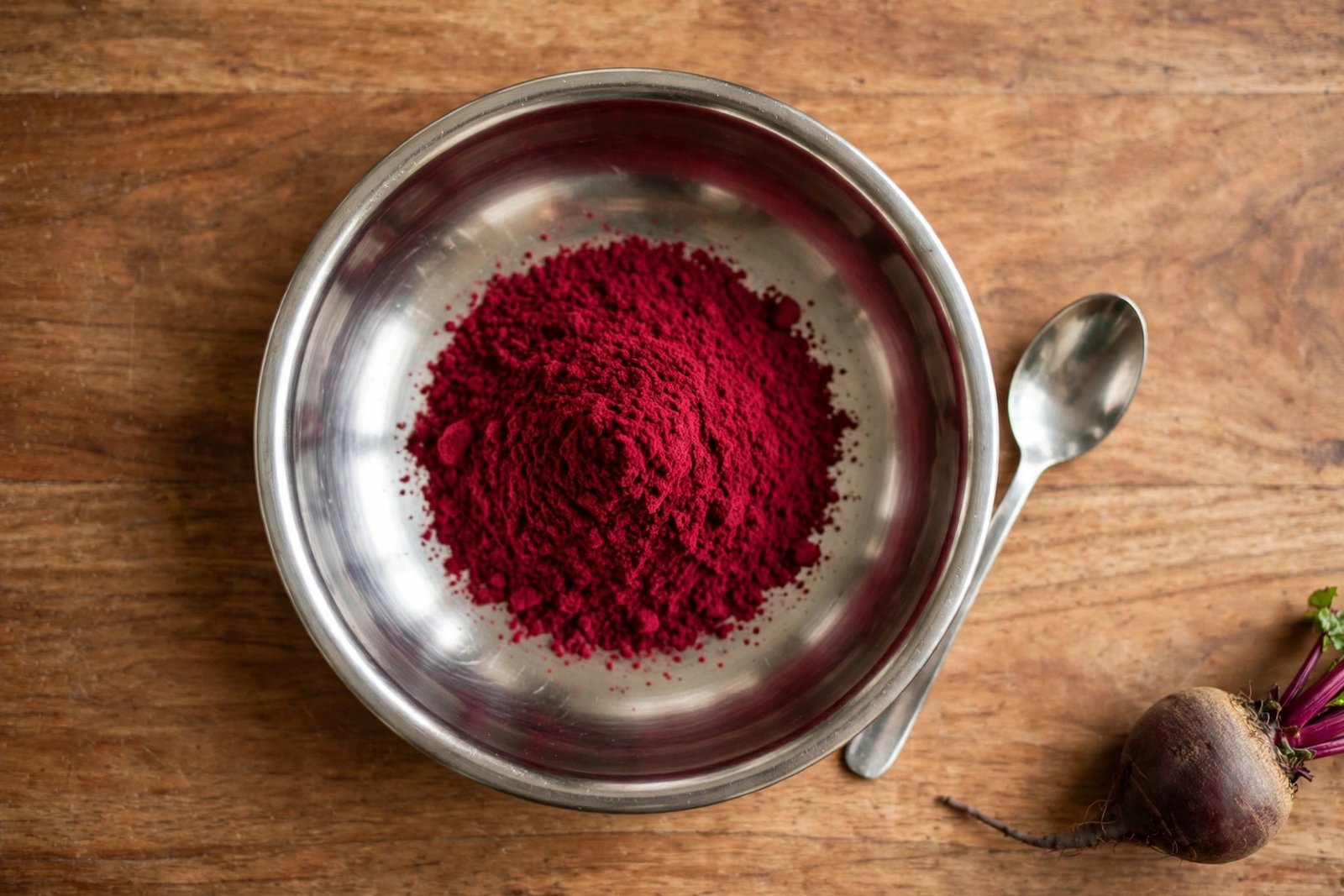
Beetroot powder is the whole beetroot, dried and ground — the deep red powder that turns raita pink, juice ruby and halwa a colour no food dye can match. Puiser’s Organic Beetroot Powder is dried beetroot only, ground fine — no fillers, no added sugar, no colour, nothing but the root.
What the root actually contains is worth stating plainly, from the USDA record for the fresh root. A 100 g portion of raw beetroot gives about 43 kcal, about 1.61 g of protein, about 0.17 g of fat, about 9.56 g of carbs, about 2.8 g of fibre and about 6.76 g of natural sugars (USDA FDC 169145, “Beets, raw” — SR Legacy). The same 100 g carries about 109 mcg of folate, about 325 mg of potassium, about 23 mg of magnesium, about 0.8 mg of iron, about 16 mg of calcium, about 78 mg of sodium, about 0.33 mg of manganese, about 4.9 mg of vitamin C and about 128.7 mg of betaine. A whole medium beetroot, about 82 g, is about 35 kcal — the root is light food, and the powder is the root with the water taken out. Fresh beetroot is about 88% water, so the powder is several times more concentrated by weight than the fresh root: a spoonful of powder is not the same as eating a beet, and it should not be read as one.
The honest catch is the concentration, the oxalates and the juice evidence. Because the powder is concentrated, a heaped spoon is easy to overdo — a teaspoon a day is the measure, not a tablespoonful in everything. Beetroot is high in oxalates, so anyone with calcium-oxalate kidney stones or gout should eat it sparingly and check with a doctor. The blood-pressure evidence is real but it is beetroot JUICE evidence — small trials, like the 2015 study of 68 people drinking 250 ml of juice a day — not powder evidence, and no one should stop blood-pressure medication for a spoonful of powder. And the first surprise is harmless: red stool or pink urine after beetroot, called beeturia, is normal and passes. Buy beetroot powder for the colour, the folate and the everyday root in a spoon — not as a medicine.
Why you’ll love it
- Pure dried beetroot, ground fine — no fillers, no added sugar, no colour.
- 109 mcg folate and 325 mg potassium per 100 g of fresh root, with betaine.
- A teaspoon a day — about 100 servings in a 200 g pack, about ₹2.19 a serving.
- The raita, juice and halwa root, in a spoon — colour and flavour without peeling.
How to use
Stir a teaspoon into curd for pink raita, or whisk into buttermilk and lassi for a ruby drink. Blend into smoothies and juices where the fruit carries the earthy note, or mix into dosa and idli batter for pink dosas. Fold into halwa, kheer and laddoo for natural colour, or dust over salads, chaat and roasted vegetables. Add to atta for pink rotis and parathas that children actually eat. Start with a level teaspoon — the colour is strong, and a little powder goes a long way in a pot.
Good to know
A teaspoon of powder is concentrated beetroot, not a whole beet — fresh beetroot is about 88% water, and the powder is the root with that water gone. Beetroot is high in oxalates: anyone with calcium-oxalate kidney stones or gout should use it sparingly and check with a doctor. Red stool or pink urine after beetroot (beeturia) is harmless and passes on its own. The ingredients list should read beetroot only — a pack that lists sugar, colour or flavour is not plain beetroot powder. Store airtight in a cool, dark place — the red fades in light and damp, and a damp spoon clumps the whole pack.