
Organic Carrot Powder
₹269 ₹299 · 200 g · Organic Pantry Staples
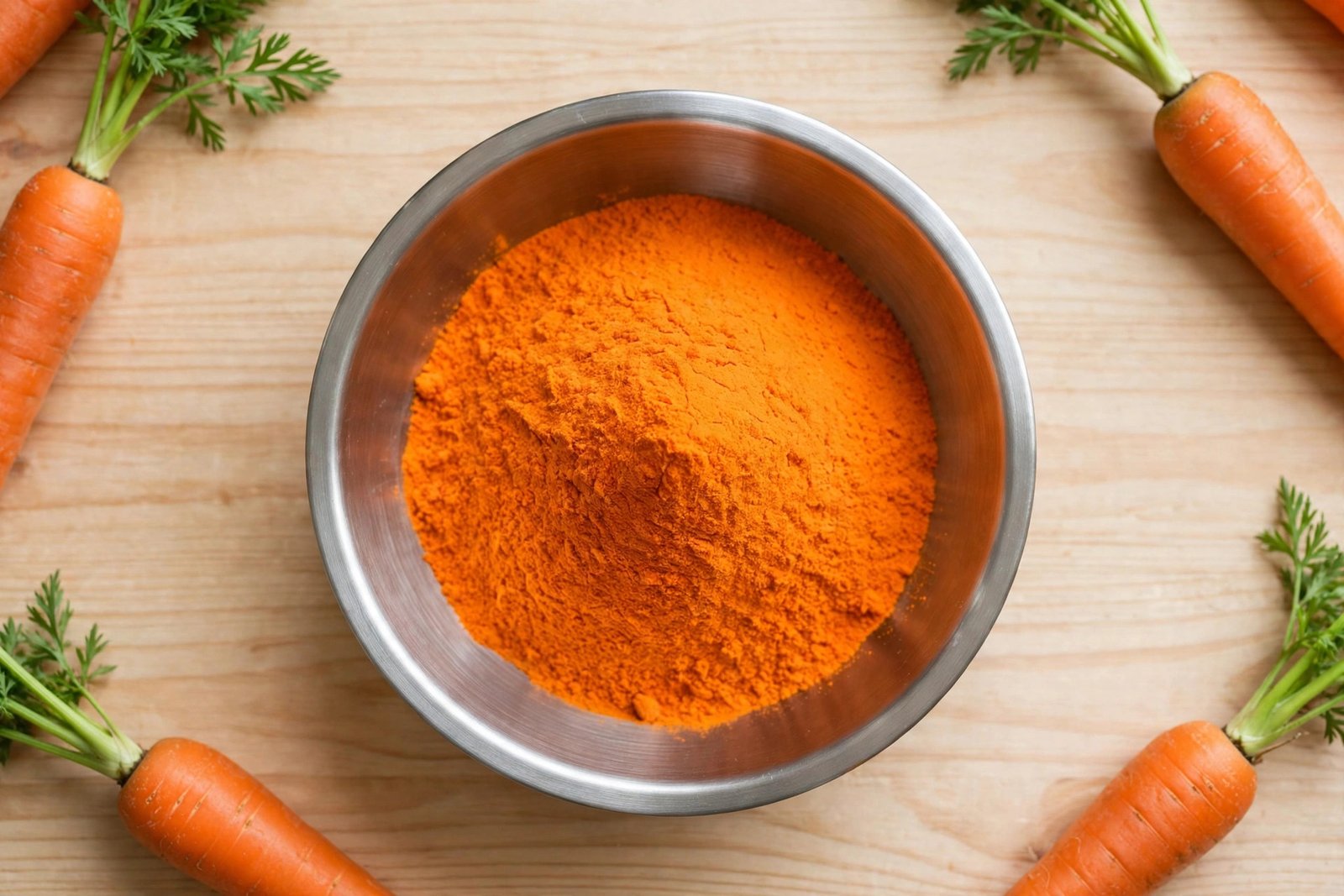
Carrot powder is the whole carrot, dried and ground — the orange powder that turns dough golden, soups sweet and halwa a colour no food dye can match. Puiser’s Organic Carrot Powder is dried carrot only, ground fine — no fillers, no added sugar, no colour, nothing but the root.
What the root actually contains is worth stating plainly, from the USDA record for the fresh root. A 100 g portion of raw carrots gives about 41 kcal, about 0.93 g of protein, about 0.24 g of fat, about 9.58 g of carbs, about 2.8 g of fibre and about 4.74 g of natural sugars (USDA FDC 170393, “Carrots, raw” — SR Legacy). The same 100 g carries about 835 mcg of vitamin A (RAE), about 8,280 mcg of beta-carotene, about 3,480 mcg of alpha-carotene, about 320 mg of potassium, about 13.2 mcg of vitamin K and about 5.9 mg of vitamin C. A medium carrot, about 61 g, is about 25 kcal with about 509 mcg of vitamin A (RAE). That is the fresh root, per 100 g — read it as what the carrot contains, and keep the dose in mind: a teaspoon of powder is about 2 g, one-fiftieth of the 100 g the table is measured in, so a teaspoon never delivers the table’s numbers. The powder is more concentrated than the fresh root because the water is gone, but the USDA publishes no record for dried carrot powder, so there is no honest per-teaspoon nutrient table to quote. A 200 g pack gives about 100 teaspoons at a 2 g measure, about ₹2.69 a teaspoon.
The honest catch is the conversion, the vision claim and the juice trap. Carrots contain NO preformed vitamin A — only carotenoids the body converts, so say “vitamin A from beta-carotene”, never “vitamin A in carrots” without the conversion note, and the conversion varies from person to person. “Carrots improve eyesight” is overstated for well-nourished people — vitamin A prevents deficiency-related night blindness; no trial shows eating carrots sharpens normal vision. Boiled carrots have a low glycaemic index, about 35–43, but that is for boiled carrots, not juice — carrot juice strips the fibre, and the powder keeps some fibre but is not the same as eating a carrot. And the sugars, about 4.74 g per 100 g, make it a sweet vegetable, not a sweet food — one medium carrot is 25 kcal, so portion honesty still applies. Buy carrot powder for the colour, the beta-carotene and the everyday root in a spoon — not as eye medicine.
Why you’ll love it
- Pure dried carrot, ground fine — no fillers, no added sugar, no colour.
- 835 mcg vitamin A (RAE) and 8,280 mcg beta-carotene per 100 g of fresh root.
- A teaspoon a day — about 100 servings in a 200 g pack, about ₹2.69 a teaspoon.
- The halwa, sabzi and salad root, in a spoon — colour and sweetness without peeling.
How to use
Stir a teaspoon into hot dal, sambar and soups just before serving — the heat is gentle and the sweet orange flavour folds in. Knead into atta for golden rotis and parathas, or mix into dosa and idli batter for orange dosas. Fold into halwa, kheer and laddoo for natural colour, or blend into smoothies and juices where the fruit carries the earthy note. Dust over salads, chaat and roasted vegetables, or whisk into porridge and upma for a sweet lift. Start with a level teaspoon — the colour is strong, and a little powder goes a long way in a pot.
Good to know
A teaspoon is about 2 g — one-fiftieth of the 100 g the USDA table is measured in, so read the table as what the carrot contains, not what a teaspoon delivers. The USDA has no record for dried carrot powder, so no per-teaspoon nutrient table is quoted here. Carrots contain no preformed vitamin A — the vitamin A figure comes from beta-carotene the body converts. The ingredients list should read carrot only — a pack that lists sugar, colour or flavour is not plain carrot powder. Store airtight in a cool, dark place — the orange fades in light and damp, and a damp spoon clumps the whole pack.