Introduction
Dried bananas are the golden chip of the Indian dry fruit shelf, the sweet round slice that turns up in trail mix, oats and pancakes. They taste like banana toffee and carry the sugar to match, so the honest question is whether they earn their place as a health food or only as a sweet. This guide covers the dried bananas benefits that matter most, the potassium and fibre numbers told honestly, the chips trap and the cramp myth, and the five best dishes.
In this article
- The short answer
- What dried bananas actually are
- Dried bananas in numbers
- 10 benefits worth knowing
- The potassium story, honestly
- Plain dehydrated versus fried chips versus powder
- Five everyday ways to use them
- Buying and storing dried bananas
- 5 expert tips
- Common mistakes to avoid
- Frequently asked questions
- Conclusion
The Short Answer
The dried bananas benefits that matter most are potassium, fibre and quick energy, in a dried fruit that needs no cooking at all. A 100 g portion of plain dehydrated banana gives about 1,490 mg of potassium and 9.9 g of fibre for about 346 kcal, and a small handful of 30 g gives about 104 kcal and 447 mg of potassium. Dried bananas are sugar dense, about 47.3 g of sugars per 100 g, so a small handful a day is the portion, and they suit the trail mix, the oats bowl and the pancake pan.
What Dried Bananas Actually Are
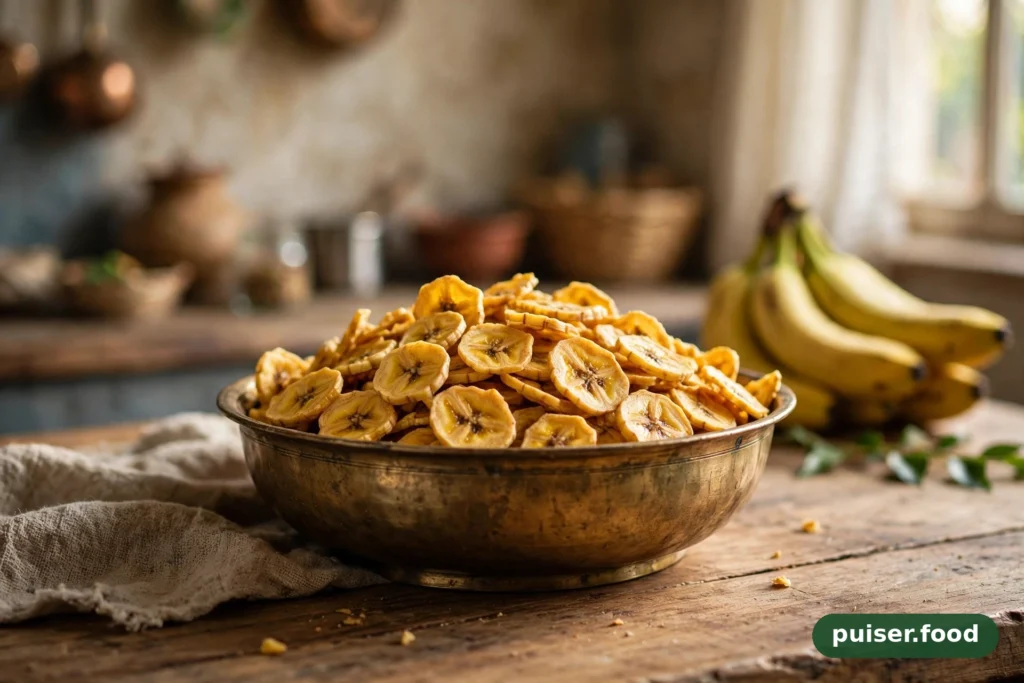
Dried bananas are slices of Musa acuminata, the common banana, dried in hot air until they turn golden, chewy and sweet. India grows more bananas than almost any country, in Tamil Nadu, Maharashtra, Gujarat and Karnataka, yet most plain dehydrated banana on the shelf is made in small units or imported, while the fried banana chips of Kerala are a different food altogether. Plain dried banana holds a growing place in Indian kitchens, in trail mixes, in oats, in pancakes and in smoothies.
That dried bananas carry potassium and fibre with their sugar is the first thing to understand, because it is what separates a banana slice from a sweet, and it is where the dried bananas benefits start. A banana slice gives natural sugars with potassium, fibre and vitamin B6 attached. The potassium supports a healthy diet, the fibre slows the sugars down a little, and the fruit still tastes like banana toffee, so dried bananas work as a snack and a garnish at once.
Dried bananas are also the fruit of the trail mix and the breakfast table, in the oats of a winter morning, in the pancake of a Sunday breakfast and in the smoothie of a summer afternoon. Our dried mango benefits guide covers the other golden dried fruit of the same shelf, the one to reach for when the question is aam rather than banana. Our dried apples benefits guide covers the chewy ring with the second most fibre of the series, the one to reach for when the question is apple rather than banana.
Dried Bananas in Numbers
The table below sets out the dried bananas benefits in numbers, and it uses one basis throughout. The figures are from USDA FoodData Central, FDC #173945, for bananas, dehydrated, or banana powder, per 100 g. The potassium figure, 1,490 mg per 100 g, is the one that matters most, and it puts dried bananas far ahead of every other dried fruit in this series on potassium.
| Nutrient (per 100 g) | Amount |
|---|---|
| Energy | 346 kcal |
| Protein | 3.9 g |
| Fat | 1.8 g |
| Carbohydrates | 88.3 g |
| Fibre | 9.9 g |
| Sugars | 47.3 g |
| Sodium | 3 mg |
| Calcium | 22 mg |
| Iron | 1.15 mg |
| Magnesium | 108 mg |
| Phosphorus | 74 mg |
| Potassium | 1,490 mg |
| Zinc | 0.61 mg |
| Vitamin C | 7 mg |
| Vitamin B6 | 0.44 mg |
The portion table below turns those 100 g figures into handfuls people actually eat. A 30 g handful is about two tablespoons, and it is the portion this guide uses everywhere, because a whole 100 g pack is a lot of sugar for one sitting. The USDA serving is a quarter cup, 25 g, which gives 87 kcal and 2.5 g of fibre.
| Portion | Energy | Fibre | Sugars | Potassium |
|---|---|---|---|---|
| 25 g, 1/4 cup (USDA serving) | 87 kcal | 2.5 g | 11.8 g | 373 mg |
| 30 g handful (2 tbsp) | 104 kcal | 3.0 g | 14.2 g | 447 mg |
| 100 g | 346 kcal | 9.9 g | 47.3 g | 1,490 mg |
The comparison table below puts dried bananas beside cranberries and raisins, on the four numbers that matter most. Bananas carry the most potassium and the most fibre of the three, and the lowest sugars, while raisins carry more iron, and cranberries carry the most sugar.
| Per 100 g | Dried bananas | Dried cranberries | Raisins |
|---|---|---|---|
| Fibre | 9.9 g | 5.3 g | 3.7 g |
| Sugars | 47.3 g | 72.6 g | 59.2 g |
| Potassium | 1,490 mg | 49 mg | 749 mg |
| Iron | 1.15 mg | 0.39 mg | 1.88 mg |
10 Benefits Worth Knowing
Here are the ten dried bananas benefits worth knowing, in the order a home cook would care about them. Each one is tied to a number from the tables above or to a study named in the text, and none of them is a cure for anything.
1. Potassium that actually counts
The first of the dried bananas benefits is the potassium, 1,490 mg per 100 g, which is double raisins at 749 mg and thirty times cranberries at 49 mg. A 30 g handful gives 447 mg of potassium, about an eighth of the day’s need in a food that needs no cooking, and potassium helps the body balance fluids and supports healthy blood pressure as part of a whole diet.
2. Fibre that actually counts
The second of the dried bananas benefits is the fibre, 9.9 g per 100 g, which is more than apples at 8.7 g and nearly double cranberries at 5.3 g. A 30 g handful gives 3.0 g of fibre, a useful share of the daily target in a food that needs no cooking, and the fibre slows the sugars down a little and keeps a small handful filling for longer than a sweet of the same size.
3. Quick energy before a workout
Dried bananas give 346 kcal per 100 g, almost all of it from fast carbohydrates, which makes them a quick energy food for the hour before a workout, a trek or a long day of travel. A 30 g handful gives about 104 kcal, enough to lift a flagging afternoon without a heavy meal, and the chew slows the eating down so the energy lasts a little longer than a sweet drink. The same fast sugars are the reason the portion stays small on a quiet day.
4. Vitamin B6 for energy
Dried bananas carry 0.44 mg of vitamin B6 per 100 g, about a third of the day’s need, and vitamin B6 is the vitamin the body uses to turn food into energy and to make red blood cells. A 30 g handful gives about 0.13 mg, a small share of the day, and it adds to the B6 from dal, eggs and whole grains rather than replacing them. The figure is modest, but it is real, and it is higher than in most dried fruits.
5. Magnesium for muscles
Dried bananas carry 108 mg of magnesium per 100 g, a solid figure for a dried fruit, far more than cranberries or raisins. A 30 g handful gives about 32 mg, a useful share of the day, and magnesium is the mineral the body uses for muscle function and for turning food into energy. The figure is large enough to matter, and it is one of the reasons banana is the fruit of the gym bag.
6. A gentler blood sugar rise than a sweet
The fibre in dried bananas slows the sugars down a little, so a small handful raises blood sugar more slowly than a biscuit or a sweet of the same calories. The effect is small and the sugars are still 47.3 g per 100 g, so the portion has to stay small, but the fibre is the reason a banana slice behaves better in the body than a spoon of sugar. People with diabetes should still count the slices as the sweet of the meal.
7. Fibre for the gut
The fibre in dried bananas feeds the good bacteria in the gut, the microbes that help digestion and make short chain fatty acids the gut lining uses for fuel. A small handful a day, eaten with enough water, adds bulk to the stool and keeps digestion regular, and the fibre works best when the rest of the day has fibre too, from dal, vegetables and whole grains. Dried bananas are not a laxative, and a handful will not fix a fibre free diet.
8. A sweet with almost no salt
Dried bananas carry only 3 mg of sodium per 100 g, which is almost nothing, and that makes them a rare sweet that adds no salt to the day. Most packaged sweets and snacks carry salt along with their sugar, so a sweet that is nearly salt free is a small but real advantage for people watching their salt. The potassium, 1,490 mg per 100 g, is the highest of the series, so the fruit is a potassium food in a way the others are not.
9. A snack that travels well
Dried banana slices keep for about six months in an airtight jar without a fridge, and they are light, tough and hard to crush, which makes them one of the best dried fruits for a train journey, a trek or a school tiffin. Fresh bananas are heavy, bruise easily and ripen fast, while the dried slices weigh almost nothing and keep their shape in a bag. That is a practical benefit, the kind that matters on the road rather than in a study.
10. A small handful that satisfies a sweet craving
A 30 g handful gives about 104 kcal and 3.0 g of fibre, and the chew and the banana toffee flavour satisfy a sweet craving for longer than a biscuit of the same calories. The fibre slows the eating down, the sweetness is real, and the portion is easy to measure, two tablespoons in a small bowl, so the craving ends without the pack emptying. That is the practical benefit, the one that matters most on an ordinary evening.
The Potassium Story, Honestly
The potassium story is the part of the dried bananas benefits that makes the banana the fruit of the gym bag, so it deserves a straight telling. Potassium is a mineral the body uses to balance fluids, to keep the heartbeat steady and to help muscles work, and dried bananas carry more of it than any other dried fruit in this series, 1,490 mg per 100 g. A 30 g handful gives 447 mg, which is a real share of the day, and the potassium is the strongest number in the whole article.
The cramp story is where the honesty starts. Bananas are sold as the food that stops muscle cramps, but the evidence for that is thin. Exercise cramps are linked mostly to muscle fatigue and to salt lost in sweat, and the trials that tested potassium for cramps found little effect. A banana will not fix a cramp that comes from a tired muscle, and the potassium in a handful is a small dose next to what a whole day of food gives. What the potassium does do is add to a diet that already has dal, vegetables and curd, and that is a quieter claim, but it is the true one.
The honest version is this. Dried bananas are the best dried fruit for potassium, and the figure is large enough to matter, but potassium is a daily habit, not a quick fix, and no single handful cures cramps or treats blood pressure. Eat dried bananas for their potassium, their fibre and their flavour, and keep the portion small, because the sugars arrive with the potassium. What dried bananas are not is a sports medicine, and anyone selling them as one is selling a story, not a result.
Plain Dehydrated Versus Fried Chips Versus Powder
The dried bananas benefits change a lot between plain dehydrated slices and fried chips, because the two are different foods. Plain dehydrated banana is sliced banana dried in hot air, with no oil and no added sugar, and the figures in this guide are for that kind. Fried banana chips are sliced banana fried in oil, usually with added salt and sometimes sugar, and they carry about 519 kcal and 33.6 g of fat per 100 g, against 346 kcal and 1.8 g of fat for the plain kind. A pack of Kerala banana chips is a crisp, not a dried fruit.
Banana powder is the same fruit ground fine, and it is used in baby food, smoothies and baking, where it dissolves into a batter or a drink. It carries the same numbers as the slices, but it is easy to eat too much of, because a spoon of powder hides the fruit it came from. Freeze dried banana slices are a different product again. They are light, crisp and keep more of their vitamin C, because freeze drying uses cold instead of heat, but they cost far more per 100 g and crush easily, so they suit a smoothie or a garnish better than a trail mix.
Sugar coated slices sit in the middle. Some packs are dipped in sugar syrup before drying, and the label can look kinder, but their sugars are far higher than the 47.3 g in the plain dried fruit, so check the added sugars line. For everyday use, a plain dehydrated slice is fine, and the label check matters more than the variety: oil or sugar listed first means a chip or a sweet, and a deep golden colour means the slices were dried well.
Five Everyday Ways to Use Them
The dried bananas benefits show up best in five everyday dishes, each one using a small handful rather than a bowlful, and each portion below is for one serving, with the bananas at 30 g or less.
1. Trail mix with peanuts and raisins
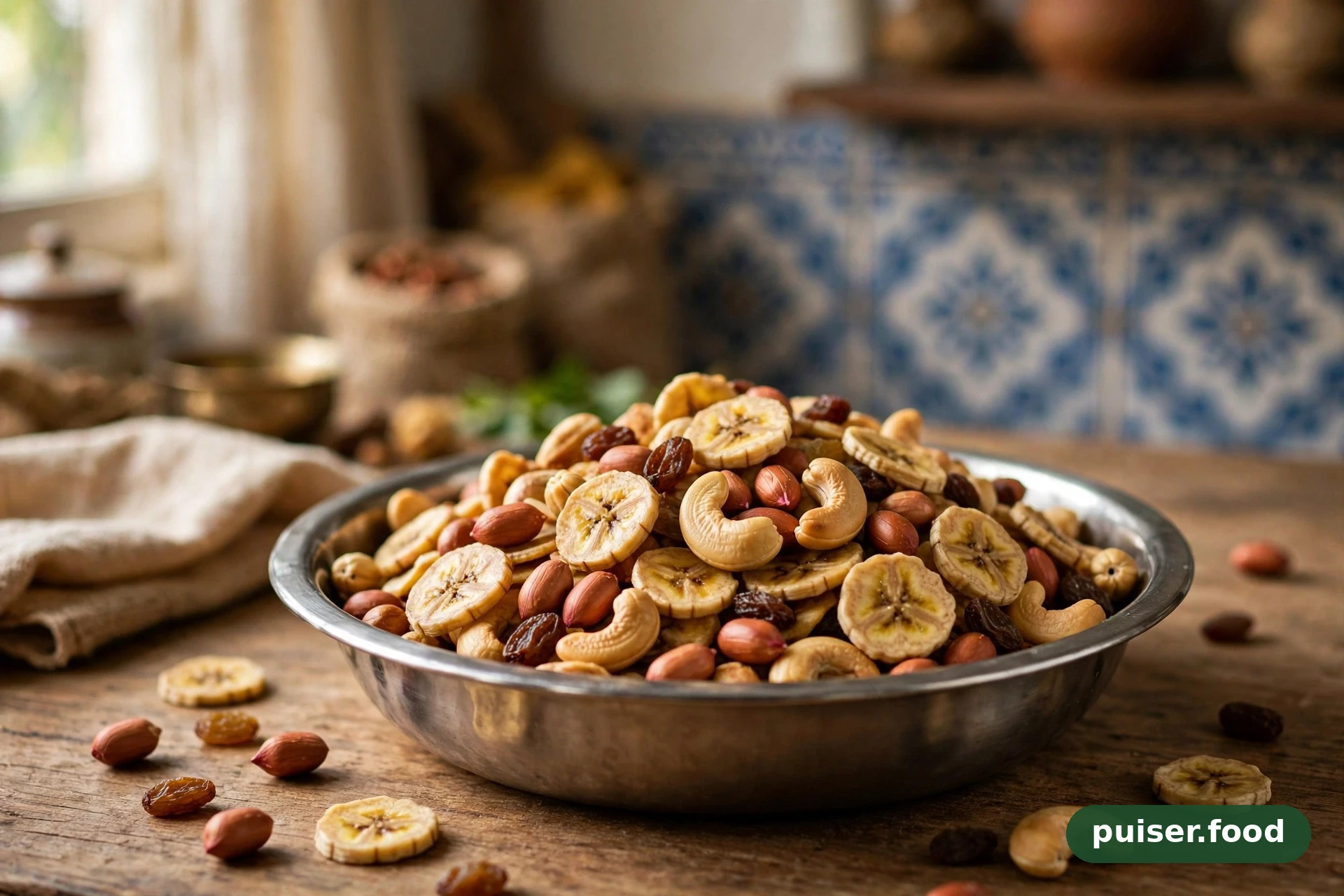
Mix 30 g of dried banana slices with a handful of roasted peanuts and a spoon of raisins, and the mix travels well in a small box for a train journey or a desk. The bananas give the sweetness, the peanuts give the crunch and the protein, and the raisins give the darker sweet note, so the mix feels like a dessert and eats like a snack. Our peanuts benefits guide covers the nut that makes this snack filling rather than just sweet.
2. Oats porridge with honey
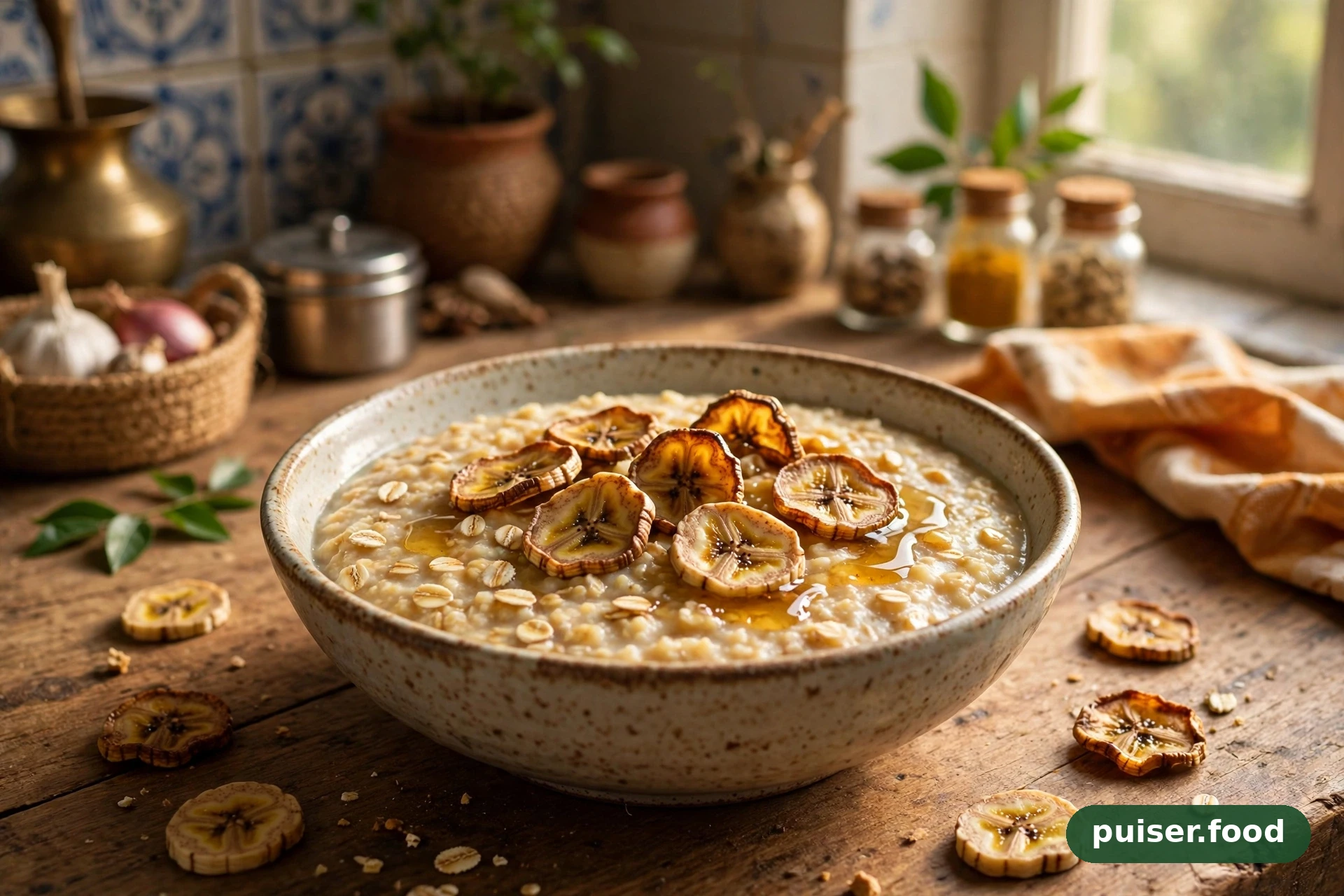
Stir 30 g of dried banana slices into a bowl of oats cooked in milk, with a teaspoon of honey and no extra sugar, and the bananas soften in the heat and turn the oats sweet and fragrant. The fibre of the oats and the fibre of the bananas work together, and the bowl needs no jaggery, because the bananas carry the sweetness. This is the breakfast where dried bananas earn their keep.
3. Curd smoothie with banana
Blend 30 g of dried banana slices, soaked in warm water for ten minutes, with a bowl of thick curd and a pinch of cardamom, and the smoothie is sweet, creamy and filling at once. The curd gives the protein, the bananas give the potassium and the flavour, and the cardamom gives the aroma. Soak the slices first, because dry slices will not blend smooth.
4. Whole wheat banana pancakes
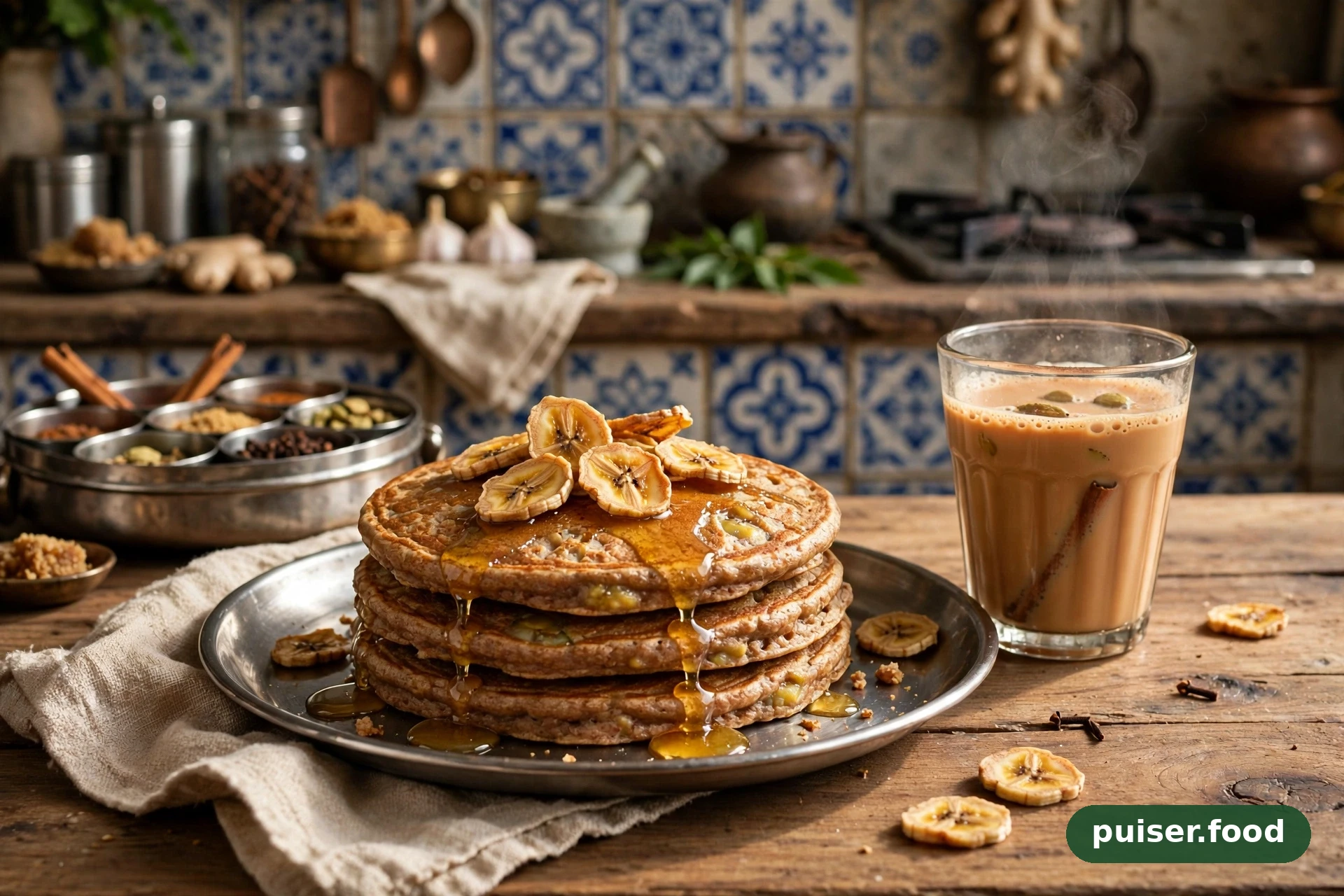
Fold 30 g of dried banana slices, chopped small, into a batch of whole wheat pancakes, and cook as usual. The bananas soften in the pan and give each pancake a burst of sweetness without extra sugar in the batter, and a pancake made this way beats a bakery pancake full of sugar and fat. Serve with a little honey and a few chopped walnuts on top.
5. Peanut butter sandwich with dried banana
Spread peanut butter on whole wheat bread, lay 30 g of dried banana slices on top, and close the sandwich. The peanut butter gives the protein and fat, the bananas give the sweetness and the potassium, and the bread gives the body, so the sandwich works as a tiffin or a pre workout snack. Keep the banana layer thin, because a thick layer turns the sandwich into a sweet.
Buying and Storing Dried Bananas
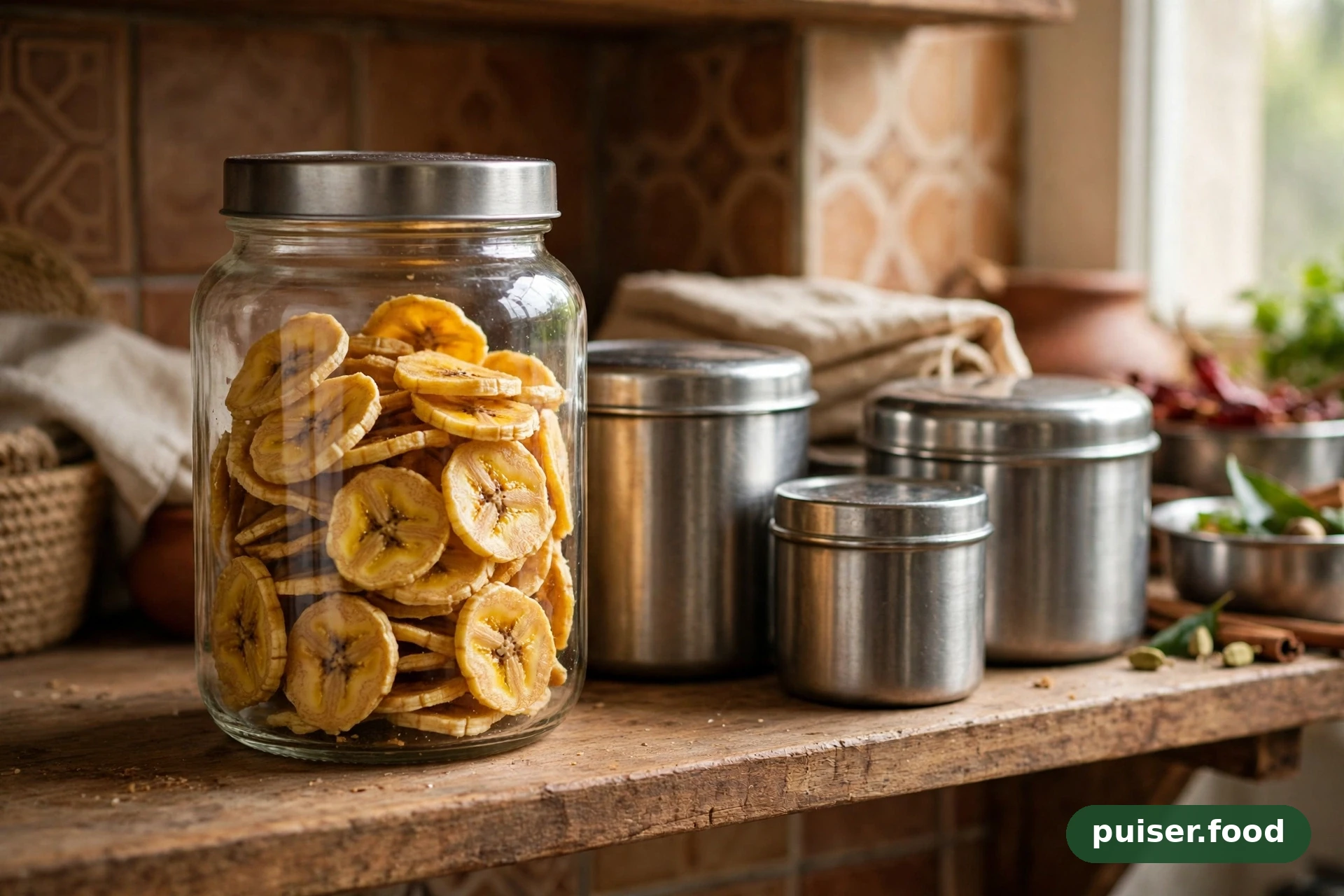
The benefits survive or die on the label, so buy by the label, not by the price alone. The ingredients list should read banana, and a pack that lists oil first is a fried chip, not a dried fruit. Plain slices are deep gold and chewy, while fried chips are pale yellow and crisp, so the look of the slice tells the story before the label does. Most Indian packs are fried chips, so a plain dehydrated pack is worth looking for online or in a dry fruit shop.
Store dried bananas in an airtight jar in a cool, dark place, where they keep for about six months, or in the fridge, where they keep for about a year. Their sugars attract moisture, so a pack left open in a humid kitchen will turn sticky and clump, and in summer the fridge is the safer place once the pack is opened. Throw the slices away if they smell sour, taste fermented or show mould. A 30 g handful a day makes a 250 g pack last about eight days, so the daily portion is easy to measure and worth measuring rather than eating from the pack.
5 Expert Tips
1. Soak before blending. Soak dried banana slices in warm water for ten minutes before blending them into a smoothie, because dry slices will not blend smooth.
2. Chop before cooking. Chop dried banana slices small before adding them to oats, pancakes or trail mix, so every bite gets banana and the slices do not stay in big chewy pieces.
3. Pair with peanuts for protein. Eat dried bananas with peanuts or curd rather than alone, because the protein and fat slow the sugars down and keep the snack filling for longer.
4. Buy plain, not fried. Buy plain dehydrated slices for snacking and cooking, and keep the fried Kerala chips for the rare occasion, because the chips carry oil and salt the plain slices do not.
5. Measure the handful. Measure two tablespoons into a small bowl and put the pack away, because a handful eaten from the pack is usually two, and the sugar adds up fast.
Common Mistakes to Avoid
Buying chips as dried bananas. The commonest mistake is buying fried banana chips and eating them as a health food, when they carry 33.6 g of fat per 100 g. Check the ingredients list, and if oil comes first, put the pack back.
Eating by the bowlful. A whole bowl of dried bananas is about 100 g and 47.3 g of sugars, and the fast carbs arrive quickly. A small handful is the portion.
Expecting the potassium to stop cramps. A handful of dried bananas will not fix a cramp, because cramps come mostly from tired muscles and salt lost in sweat. Eat bananas for their potassium, not as a cramp cure.
Storing in the open pack. A pack left open in a humid kitchen turns sticky, clumps and can ferment. Move the slices to an airtight jar on the day the pack is opened.
Skipping the soak. Dry banana slices stay hard in a smoothie or a batter, and they chew like leather in oats. Soak them in warm water for ten minutes first, so they soften before they meet the pan.
Frequently Asked Questions
What are the main dried bananas benefits?
The main dried bananas benefits are potassium, fibre and quick energy. A 100 g portion gives about 1,490 mg of potassium and 9.9 g of fibre for about 346 kcal. A small handful gives about 447 mg of potassium, which is a real share of the day.
How many dried bananas should I eat in a day?
A small handful of dried bananas a day, about 30 g or two tablespoons, is a sensible portion for most adults. That gives about 104 kcal and 3.0 g of fibre. Eat them in a trail mix, salad or oats, rather than by the bowlful.
Do dried bananas help with muscle cramps?
Dried bananas may help a little with cramps, because they carry potassium and magnesium, but the evidence is thin. Cramps come mostly from tired muscles and salt lost in sweat, and no trial has shown that eating bananas stops them. They are a good snack, not a cramp cure.
Are dried bananas good for diabetes?
Dried bananas are sugar dense, about 47.3 g of sugars per 100 g, so a small handful has a real effect on blood sugar. The fibre slows the sugars down a little, but the portion must stay small. People with diabetes should count bananas as the sweet of the meal and ask their own doctor.
Are dried bananas good for the heart?
Dried bananas may help the heart, because their potassium supports a healthy diet, and potassium helps the body balance fluids. The benefit comes from the whole diet, not from one fruit. Dried bananas do not treat heart disease, so keep the portion small.
Do dried bananas help with constipation?
Dried bananas can help with constipation, because their fibre adds bulk to the stool and feeds the good bacteria in the gut. A small handful gives about 3.0 g of fibre, and eating them daily with enough water helps most people. Bananas are not a laxative, and persistent constipation deserves a doctor.
Are dried bananas better than raisins?
Dried bananas carry far more potassium than raisins, about 1,490 mg against 749 mg per 100 g, and more fibre, 9.9 g against 3.7 g. Raisins carry more iron, about 1.88 mg against 1.15 mg. Bananas also carry less sugar, so the choice depends on what the meal needs.
What is the difference between dried bananas and banana chips?
Plain dried bananas are sliced banana dried in hot air, with no oil and no added sugar. Banana chips are sliced banana fried in oil, usually with salt, and they carry about 519 kcal and 33.6 g of fat per 100 g. Chips are a crisp, not a dried fruit, so check the label for oil.
Are dried bananas safe for children?
Dried bananas are safe for children in small amounts, about a tablespoon for a young child, and they make a better snack than a biscuit. They are soft and chewy, but young children should eat them sitting down and supervised. Their sugars are sticky, so rinse the mouth or brush after eating.
How do I store dried bananas?
Dried bananas keep for about six months in an airtight jar in a cool, dark place, or about a year in the fridge, because their sugars attract moisture and the fruit can ferment in heat. Store them in the fridge once opened in summer. Throw the slices away if they smell sour or show mould.
Conclusion
The dried bananas benefits are real, and they are simple: potassium that counts, fibre that counts, and quick energy for an active day. The catch is just as simple, 47.3 g of sugars per 100 g, so the portion is a small handful, not a bowlful. Buy a plain dehydrated pack, check the label for oil, measure two tablespoons into a small bowl, and the bananas earn their place in the jar.
Disclaimer: This article is for general information only and is not medical advice. If you have diabetes, high blood pressure, kidney disease, or any health condition, talk to your doctor before changing your diet.