Introduction
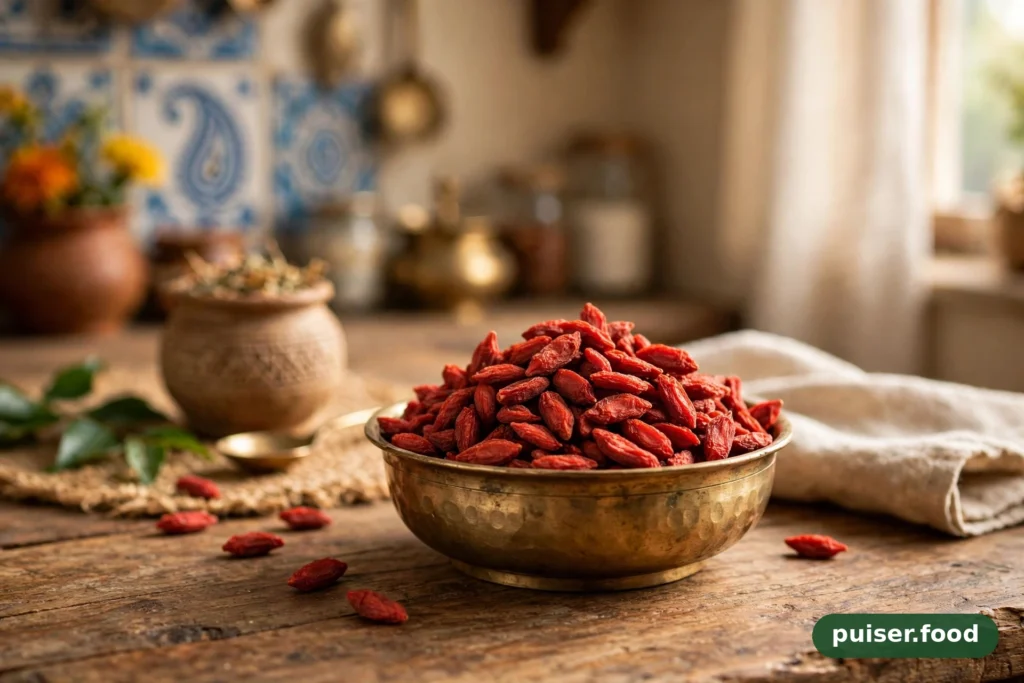
Goji berries are the red berry of the Indian trail mix, the small, chewy fruit that brightens a kheer, steeps into a tea and sits in the dry fruit box of every health conscious kitchen. They taste sweet and a little herbal, and they carry the price to match, so the honest question is whether they earn their place as a health food or only as an expensive sweet. This guide covers the goji berries benefits that matter most, the protein and fibre numbers told honestly, the warfarin warning with both views, and the five dishes where goji berries work best.
In this article
- The short answer
- What goji berries actually are
- Goji berries in numbers
- 10 benefits worth knowing
- The eye evidence and the warfarin warning, honestly
- Red versus black goji
- Five everyday ways to use them
- Buying and storing goji berries
- 5 expert tips
- Common mistakes to avoid
- Frequently asked questions
- Conclusion
The Short Answer
The goji berries benefits that matter most are protein, fibre and zeaxanthin in a dried fruit that needs no cooking at all. A 100 g portion of dried goji berries gives about 14.3 g of protein and 13 g of fibre for about 349 kcal, and a tablespoon of 15 g gives about 52 kcal and 2.0 g of fibre. Goji berries are sugar dense, about 46 g of sugars per 100 g, so a tablespoon or two a day is the portion, and they suit the trail mix, the kheer and the tea best.
What Goji Berries Actually Are
Goji berries, called wolfberries in English, are the fruit of Lycium barbarum, a shrub grown for over 2,000 years in China, and the berries are picked ripe, dried in the sun and sold as small, soft, deep red fruit. The berry is a staple of Chinese food and medicine, eaten dried, steeped in tea and cooked into soups, and it reached Indian kitchens through health food shops and online stores, where it sells as a premium import. India grows almost no goji of its own, so nearly every pack on an Indian shelf comes from China.
That goji berries carry protein and fibre with their sugar is the first thing to understand, because it is what separates a goji berry from a sweet, and it is where the goji berries benefits start. A goji berry gives natural sugars with protein, fibre, iron and vitamin C attached, and the protein makes the berry more filling than any other dried fruit, the fibre slows the digestion a little, and the fruit still tastes sweet, which is why goji berries work as a snack and a garnish at once.
Goji berries are also the fruit of the tea cup and the kheer bowl, in the goji tea of the evening, in the kheer garnish of a festival, in the trail mix of a train journey, and in the oats of a winter morning. Our dried cranberries benefits guide covers the tart red berry of the same trail mix, the one to reach for when the mix needs tartness rather than protein. Our dried mango benefits guide covers the chewy tropical fruit of the same shelf, the one to reach for when the snack needs to be sweet rather than herbal.
Goji Berries in Numbers
The table below sets out the goji berries benefits in numbers, and it uses one basis throughout. The figures are from USDA FoodData Central, FDC #173032, for goji berries, dried, per 100 g, and they are the figures this guide uses throughout. The protein figure, 14.3 g per 100 g, is the one that matters most, and it is the figure that separates goji berries from every other dried fruit in this series, so it can be checked two ways.
| Nutrient (per 100 g dried goji berries) | Goji Berries |
|---|---|
| Energy | 349 kcal |
| Protein | 14.3 g |
| Fat | 0.39 g |
| Carbohydrates | 77.1 g |
| Dietary fibre | 13 g |
| Sugars | 45.6 g |
| Calcium | 190 mg |
| Iron | 6.8 mg |
| Sodium | 298 mg |
| Vitamin C | 48.4 mg |
| Vitamin A | 26,800 IU |
Figures per USDA FoodData Central FDC #173032, goji berries, dried, per 100 g. The fibre, 13 g per 100 g, is the highest of the dried fruit series, and a tablespoon of 15 g gives about 2.0 g. The iron, 6.8 mg per 100 g, is the highest of the series too, and this guide covers below why the body absorbs so little of it, because goji berries are often sold as an iron food and the number alone does not tell the story. Potassium is not reported in this USDA record, so this guide claims no potassium figure for goji.
The second table shows what a real portion gives you. A tablespoon, about 15 g, gives about 52 kcal and 2.1 g of protein, which is a sensible daily portion. A 28 g portion, five tablespoons and the USDA serving size, gives about 98 kcal and 4.0 g of protein, which is about the protein of an egg white, and that is why the tablespoon is the portion and the bowl is not.
| Portion | Energy | Protein | Fibre | Price, at 600 rupees per 250 g |
|---|---|---|---|---|
| 100 g goji berries | 349 kcal | 14.3 g | 13 g | About 240 rupees |
| 1 tbsp, about 15 g | About 52 kcal | About 2.1 g | About 2.0 g | About 36 rupees |
| 5 tbsp, about 28 g | About 98 kcal | About 4.0 g | About 3.6 g | About 67 rupees |
| 2 tbsp, about 30 g | About 105 kcal | About 4.3 g | About 3.9 g | About 72 rupees |
Figures per USDA FDC #173032, scaled to the portion. Prices are worked out from goji berries at 600 rupees for 250 g, about 240 rupees per 100 g, so a tablespoon costs about 36 rupees and a 250 g pack gives about 16 tablespoons. Cheaper packs sell for about 450 rupees for 250 g, and imported organic packs sell for about 700 rupees, so the tablespoon maths above is for a mid range pack, and the dearest tablespoon costs about 42 rupees.
The third table compares goji berries with the other sweet dried fruits of the Indian kitchen. Goji berries carry the most protein, fibre and iron of the table, and no other dried fruit in it comes close on all three at once. Raisins carry more potassium, dates carry more sugars, and cranberries carry far more sugars and almost no protein.
| Food, per 100 g | Energy | Sugars | Fibre | Protein | Best use |
|---|---|---|---|---|---|
| Goji berries, dried | 349 kcal | 45.6 g | 13 g | 14.3 g | Trail mix, tea, kheer garnish |
| Raisins, dark seedless | 299 kcal | 59.2 g | 3.7 g | 3.07 g | Kheer, poha, trail mix |
| Dates, Medjool | 277 kcal | 66.5 g | 6.7 g | 1.81 g | Handful, laddoo, sweetener |
| Dried cranberries, sweetened | 308 kcal | 72.6 g | 5.3 g | 0.2 g | Trail mix, salad, baking |
Comparison per USDA FoodData Central, on the same basis: goji berries FDC #173032, raisins FDC #168165, dates FDC #169655, dried cranberries FDC #171723. The protein gap is the story of the table: goji berries carry about 14.3 g of protein per 100 g, raisins carry about 3.1 g, and cranberries carry about 0.2 g, which is why the goji berry is the only dried fruit that eats like a small protein snack, even if the portion is only a tablespoon.
10 Benefits Worth Knowing
These are the ten goji berries benefits worth knowing, in the order that matters for an Indian kitchen. The first three are the nutrition facts. The rest are what those facts mean in practice, including the honest limits.
1. Protein, the highest of any dried fruit
At 14.3 g of protein per 100 g, goji berries carry more protein than any other dried fruit, and that is the first of the goji berries benefits, because a tablespoon gives about 2.1 g and the protein makes the berry more filling than raisins or dates. The protein is the reason goji berries suit a trail mix and a gym bag, and it is the reason the berry costs what it does. The protein is plant protein, so it does not replace dal or egg, but it is a genuine extra on top of the fibre.
2. Fibre, the highest of the series
At 13 g of fibre per 100 g, goji berries carry more fibre than any other dried fruit in this series, and a tablespoon gives about 2.0 g. The fibre adds bulk to the stool and feeds the good bacteria in the gut, and it is the reason goji berries help with digestion when eaten daily with enough water. The fibre also slows the sugars down, so a goji berry is digested more slowly than the same weight of sugar.
3. Iron, with a catch the label hides
At 6.8 mg of iron per 100 g, goji berries carry more iron than any other dried fruit, and a tablespoon gives about 1.0 mg. The catch is that the body absorbs very little of the iron in goji berries, because the fruit carries compounds that block absorption, and the portion is small, so a tablespoon gives only about 1.0 mg against the 18 mg a day that adult women need. A bowl of dal or a portion of leafy greens gives far more usable iron, and goji berries belong in an iron rich diet as a small extra, not as the source. Eating goji berries with amla, lemon or orange helps the body absorb a little more of the iron.
4. Zeaxanthin and eye health
Goji berries are the richest dietary source of zeaxanthin, a carotenoid that gathers in the retina and helps protect the eyes from light damage, and a 28 g portion gives about 7,504 IU of vitamin A. Small trials found that eating goji berries for 90 days raised macular pigment, the protective layer of the retina, in healthy adults and in people with early macular degeneration. The trials were small and short, so the eye story stays promising, not proven, and the eye section below covers it in full.
5. Vitamin C that survives the drying
At 48.4 mg of vitamin C per 100 g, goji berries carry more vitamin C than any other dried fruit in this series, and a tablespoon gives about 7.3 mg. Vitamin C supports the immune system and helps the body make collagen for skin and gums, and it survives the drying far better than the vitamin C in cranberries, which drops to almost nothing. The vitamin C is the reason goji berries suit the winter kitchen, and it is a genuine plus beside the protein and fibre.
6. Calcium, the quiet second mineral
At 190 mg of calcium per 100 g, goji berries carry more calcium than dates, raisins or prunes, and a tablespoon gives about 29 mg. The amount is modest beside a glass of milk, but it adds up across a varied diet, and goji berries are one of the few sweet foods that carry this much calcium at all. The calcium story is a supporting role, not the headline, and this guide keeps it there, because the portion, not the 100 g figure, is what the reader eats.
7. Antioxidants, led by goji polysaccharides
Goji berries carry Lycium barbarum polysaccharides, or LBP, a group of sugars unique to the berry, along with carotenoids, flavonoids and phenols that act as antioxidants in the body. The antioxidants protect cells from the damage of free radicals, and goji berries rank among the richest dried fruits for total antioxidant content. Antioxidants are not a reason to eat goji berries by the bowlful, but they are a real extra on top of the protein and fibre.
8. Immune support, through vitamin C and LBP
At 48.4 mg of vitamin C per 100 g, goji berries support the immune system in the ordinary way vitamin C does, and the LBP compounds have been studied for immune effects in small trials in older adults, where they raised vaccine antibody levels. The trials were small and used a milk based goji drink rather than whole berries, so the immune story stays promising, not proven. The vitamin C alone is a solid reason to keep goji berries in the winter rotation.
9. A snack that travels and keeps
Goji berries need no fridge, no cooking and no packet to open, and they keep for months in an airtight jar, which makes them one of the most practical snacks in the Indian kitchen. A small box of goji berries goes into a lunchbox, a handbag, a desk drawer or a train journey, and the fruit is ready to eat at any of them. That ease is part of why goji berries stay in the jar long after the festival cooking is done, and it is a benefit worth having for a busy household.
10. A fruit that works in sweet and savoury cooking
Goji berries work in more dishes than any other berry, in trail mix, in oats, in kheer, in salads and in tea. The sweet herbal flavour suits sweet dishes best, and the berries soften in hot water, which is why a spoon of goji berries lifts a cup of tea or a bowl of kheer. That range is part of why the price is worth paying, because the fruit does more than sit in the jar.
The Eye Evidence and the Warfarin Warning, Honestly
The goji berries benefits for eye health rest on zeaxanthin, the carotenoid that gathers in the macula, the centre of the retina, and helps shield it from blue light. In a trial of 27 adults aged 45 to 65, eating 28 g of goji berries five days a week for 90 days raised macular pigment, a marker of eye protection, while a lutein supplement did not. In a trial of 150 healthy people aged 65 to 70, a milk based goji drink taken for 90 days kept macular features more stable than placebo. Both trials were small and short, and they measured pigment, not eyesight, so the eye story stays promising, not proven.
The warfarin warning is the part buyers must not miss. Case reports link goji berries with higher bleeding risk in people taking warfarin, the blood thinner, and goji may also interact with medicines for diabetes and high blood pressure. The evidence is case reports and small studies, not large trials, but the warning is real, so people on warfarin, diabetes or blood pressure medicines should ask their doctor before starting a daily goji habit. A small occasional spoonful in a trail mix is a different matter from a daily habit, and the doctor, not this guide, decides which is safe.
The allergy catch belongs here too, because goji is in the nightshade family, the same family as tomato, potato and peppers, and people sensitive to those foods can react to goji berries. The reaction is uncommon, and it ranges from a mild mouth itch to a rash, but anyone with a nightshade sensitivity should try a small amount first. Goji tea, made by steeping a tablespoon in hot water, is the gentlest way to start, because the dose is small and the berries soften.
Red Versus Black Goji
Red goji, Lycium barbarum, is the common kind of India, small, soft and deep red, sold by health food brands at about 450 to 710 rupees for 250 g. Black goji, Lycium ruthenicum, is a different species, smaller and darker, rich in anthocyanins, and it is sold mostly for tea, where it turns the water purple. Black goji costs far more than red, and it is the one most often sold by premium tea brands.
The goji berries benefits barely change between whole berries and powder, because the fruit is the same and only the form differs, so the choice is mostly one of price and use. For daily eating, the whole red berry is the right buy, because it is soft, sweet and ready to eat. For tea, the black berry is the right buy, because it colours the water and steeps cleanly. For smoothies, the powder is the right buy, because it blends without chewing, though it costs more per gram.
Five Everyday Ways to Use Them
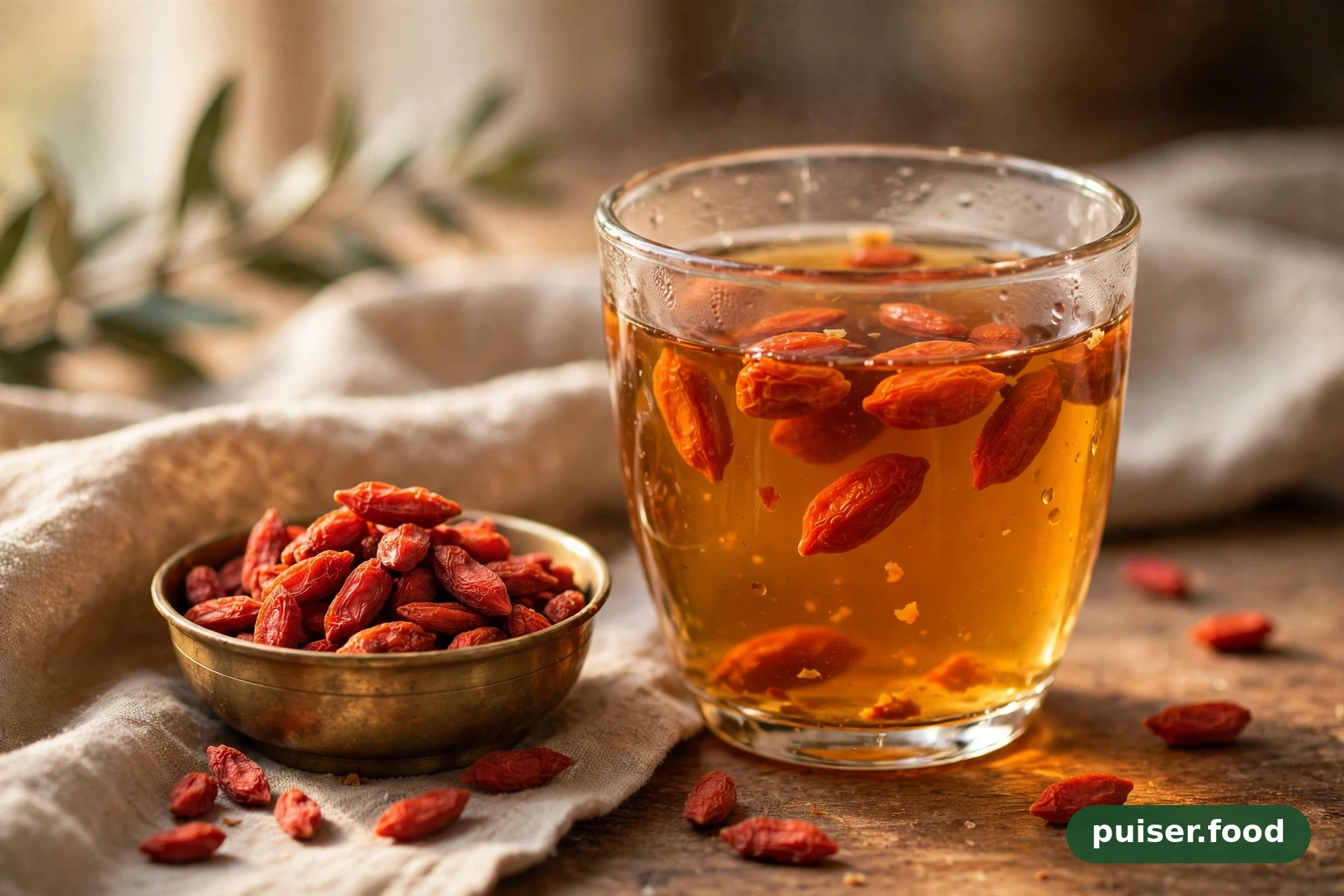
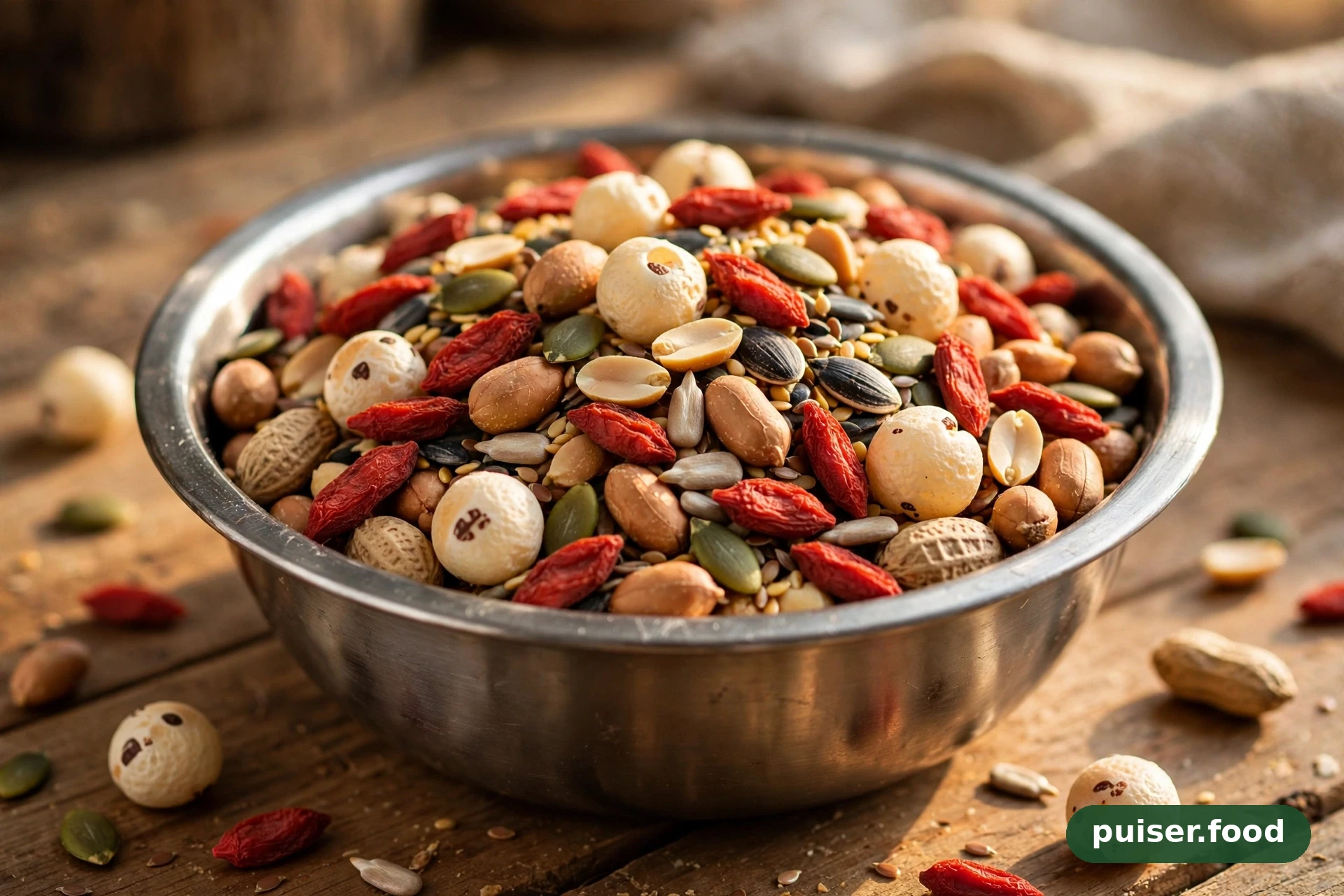
The goji berries benefits show up in five everyday dishes. First, trail mix, goji berries with peanuts, makhana and seeds, the snack that travels in a pocket. Second, oats and curd, the breakfast bowl where a spoon of goji berries sweetens the plain base. Third, kheer garnish, goji berries scattered over rice pudding, where they plump up in the hot milk. Fourth, goji tea, a tablespoon steeped in hot water with a little honey, the evening drink of the Chinese kitchen. Fifth, a green salad, where a spoon of goji berries sweetens the leaves and the lemon dressing.
The fruit also works chopped into cookies, where it replaces some of the raisins, and in pulao, where it sweetens the rice. Our dried cranberries benefits guide covers the tart red berry of the same trail mix, the one to reach for when the mix needs tartness rather than protein. Our raisins benefits guide covers the small sweet fruit of the kheer, the one to reach for when the question is kishmish rather than goji.

Buying and Storing Goji Berries
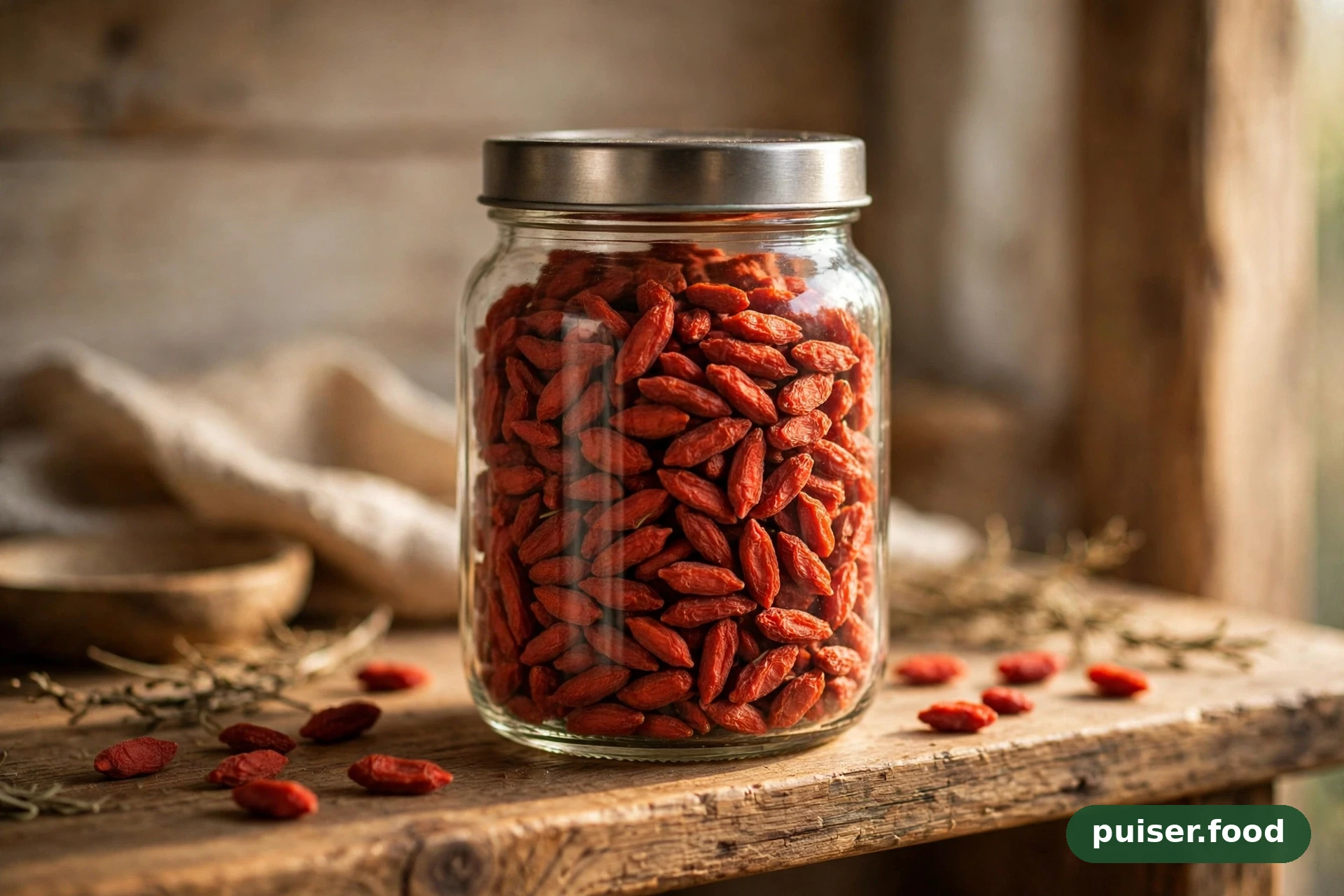
The goji berries benefits survive or die on whether the berries are fresh, because old berries dry out, turn hard and lose their soft chew. Good berries are plump, soft and deep red, with unbroken skin and no white sugar crystals on the surface, and they should smell sweet and faintly herbal, not sour or fermented. Many cheap goji berries in India are dyed to look redder, so buy berries with no added colour and no preservatives listed.
Price is the honest catch. Goji berries sell for about 450 to 710 rupees per 250 g, and a 250 g pack gives about 16 tablespoons, so a tablespoon costs about 36 rupees. Puiser has no goji product yet, and the cranberries and mango products are the better buy in this batch.
Store goji berries in an airtight jar in a cool, dark place, and in the fridge once opened in summer, because the sugars attract moisture and the fruit can ferment in heat. They keep for about six months in a cool place, or about a year in the fridge. If the berries smell sour, taste fermented or show mould, throw them away, because spoiled berries are not worth eating. Goji berries are also a choking risk for small children, so chop them fine for toddlers.
5 Expert Tips
Five habits protect the protein and fibre in goji berries. First, buy a small pack at a time, and taste a berry before you buy a kilo. Second, eat a tablespoon or two a day, not a bowlful, because the fruit is sugar dense and the portion is the whole story. Third, steep goji berries in hot water for tea, because the soaked berries are softer and the tea carries some of the flavour. Fourth, mix goji berries with nuts and seeds, because the fat and protein slow the sugars down and keep the snack filling. Fifth, ask your doctor first if you take warfarin, because the interaction is real even if the evidence is thin.
Common Mistakes to Avoid
The most common mistake is eating a bowlful and calling it a health food, when the portion is a tablespoon or two and a bowlful carries about 349 kcal and 46 g of sugars. The second is quoting goji berries as an iron cure for anaemia, when a tablespoon gives about 1.0 mg of iron, far too little to matter on its own. The third is starting a daily goji habit while taking warfarin, when the interaction is real and the doctor should decide. The fourth is buying dyed berries and counting them as plain fruit, when the colour is added. The fifth is storing goji berries on a warm shelf for months, when the fruit ferments and turns sour.
Frequently Asked Questions
What are the main goji berries benefits?
The main goji berries benefits are protein, fibre and zeaxanthin. A 100 g portion gives about 14.3 g of protein and 13 g of fibre for about 349 kcal. A tablespoon gives about 2.1 g of protein and 2.0 g of fibre, which is a useful share of the daily target.
How many goji berries should I eat in a day?
A tablespoon or two of goji berries a day, about 15 to 30 g, is a sensible portion for most adults. That gives about 52 to 105 kcal and 2.0 to 3.9 g of fibre. Eat them in a trail mix, kheer or tea, rather than by the bowlful, because the fruit is sugar dense.
Are goji berries good for eyes?
Goji berries may help the eyes, because they are the richest dietary source of zeaxanthin, which gathers in the retina and shields it from blue light. Small trials found 90 days of goji berries raised macular pigment. The trials were small and short, so the eye story stays promising, not proven.
Can goji berries interact with warfarin?
Case reports link goji berries with higher bleeding risk in people taking warfarin, the blood thinner. Goji may also interact with medicines for diabetes and high blood pressure. The evidence is thin, but the warning is real, so ask your doctor before starting a daily goji habit.
Are goji berries good for diabetes?
Goji berries are sugar dense, about 46 g of sugars per 100 g, so a tablespoon has a real effect on blood sugar, though less than raisins or dates. Small trials found goji berries lowered blood sugar in people with type 2 diabetes. People with diabetes should count goji as the sweet of the meal and ask their own doctor.
Are goji berries good for anaemia?
Goji berries carry more iron than any other dried fruit, about 6.8 mg per 100 g, but the body absorbs very little of it, and the portion is small. A tablespoon gives about 1.0 mg of iron, which is a small share of the daily need. Goji berries are not a useful iron remedy on their own.
Are black goji berries better than red?
Black goji berries are a different species, rich in anthocyanins, and they suit tea, where they turn the water purple. Red goji berries are the common kind, softer and sweeter, and they suit snacking and cooking. The nutrition differences are small, so the choice is mostly taste, use and price.
Are goji berries good for the skin?
Goji berries may help the skin, because their vitamin C helps the body make collagen, and their antioxidants protect skin cells from free radical damage. The skin benefit comes from the whole diet, not from one fruit. Goji berries are not a skin treatment, and the evidence is mostly from small trials.
Can I eat goji berries every day?
Most healthy adults can eat a tablespoon or two of goji berries every day as part of a balanced diet. People taking warfarin, diabetes or blood pressure medicines should ask their doctor first, because goji may interact with these medicines. People with a nightshade sensitivity should try a small amount first.
How do I store goji berries?
Goji berries keep for about six months in an airtight jar in a cool, dark place, or about a year in the fridge, because their sugars attract moisture and the fruit can ferment in heat. Store them in the fridge once opened in summer. Throw the berries away if they smell sour or show mould.
Conclusion
Goji berries are the small red berry that asks for nothing but a tablespoon or two a day, and gives back a trail mix, a kheer garnish, a tea and a salad, all for about 36 rupees a portion. A tablespoon gives useful protein and fibre, and an eye story that is honest about the evidence, and the fruit keeps well in a cool jar for months. The goji berries benefits are real, but they are ordinary benefits, the kind that show up in a better everyday kitchen rather than in a miracle. Buy them fresh, store them cool, eat a tablespoon a day, and keep them on the daily rotation.
Disclaimer: This article is for general information only and is not medical advice. If you have a medical condition, are pregnant or breastfeeding, or take regular medication, talk to your doctor before changing your diet.