
Introduction
Learning how to test pure honey at home is worth ten minutes: most of the honey sold in India is not what the label suggests. In 2020, the Centre for Science and Environment tested 22 samples from 13 leading brands and found 77 percent adulterated with sugar syrup. This guide shows you what wild and regular honey really are, six tests you can do in your kitchen, what those tests can and cannot prove, and how to pick a jar you can trust.
In this article
- Wild honey vs regular honey: what is the difference?
- Why testing matters in India
- How to test pure honey at home: six tests that help
- The six tests at a glance
- What no home test can prove
- How to read a honey label
- How to buy a jar you can trust
- Using and storing honey safely
- 5 expert tips for buying and using honey
- Common mistakes to avoid
- Frequently asked questions
- Conclusion
Wild Honey vs Regular Honey: What Is the Difference?
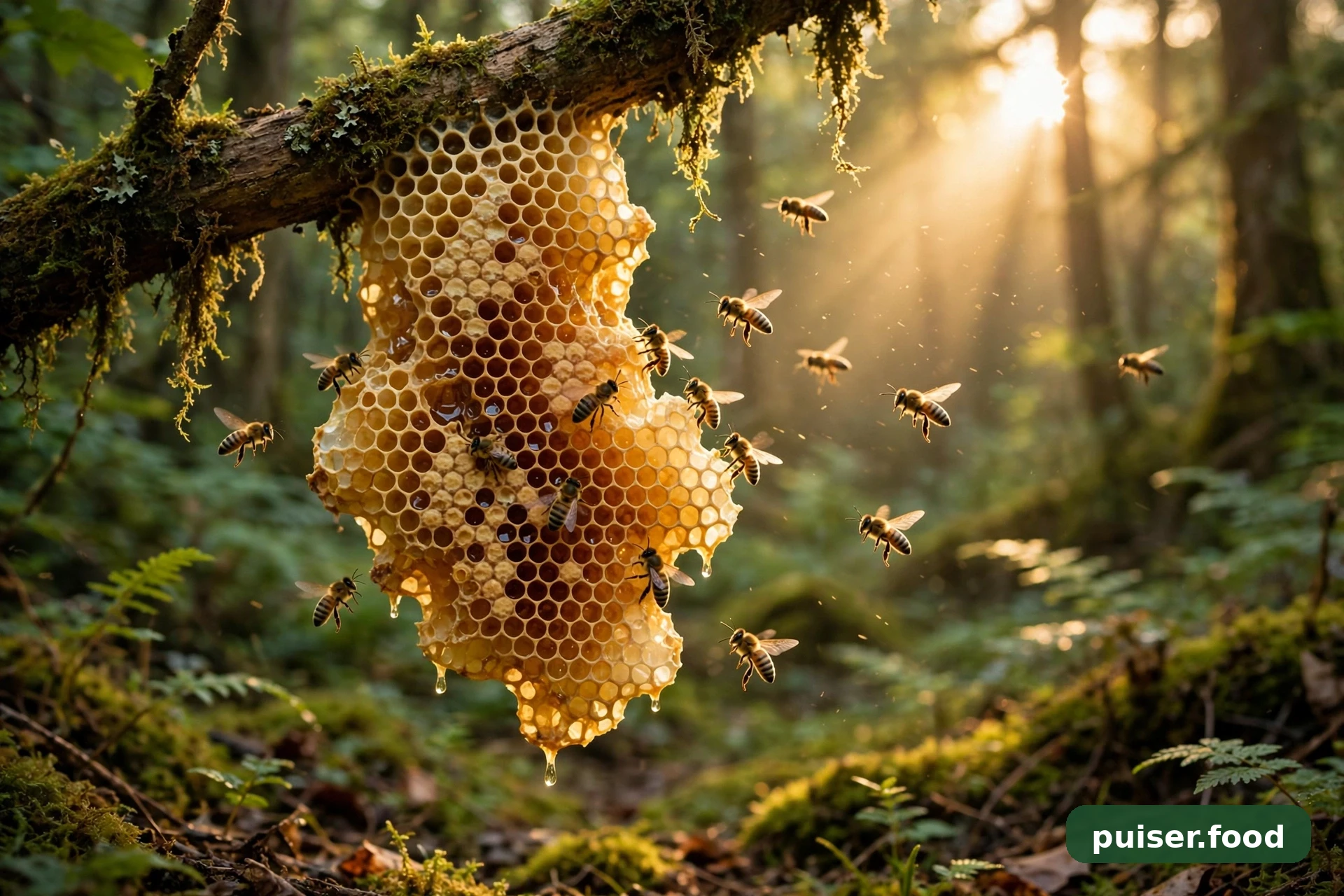
Wild honey, also called forest honey, comes from bees that feed on whatever is flowering naturally in a forest. In India those bees are mainly Apis dorsata, the rock bee, and Apis cerana indica, the Indian honeybee, so wild honey tastes different from harvest to harvest.
Regular honey, the kind on most supermarket shelves, usually comes from large apiaries near a single crop such as mustard or sunflower. After harvest it is often heated to stay liquid, and filtered to remove pollen and wax. Heating and filtering make it look clean and golden, but strip out much of what made it special.
Raw honey is a separate idea: never heated above hive temperature, about 40 degrees C, or ultra-filtered or blended with syrup. Wild honey is often raw, but not always.
Why Testing Matters in India
The reason to learn how to test pure honey at home is the scale of the problem. In 2020, the Centre for Science and Environment (CSE) collected 22 samples from 13 brands, tested first in Gujarat, then at a specialist lab in Germany. Most samples passed the Indian tests. The German lab then ran NMR profiling and a rice syrup marker test, and the picture changed: 17 of the 22 samples, 77 percent, were adulterated with added sugar syrup. Only three brands passed every test: Saffola, Markfed Sohna, and one Nature’s Nectar sample.
Chinese companies designed these syrups to pass the standard Indian tests, so a jar could carry an FSSAI mark and still be mostly syrup. NMR checks whether the sugars match the pattern bees produce, and it caught what the Indian tests missed. Since August 2020, NMR testing has been mandatory for export honey.
FSSAI limits honey moisture to below 20 percent and HMF, a compound that rises when honey is heated or stored badly, to below 80 mg per kg. Those limits matter, but they cannot catch a well-made syrup, so a home test and a label check are both needed.
How to Test Pure Honey at Home: Six Tests That Help
These six tests use things already in your kitchen. None proves purity on its own, but together they catch the obvious fakes.
1. The water test
Drop a spoonful of honey into a glass of room-temperature water without stirring. Pure honey is dense, so it sinks to the bottom as a compact lump. Honey cut with water or syrup disperses quickly and turns the water cloudy. The water test is the first step in how to test pure honey at home because it is fast and needs nothing special. It cannot catch a thick syrup made to the same density as honey.

2. The thumb test
Put a small drop on your thumb. Pure honey stays put, thick and firm, and does not spread or drip. Honey with added water or syrup spreads out or slips off. Pure honey has low moisture, around 17 to 20 percent, while diluted honey is wetter. A thick syrup can pass it too, so use it with the other tests.
3. The crystallisation test
Leave the jar alone for a few weeks. Pure raw honey crystallises naturally at room temperature, forming fine sugar crystals, especially in cooler weather. This is normal: it shows the honey still holds its natural glucose. If your honey has sat for a year and is still perfectly clear, it has probably been heated or filtered. To fix it, stand the jar in warm water until it turns liquid again. Never microwave it.

4. The flame test
Dip a dry matchstick tip in the honey, then strike it. Pure honey has so little water that the match lights and burns steadily. Honey with added moisture will not light, or it fizzes and crackles. Do it with care: work over a sink or plate, away from curtains and children, and never heat the honey over a flame. It only measures moisture, not where the sugars came from.
5. The paper test
Put a few drops on blotting paper or a paper towel and wait a minute. Pure honey stays on the surface and does not soak through or leave a wet ring. Honey with added water is runnier and soaks in, leaving a wet stain. It pairs well with the thumb test, since both point at excess moisture. Like the others, it cannot catch a thick syrup.
6. The pour test
Hold a spoonful high above the jar and let it fall. Pure honey pours in a slow, continuous thread that does not break. Thin honey pours fast and breaks into drops. A syrup can be made thick enough to pour slowly, so a good pour is encouraging, not conclusive.
The Six Tests at a Glance
| Test | What you need | Pure honey | Adulterated honey |
|---|---|---|---|
| Water test | Glass of water | Sinks and sits at the bottom | Disperses and turns water cloudy |
| Thumb test | Your thumb | Stays firm, does not spread | Spreads, drips, or soaks in |
| Crystallisation | Time, a few weeks | Forms fine crystals naturally | Stays perfectly clear and liquid |
| Flame test | Dry matchstick | Match lights and burns steadily | Match fails to light, fizzes |
| Paper test | Blotting paper or tissue | Stays on the surface | Soaks through, leaves a wet ring |
| Pour test | A spoon | Slow, unbroken thread | Fast pour, breaks into drops |
What No Home Test Can Prove
A jar can pass all six tests above and still be adulterated. The syrups in the CSE investigation were designed to behave like honey, with similar thickness, sweetness, and moisture. A thick rice syrup can sink in water, stay on your thumb, and pour in a slow thread. That is the limit of any kitchen test: it cannot tell you whether the sugars in a jar came from bees or from a factory.
Only laboratory analysis settles the question. NMR profiling checks the sugar pattern against what bees produce, and it caught the adulteration standard tests missed. Some premium brands print “NMR tested” on the label, and that claim is worth looking for. A lab test costs more than a jar of honey, so it suits brands and sellers. Use the home tests to catch the obvious fakes, then buy from a seller you can check.
How to Read a Honey Label
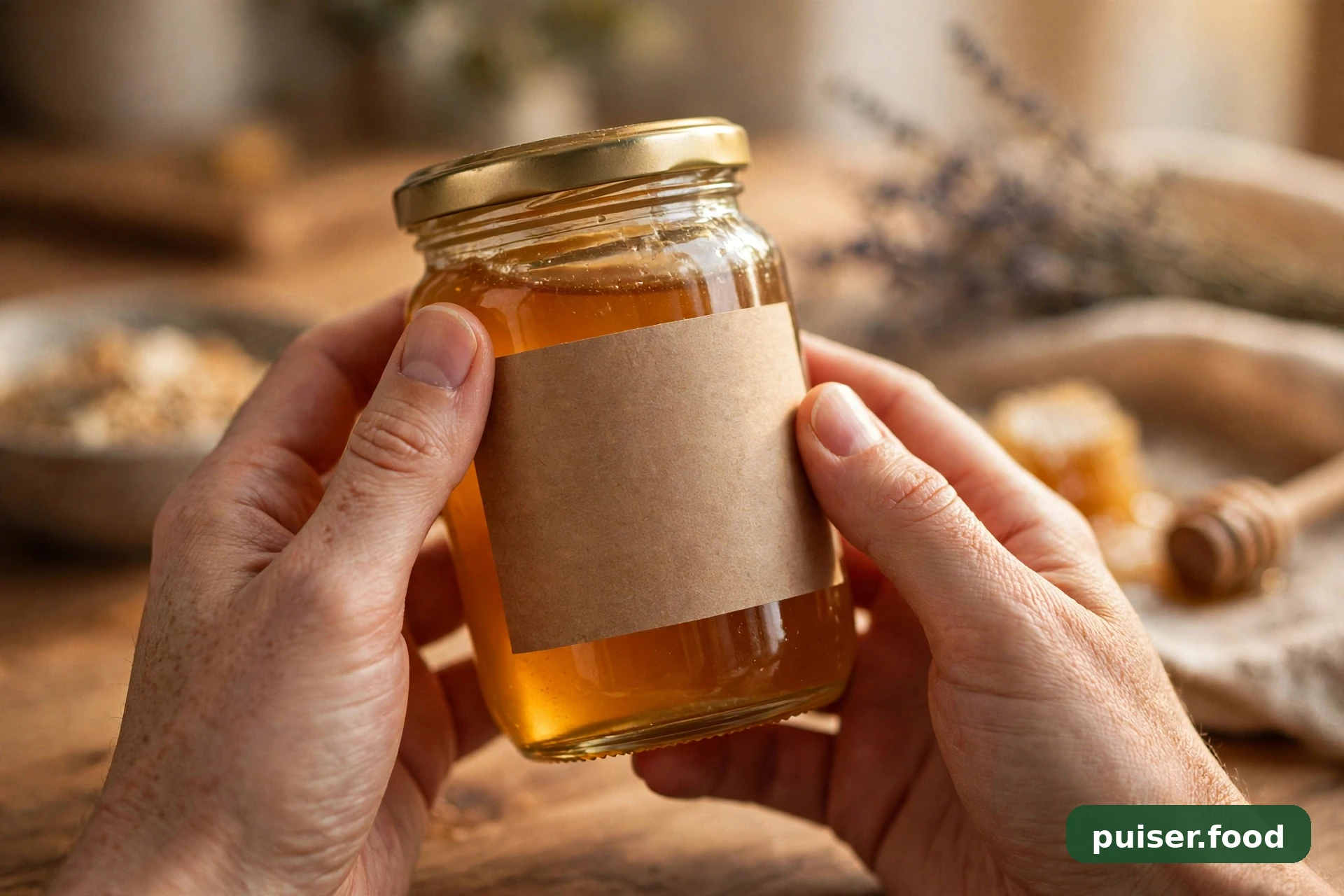
A label check is part of how to test pure honey at home. Start with the ingredient list: it should say one thing, honey. If you see added sugar, glucose, fructose syrup, or rice syrup, the jar is not pure honey.
Next, look for the FSSAI logo and licence number. Every packaged food in India must carry one; its absence is a reason to leave the jar on the shelf. Then look for the words “NMR tested” and the laboratory’s name, if given. A brand that names its source region and shows test reports gives you something to check. Our guide to how to tell if food is really organic in India explains the same checks for other foods.
Be careful with words that sound like guarantees but are not regulated. “Natural”, “pure”, “organic”, and “forest” mean little unless a certification or test report backs them up. Price is a clue too: real raw honey comes from small harvests. A jar far cheaper than other raw honey on the shelf is a reason to look twice, not a bargain.
How to Buy a Jar You Can Trust
The best way to learn how to test pure honey at home is to practise on a jar you already trust. Buy your first jar from a beekeeper you can talk to, a farmer group, or a brand that publishes NMR test reports.
When you compare jars, taste them side by side. Real honey tastes of the flowers the bees visited, and wild honey changes with the season, so a jar that always tastes the same has probably been blended. Wild honey ranges from pale gold to deep amber, while a jar that is always the same bright gold may have been heated. Our wild forest honey comes from forest apiaries. Try it in turmeric milk, where a spoonful adds sweetness without covering the spice.
Using and Storing Honey Safely
Use honey in warm milk, on toast, in salad dressing, or over fruit. Add it after cooking, because high heat destroys its delicate flavour and enzymes. Honey is sweeter than sugar, so use a little less than a recipe asks. Our jaggery vs white sugar guide compares the other sweeteners.
Store honey in a cool, dry place, lid on tight, away from the stove and sunlight. It keeps for years: low moisture and natural acidity stop bacteria growing. Do not refrigerate it, because the cold speeds up crystallisation. If it crystallises, stand the jar in warm water until it turns liquid again.
One safety rule matters most: never give honey to a baby under one year old. Honey can carry spores of the bacterium that causes infant botulism, and a baby’s gut cannot handle them. This applies to all honey and food made with honey.
5 Expert Tips for Buying and Using Honey
Buy small first. When you try a new brand, buy the smallest jar and use it to practise how to test pure honey at home. Run the water, thumb, and paper tests first.
Keep a reference jar. Once you find a honey you trust, keep a little aside. When you test a new jar, compare the pour, thickness, smell, and taste.
Trust crystallisation, not clarity. A jar that turns cloudy or grainy in winter is doing what real honey does. A jar that stays perfectly clear for a year has been heated, filtered, or is not honey at all.
Read the label before the price. The ingredient list, the FSSAI number, and the words “NMR tested” tell you more than the price or the picture. A cheap jar with a vague label is the most expensive honey: you pay for syrup.
Use honey where you can taste it. Honey shines in warm milk, toast, fruit, and salad dressing. In a heavily spiced dish, its flavour disappears, so save the good jar for where you can taste it.
Common Mistakes to Avoid
Trusting a single home test. The most common mistake in how to test pure honey at home is treating one passed test as proof. A thick syrup can pass the water, thumb, and pour tests. Run several tests, read the label, and check the seller.
Throwing away crystallised honey. Many people see crystals and think the honey has gone bad. The opposite is true: crystallisation is normal for real raw honey. Warm the jar in water and it turns liquid again.
Believing “natural” means pure. Natural has no legal definition on a honey label in India. Only a test report, an NMR claim, or a named source backs up the word. Judge the jar by its label and seller, not the adjectives on the front.
Heating honey till it boils. Boiling honey destroys its flavour and delicate compounds. Add honey after food has cooled, and never microwave a jar.
Giving honey to a baby. Honey is not safe for babies under one year old, even in small amounts or cooked food. This rule has no exception.
Storing honey in the fridge. Cold speeds up crystallisation and makes honey hard to pour. Keep it in a cool cupboard with the lid tight.
Frequently Asked Questions
How can I check honey purity without a lab?
Run simple checks: the water test, where pure honey sinks; the thumb test, where it stays firm; and the crystallisation check, where raw honey forms crystals. These catch obvious fakes, but no home test proves purity. Only lab NMR testing can confirm purity.
Does crystallised honey mean it is fake?
No, crystallisation is normal for pure raw honey and a good sign. Real honey contains natural glucose, which forms fine crystals over weeks or months. A jar that stays perfectly clear for a year has likely been heated, filtered, or adulterated.
What is the water test for honey?
Fill a glass with room-temperature water and drop in a spoonful of honey without stirring. Pure honey is dense, so it sinks to the bottom as a compact lump. Honey cut with water or syrup disperses and turns the water cloudy.
Is the flame test for honey safe?
Yes, done carefully. Dip a dry matchstick tip in the honey and strike it over a sink or plate, away from curtains and children. Pure honey has so little water that the match lights. Never heat the honey itself over a flame.
What does NMR tested mean on a honey label?
NMR stands for Nuclear Magnetic Resonance, a lab test that checks whether honey sugars match the pattern bees produce. It caught the adulteration standard tests missed in 2020, when 77 percent of samples failed. A jar labelled NMR tested has passed the strongest check.
What is the difference between wild honey and regular honey?
Wild honey comes from bees feeding on forest flowers, mainly Apis dorsata and Apis cerana indica, so its taste changes by season. Regular honey comes from large apiaries near a single crop, and is often heated and filtered. Wild honey is often raw, but the words mean different things.
Is raw honey better than processed honey?
Raw honey keeps more flavour, pollen, and enzymes because it is never heated above hive temperature. Processed honey is still genuine if it contains nothing else, but heating and filtering remove much of what makes it special. For the full character, choose raw and check for NMR testing.
How can I tell if honey is adulterated with sugar syrup?
Home tests help: pure honey sinks in water, stays firm on your thumb, and pours in a slow thread. But syrups are designed to pass these tests, so a jar can pass. Read the label for one ingredient and NMR testing, and buy from a seller who names the source.
Can babies eat honey?
No, never give honey to a baby under one year old. Honey can carry spores of the bacterium causing infant botulism, and a baby’s gut cannot handle them. This applies to all honey and food made with honey. Older children and adults can eat it.
How should I store honey at home?
Keep honey in a cool, dry place, lid tight, away from the stove and sunlight. Do not refrigerate it: cold speeds up crystallisation. Honey keeps for years: low moisture and natural acidity stop bacteria. If it crystallises, stand the jar in warm water.
Conclusion
Learning how to test pure honey at home takes one jar and ten minutes. Run the water, thumb, and paper tests, watch for crystallisation, read the label for one ingredient and an NMR claim, and buy from a seller who names its source. Try the tests on your next jar.


