Introduction
Kala chana is the small black chickpea that Indian kitchens have eaten for centuries, usually soaked overnight and served as a chaat, a sundal or the prasad of Ashtami, and it is easy to mistake it for a poor cousin of the pale kabuli chana. It is not. This guide covers the kala chana benefits that matter most, the nutrition with its honest disagreements, the sprouting story, and the five dishes where kala chana works best.
In this article
- The short answer
- What kala chana actually is
- Kala chana in numbers
- 10 benefits worth knowing
- Protein and the kabuli comparison
- Iron, folate and the breakfast argument
- Sprouting: the extra step that pays
- Blood sugar and the low GI
- How to cook kala chana
- Five everyday ways to use it
- Buying and storing kala chana
- 5 expert tips
- Common mistakes to avoid
- Frequently asked questions
- Conclusion
The Short Answer
The kala chana benefits that matter most are the fibre, protein and iron in a cheap, filling legume. A katori of cooked kala chana, about 100 g made from 40 g dry, gives roughly 6.8 g of protein, 10 g of fibre and 1.8 mg of iron for about 145 kcal. The bean is also a good source of folate and magnesium, and it has a very low glycaemic index, around 28.
What Kala Chana Actually Is
Kala chana, also called black chana, black chickpeas or Bengal gram, is the small, dark, rough-coated variety of chickpea, Cicer arietinum, and it is the desi chickpea of India. It is different from kabuli chana, the large pale chickpea used in chole, and different again from chana dal, which is the split and skinned form. The three are related but they are not the same food, and their nutrition differs. Kala chana is higher in fibre and minerals, while kabuli chana is slightly higher in protein, and this guide is about kala chana alone.
That distinction matters, because most nutrition tables online mix the three up. Cooked chickpea figures quoted for kala chana often come from kabuli records, and dry figures get quoted next to cooked serving advice. The nutrition figures in this guide are for Bengal gram whole, kala chana, with the basis stated for each number, and dry and cooked figures kept apart.
Kala chana is also the bean of the Indian breakfast and the festival plate. Soaked overnight and eaten with onion, tomato and lemon, it is a common breakfast in many homes. Sprouted and tossed with coconut, it is sundal, the prasad of Navratri. With halwa and puri, it is the Ashtami bhog. Our moong dal benefits guide covers the lightest dal in the same kitchen, the one to reach for when kala chana feels too heavy.

Kala Chana in Numbers
The table below sets out the kala chana benefits in numbers, and it is honest about the disagreements. The protein of dry kala chana is given as 17.1 g per 100 g by the NIN Nutritive Value of Indian Foods, and as 19 to 20 g by other sources. The fibre is given as about 25 g of total dietary fibre by IFCT 2017, and as 12 to 24 g by other tables. The iron is 4.6 mg in the NIN table and up to 5.8 mg elsewhere. This guide uses the NIN and IFCT figures as its main record, and names the other figures where they differ.
| Nutrient (per 100 g, dry) | Main figure | Basis |
|---|---|---|
| Energy | About 350 to 400 kcal | Indian food tables |
| Protein | 17.1 g | NIN; other sources give 19 to 20 g |
| Dietary fibre | About 25 g | IFCT 2017; other tables give 12 to 24 g |
| Fat | About 5 to 6 g | Indian food tables |
| Iron | 4.6 mg | NIN; other sources give up to 5.8 mg |
| Calcium | About 200 mg | NIN |
| Folate | About 180 mcg | USDA chickpea records |
Dry figures per NIN Nutritive Value of Indian Foods (Gopalan et al., revised 1989) and IFCT 2017 (Bengal gram, whole, food code B002). Cooked figures vary with how much water the beans absorb.
The second table shows what a real portion gives you. A katori of cooked kala chana is about 100 g, made from roughly 40 g of dry chickpeas, because 100 g of dry kala chana yields about 250 g cooked. The cooked figures below use the NIN dry figures scaled to 40 g, which is the honest way to get them, and the other common cooked record is named in the note.
| Portion | Energy | Protein | Fibre | Iron |
|---|---|---|---|---|
| 40 g dry, uncooked | About 145 kcal | About 6.8 g | About 10 g | About 1.8 mg |
| 1 katori cooked, about 100 g | About 145 kcal | About 6.8 g | About 10 g | About 1.8 mg |
| 1 cup cooked, about 164 g | About 240 kcal | About 11 g | About 16 g | About 3 mg |
Portion figures scaled from the NIN dry record. Another common cooked record gives 164 kcal and 8.9 g of protein per 100 g cooked, which implies a denser preparation with less water absorbed. Both are shown so the reader can see the range.
The third table compares kala chana with kabuli chana, the pale chickpea, so the choice is clear. Kala wins on fibre, iron and glycaemic index. Kabuli wins slightly on protein and on softness, which is why it suits chole. The difference is real but small, and both are good foods.
| Quality | Kala chana | Kabuli chana |
|---|---|---|
| Size and look | Small, dark, rough coat | Large, pale, smooth coat |
| Fibre, per 100 g dry | About 25 g | About 17 g |
| Iron, per 100 g dry | About 4.6 mg | About 2.9 mg |
| Protein, per 100 g dry | About 17.1 g | About 19 g |
| Glycaemic index | Lower, about 28 | About 28 to 33 |
| Best dishes | Chaat, sundal, sprouts, roast | Chole, hummus, salads |
Comparison per Tarla Dalal and Indian food tables: kala chana is higher in fibre and minerals, kabuli chana is slightly higher in protein. Glycaemic index figures are approximate and vary by cooking method.
10 Benefits Worth Knowing
These are the ten kala chana benefits worth knowing, in the order that matters for an Indian kitchen. The first three are the nutrition facts. The rest are what those facts mean in practice, including the honest limits.
1. Fibre in a quantity few foods match
At about 25 g of total dietary fibre per 100 g dry, a katori of cooked kala chana gives about 10 g, which is a large share of the daily fibre most Indians eat. The fibre is a mix of soluble and insoluble, which supports regular bowel movements, feeds the good bacteria in the gut, and slows digestion.
2. Plant protein at a low price
A katori gives about 6.8 g of protein, and a cup gives about 11 g, which is a serious share of a vegetarian meal, and the bean costs a fraction of paneer or eggs per gram of protein. The protein is not complete on its own, so it works best with rice or roti, which is exactly how it is eaten. For a vegetarian household, kala chana is one of the cheapest reliable proteins in the kitchen.
3. Iron for energy and haemoglobin
At 4.6 mg of iron per 100 g dry, a katori gives about 1.8 mg, which is a modest but real contribution of plant iron. Iron is needed to make haemoglobin, the molecule that carries oxygen in the blood, and iron deficiency is a leading cause of fatigue. Plant iron absorbs poorly on its own, so it counts for more with vitamin C in the meal, a squeeze of lemon on the chaat or a tomato salad alongside.
4. Folate for cell repair and pregnancy
At about 180 mcg per 100 g dry, a katori gives about 72 mcg of folate, which is a useful share of the daily requirement. Folate is needed to make new cells, which is why it matters in pregnancy and in growing children. Kala chana is not the richest folate food, leafy greens carry far more, but it is a useful everyday source.
5. Very low glycaemic index for steadier blood sugar
Kala chana has a very low glycaemic index, around 28, which means it releases sugar into the blood slowly. The fibre and the firm structure of the bean both slow digestion. That makes it a sensible choice for blood sugar, including for people with type 2 diabetes, as part of an overall diet. It is not a treatment, and the rest of the plate still matters.
6. Weight management through fullness
The combination of high fibre and solid protein is what makes kala chana useful for weight management. A katori with onion, tomato and lemon keeps you full for hours, which reduces the urge to snack. The bean itself is only about 145 kcal per katori, so the calories in the meal come mostly from any oil or extra roti.
7. Magnesium and potassium for blood pressure
Kala chana carries useful magnesium and potassium, two minerals that help regulate blood pressure and support muscle and nerve function. The bean is no substitute for blood pressure medicine, but as part of an overall diet, it sits on the right side of the evidence.
8. Heart health from soluble fibre
The soluble fibre in kala chana helps lower LDL cholesterol, the kind usually called bad cholesterol, by binding bile acids in the gut. The bean is also naturally low in fat and contains no cholesterol.
9. Sprouts that add vitamin C
Sprouted kala chana is a different food from the cooked bean, and it is worth the extra day. Sprouting increases vitamin C, reduces phytic acid, and improves digestibility, which means the iron and other minerals absorb better. A handful of sprouts in a salad or chaat is one of the cheapest fresh foods in the kitchen, and it needs no cooking at all.
10. A breakfast that needs no cooking skill
The practical benefit is the simplest one. Soak the beans overnight, pressure cook them in the morning, toss with onion, tomato, lemon and chaat masala, and breakfast is done. It keeps well in a tiffin, it travels, and it costs a few rupees. For school, office and travel, it is a meal with real nutrition behind it.
Protein and the Kabuli Comparison
That combination is the first of the kala chana benefits, and it is the one that explains the choice between the two chickpeas. Kala chana gives about 17.1 g of protein per 100 g dry on the NIN record, against about 19 g for kabuli, so kabuli wins slightly on protein. But kala chana gives about 25 g of fibre against about 17 g for kabuli, and about 4.6 mg of iron against about 2.9 mg, so kala wins clearly on fibre and iron. The trade is small, and the right choice depends on the dish, not on a single number.
The protein is not complete on its own, so it works best with rice or roti, which supply the amino acids the bean is short of. A katori of kala chana with two rotis gives about 13 to 14 g of protein, which is a serious share of a vegetarian meal.
The honest limit is the cooked figure trap. Many blogs quote 19 g of protein per 100 g, which is the dry bean, and then talk about a katori as if it carried that much. A katori of cooked kala chana carries about 6.8 g on the NIN basis, or 8.9 g on the denser cooked record, which is still good, but it is not 19 g. This guide uses cooked figures throughout, because the cooked figure is the meal.
Iron, Folate and the Breakfast Argument
Iron is the second of the kala chana benefits that deserves a closer look, because anaemia is common in India and the bean is often recommended for it. At 4.6 mg per 100 g dry, a katori gives about 1.8 mg of iron, which is a modest but real contribution. Iron is needed to make haemoglobin, and low haemoglobin is a leading cause of fatigue, especially in menstruating women, children and vegetarians. The bean also gives about 72 mcg of folate per katori, and folate is involved in healthy red blood cell production, so the two nutrients work together.
The catch is absorption. Plant iron, the non-haem kind, absorbs poorly on its own, at roughly 2 to 20% depending on the meal, against 15 to 35% for iron from meat. Vitamin C in the same meal helps a lot, which is why the lemon on the chaat and the tomato in the salad are not just flavour. Tea and coffee with the meal reduce absorption, so keep them an hour away from breakfast. Our amla benefits guide explains why amla is the best vitamin C partner for plant iron.
The honest limit is that food alone does not fix anaemia. If haemoglobin is low, the cause needs a doctor, and iron tablets may be needed alongside the diet. Kala chana is a useful part of an iron aware diet, not a treatment, and that distinction matters.
Sprouting: The Extra Step That Pays
Sprouting is the part of the kala chana benefits story that most blogs mention in one line, and it deserves more, because it changes the bean. Soak the beans overnight, drain them, tie them in a damp cloth and leave them in a warm place for 24 to 36 hours, rinsing once or twice, until small white tails appear. The sprouted beans can be eaten raw in a chaat, lightly steamed, or tossed into a salad.
Three things change when the bean sprouts. Vitamin C appears, where the dry bean has almost none. Phytic acid falls, which means the iron, zinc and calcium absorb better. And the starches begin to break down, which makes the bean easier to digest for many people.
The cautions are simple. Keep the sprouting cloth clean and damp, not wet, and rinse the sprouts before eating, because warm damp beans can grow bacteria as well as tails. Eat the sprouts within a day or two, and keep them in the fridge once sprouted. People with weak immunity should eat sprouts lightly cooked rather than raw, and that is a sensible precaution rather than a ban.
Blood Sugar and the Low GI
Kala chana tests at a glycaemic index of about 28, which puts it firmly in the low category, well below the 55 boundary. White rice sits at about 72 and white bread at about 75, so the bean pulls the meal’s overall glycaemic load down even when it is a smaller part of the plate. The soluble fibre slows digestion and glucose absorption, so the rise in blood sugar after a kala chana meal is gentler than after a plain rice meal.
That makes kala chana a sensible choice for people managing blood sugar, including those with type 2 diabetes, as part of an overall diet. It is not a treatment, and the rest of the plate still matters: a large plate of fried chaat with sweet chutney is a different meal from a simple bowl of boiled chana with lemon.
How to Cook Kala Chana
Getting the kala chana benefits is mostly a matter of soaking and boiling, and the method is simple once it becomes a habit. Rinse one cup of dry kala chana, soak it in plenty of water for 8 hours or overnight, then discard the soaking water and rinse again. Pressure cook with fresh water and a little salt for 4 to 5 whistles, or boil in an open pot for 45 minutes to an hour until soft. The bean should yield when pressed between finger and thumb, with no hard centre.
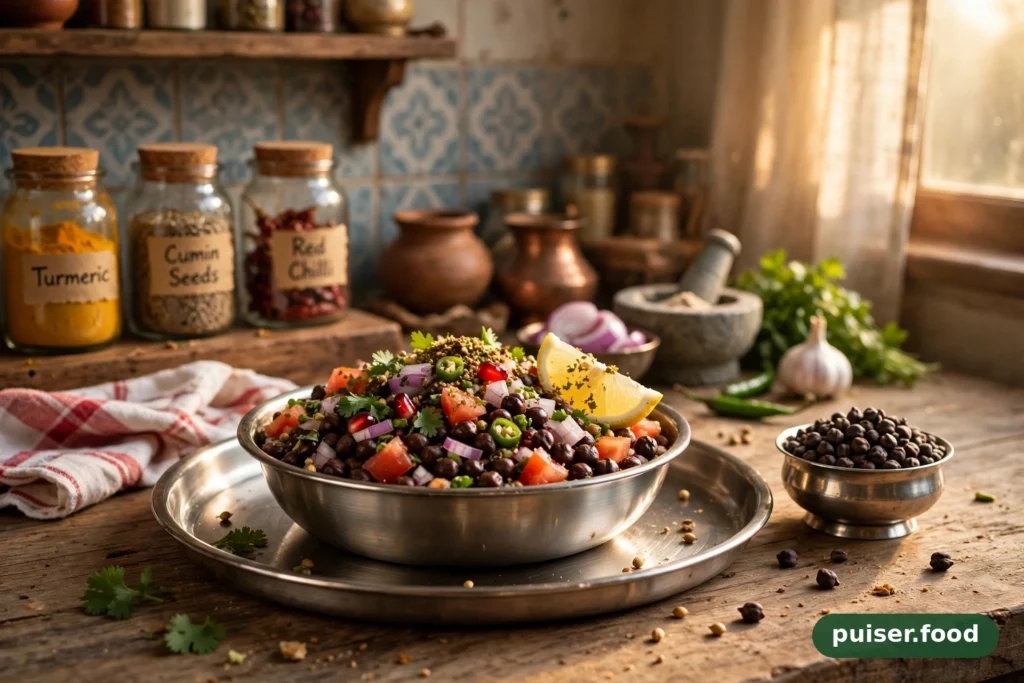
For a simple chaat, toss the cooked chana with chopped onion, tomato, green chilli, coriander leaves, lemon juice and chaat masala, and eat it warm. For a masala, heat ghee or oil, add cumin, then onion, ginger and garlic, and cook until golden. Add tomato and cook until the oil separates, then add garam masala, coriander powder and red chilli, and simmer the beans in the masala for 10 minutes. For sundal, temper mustard seeds, urad dal, dried red chilli and curry leaves in coconut oil, add the cooked chana and grated coconut, and serve warm.
Two details make the difference. First, add salt to the beans only after they have softened, because salt added early can keep the skins tough. Second, do not throw the cooking liquid away, because it carries flavour and minerals.
Five Everyday Ways to Use It
Kala chana is more than the festival prasad, and the bean works in five everyday dishes. First, the breakfast chaat, with onion, tomato, lemon and chaat masala, the simplest use of all. Second, sundal, with coconut and a mustard tempering, the South Indian prasad that doubles as an evening snack. Third, kala chana masala with roti or rice, the everyday curry. Fourth, sprouted chana salad, with cucumber, carrot, pomegranate and lemon, a light lunch on its own. Fifth, roasted kala chana, tossed with salt and eaten by the handful, the train journey snack that beats namkeen.
The bean also works in ghugni, in wraps with onion and curd, and in a mixed bean salad with rajma and moong. Our rajma benefits guide covers the other bean of the weekly rotation, the Sunday lunch to this one’s weekday breakfast.
Buying and Storing Kala Chana
The kala chana benefits survive or die on the age of the bean, so buy with your eyes open. Old kala chana takes far longer to cook and never quite turns soft, no matter how long it boils. The beans should be whole and unbroken, with a deep even colour and no white patches, holes or dust. Check for weevils in hot weather, and prefer a shop that turns its stock over quickly.
Price is low. Kala chana sells for about 80 to 120 rupees per kilo in India, which makes it one of the cheapest proteins in the kitchen. A kilo gives about 25 katoris of cooked chana, so the cost is roughly 3 to 5 rupees a portion. Buy a kilo at a time and store it well, rather than small packets that cost more per kilo.
Store dry kala chana in an airtight jar in a cool, dark place for six to eight months. Cooked kala chana keeps for two days in the fridge, covered, and it freezes well for a month, though the texture softens a little on reheating. Soaked kala chana keeps for a day in the fridge in a covered box. Sprouted chana keeps for a day or two in the fridge. If the beans smell musty or look discoloured, throw them away.

5 Expert Tips
These five habits protect the kala chana benefits and keep the pot worth waiting for. First, soak overnight, every time, and throw the soaking water away. Second, add salt only after the beans have softened. Third, sprout a batch once a week, because sprouting adds vitamin C and improves mineral absorption for no extra cost. Fourth, eat it with a vitamin C food, lemon, tomato or amla, so the iron absorbs better. Fifth, keep the cooking liquid, because it carries flavour and minerals that belong in the masala, not down the sink.
Common Mistakes to Avoid
The most common mistake is skipping the soak, which leaves the beans hard, gassy and slow to cook. The second is adding salt too early, which keeps the skins tough. The third is throwing the cooking liquid away, which wastes flavour and minerals. The fourth is eating a huge portion of fried chaat and calling it a health food, when the preparation matters as much as the bean.
Frequently Asked Questions
What are the main kala chana benefits?
The main benefits are fibre, protein, iron and folate. A katori of cooked kala chana gives about 6.8 g of protein, 10 g of fibre and 1.8 mg of iron for about 145 kcal. It has a very low glycaemic index of about 28, and sprouting adds vitamin C and improves mineral absorption.
How much kala chana should I eat in a day?
One katori of cooked kala chana, about 100 g made from 40 g dry, is a sensible portion for most adults. That gives about 6.8 g of protein and 10 g of fibre. Eat it as the main protein of one meal, with roti or rice, rather than at every meal of the day.
Do I need to soak kala chana overnight?
Yes, soak dried kala chana for at least 8 hours, or overnight, then throw the soaking water away and cook in fresh water. Soaking shortens the cooking time, reduces the gas forming compounds, and improves digestibility. Without a soak, the beans stay hard and take far longer to cook.
Is kala chana better than kabuli chana?
Kala chana is better for fibre and iron, with about 25 g of fibre and 4.6 mg of iron per 100 g dry, against about 17 g and 2.9 mg for kabuli. Kabuli is slightly higher in protein and softer, which suits chole. The right choice depends on the dish, and both are good foods.
Is kala chana good for diabetes?
Kala chana is a sensible choice for blood sugar, because its glycaemic index is about 28 and its fibre slows digestion. But it is not a treatment, and the rest of the plate matters. Keep the preparation simple, load the plate with vegetables, and check your blood sugar as your doctor advises.
Is kala chana good for weight loss?
Kala chana can help, because the high fibre and solid protein keep you full for hours, so a katori works as a satisfying meal. It carries only about 145 kcal per katori, so the calories come mostly from oil or extra roti. Weight loss still comes from the whole diet and activity, not from one bean.
Does kala chana cause gas?
Kala chana can cause gas, because it contains oligosaccharides that gut bacteria ferment. Soaking overnight and throwing the soaking water away helps, as does cooking the beans until fully soft. Add hing and ginger to the tempering, start with a small katori, and increase the portion slowly over a few weeks.
Are sprouted kala chana better than cooked?
Sprouted kala chana are better in some ways and not in others. Sprouting adds vitamin C, reduces phytic acid, and improves mineral absorption and digestibility. But cooked chana are easier on the stomach for many people and safer for those with weak immunity. Both belong in the rotation, and sprouts suit salads and chaats best.
Is kala chana good for anaemia?
Kala chana is a useful part of an iron aware diet, with about 4.6 mg of iron per 100 g dry and folate alongside it. But plant iron absorbs poorly, so eat it with vitamin C, like lemon or amla, and keep tea away from the meal. Low haemoglobin needs a doctor, and food alone does not fix anaemia.
How do I store kala chana?
Dry kala chana keeps for six to eight months in an airtight jar in a cool, dark place. Cooked kala chana keeps for two days in the fridge in a covered container, and it freezes well for about a month. Soaked chana keeps for a day in the fridge, and sprouted chana for a day or two.
Conclusion
Kala chana is the small black chickpea that asks for one night of soaking and gives back a breakfast, a chaat, a sundal and a curry, all for a few rupees. A katori gives solid protein, remarkable fibre, useful iron and folate, and a glycaemic index low enough to steady the whole meal. The kala chana benefits are real, but they are ordinary benefits, the kind that show up in a better breakfast rather than in a miracle. Soak it overnight, sprout a batch once a week, and keep it on the weekly rotation.
Disclaimer: This article is for general information only and is not medical advice. If you have a medical condition, are pregnant or breastfeeding, or take regular medication, talk to your doctor before changing your diet.