

Cold pressed vs refined oils is the question behind every bottle on the shelf, and the honest answer is less simple than most labels suggest. Cold pressed oil keeps more of the natural compounds from the seed, and refined oil handles high heat better and costs less. Neither is automatically good or bad. This guide compares how they are made, what refining removes, smoke points, shelf life and price, so you can pick the right oil for each dish.
In this article
What cold pressed and refined oils are
Cold pressed oil is pressed out of seeds, nuts or fruit by mechanical pressure at low temperature, usually below 49 degrees, with no chemicals and no added heat. The oil keeps its natural colour, smell, flavour and most of its minor compounds, including vitamin E, polyphenols and phytosterols. It is darker and stronger smelling than refined oil, and it costs more, because the yield is lower and the process is slower.
Refined oil is extracted at scale, often with a chemical solvent like hexane, then cleaned through several high-heat steps. The result is a clear, neutral, shelf-stable oil with a high smoke point and a low price, but fewer natural nutrients. Refined oil was designed for consistency and volume, not for maximum nutritional retention. That does not make it harmful. It makes it a different product, built for a different job in the kitchen.
How each oil is made
The difference between cold pressed vs refined oils starts at extraction, and the gap only widens from there. Cold pressing is one step: clean seed goes into a press, pressure squeezes the oil out at low temperature, and the oil is filtered. Nothing else is added and nothing is heated. The oil that comes out is close to what was in the seed.
Refining is a chain of steps. The seed is heated to 160 to 220 degrees and pressed or treated with hexane to extract the maximum oil. Then comes degumming, which removes gums, neutralisation, which removes free fatty acids, bleaching, which removes colour, and deodorisation, which removes smell, at about 260 degrees under vacuum. Each step removes something, and what is removed includes gums, free fatty acids, colour compounds and odours, along with a large share of the natural nutrients. Deodorisation is the step that causes most of the vitamin E and polyphenol loss.

Cold pressed vs refined oils: the quick comparison
The table below puts the two side by side. Read it as a guide to choosing, not as a scorecard. Cold pressed wins on nutrients, flavour and natural character. Refined wins on smoke point, shelf life and price. Most Indian kitchens need both, for different dishes, and the smart move is to keep one bottle of each rather than arguing about which is better in general.
| Factor | Cold pressed oil | Refined oil |
|---|---|---|
| Extraction | Mechanical pressing only | Heat and solvents, often hexane |
| Temperature | Below 49 degrees | 160 to 220 degrees, deodorised at 260 |
| Chemicals used | None | Hexane and processing aids |
| Colour and smell | Natural colour, strong aroma | Clear, neutral, no smell |
| Vitamin E and antioxidants | Mostly kept | Reduced by 30 to 60 percent |
| Smoke point | Usually lower, 150 to 190 degrees | Higher, 200 to 250 degrees |
| Shelf life | 6 to 12 months | 18 to 24 months |
| Price | Higher | Lower |
| Best for | Flavour and everyday cooking | Deep frying and bulk cooking |
What refining removes
What refining removes is the heart of the cold pressed vs refined oils debate, and the numbers are worth seeing plainly. Research indexed by the National Institutes of Health found that refining causes total tocopherol losses of 10 to 36 percent, total sterol losses of 6 to 52 percent, and polyphenol losses of 93 to 98 percent. Polyphenols are hit hardest, because deodorisation at 260 degrees destroys nearly all of them. Vitamin E losses are smaller but still real, and phytosterols fall by up to half.
What refining does not change is the basic fat profile. The fatty acids in the oil, the balance of saturated, monounsaturated and polyunsaturated fat, are set by the seed and stay largely the same through refining. A refined groundnut oil still has the fat profile of groundnut, and a refined sunflower oil still has the fat profile of sunflower. That matters, because it means the health difference between the two is in the minor compounds, not in the fat itself. Cold pressed oil is not a different fat. It is the same fat with its natural compounds still in it.
| Nutrient component | Cold pressed oil | Refined oil |
|---|---|---|
| Tocopherols, vitamin E | Mostly kept | 10 to 36 percent lost |
| Polyphenols | Present | 93 to 98 percent lost |
| Phytosterols | Mostly intact | 6 to 52 percent lost |
| Fatty acid profile | Preserved | Largely preserved |
| Free fatty acids | Higher, goes rancid faster | Lower, more stable |
| Colour and aroma compounds | Kept | Removed by bleaching and deodorising |
Smoke points by oil
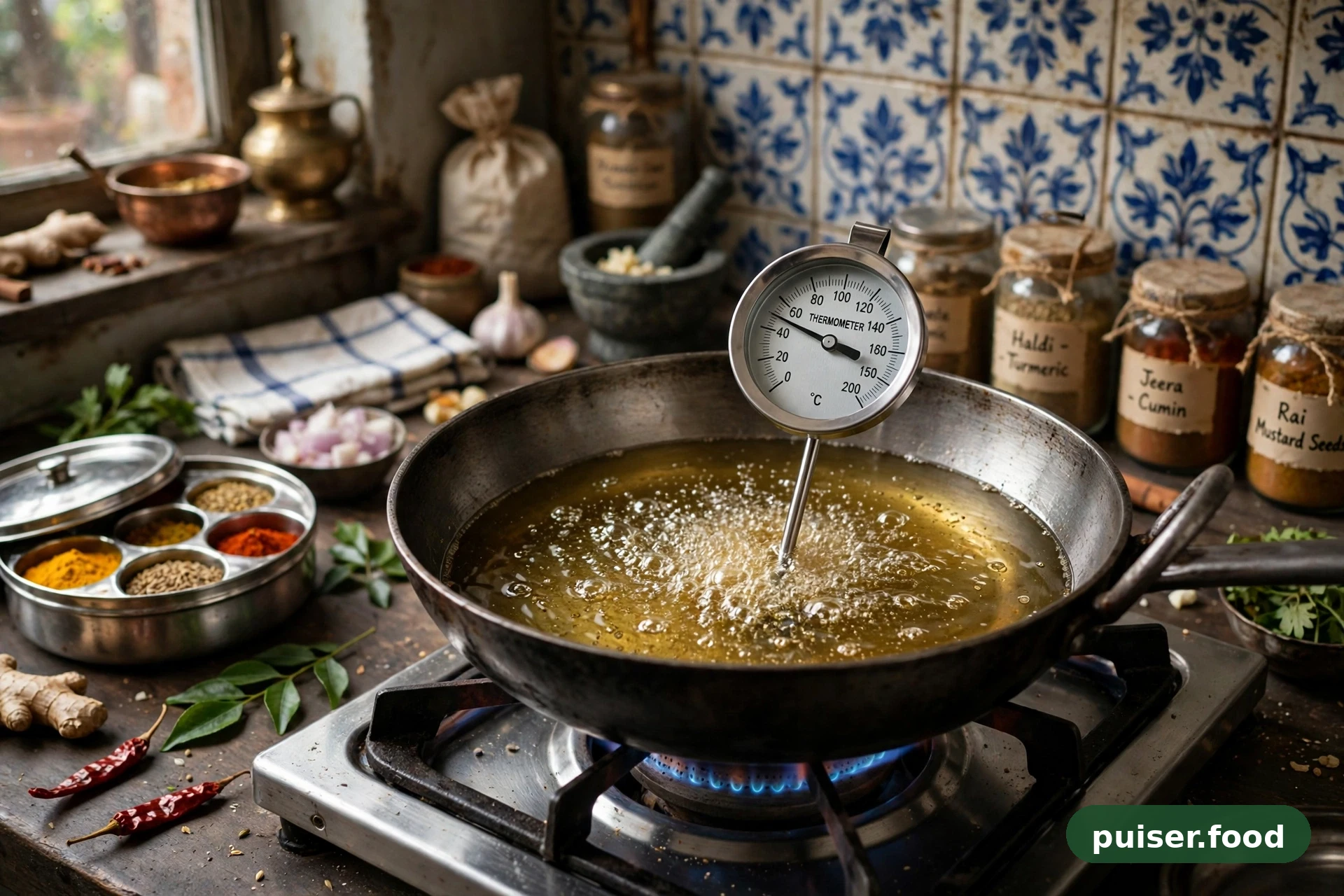
Smoke point is where cold pressed vs refined oils genuinely differ, and it is the reason refined oil still has a place in Indian cooking. The smoke point is the temperature at which an oil starts to break down and give off visible smoke, and heating past it produces aldehydes and free radicals. Refined oils smoke higher because the free fatty acids and impurities that lower the smoke point have been removed. Cold pressed oils smoke lower, but ordinary Indian cooking sits comfortably within their range for most dishes.
The exception is cold pressed mustard oil, which has a smoke point of about 250 degrees, higher than most refined oils. That is why it works for deep frying and for the high-heat tadka that mustard oil is famous for. Cold pressed groundnut oil smokes at about 160 degrees, which suits most Indian cooking, stir-frying and light frying, but not long deep frying. Cold pressed coconut oil smokes at about 177 degrees, and cold pressed sesame oil at about 177 degrees too. For deep frying at very high temperatures, a refined oil is the safer choice.
| Oil | Cold pressed smoke point | Refined smoke point | Best use |
|---|---|---|---|
| Groundnut | About 160 degrees | About 230 degrees | Everyday cooking, light frying |
| Mustard | About 250 degrees | About 240 degrees | Tadka, deep frying, pickles |
| Coconut | About 177 degrees | About 204 degrees | Sauteing, baking, South Indian cooking |
| Sesame | About 177 degrees | About 210 degrees | Cooking, finishing, South Indian dishes |
| Sunflower | About 160 degrees | About 230 degrees | Everyday cooking, frying |
| Rice bran | Not usually cold pressed | About 254 degrees | Deep frying, everyday cooking |
Smoke points are approximate and vary by brand and batch.
Which oil for which dish
The practical way to choose is by dish, not by label. For tadka, use cold pressed mustard oil or sesame oil, because their flavour is part of the dish and their smoke points handle tadka heat. For deep frying, use a refined oil like groundnut or rice bran, because the high smoke point keeps the oil stable and the food crisp. For salad dressing and finishing, use a cold pressed oil, because its flavour is the point. For baking, cold pressed coconut or sesame oil adds a mild flavour that suits cakes and biscuits. For an everyday sabzi, either works, and the choice is about flavour and budget rather than health.
| Dish | Best choice | Why |
|---|---|---|
| Tadka and tempering | Cold pressed mustard or sesame | Flavour is part of the dish, smoke point is enough |
| Deep frying | Refined groundnut or rice bran | High smoke point, stable, neutral taste |
| Salad dressing and finishing | Cold pressed oil of choice | Flavour matters most, no heat involved |
| Baking | Cold pressed coconut or sesame | Mild flavour, replaces butter well |
| Everyday sabzi | Either, by flavour and budget | Medium heat, both work fine |
| Pickles | Cold pressed mustard | Flavour and preservative tradition |

Shelf life and storage
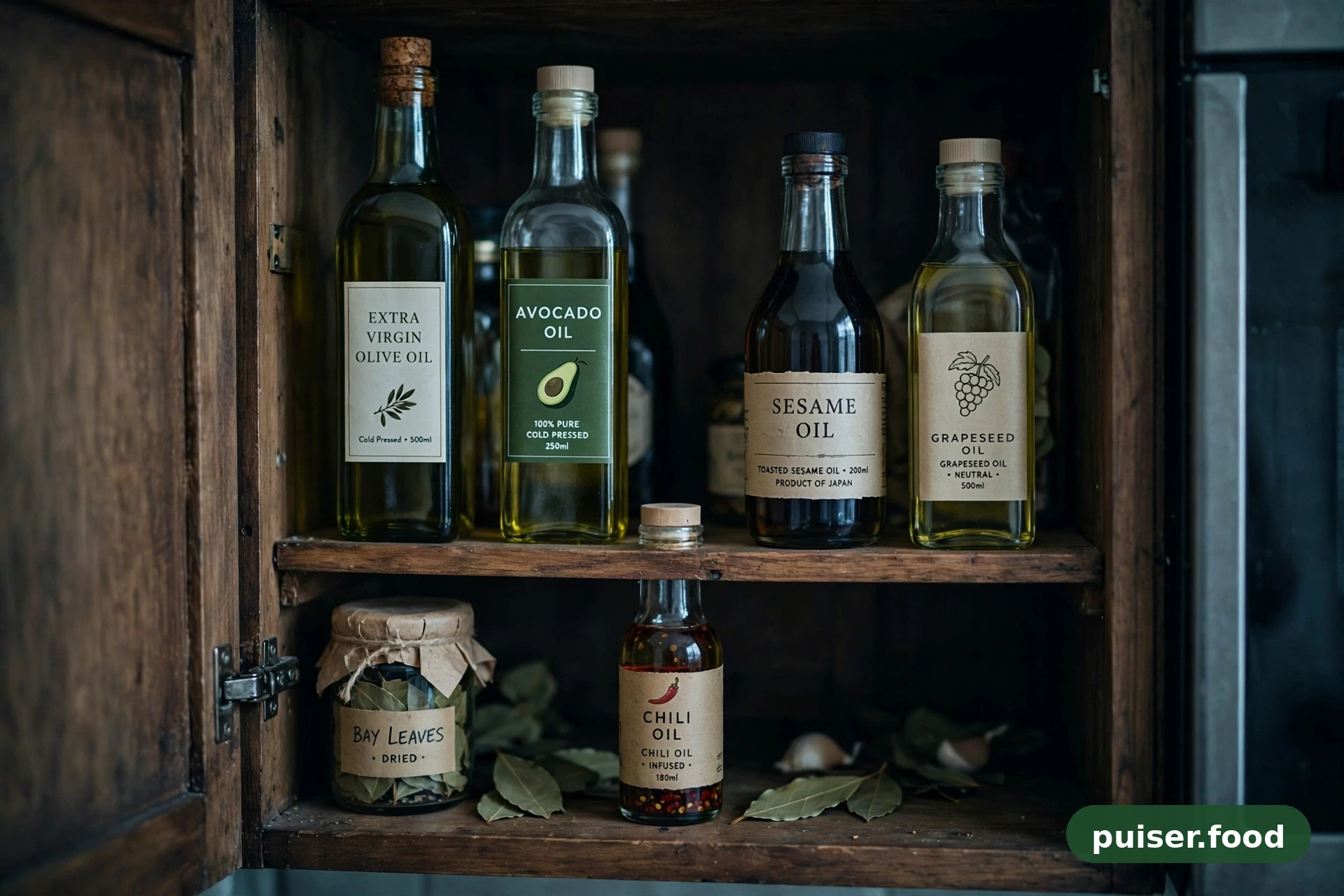
Cold pressed oil keeps for six to twelve months after opening, and refined oil for eighteen to twenty-four months, because refining removes the free fatty acids that turn rancid first. That gap matters if you buy in bulk or use oil slowly. Store both kinds in a cool dark cupboard in a sealed bottle, away from the stove and out of sunlight. Heat and light turn any oil rancid, and rancid oil smells sharp or like old paint. Buy cold pressed oil in smaller bottles so you finish it while it is fresh, and buy refined oil in larger packs only if you fry often enough to use it.
Label each bottle with the month you opened it, so you know when six months have passed for a cold pressed oil. A bottle that smells sharp, sour or like old paint has gone rancid, whatever the date on the label says, and it should be thrown away rather than used. Rancid oil tastes bitter and can upset the stomach, so the smell test is worth doing every time you open a new bottle.
Price and value
Cold pressed oil costs more per litre, because the yield is lower and the process is slower. A litre of cold pressed groundnut or sesame oil can cost half as much again as the refined version, and mustard oil shows a similar gap. The value question is about use, not about price alone. A bottle of cold pressed oil used for tadka, dressing and everyday cooking gives you flavour and nutrients in every meal, while a bottle of refined oil used only for deep frying gives you a high smoke point at a low price. Most kitchens get the best value from one bottle of each, used for the jobs each does best.
Buy the smallest bottle that fits your cooking, because an open bottle loses quality month by month, and the saving on a large bottle disappears if half of it goes rancid. A family that fries once a week will finish a litre of refined oil in a few months, while a bottle of cold pressed oil for tadka lasts longer because a teaspoon at a time goes a long way.
The honest verdict
So which side wins the cold pressed vs refined oils argument? Neither, outright. Cold pressed oil is better for flavour, for nutrients and for everyday low to medium heat cooking. Refined oil is better for deep frying, for bulk cooking and for a neutral taste. Refined oil still has a place in deep frying and bulk cooking, and the best refined oils for health include rice bran and groundnut oil, because their fat profiles are balanced and their smoke points are high. The mistake is treating the choice as a moral one. It is a cooking choice, and the right answer changes with the dish. Our guide to cold pressed groundnut oil benefits and our kachi ghani mustard oil benefits show what cold pressed oils do well, and our coconut oil uses guide covers an oil that works for cooking, skin and hair from one bottle.
Mistakes to avoid
The biggest mistake in the cold pressed vs refined oils debate is treating one side as good and the other as bad. Cold pressed oil heated past its smoke point produces the same harmful compounds as any overheated oil, and refined oil used within its range is a stable, safe cooking fat. The second mistake is deep frying with a low smoke point cold pressed oil, which breaks the oil down and gives food a burnt taste. The third is buying cold pressed oil in bulk and keeping it for two years, by which time it is rancid.
Other mistakes are easy to avoid. Reusing frying oil many times degrades any oil, cold pressed or refined, so strain it and reuse it only once or twice. Storing oil above the stove or in sunlight turns it rancid fast. And choosing an oil only by its label, without checking the smoke point for the dish, wastes the money spent on a premium bottle.
Expert tips
Keep one bottle of cold pressed oil for tadka, dressing and everyday cooking, and one bottle of refined oil for deep frying. Match the oil to the dish, not to a slogan, and check the smoke point before you fry. Buy cold pressed oil in small bottles and finish it within six months, so the flavour and nutrients stay fresh. Never heat any oil until it smokes, because smoke means the oil is breaking down. Reuse frying oil at most once or twice, and strain it through a cloth before storing. And if you want the flavour of a cold pressed oil in a high-heat dish, add it at the end as a finishing oil rather than frying with it.
FAQs
Which is better, cold pressed vs refined oils?
Neither is better in general. Cold pressed oil is better for flavour, nutrients and everyday low to medium heat cooking, because it keeps vitamin E, polyphenols and its natural aroma. Refined oil is better for deep frying, bulk cooking and a neutral taste, because its smoke point is higher and its shelf life is longer. Most kitchens need both.
Is refined oil unhealthy?
Refined oil is not automatically unhealthy. Refining removes some vitamin E and most polyphenols, but it does not change the basic fat profile, which is set by the seed. Used within its smoke point, refined oil is a stable cooking fat. The concern is overheating any oil past its smoke point, and reusing frying oil too many times.
Which oil is better for deep frying?
For deep frying, cold pressed vs refined oils is an easy call: refined wins. Deep frying needs 190 degrees and above, and most cold pressed oils smoke at 150 to 190 degrees. Refined groundnut or rice bran oil smokes above 230 degrees and stays stable. Cold pressed mustard oil is the exception, with a smoke point of about 250 degrees.
Does cold pressed oil have more nutrients?
Yes, cold pressed oil keeps more of the minor compounds from the seed, including vitamin E, polyphenols and phytosterols. Research indexed by the National Institutes of Health found refining causes tocopherol losses of 10 to 36 percent, sterol losses of 6 to 52 percent, and polyphenol losses of 93 to 98 percent. The fatty acid profile stays largely the same.
What is the smoke point of cold pressed groundnut oil?
Cold pressed groundnut oil has a smoke point of about 160 degrees, which suits most Indian cooking, stir-frying and light frying. It is not ideal for long deep frying, where the oil sits at 190 degrees or more. For deep frying, use a refined groundnut or rice bran oil, or cold pressed mustard oil, which smokes at about 250 degrees.
Can I use cold pressed oil for tadka?
Yes, cold pressed oil is excellent for tadka. Mustard, sesame and groundnut oils all carry spice flavour well, and their smoke points handle tadka heat. Mustard oil is the classic tadka oil in North India, and sesame oil is the classic choice in South India. Heat the oil until it is hot but not smoking, then add the spices.
How long does cold pressed oil last?
Cold pressed oil keeps for six to twelve months after opening, while refined oil keeps for eighteen to twenty-four months. Store both in a cool dark cupboard in a sealed bottle, away from the stove. Buy cold pressed oil in small bottles so you finish it fresh, and throw away oil that smells sharp or rancid.
Is hexane in refined oil dangerous?
Hexane is used as a solvent to extract oil from seeds, and most of it is removed during refining, with residues kept within food safety limits set by regulators. The amount left in oil is small. If the idea bothers you, choose cold pressed oil, which uses no solvents at all. It is a preference, not a proven health risk.
Can I mix cold pressed and refined oil?
Yes, you can mix them, and many cooks do, using a little cold pressed oil for flavour and a refined oil for heat stability. Mixing does not harm the oil. It gives you a middle ground: some flavour and a higher smoke point than cold pressed oil alone. Keep the mix in a sealed bottle in a cool dark place.
Which refined oil is the healthiest?
Among refined oils, rice bran and groundnut are good choices, because their fat profiles are balanced and their smoke points are high, above 230 degrees. Rice bran oil also contains oryzanol, a compound studied for cholesterol support. The healthiest choice is less about the brand and more about using the right oil for the dish and not overheating it.
Conclusion
Cold pressed vs refined oils is not a contest with one winner. Cold pressed oil brings flavour, nutrients and natural character to everyday cooking, and refined oil brings a high smoke point, a long shelf life and a low price to deep frying and bulk cooking. Keep one bottle of each, match the oil to the dish, and never heat any oil until it smokes. That is the whole method. If you want to go deeper, read our sesame oil benefits and mustard oil benefits, and our budget guide shows how to buy good oils without overspending.


