

A2 desi ghee benefits are talked about a lot in India right now, and so is the price. A kilo of real bilona ghee can cost three to five times a regular pack, and that gap makes people ask whether the difference is real or only marketing. This guide explains what A2 means, how bilona ghee is made, what the benefits actually are, and why the price is what it is.
In this article
What A2 means
The A2 in A2 ghee refers to the type of beta-casein protein in the milk. Indigenous Indian cow breeds like Gir, Sahiwal, Red Sindhi and Tharparkar produce milk with A2 beta-casein. Most crossbred and exotic cows, and buffalo, produce milk with A1 beta-casein, or a mix of A1 and A2. The distinction matters because A1 beta-casein releases a peptide called BCM-7 during digestion, which some studies have linked to digestive discomfort, bloating and inflammation in sensitive people. A2 milk does not produce BCM-7 in the same way, so many people find it easier to digest.
That does not mean A1 milk is harmful to everyone, and it does not mean A2 ghee treats any disease. It means that for people who feel heavy or bloated after dairy, A2 ghee is often better tolerated. Ghee itself is nearly free of lactose and casein, because the milk solids are removed when butter is clarified, so the A2 difference in ghee is subtler than in milk. The bigger difference in ghee comes from how it is made, which is where the bilona method comes in.
What the bilona method is
Bilona is the traditional Ayurvedic method of making ghee from curd, not from cream. Fresh A2 desi cow milk is boiled and cooled to room temperature, then set as curd. The curd is hand-churned with a wooden bilona churner until white butter, makhan, separates. That butter is then slow-cooked until the water evaporates and the milk solids settle, leaving golden ghee. The whole cycle takes two to three days, and it is entirely manual.
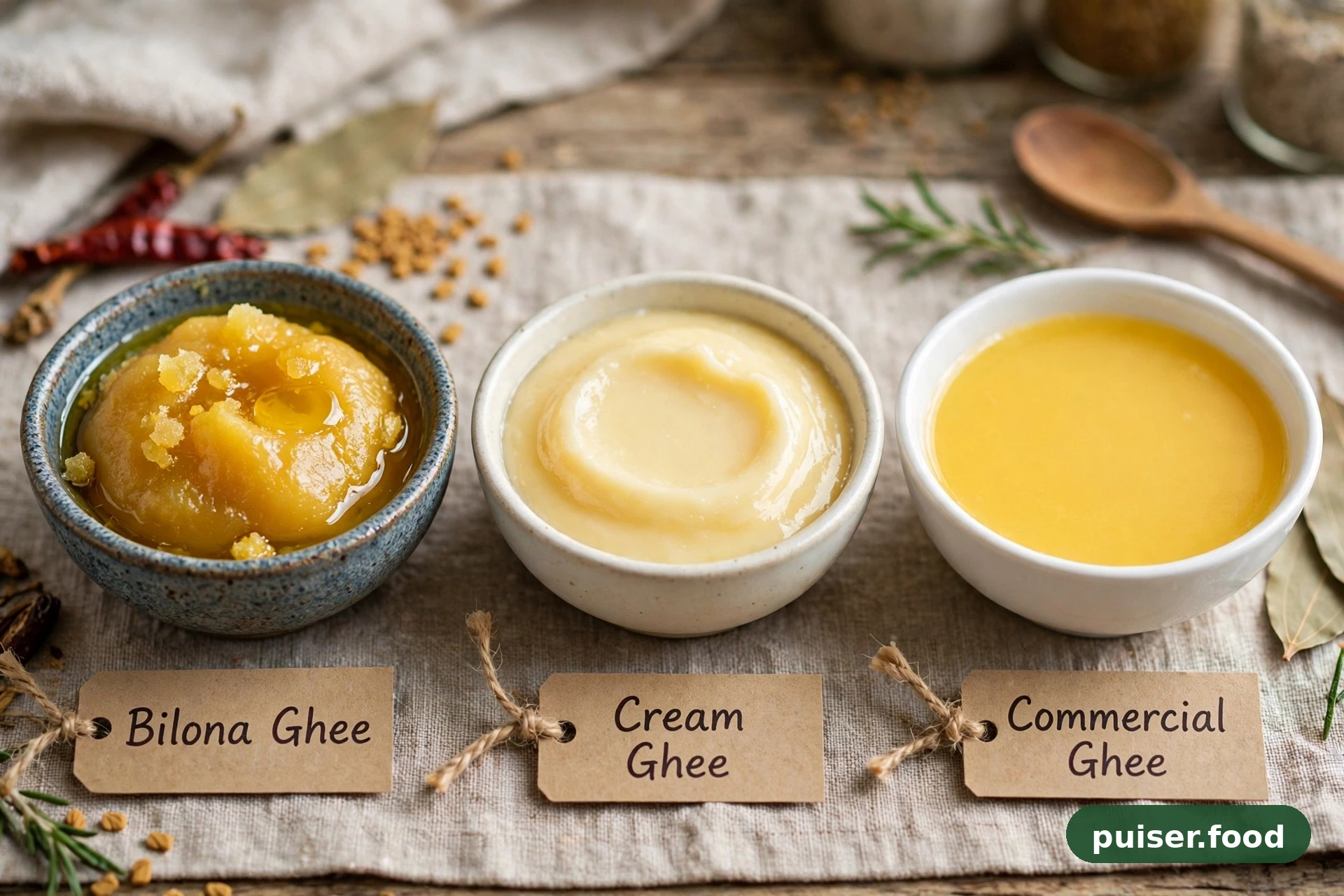
The Charaka Samhita, the classical Ayurvedic text, classifies ghee made from curd butter as superior to cream-derived ghee for its effect on digestion. The reason is fermentation. When milk becomes curd, natural fermentation breaks down lactose, improves digestibility and introduces beneficial short-chain fatty acids. Commercial ghee skips this step entirely, because it is made by heating cream directly. The flavour is different too. Bilona ghee is grainy rather than smooth, deeply golden, and fragrant enough to smell from the next room, with a nutty taste and caramel notes from the slow cooking.

Why bilona ghee costs more
The price is mostly yield and labour, not marketing. It takes about 25 to 30 litres of A2 milk to make a single kilo of bilona ghee, because the curd-churning method extracts less fat per litre than the cream method. Commercial ghee from cream separation produces far more ghee per litre of milk. Indigenous cows also give less milk per day than crossbreeds, so the milk itself costs more. Add two to three days of manual work per batch, small batch sizes, and no preservatives or stabilisers, and the price follows.
Retail prices for authentic A2 bilona ghee in India run about 1,500 to 3,500 rupees per kilo. Regular commercial ghee sells for about 400 to 800 rupees per kilo. If a product labelled bilona ghee is priced below 800 rupees a kilo, it is almost certainly not authentic, because the economics of genuine bilona production make that price impossible. Our organic A2 desi ghee is bilona-made from Gir cow milk, and the price reflects the milk and the method.
| Where the price goes | What it means |
|---|---|
| Milk needed | 25 to 30 litres of A2 milk per kilo of ghee |
| Manual labour | Hand churning with wooden tools, no industrial machinery |
| Time | Two to three days per batch, against a few hours for commercial ghee |
| Indigenous breeds | Gir and Sahiwal cows give less milk than crossbreeds |
| No additives | No preservatives or stabilisers, shorter commercial shelf window |
A2 desi ghee benefits: what the evidence actually says
The best-supported of the a2 desi ghee benefits is gut support. Ghee contains 3.5 to 4 percent butyric acid, a short-chain fatty acid that is the primary fuel for colonocytes, the cells lining the colon. Butyrate has been studied for its role in reducing gut inflammation and supporting the gut lining. Bilona ghee may retain slightly more of it because of the fermentation step and the slow cooking, though the difference is small and the evidence is not from large human trials.
Another of the a2 desi ghee benefits is easier digestion. Because A2 milk does not release BCM-7 the way A1 milk does, and because fermentation in the bilona method breaks down lactose, many people who feel heavy after ordinary dairy find A2 bilona ghee easier on the stomach. It is also virtually lactose free, since the milk solids are removed during clarification, so it sits well with most people who avoid lactose.
High-heat cooking is one of the most practical a2 desi ghee benefits. Ghee has a smoke point of about 250 degrees, far above the temperature used for tadka, frying or roasting, so it stays stable where butter would burn. The fat-soluble vitamins are among the quieter a2 desi ghee benefits. Pasture-fed cow ghee carries vitamins A, D, E and K2, and conjugated linoleic acid, or CLA, at about 0.9 to 1.5 grams per 100 grams, which is three to five times the CLA in grain-fed commercial ghee. These are real nutrients, but the amounts per spoonful are small, so ghee is a useful part of a diet, not a supplement.
Nutrition: what is in a spoonful
Ghee is almost entirely fat, so the numbers are simple. One tablespoon, about 15 grams, has about 130 calories, 15 grams of fat and 9 grams of saturated fat, according to USDA FoodData Central. The table below scales those figures to 100 grams and adds the compounds that make ghee different from other fats. A teaspoon, about 5 grams, has about 45 calories. Use it in the small amounts Indian cooking already uses, a teaspoon for tadka or a teaspoon over rice, rather than by the ladle.
| Nutrient | Per 1 tablespoon (15 g) | Per 100 g |
|---|---|---|
| Energy | About 130 kcal | About 867 kcal |
| Total fat | 15 g | 100 g |
| Saturated fat | 9 g | About 60 g |
| Butyric acid | About 0.5 g | 3.5 to 4 g |
| CLA, pasture-fed | About 0.15 g | 0.9 to 1.5 g |
| Vitamins | A, D, E and K2 in small amounts | Same, per 100 g |
| Lactose and casein | Virtually none | Virtually none |
Bilona vs cream vs commercial ghee
The three kinds of ghee differ in milk, method and price, and the table below puts them side by side. Bilona ghee starts from curd, takes the longest, uses the most milk and costs the most. Cream ghee starts from separated cream and is faster and cheaper. Commercial ghee is made at scale from any milk, often with the cream method, and is the cheapest. The butyric acid content is similar across all three, around 3 to 4 percent, so the premium in bilona ghee is for the process, the flavour and the micronutrient profile, not for a different amount of butyric acid.
| Factor | Bilona ghee | Cream ghee | Commercial ghee |
|---|---|---|---|
| Milk source | A2 desi cow breeds | A2 or any cow milk | Any dairy milk |
| Starting point | Curd, fermented | Separated cream | Separated cream |
| Milk per kilo of ghee | 30 to 35 litres | 25 to 28 litres | 22 to 25 litres |
| Time per batch | Two to three days | A few hours | A few hours |
| CLA content | Highest, pasture plus process | High, pasture | Lower, grain-fed |
| Price per kilo | 1,500 to 3,500 rupees | 700 to 1,200 rupees | 400 to 800 rupees |
| Flavour | Nutty, grainy, caramel notes | Mild, smooth | Mild, neutral |
How to use A2 ghee
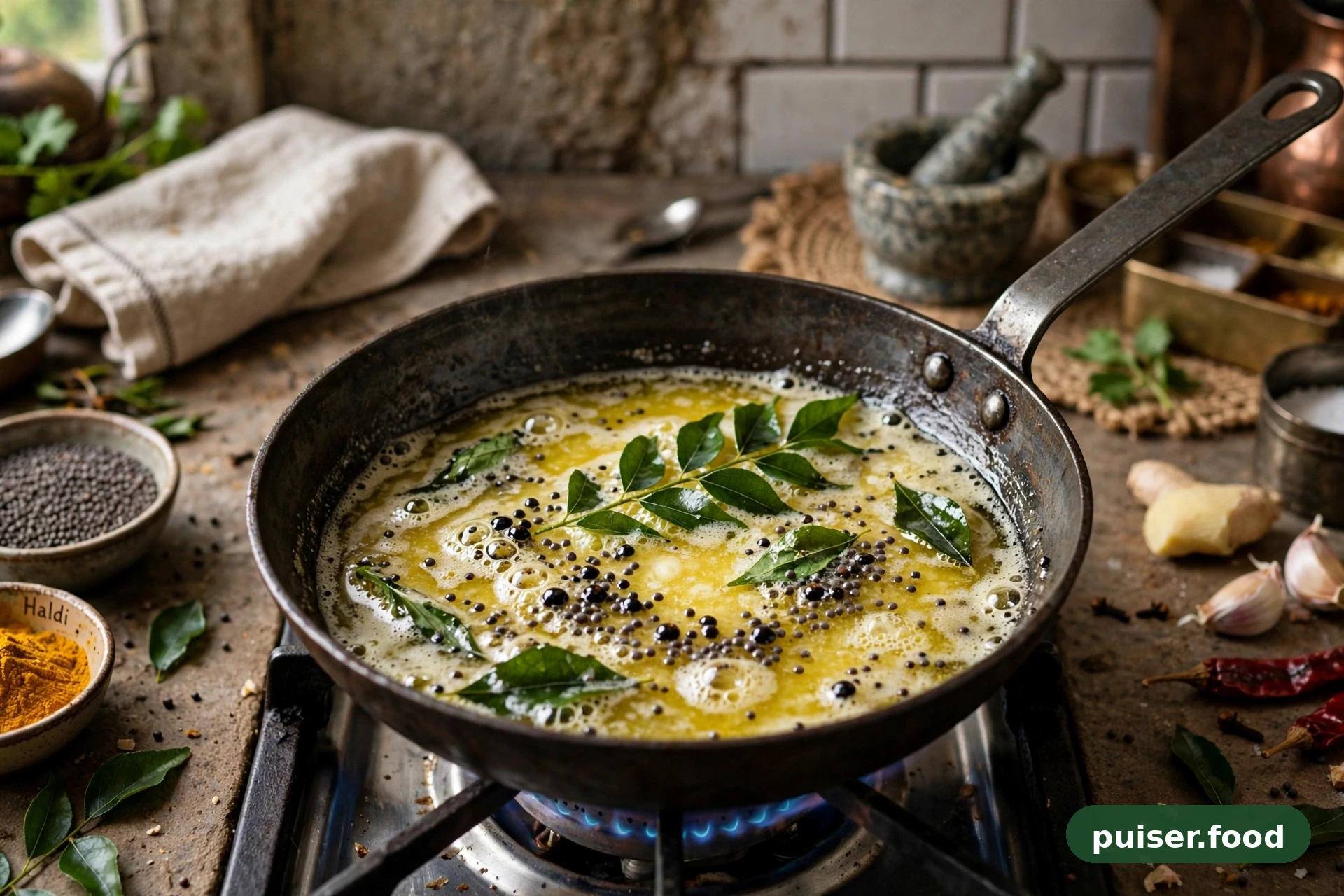
Use A2 ghee where its flavour and smoke point earn their keep. A teaspoon in tadka carries the flavour of mustard seeds, cumin and curry leaves better than oil. A teaspoon melted over hot rice, dal or roti is the classic daily use, and it needs no more than that. In haldi doodh, a teaspoon of ghee helps the body absorb the fat-soluble compounds in turmeric, and our turmeric milk recipe uses exactly that amount. For frying and roasting, ghee is one of the most stable fats in an Indian kitchen.
Outside cooking, ghee has traditional uses that many families keep. A small amount massaged into dry skin or cracked heels softens them, and a drop in each nostril is an old Ayurvedic practice for dryness, though that is a traditional use rather than a medical recommendation. Keep the amounts small in every case. Ghee is calorie dense, and a tablespoon too many each day adds up over a month.
| Use | Amount | Why it works |
|---|---|---|
| Tadka | 1 teaspoon | High smoke point, carries spice flavour |
| Over rice or dal | 1 teaspoon | Flavour and fat-soluble vitamins |
| Haldi doodh | 1 teaspoon | Helps absorb turmeric compounds |
| Frying and roasting | As needed | Stable at 250 degrees |
| Dry skin and heels | Small amount | Occlusive moisture barrier |
How to buy real A2 bilona ghee
Start with the breed and the method on the label. A genuine pack names the breed, Gir or Sahiwal, and the method, bilona or curd-churned, rather than only saying A2. Check the price. Below 800 rupees a kilo, the pack is almost certainly not bilona, because the milk alone costs more than that. Look at the texture. Real bilona ghee is grainy, not smooth, and it softens with temperature. It should smell nutty and rich, not neutral or chemical. Check the FSSAI licence number and the ingredient list, which should have one item: ghee.
Buy from a seller who can say where the milk comes from. Small farms and direct sellers usually can, and large anonymous brands often cannot. If you want to see the method in full, our guide to how to make desi ghee at home walks through the butter method step by step, and our butter from malai guide shows where good ghee starts.

Storing ghee
Ghee keeps for about three months at room temperature and about a year in the fridge, as long as it is kept in a clean airtight jar and no water gets in. Use a clean dry spoon every time, because a wet spoon is the fastest way to spoil a jar. Keep it away from sunlight and heat, and do not store it above the stove. If ghee smells sour, sharp or rancid, throw it away. A jar that has gone grainy with temperature change is fine, because ghee grains and softens with temperature naturally.
A steel or glass jar is better than plastic for long storage, because ghee can pick up smells from plastic over months. Keep the daily jar small, so you open the main jar less often, and refill it from the larger jar with a clean dry spoon. In summer, a cupboard on an interior wall stays cooler than one near the stove, and that small difference keeps ghee fresh longer.
Mistakes to avoid
The biggest mistake when judging a2 desi ghee benefits is expecting it to treat a health condition. Ghee is food, not medicine, and its benefits are modest and supportive. The second mistake is buying the cheapest pack labelled bilona, which is almost certainly not bilona at all. The third is using far too much. A tablespoon too many each day is about 130 extra calories, and that adds up. Other mistakes are simple: storing ghee above the stove, using a wet spoon, and keeping an open jar for over a year at room temperature.
Expert tips
Buy bilona ghee only from sellers who name the breed and the method, and check the price against the 800 rupee floor. Use a teaspoon at a time, because a little ghee carries a lot of flavour. Keep it in a small jar for daily use and a larger sealed jar for storage, and always use a clean dry spoon. Bloom tadka spices in ghee rather than oil when you want the deepest flavour, because ghee carries spice oils well. Store the jar in a cool dark cupboard, never above the stove. And if you make ghee at home, start from malai butter rather than cream, because the slow method gives a better flavour and a grainier texture.
FAQs
What are the main a2 desi ghee benefits?
The a2 desi ghee benefits that matter most are gut support, easier digestion and high-heat stability. Butyric acid feeds the cells lining the colon, A2 milk avoids the BCM-7 peptide that troubles sensitive people, and the 250 degree smoke point makes ghee one of the most stable cooking fats. It also carries fat-soluble vitamins A, D, E and K2.
Why is bilona ghee so expensive?
Bilona ghee costs more because it takes about 25 to 30 litres of A2 milk to make one kilo, the curd is hand-churned over two to three days, and indigenous cows give less milk than crossbreeds. Retail prices run 1,500 to 3,500 rupees per kilo. Below 800 rupees a kilo, a pack labelled bilona is almost certainly not authentic.
Is A2 ghee better than regular ghee?
A2 bilona ghee is better in flavour, digestibility and micronutrient profile, but the difference is modest. Butyric acid is similar across all ghee at 3 to 4 percent. The real gap is the process: fermentation, slow cooking and pasture-fed milk. For daily cooking, regular ghee from a good brand is fine, and bilona is a premium choice.
Can people with lactose intolerance eat ghee?
Most people with lactose intolerance can eat ghee, because the milk solids, including lactose and casein, are removed when butter is clarified. Ghee is virtually lactose free. Anyone with a severe milk allergy should still ask a doctor first, because trace proteins can remain in poorly clarified ghee.
How much ghee should I eat per day?
One to two teaspoons a day is a sensible amount for most adults, used in tadka, over rice or in haldi doodh. A tablespoon has about 130 calories, so larger amounts add up quickly. People with high cholesterol or heart conditions should ask their doctor about how much saturated fat suits them.
Does ghee help with digestion?
Ghee contains butyric acid, which feeds the cells lining the colon and supports gut health, and the bilona method adds fermentation, which breaks down lactose. Many people find A2 bilona ghee easier to digest than ordinary dairy fat. It supports digestion as food, but it does not treat digestive disease.
What is the difference between A1 and A2 milk?
A1 and A2 are types of beta-casein protein in milk. A1 beta-casein releases a peptide called BCM-7 during digestion, which some studies link to discomfort and bloating in sensitive people. A2 beta-casein does not release BCM-7 the same way. Indigenous Indian breeds like Gir and Sahiwal produce A2 milk, while most crossbred cows produce A1 or mixed milk.
How can I tell if ghee is pure?
Pure bilona ghee is grainy, not smooth, golden in colour, and smells nutty and rich. It softens with temperature and firms up when cool. The ingredient list should have one item, ghee, and the label should name the breed and the bilona method, with an FSSAI licence number. A very low price is the clearest warning sign.
Can I use ghee for frying?
Yes, ghee is one of the best fats for frying in an Indian kitchen, because its smoke point is about 250 degrees, far above frying temperatures. It stays stable where butter would burn and where many cold pressed oils would smoke. Use it for tadka, shallow frying and roasting, and keep the amount modest.
How long does ghee last?
Ghee keeps for about three months at room temperature and about a year in the fridge, in a clean airtight jar. Always use a clean dry spoon, because water spoils ghee faster than anything else. If it smells sour, sharp or rancid, throw it away, even if the jar is still half full.
Conclusion
A2 desi ghee benefits are real but modest, and the price is honest once you know the method. Twenty-five to thirty litres of milk, two to three days of hand churning, and a small batch of grainy golden ghee are what you are paying for, along with easier digestion, gut-supporting butyric acid and a smoke point that handles any Indian cooking. Buy from a seller who names the breed and the method, use a teaspoon at a time, and store it cool and dry. If you want to see the method yourself, read our desi ghee guide and our organic milk guide, and our butter from malai guide shows where good ghee begins.


