Introduction
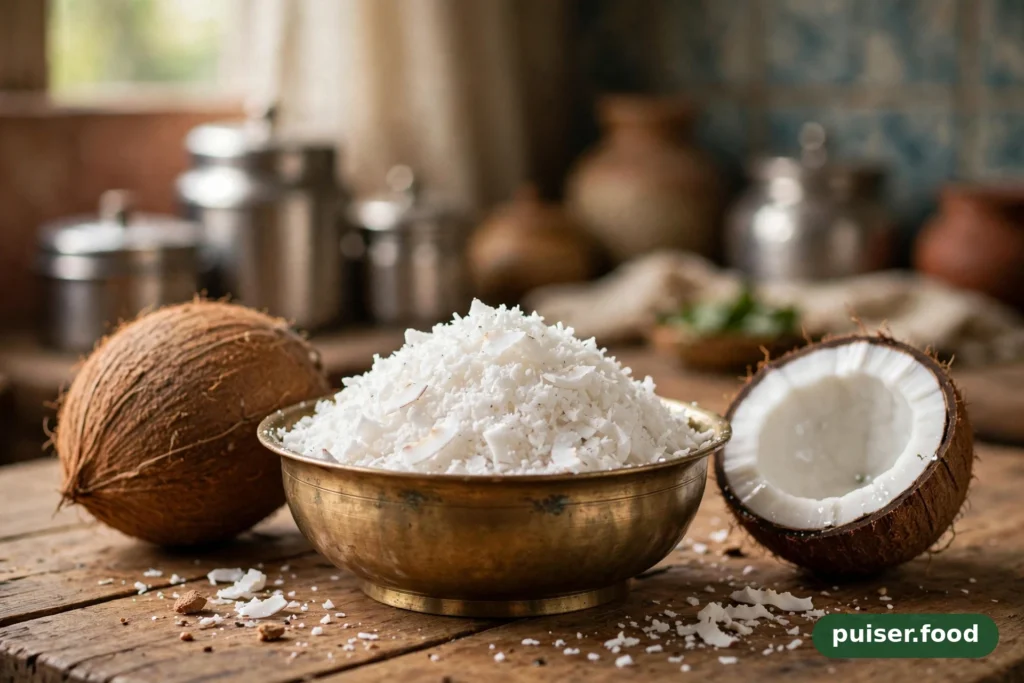
Dried coconut, or nariyal, is the white shred in the Indian kitchen jar that turns up in laddoos, barfi, chutney and curries. It tastes rich and sweet without added sugar, and it carries more fibre than most people expect, along with a lot of saturated fat. This guide covers the dried coconut benefits that matter most, the numbers from one USDA record told honestly, the MCT and brain story, and the five best dishes.
In this article
- The short answer
- What dried coconut actually is
- Dried coconut in numbers
- 10 benefits worth knowing
- The MCT and brain story, honestly
- Unsweetened versus sweetened versus flakes
- Five everyday ways to use it
- Buying and storing dried coconut
- 5 expert tips
- Common mistakes to avoid
- Frequently asked questions
- Conclusion
The Short Answer
The dried coconut benefits that matter most are fibre and minerals, in a food that needs no cooking at all. A 100 g portion of unsweetened desiccated coconut gives about 16.3 g of fibre and about 660 kcal, and a small 20 g serving gives about 132 kcal, 3.3 g of fibre and 11.4 g of saturated fat. Dried coconut is energy dense, so a small spoonful a day is the portion, and it suits the laddoo, the chutney and the curry.
What Dried Coconut Actually Is
Dried coconut is the white meat of a mature coconut, grated or shredded and dried until almost all the water is gone. The USDA record used in this guide lists only 3 g of water per 100 g, against about 47 g in fresh coconut meat, and that drying is what concentrates everything else. India grows coconuts in Kerala, Tamil Nadu, Karnataka and Andhra Pradesh, and nariyal has been part of Indian cooking for generations, in temple prasad, in festival sweets and in the daily chutney.
That dried coconut carries fibre and minerals with very little sugar is the first thing to understand, because it is what separates the plain shred from a sweet, and it is where the dried coconut benefits start. A spoonful gives fibre, manganese, copper and iron with only 7.35 g of sugars per 100 g, so the sweetness on the tongue comes from the fat and the aroma rather than from sugar.
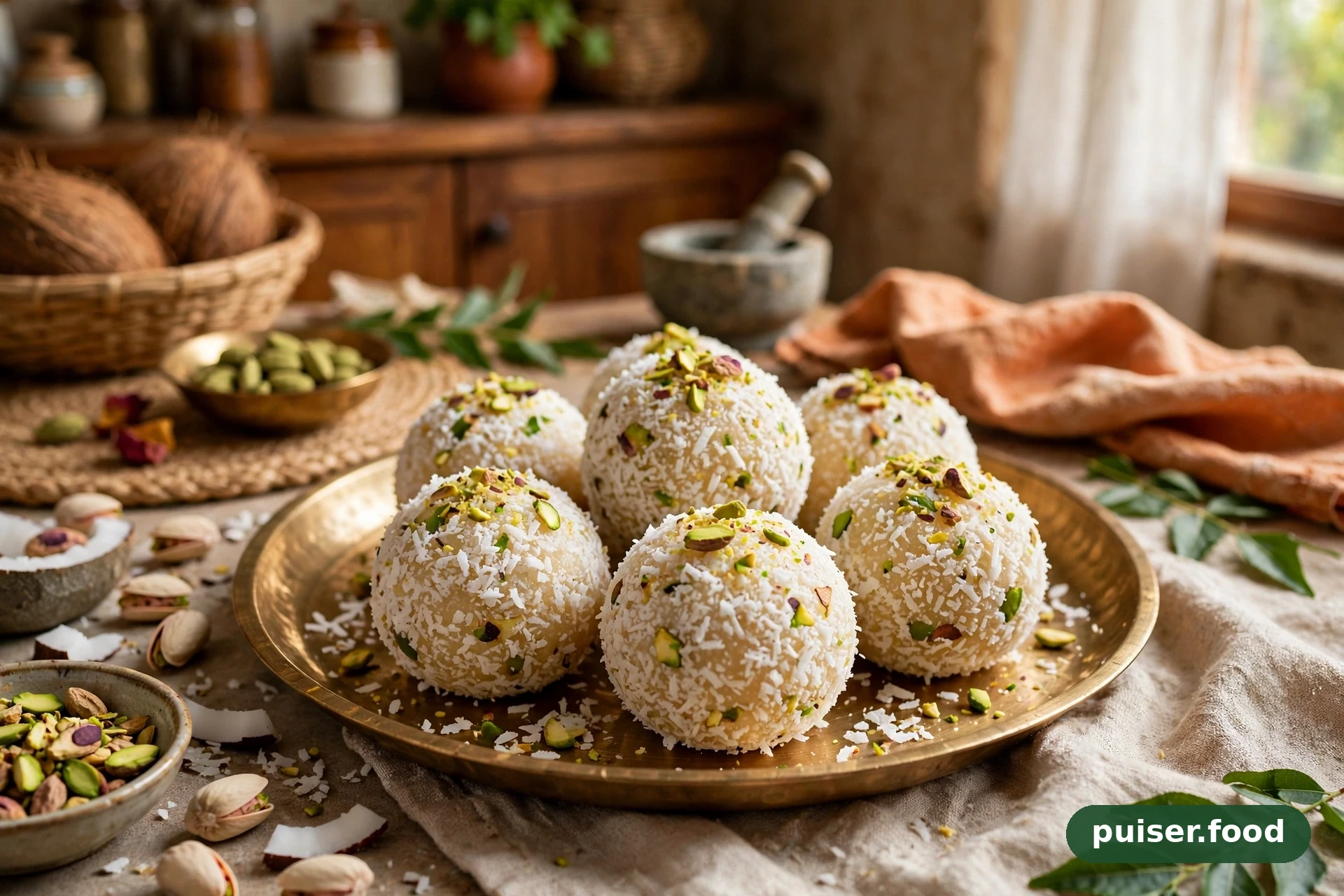
Dried coconut is also the shred of the laddoo and the barfi, in the chutney of a dosa breakfast and in the thoran of a Kerala lunch. Our dried mango benefits guide covers the golden slice with far more sugar per 100 g, and our dried pineapple benefits guide covers the tangy ring with the highest sugars of the dried fruit shelf.
Dried Coconut in Numbers
The table below sets out the dried coconut benefits in numbers, and it uses one record throughout, USDA FoodData Central SR Legacy entry 170170, “Nuts, coconut meat, dried (desiccated), not sweetened”, per 100 g. Every figure in this section comes from that record unless the text says otherwise, and the sweetened kind is a different record, kept separate in the comparison table.
| Nutrient (per 100 g) | Amount |
|---|---|
| Energy | 660 kcal |
| Protein | 6.88 g |
| Fat | 64.5 g |
| Saturated fat | 57.2 g |
| Monounsaturated fat | 2.74 g |
| Polyunsaturated fat | 0.71 g |
| Carbohydrates | 23.6 g |
| Fibre | 16.3 g |
| Sugars | 7.35 g |
| Sodium | 37 mg |
| Calcium | 26 mg |
| Iron | 3.32 mg |
| Magnesium | 90 mg |
| Phosphorus | 206 mg |
| Potassium | 543 mg |
| Zinc | 2.01 mg |
| Copper | 0.80 mg |
| Manganese | 2.74 mg |
| Selenium | 18.5 mcg |
| Vitamin C | 1.5 mg |
| Vitamin E | 0.44 mg |
| Vitamin B6 | 0.30 mg |
| Folate | 9 mcg |
| Cholesterol | 0 mg |
The portion table below turns those 100 g figures into spoonfuls people actually eat. A 20 g serving is the portion this guide uses everywhere, and the 28 g row is the USDA ounce measure. A 50 g serving is shown so the cost of a heavy hand is plain to see.
| Portion | Energy | Fat | Saturated fat | Fibre | Sugars |
|---|---|---|---|---|---|
| 10 g, about 2 teaspoons | 66 kcal | 6.5 g | 5.7 g | 1.6 g | 0.7 g |
| 20 g, daily portion | 132 kcal | 12.9 g | 11.4 g | 3.3 g | 1.5 g |
| 28 g, 1 oz USDA measure | 187 kcal | 18.3 g | 16.2 g | 4.6 g | 2.1 g |
| 50 g, a heavy hand | 330 kcal | 32.3 g | 28.6 g | 8.2 g | 3.7 g |
The comparison table below puts unsweetened desiccated coconut beside fresh coconut meat and sweetened shredded coconut, per 100 g. Fresh coconut meat is USDA record 170169, and sweetened shredded coconut is USDA record 168586, so the three columns come from three separate records and are not mixed.
| Per 100 g | Fresh coconut meat | Unsweetened desiccated | Sweetened shredded |
|---|---|---|---|
| Energy | 354 kcal | 660 kcal | 501 kcal |
| Fat | 33.5 g | 64.5 g | 35.5 g |
| Saturated fat | 29.7 g | 57.2 g | 31.5 g |
| Fibre | 9.0 g | 16.3 g | 4.5 g |
| Sugars | 6.2 g | 7.35 g | 43.2 g |
| Protein | 3.33 g | 6.88 g | 2.88 g |
The fatty acid table below breaks the 57.2 g of saturated fat into its parts, all from USDA record 170170. Lauric acid is by far the largest part, at 28.6 g per 100 g, and the two shorter chain fats that turn into ketones fastest, caprylic acid and capric acid, add up to only 8.11 g per 100 g.
| Fatty acid (per 100 g) | Amount |
|---|---|
| Lauric acid, C12 | 28.6 g |
| Myristic acid, C14 | 11.3 g |
| Palmitic acid, C16 | 5.47 g |
| Caprylic acid, C8 | 4.52 g |
| Capric acid, C10 | 3.59 g |
| Stearic acid, C18 | 3.34 g |
| Caproic acid, C6 | 0.37 g |
| Total saturated fat | 57.2 g |
| Total monounsaturated fat | 2.74 g |
| Total polyunsaturated fat | 0.71 g |
10 Benefits Worth Knowing
Here are the ten dried coconut benefits worth knowing, in the order a home cook would care about them. Each one is tied to a number from the tables above or to a limit stated in the text, and none of them needs a large serving to work.
1. Fibre that actually counts
The first of the dried coconut benefits is the fibre, 16.3 g per 100 g, which is more than most dried fruits and more than most nuts by weight. A 20 g serving gives 3.3 g of fibre, a useful share of the day in a food that needs no cooking, and the fibre keeps a small serving filling for longer than its size suggests.
2. Manganese in a spoonful
Dried coconut carries 2.74 mg of manganese per 100 g. A 20 g serving gives about 0.55 mg, and manganese helps the body form connective tissue and use energy from food as part of a whole diet.
3. Copper and iron for the blood
Dried coconut carries 0.80 mg of copper and 3.32 mg of iron per 100 g, and a 20 g serving gives about 0.16 mg of copper and 0.66 mg of iron. Copper helps the body use iron, and iron helps the body make red blood cells that carry oxygen.
4. Potassium and magnesium
Dried coconut carries 543 mg of potassium and 90 mg of magnesium per 100 g, and a 20 g serving gives about 109 mg of potassium and 18 mg of magnesium. Potassium helps the body balance fluids, while magnesium supports muscle and bone health as part of a whole diet.
5. Lauric acid, kept in proportion
Dried coconut carries 28.6 g of lauric acid per 100 g, about half of its saturated fat. In the laboratory, lauric acid shows activity against some bacteria and fungi, and that is where the immune claims come from. No trial has tested whether eating desiccated coconut protects people from infection.
6. Protein in a small package
Dried coconut carries 6.88 g of protein per 100 g, which is more than most dried fruits. A 20 g serving gives about 1.4 g of protein, a small amount on its own, and it comes with the fibre and the fat in the same spoonful, which keeps a laddoo or a chutney filling for longer than a sweet made of sugar alone.
7. Selenium and zinc
Dried coconut carries 18.5 mcg of selenium and 2.01 mg of zinc per 100 g, and a 20 g serving gives about 3.7 mcg of selenium and 0.40 mg of zinc. Selenium supports the body in handling oxidative stress, while zinc supports the immune system and the skin.
8. Low sugar for a dried food
Dried coconut carries only 7.35 g of sugars per 100 g when it is unsweetened, which is low beside sweetened shredded coconut at 43.2 g. A 20 g serving gives about 1.5 g of sugars, so the sweetness of a laddoo comes from the jaggery or sugar added in the recipe.
9. A pantry staple that keeps well
Dried coconut keeps for months in an airtight jar in a cool, dark place, because it holds only 3 g of water per 100 g, and it is light and hard to crush. Fresh coconut meat spoils in days in the fridge, while the dried shred waits in the jar for the next laddoo, the next chutney or the next curry.
10. A flavour that cooks across sweet and savoury
Dried coconut softens in heat and gives its aroma to the dish, which makes it one of the few pantry foods that cooks as well in a curry as it does in a sweet. A spoonful in a thoran, in a chutney or in a laddoo adds body and flavour without extra cooking time.
The MCT and Brain Story, Honestly
The MCT story is the part of the dried coconut benefits that gives the shred its confusing reputation, so it deserves a straight telling. Medium chain triglycerides, or MCTs, are fats that travel straight to the liver, where the liver can turn them into ketones, an alternative fuel for the brain when glucose use falters. That is why purified MCT oil has been studied in small trials of people with mild memory problems, with modest results after weeks of daily use.
The catch is the dose and the form. The trials used purified MCT oil, made mostly of caprylic acid, C8, and capric acid, C10, and desiccated coconut carries only 8.11 g of those two fats per 100 g, against 28.6 g of lauric acid, C12, which behaves more like a long chain fat and makes far fewer ketones. A 20 g serving gives only about 1.6 g of C8 and C10 combined, so a spoonful of shreds is a diluted version of what the trials tested, and no trial has tested desiccated coconut itself on memory or energy. Our cold pressed coconut oil guide covers the oil form.
The saturated fat is the other half of the honest story. Dried coconut carries 57.2 g of saturated fat per 100 g, and a 20 g serving gives 11.4 g, which is about half of the daily limit implied by the World Health Organization guidance to keep saturated fat below 10 percent of daily energy. For a 2,000 kcal diet, that limit works out to about 22 g a day, so one spoonful uses about half of it. Coconut oil raises LDL cholesterol compared with unsaturated vegetable oils, and the same caution applies to the shred.
Unsweetened Versus Sweetened Versus Flakes
The benefits change a lot between unsweetened and sweetened packs, because sweetening replaces fat and fibre with sugar. Unsweetened desiccated coconut carries 660 kcal, 16.3 g of fibre and 7.35 g of sugars per 100 g, while sweetened shredded coconut carries 501 kcal, 4.5 g of fibre and 43.2 g of sugars per 100 g. The sweetened kind still gives 31.5 g of saturated fat per 100 g, so the label matters more than the calorie number.
Flakes and chips are the same dried meat cut larger, and they carry the same nutrition as the fine shred when they are unsweetened. Flakes toast faster and burn faster, so they suit a garnish and a trail mix, while the fine shred suits a laddoo, a barfi and a chutney, where it blends into the mixture. Fresh grated coconut is the other comparison on the shelf, with 354 kcal and 9.0 g of fibre per 100 g.
Five Everyday Ways to Use It
The dried coconut benefits show up best in five everyday dishes, each one using a small serving rather than a bowlful, with the coconut at 20 g or less per serving.
1. Coconut laddoo with jaggery
Warm 100 g of desiccated coconut in a kadhai with jaggery syrup and a pinch of cardamom, and roll the mixture into small laddoos while it is warm. Each laddoo uses about 20 g of coconut, and the jaggery carries the sweetness, so the coconut gives the body and the aroma.
2. Coconut barfi with cardamom
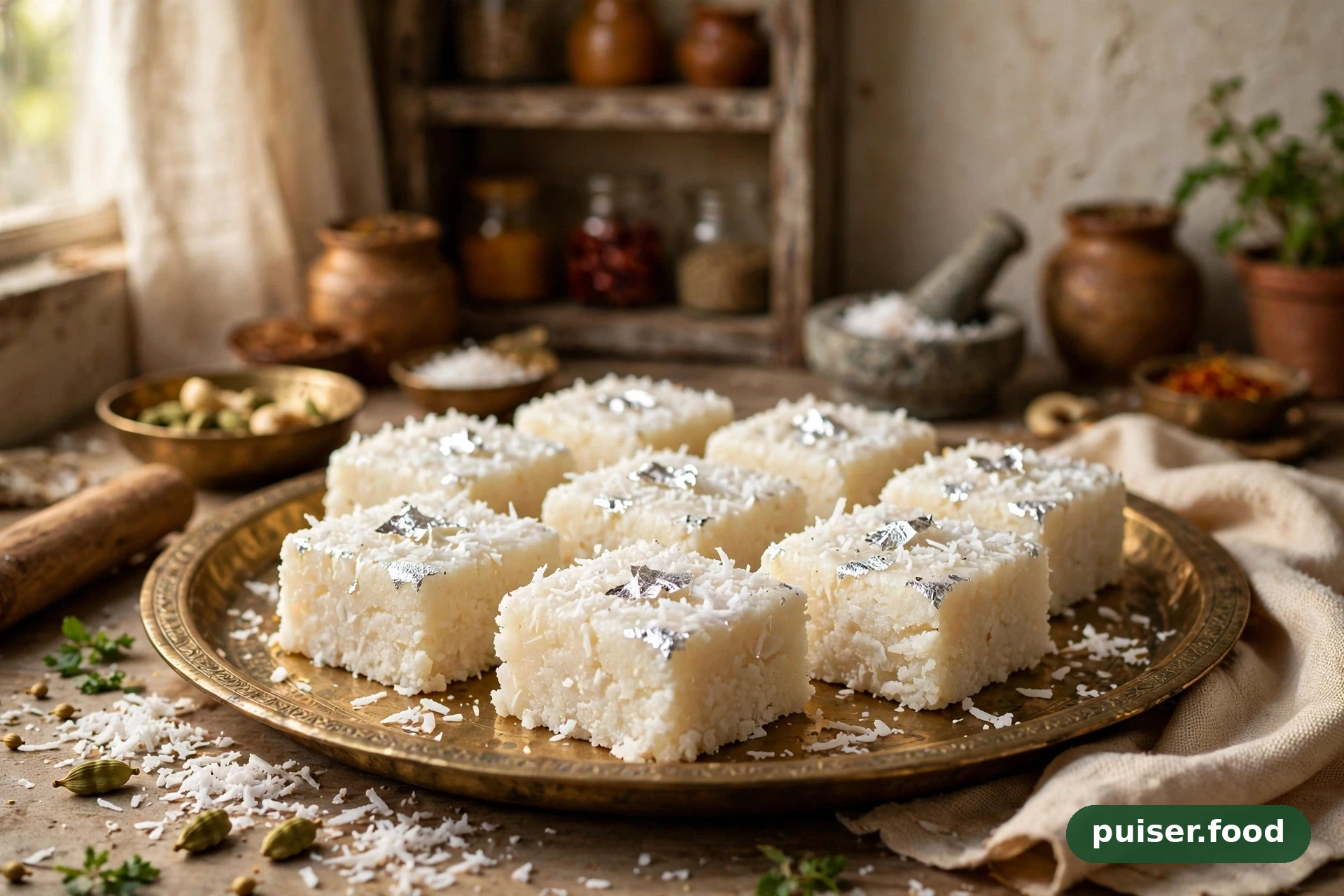
Cook desiccated coconut with condensed milk and cardamom in a kadhai until the mixture leaves the sides, spread it in a greased tray, and cut it into squares once it sets. A square uses about 20 g of coconut, and the barfi keeps for days in an airtight box.
3. Coconut chutney for dosa and idli
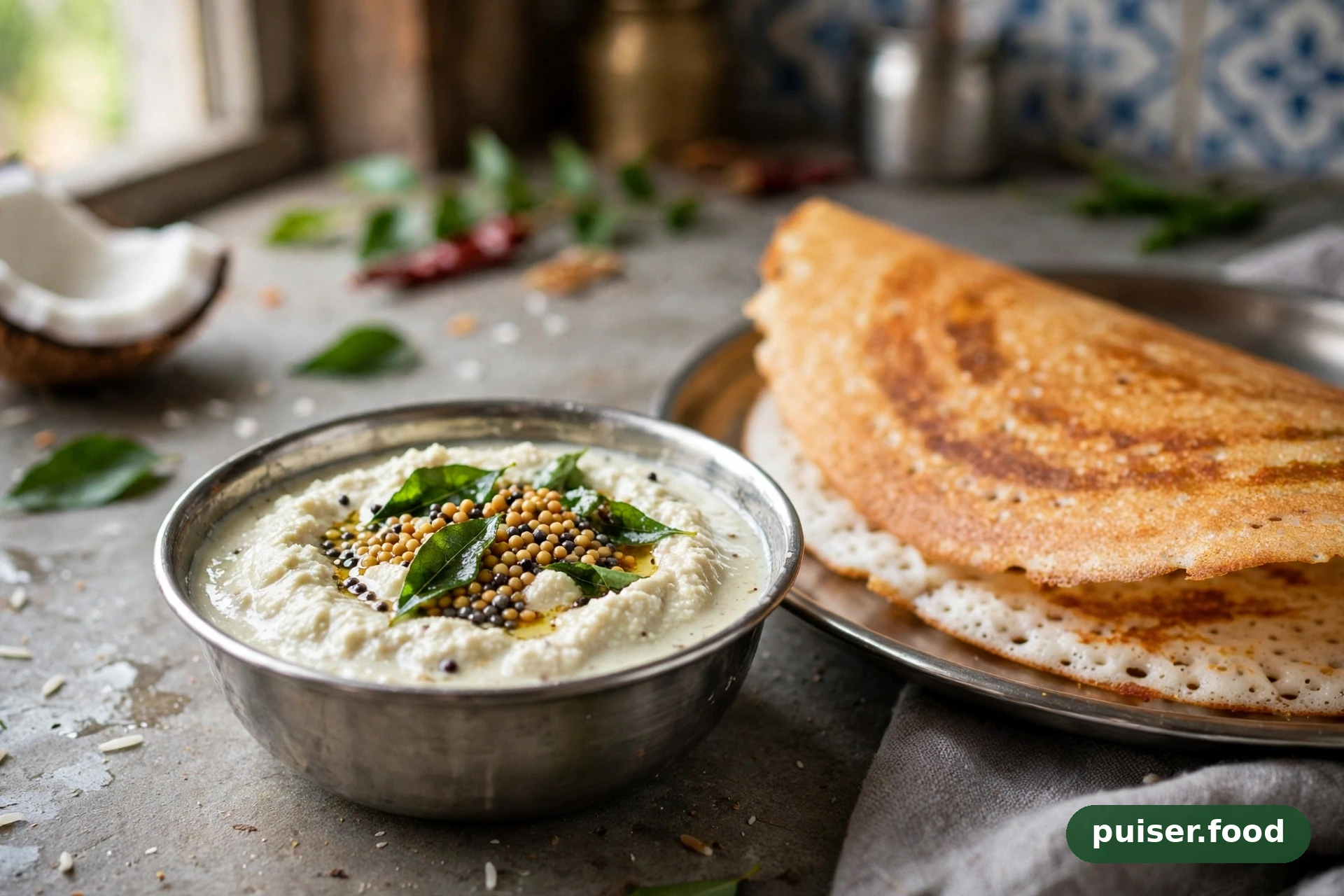
Grind 20 g of desiccated coconut with green chilli, ginger, salt and a little water, then temper it with mustard seeds, urad dal and curry leaves in hot oil. The chutney is the daily partner of dosa and idli in South Indian homes. Soak the shreds in warm water for ten minutes first, so they grind smooth instead of gritty.
4. Thoran and poriyal with curry leaves
Stir 20 g of desiccated coconut into a thoran of cabbage or beans, or a poriyal of carrots, with mustard seeds, curry leaves and green chilli. The coconut gives the vegetable dish body and a mild sweetness, and it is the flavour that marks a Kerala thoran.
5. Oats porridge with banana and coconut
Stir 20 g of desiccated coconut into a bowl of oats cooked in milk, with sliced banana and a pinch of cardamom and no extra sugar, and the coconut softens in the heat and turns the oats fragrant. The bowl needs no jaggery or honey, because the banana and the coconut carry the flavour.
Buying and Storing Dried Coconut
The dried coconut benefits survive or die on the label, so buy by the label, and not by the price alone. The ingredients list of the plain kind should read coconut, and a pack that lists sugar is the sweetened kind, with 43.2 g of sugars per 100 g. A pack that smells stale, sour or soapy has turned rancid and should go out.
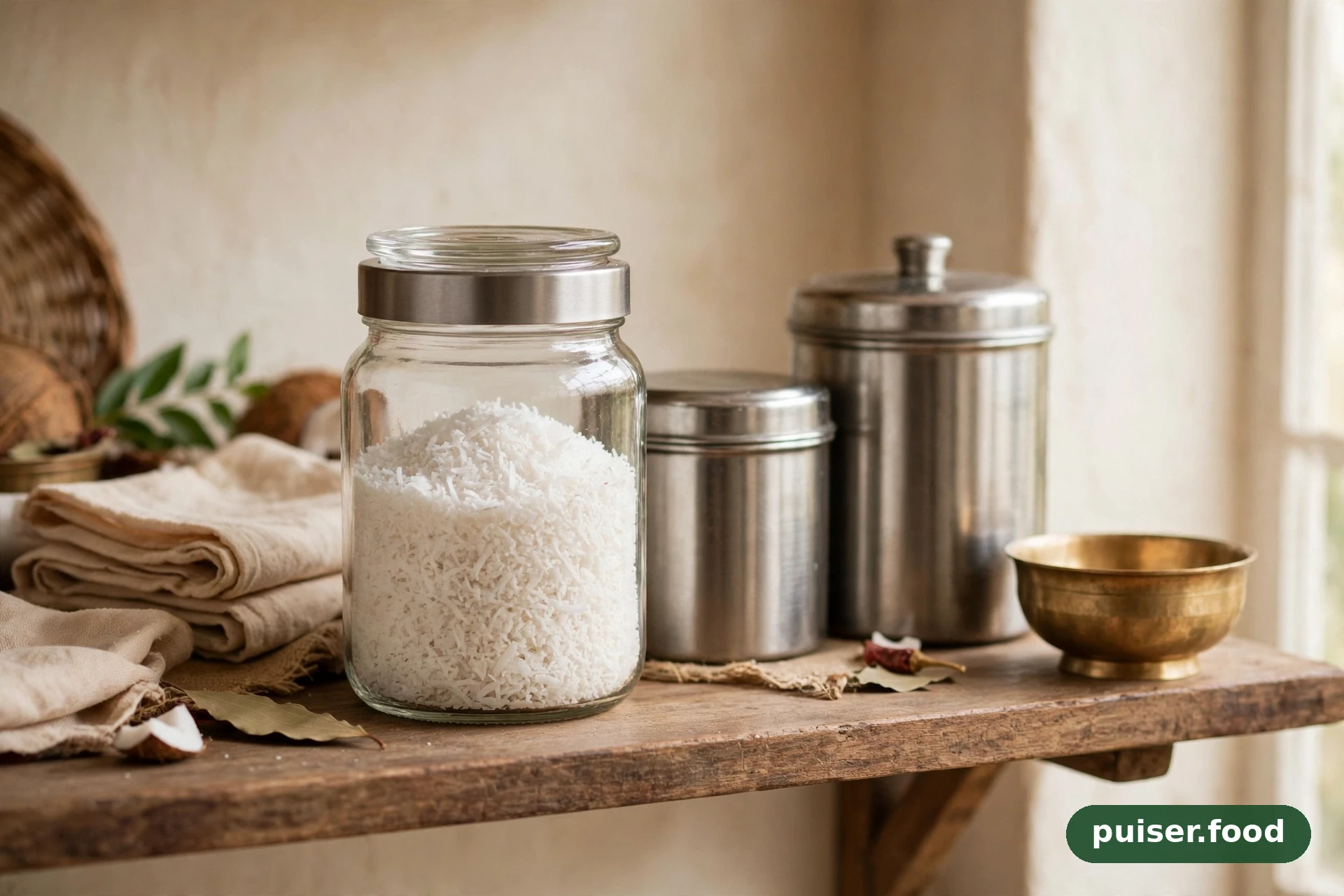
Our Organic Desiccated Coconut is the plain unsweetened kind for the Puiser shop. Store dried coconut in an airtight jar in a cool, dark place, where it keeps for about six months, or in the fridge, where it keeps for about a year. Throw the shreds away if they smell sour, taste bitter or show mould.
5 Expert Tips
1. Measure the spoonful. Measure 20 g into a small bowl and put the pack away, because a handful eaten from the pack is usually two.
2. Soak before grinding. Soak desiccated coconut in warm water for ten minutes before grinding it for chutney, so it turns smooth.
3. Toast it lightly. Toast desiccated coconut in a dry kadhai on a low flame until it turns pale gold. It burns fast, so stir it and watch it.
4. Pair it with fibre foods. Eat dried coconut with oats, vegetables or curd rather than alone, because the meal keeps the serving filling for longer.
5. Check the sugars per 100 g. Check the sugars per 100 g before buying. A pack at 43.2 g is the sweetened kind, and a pack at 7.35 g is the plain kind.
Common Mistakes to Avoid
Eating it by the bowlful. The commonest mistake is eating 50 g at a sitting, which gives 330 kcal and 28.6 g of saturated fat. Twenty grams is the portion.
Buying the sweetened kind by mistake. The sweetened kind carries 43.2 g of sugars per 100 g, against 7.35 g in the plain kind. Check the sugars before buying.
Expecting a brain food. The brain story rests on trials of purified MCT oil, and not on trials of desiccated coconut. A 20 g serving gives only about 1.6 g of the fast MCTs.
Storing it in the open pack. A pack left open in a warm kitchen turns rancid. Move the coconut to an airtight jar on the day the pack is opened.
Burning it in the kadhai. Desiccated coconut toasts in seconds on a high flame, and burnt coconut tastes bitter through the whole dish. Use a low flame and stir it.
Frequently Asked Questions
What are the main dried coconut benefits?
Dried coconut benefits centre on fibre and minerals, with 16.3 g of fibre, 2.74 mg of manganese and 3.32 mg of iron per 100 g. The benefits belong to the plain unsweetened kind, and not to the sweetened kind, which carries 43.2 g of sugars per 100 g.
Is desiccated coconut healthy?
Desiccated coconut can fit a healthy diet in small amounts, because it gives fibre, manganese, copper and iron with little sugar. The caution is the saturated fat, at 57.2 g per 100 g, so a 20 g serving is the portion.
Does dried coconut help weight loss?
A 20 g serving, at 132 kcal with 3.3 g of fibre, can suit a weight loss diet better than a biscuit of the same calories, because the fibre makes it filling. Dried coconut is energy dense, so it works only when the spoonful is measured.
How much desiccated coconut can I eat in a day?
Twenty grams a day is the portion this guide uses, with about 132 kcal, 3.3 g of fibre and 11.4 g of saturated fat. Eating more is fine on some days, but 50 g carries 330 kcal and 28.6 g of saturated fat.
Does dried coconut help the brain?
No trial has tested desiccated coconut on memory or brain health. The brain story comes from trials of purified MCT oil, and a 20 g serving gives only about 1.6 g of the fast MCTs, caprylic and capric acid.
Is dried coconut good for diabetes?
Unsweetened dried coconut carries only 7.35 g of sugars per 100 g, so it does not raise blood sugar the way a sweet dried fruit does. The caution is the calories and the saturated fat, at 660 kcal per 100 g, so people with diabetes should ask their own doctor about portions.
Is dried coconut good for cholesterol?
Dried coconut carries 57.2 g of saturated fat per 100 g, and coconut fat raises LDL cholesterol compared with unsaturated vegetable oils. A small 20 g serving fits most diets, but a daily bowlful would push saturated fat well past the limit.
Can children eat dried coconut?
Children can eat dried coconut in small servings, and the soft sweetness makes it an easy laddoo and barfi ingredient. Buy the unsweetened kind for children, and keep the portion small.
Is desiccated coconut gluten free and keto friendly?
Plain desiccated coconut has no gluten ingredient, so it suits a gluten free diet when the pack is made in a gluten free facility. It suits a keto diet in small amounts, with 23.6 g of carbohydrates and 16.3 g of fibre per 100 g, which leaves about 7.3 g of net carbohydrates per 100 g.
Does dried coconut have side effects?
The main side effects are the saturated fat and the calories, at 57.2 g of saturated fat and 660 kcal per 100 g. Coconut is classed as a tree nut for allergy labelling, so people with a tree nut allergy should ask their own doctor before eating it.
Conclusion
Dried coconut earns its place in the kitchen when the shreds are plain and the portion is 20 g. The dried coconut benefits, fibre and minerals with little sugar, make it a better flavour food than a sweet, and the shreds keep for months and turn a laddoo, a chutney or a thoran into a small treat. Try 20 g in a laddoo, in a chutney or over oats, and see where it earns its place in your kitchen.
Disclaimer: This article is for general information only and is not medical advice. If you have diabetes, high cholesterol, or a tree nut allergy, talk to your doctor before making dried coconut a daily habit.