Introduction
Dried dragon fruit is the pink crunch of the Indian dry fruit shelf, the bright cube that turns a plain smoothie bowl magenta. It tastes mild and sweet and carries a fair amount of sugar for its size, so the question is whether it earns its place as a health food or only as a pretty garnish. This guide covers the dried dragon fruit benefits that matter most, the numbers told honestly, and the five best Indian ways to eat it.
In this article
- The short answer
- What dried dragon fruit actually is
- Dried dragon fruit in numbers
- 10 benefits worth knowing
- The fresh-versus-dried evidence gap, honestly
- Freeze-dried versus sun-dried versus sweetened versus chips
- Five everyday ways to use it
- Buying and storing dried dragon fruit
- 5 expert tips
- Common mistakes to avoid
- Frequently asked questions
- Conclusion
The Short Answer
The dried dragon fruit benefits that matter most are fibre, potassium and vitamin C. Fresh dragon fruit gives 206 mg of potassium and 19.8 mg of vitamin C per 100 g, and the freeze-dried label prints 1,800 mg of potassium and 16 g of fibre. A small 25 g serving gives about 100 kcal and 4 g of fibre. The pink colour comes from betacyanins in the fruit, not from dye.
What Dried Dragon Fruit Actually Is
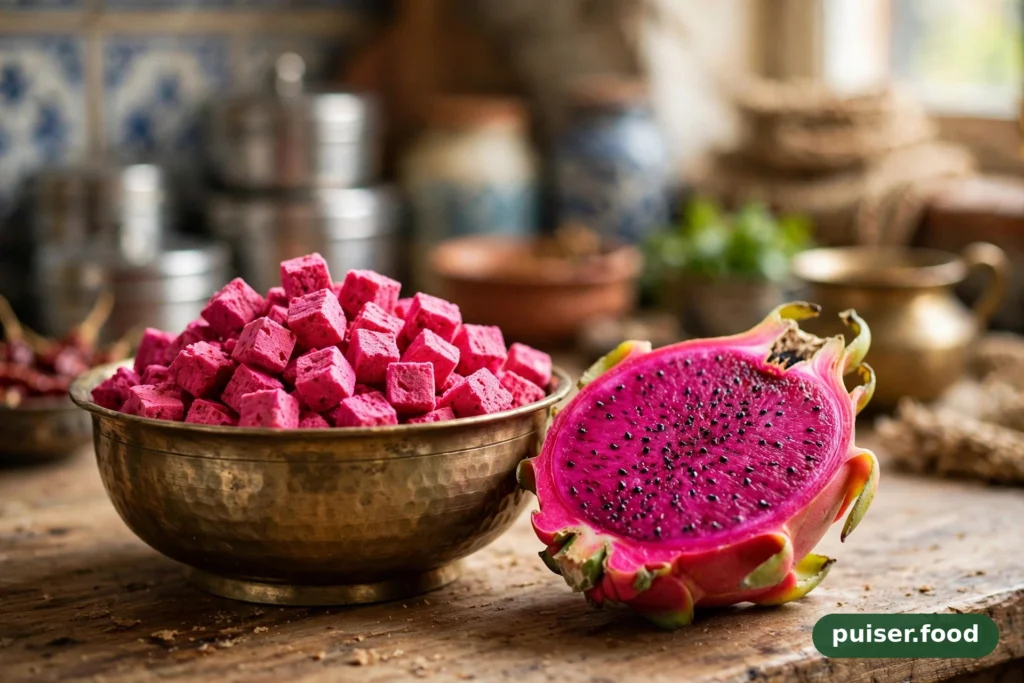
Dried dragon fruit is pitaya, the fruit of a climbing cactus, sliced and dried into pink cubes or chewy pink strips. The fruit wears a bright pink skin with green scales, which is how it got the dragon name, and inside, the flesh is white or deep magenta, speckled with tiny black seeds. Dragon fruit is now grown in several Indian states and sells in most Indian cities through much of the year.
That dried dragon fruit carries fibre and potassium with its sugar is what separates the pink cube from a sweet, and it is where the dried dragon fruit benefits start. A cube gives natural sugars with fibre, potassium and vitamin C attached, so it works as a snack and a garnish at once. The pink is betacyanins, the same family of pigments that colours beetroot, and no dye is added to the plain dried kind.
Dried dragon fruit is the fruit of the smoothie bowl and the oats bowl, the trail mix of a train journey and the kheer of a festival lunch. It has no old Indian tradition behind it, the way jackfruit or mango do, because it arrived in Indian kitchens only in the last few years. Our dried mango benefits guide covers the golden slice with the most sugar of the series, our dried pineapple benefits guide covers the tangy ring with the highest sugars of the shelf, and our dried papaya benefits guide covers the soft orange chew that shares the shelf with dragon fruit.
Dried Dragon Fruit in Numbers
The numbers behind the dried dragon fruit benefits need a straight telling, because there is no generic USDA record for dried dragon fruit. USDA FoodData Central was searched across its collections, and no generic dried entry exists. The only dried records are branded products, and no two labels agree. This guide therefore builds its main table from fresh dragon fruit, clearly labelled as fresh, and treats dried figures as ranges from one named label only.
The fresh table below uses one record throughout, USDA FoodData Central Survey, FNDDS entry 2709234, “Dragon fruit”, per 100 g. Fresh dragon fruit is mostly water, so drying concentrates everything in it. Hold the vitamin C figure, 19.8 mg per 100 g, and the sugars figure, 12.0 g per 100 g, against the dried label below.
| Nutrient, fresh dragon fruit (per 100 g) | Amount |
|---|---|
| Energy | 68 kcal |
| Protein | 0.68 g |
| Fat | 0.21 g |
| Carbohydrates | 16.2 g |
| Total sugars | 12.0 g |
| Fibre | 1.8 g |
| Water | 82.4 g |
| Calcium | 13 mg |
| Iron | 0.12 mg |
| Magnesium | 14 mg |
| Phosphorus | 18 mg |
| Potassium | 206 mg |
| Sodium | 1 mg |
| Zinc | 0.09 mg |
| Vitamin A | 5 mcg RAE |
| Vitamin C | 19.8 mg |
| Vitamin B6 | 0.101 mg |
| Folate | 11 mcg |
The label table below shows what the one named freeze-dried label actually prints, per 100 g, and it is why this guide gives ranges rather than a single dried table. FruitBuys freeze-dried dragon fruit prints 400 kcal, 44 g of sugars, 16 g of fibre and 1,800 mg of potassium per 100 g, and its 25 g portion gives about 100 kcal and 4 g of fibre. No other named label was found with full figures, so the dried numbers here rest on this one label, scaled honestly.
| FruitBuys freeze-dried dragon fruit | Energy | Sugars | Fibre | Potassium |
|---|---|---|---|---|
| Per 100 g | 400 kcal | 44 g | 16 g | 1,800 mg |
| Per 25 g portion | about 100 kcal | about 11 g | 4 g | about 450 mg |
The portion table below turns the FruitBuys label into handfuls people actually eat. A 20 g sprinkle gives about 80 kcal and 3.2 g of fibre, a 25 g serving gives about 100 kcal and 4 g of fibre, and a 30 g handful gives about 120 kcal and 4.8 g of fibre. A whole 100 g pack gives 400 kcal and 44 g of sugars, which is why the pack is not the portion.
| Portion of dried dragon fruit | Energy | Sugars | Fibre | Potassium |
|---|---|---|---|---|
| 20 g, a sprinkle | about 80 kcal | about 8.8 g | 3.2 g | about 360 mg |
| 25 g, the label portion | about 100 kcal | about 11 g | 4 g | about 450 mg |
| 30 g, a small handful | about 120 kcal | about 13.2 g | 4.8 g | about 540 mg |
| 100 g, a full pack | 400 kcal | 44 g | 16 g | 1,800 mg |
The comparison table below puts the four kinds of dried dragon fruit side by side. Freeze-dried keeps the most of the fresh fruit and costs the most. Heat-dried is the chewy kind most Indian shops sell. Sweetened looks the same, and the sugar on its ingredients list is the giveaway. Chips are crisp and fried, and their fat belongs to the cooking method, not to the fruit.
| Kind | What it is | Sugars per 100 g | Best for |
|---|---|---|---|
| Freeze-dried | 100 percent dragon fruit, water removed by cold and vacuum | about 44 g | Smoothie bowls, trail mix, garnish |
| Heat-dried, unsweetened | Ripe flesh hot-air or sun dried, nothing added | not stated on a named label | Oats, kheer, snacking |
| Heat-dried, sweetened | Ripe flesh dried with added sugar | not stated; added sugar raises it | A sweet, not a health snack |
| Chips | Slices fried crisp in oil | not stated on a named label | Tea time, in small portions |
10 Benefits Worth Knowing
Here are the ten benefits worth knowing. Each one is tied to a number from the tables above or to a source named in the text, and each one belongs to the plain dried kind.
1. Fibre in a small handful
The first of the dried dragon fruit benefits is the fibre. Fresh dragon fruit gives only 1.8 g of fibre per 100 g, because it is mostly water, and the freeze-dried label prints 16 g. A 25 g serving gives 4 g of fibre, and it keeps a small handful filling for longer than a sweet of the same size.
2. Potassium that actually counts
The second of the dried dragon fruit benefits is the potassium. Fresh dragon fruit gives 206 mg per 100 g, and the freeze-dried label prints 1,800 mg. A 25 g serving gives about 450 mg, and potassium helps the body balance fluids and supports healthy blood pressure.
3. Vitamin C, kept honest
Fresh dragon fruit gives 19.8 mg of vitamin C per 100 g, and drying keeps part of it. Freeze-drying keeps the most, because it uses cold instead of heat, while hot-air drying cuts it. A 25 g serving is a small help for vitamin C, not a rich source.
4. Betacyanins, the pink pigment
The pink colour comes from betacyanins, the pigments that give the magenta flesh its colour, and the Hermetica ingredient page notes them alongside vitamin C and prebiotic oligosaccharides. Betacyanins are antioxidants, which help the body deal with the everyday wear of free radicals.
5. Prebiotic fibres for the gut
Dragon fruit carries oligosaccharides, short chains of sugars that feed the good bacteria in the gut, which Hermetica notes as a prebiotic compound. The dried cubes carry those fibres in concentrated form, so a small serving feeds the gut bacteria a little.
6. Vitamin B6 and folate in small amounts
Fresh dragon fruit gives 0.101 mg of vitamin B6 and 11 mcg of folate per 100 g. Vitamin B6 helps the body use protein and make red blood cells, and folate helps the body make new cells.
7. A snack with almost no fat
Plain dried dragon fruit carries almost no fat: fresh dragon fruit gives 0.21 g of fat per 100 g, with no cholesterol, and the freeze-dried cubes carry the same character, because nothing is added to them. The fried chips are the exception.
8. Quick energy that travels
A 25 g serving gives about 100 kcal, which is quick energy in a light pack. The same weight of fresh fruit would be mostly water, so the dried pack carries a whole serving of fruit in a pocket.
9. A snack that keeps for months
Dried dragon fruit keeps for months in an airtight jar without a fridge, which suits a train journey, a trek or a school tiffin. Fresh dragon fruit goes bad in days, while the dried cubes weigh almost nothing. The freeze-dried cubes go soft fastest in humidity, so the jar matters most for them.
10. A fruit that garnishes well
Dried dragon fruit softens a little in milk and curd and keeps its colour, so it garnishes as well as it snacks. A handful of pink cubes on a smoothie bowl, in oats or over kheer adds colour without extra sugar, and the cubes hold their shape.

The Fresh-Versus-Dried Evidence Gap, Honestly
The fresh-versus-dried gap is the part of the dried dragon fruit benefits that most sellers skip. Most dragon fruit trials are on fresh fruit or extracts, not on dried fruit, and Hermetica says so plainly. A trial that feeds people fresh dragon fruit, or a concentrated extract in a capsule, does not prove that a handful of dried cubes does the same thing, because drying changes the fruit.
The honest version is this. Drying concentrates the fibre and potassium, and freeze-drying keeps the vitamin C and colour better than heat drying. What drying does not do is turn the fruit into a medicine, and no trial of dried cubes in people was found for this guide. Buy the cubes for fibre, potassium and colour, and treat any bigger health claim on a pack as advertising until a trial on the dried fruit itself says otherwise.
The sugar on the label is the other thing to read. The freeze-dried label prints 44 g of sugars per 100 g, against 12.0 g in the fresh fruit, so a small serving has a real effect on blood sugar. People with diabetes can eat a small serving, about 20 to 25 g, as the sweet of the meal. Some packs also add sugar or list a colour, so pick a pack with one ingredient, dragon fruit, and nothing else.
Freeze-Dried Versus Sun-Dried Versus Sweetened Versus Chips
The dried dragon fruit benefits change between the ways the fruit is dried, more than between the white and the pink flesh. Freeze-dried dragon fruit is frozen, then the ice is removed under vacuum, so the fruit is never cooked, and it keeps most of its vitamin C and colour. Sun-dried and hot-air dried dragon fruit use heat, which cuts vitamin C and dulls the colour, and the pieces turn chewy. The freeze-dried kind costs far more and crushes easily, so it suits a smoothie bowl better than a tiffin box.
The sweetened kind is the trap on the shelf. It looks like the plain kind, and the added sugar on its ingredients list is easy to miss. The fried chips are a different food again, sliced thin and fried crisp in oil, so check the fat per 100 g before buying. Fresh fruit wins on vitamin C and hydration, while the dried cube wins on fibre and potassium per gram.
Five Everyday Ways to Use It
The dried dragon fruit benefits show up best in five everyday dishes, each one using a small serving, with the dragon fruit at 25 g or less.
1. Smoothie bowl with banana and granola
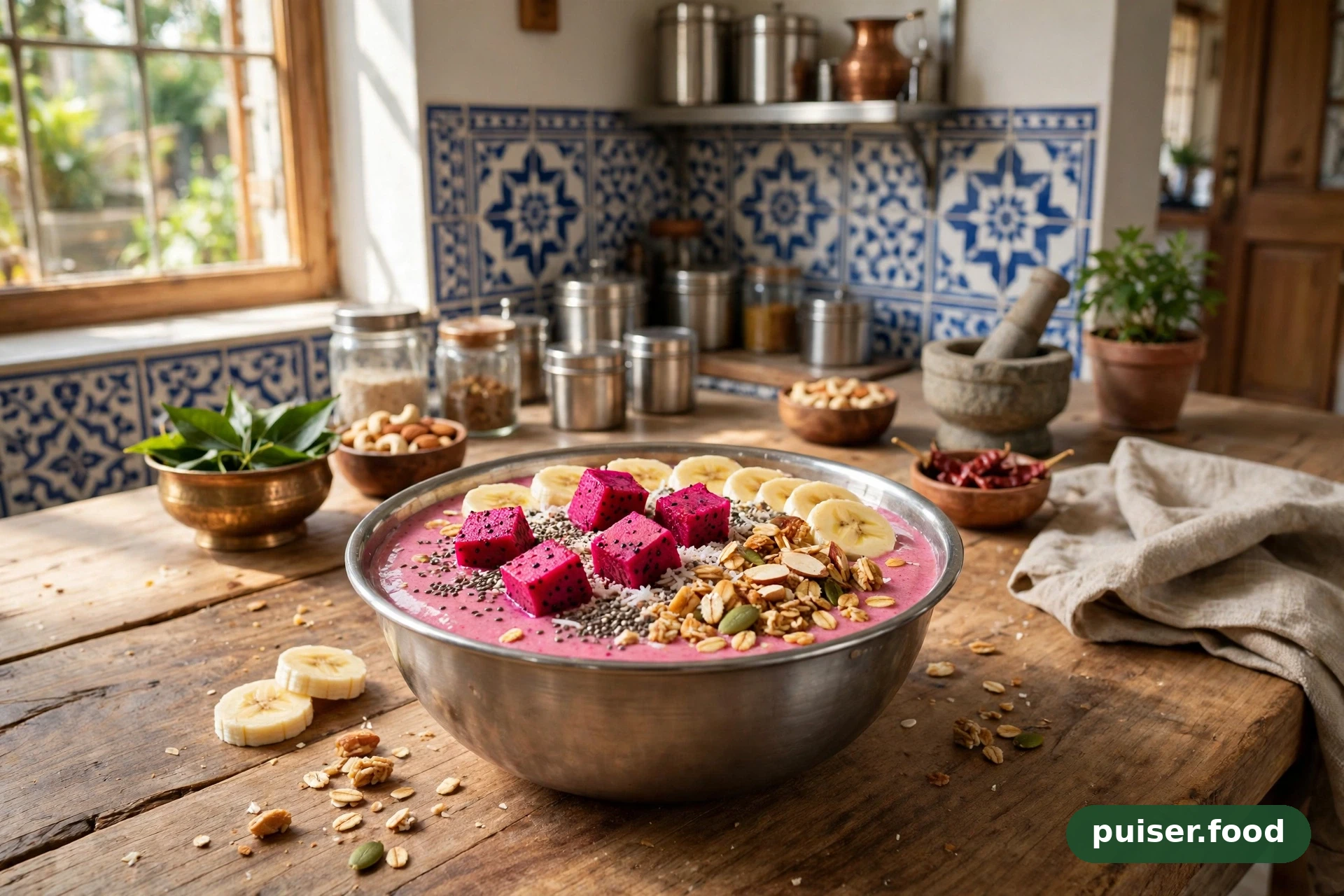
Blend a frozen banana with curd and a spoon of oats, pour it into a steel bowl, and top it with 25 g of freeze-dried cubes, banana slices and granola. The cubes soften a little on the cold curd and give the bowl its crunch.
2. Oats porridge with cinnamon
Stir 25 g of dried dragon fruit, torn small, into a bowl of oats with a pinch of cinnamon and no extra sugar, and the pieces soften in the heat and turn the oats pink. The bowl needs no jaggery or honey, because the dragon fruit carries the sweetness.
3. Trail mix with almonds and seeds
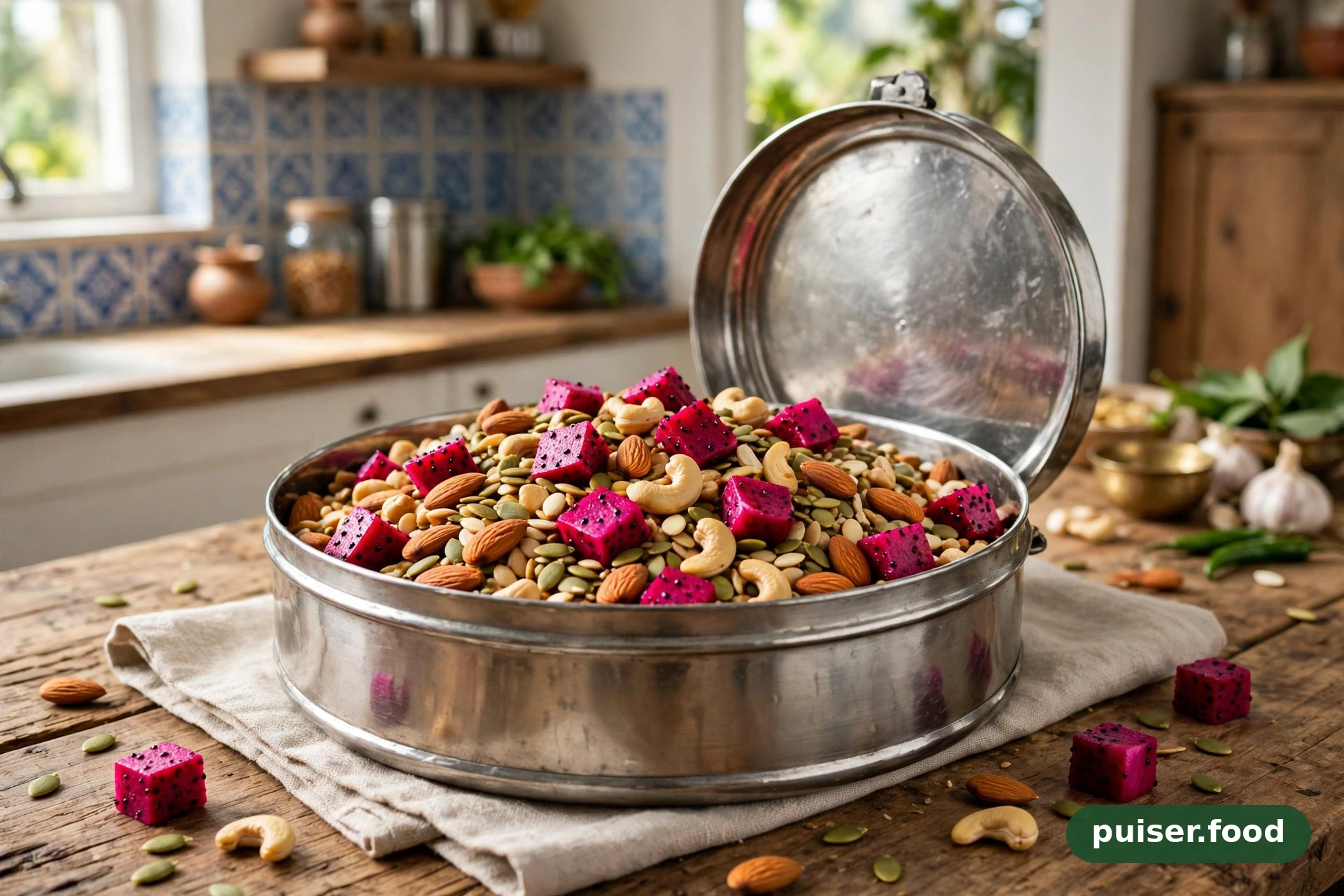
Mix 25 g of dried dragon fruit, torn small, with a handful of almonds and cashews and a spoon of pumpkin seeds, and the mix travels well in a small dabba. The dragon fruit gives the chew, the nuts the crunch.
4. Kheer with cardamom
Simmer 25 g of dried dragon fruit, torn small, in a pot of kheer with cardamom for the last ten minutes, and the pieces soften and give their pink colour to the milk, so the kheer needs less sugar.
5. Fruit chaat with chaat masala and lemon
Toss 25 g of dried dragon fruit, torn small, with chopped banana, apple and pomegranate, a pinch of chaat masala and a squeeze of lemon, and the dragon fruit gives the chaat a sweet softness against the salt and sharpness of the lemon.
Buying and Storing Dried Dragon Fruit
The dried dragon fruit benefits survive or die on the label, so buy by the label, not by the price alone. The ingredients list should read dragon fruit, and a pack that lists added sugar or a colour is a candied sweet. Check the sugars per 100 g too, because the freeze-dried label prints 44 g, and a sweetened pack will print more.
For the snack box, our Organic Dried Peaches is the plain dried kind in the Puiser shop. Store dried dragon fruit in an airtight jar in a cool, dark place, where it keeps for months. Its sugars attract moisture, so a pack left open in a humid kitchen will turn sticky and clump. Throw the cubes away if they smell sour, taste fermented or show mould.
5 Expert Tips
1. Count the handful. Count a small handful, about 25 g, into a small bowl and put the pack away.
2. Add it last. Add freeze-dried cubes at the end, so they stay crisp, because stirring them in early turns them soft and pale.
3. Pair with curd for protein. Eat dried dragon fruit with curd or nuts rather than alone, because the protein and fat slow the sugars down.
4. Buy plain for children. Buy a one-ingredient pack for children, because added sugar and colour add nothing to the taste.
5. Check the sugars per 100 g. Check the sugars per 100 g before buying, because the freeze-dried label prints 44 g and a sweetened pack will print more.
Common Mistakes to Avoid
Eating by the packful. The commonest mistake is treating dried dragon fruit like fresh dragon fruit and eating a whole 100 g pack, about 44 g of sugars. A small handful is the portion.
Buying the sweetened kind by mistake. The sweetened kind lists added sugar in its ingredients, and the plain kind lists dragon fruit alone. Check the ingredients before buying.
Expecting a vitamin C food. Dried dragon fruit keeps only part of the 19.8 mg of vitamin C in fresh dragon fruit, because heat drying cuts it.
Storing in the open pack. A pack left open in a humid kitchen turns sticky, clumps and can ferment. Move the cubes to an airtight jar on the day the pack is opened.
Believing a trial claim. Most dragon fruit trials tested fresh fruit or extracts, not dried cubes. The named label prints 44 g of sugars per 100 g, so a small serving is the portion.
Frequently Asked Questions
What are the main benefits of dried dragon fruit?
The benefits of dried dragon fruit centre on fibre, potassium and vitamin C, with fresh fruit giving 206 mg of potassium and 19.8 mg of vitamin C per 100 g, and the freeze-dried label printing 16 g of fibre. The benefits belong to the plain dried kind, not the sweetened or fried kind.
Is dried dragon fruit healthy?
Dried dragon fruit is healthy in a small portion, because it is one ingredient with fibre, potassium and almost no fat. The catch is the sugar. The freeze-dried label prints 44 g of sugars per 100 g, so a 25 g handful is a serving, and a whole pack is a sweet.
Is dried dragon fruit good for diabetes?
Dried dragon fruit is sugar dense, with 44 g of sugars per 100 g on the freeze-dried label, so a small serving affects blood sugar. Most dragon fruit trials tested fresh fruit or extracts, not dried cubes. People with diabetes should count it as the sweet of the meal and ask their own doctor.
What is the difference between freeze-dried, sun-dried and sweetened dried dragon fruit?
Freeze-dried dragon fruit is dried by cold and vacuum, keeps the most vitamin C and colour. Sun-dried and hot-air dried dragon fruit use heat, turn chewy and duller, and lose more vitamin C. Sweetened dried dragon fruit has sugar added, and it is a candied sweet.
How much dried dragon fruit can I eat in a day?
About 25 g a day, a small handful, is the daily portion this guide uses, with about 100 kcal, 11 g of sugars and 4 g of fibre. A whole 100 g pack carries 44 g of sugars, so count the handful rather than eating from the pack.
Is dried dragon fruit good for weight loss?
A 25 g handful, about 100 kcal, suits a weight loss diet better than a biscuit of the same calories, because the fibre makes it filling. Dried dragon fruit is sugar dense and the calories add up fast from the pack, so it works only when the handful is counted.
Does dried dragon fruit help with constipation?
Dried dragon fruit gives 16 g of fibre per 100 g on the freeze-dried label, and a 25 g serving gives 4 g, so it helps a fibre free diet a little. It is not a laxative. Drink water with the cubes, because fibre works best with water.
Is dried dragon fruit good for pregnancy?
Dried dragon fruit gives fibre, potassium and vitamin C in useful amounts, and a small serving fits a healthy pregnancy diet. The caution is the sweetened kind, which carries added sugar. Ask your own doctor about portions, and buy the plain one-ingredient kind.
Can children eat dried dragon fruit?
Children can eat dried dragon fruit in small servings, and the pink colour makes it an easy tiffin fruit. Buy the plain unsweetened kind for children, and cut the cubes small for young children, because the chewy pieces can be a choking risk.
Does dried dragon fruit have side effects?
The main side effect is sugar, with 44 g of sugars per 100 g on the freeze-dried label, and some packs add sugar or colour on top of that. Dragon fruit is also known to turn urine or stools pink or red in some people, which looks alarming and is harmless.
Conclusion
Dried dragon fruit earns its place in the snack box when the pack is plain and the portion is a small handful. The dried dragon fruit benefits, fibre and potassium and a little vitamin C, make it a better sweet than a biscuit, and the pink cubes travel well and keep for months. The trap is the sweetened pack and the fresh fruit trial quoted for a dried cube, and the fix is a label check. Try a small handful in oats, in kheer or over a smoothie bowl.
Disclaimer: This article is for general information only and is not medical advice. If you have diabetes or any health condition, talk to your doctor before making dried dragon fruit a daily habit.