

Introduction
Learning how to make masala chai at home is really about two things: the right spices, and the right order. Most home chai goes wrong the same way: too many spices added all at once and boiled too long, until the cup turns muddy and bitter. This recipe uses five spices at most, adds them in the order they need, and gets the tea in and out in two minutes. In about fifteen minutes you will have two cups of clear, fragrant chai that tastes the way a good cup should.
In this article
- Recipe overview
- Ingredients
- Kitchen equipment
- How to make masala chai at home: step by step
- Why the order matters
- The water to milk ratio
- Make-ahead masala blend
- 7 expert tips
- Substitutions and variations
- Nutrition (estimated)
- Serving suggestions
- Storage and food safety
- Common mistakes to avoid
- Frequently asked questions
- Conclusion
Recipe Overview
| Detail | Value |
|---|---|
| Recipe name | Masala Chai |
| Preparation time | 5 minutes |
| Cooking time | 10 minutes |
| Total time | 15 minutes |
| Servings | 2 cups |
| Difficulty level | Easy |
| Cuisine | Indian |
| Cooking method | Stovetop simmer |
Ingredients
This is everything you need for how to make masala chai at home for two cups, given for a strong cup. If you like your chai milder, cut the tea to one and a half teaspoons rather than changing the spices.
| Ingredient | Quantity | Purpose / Notes |
|---|---|---|
| Water | 1.5 cups (360 ml) | The base the spices simmer in |
| Whole milk | 1 cup (240 ml) | Full cream gives the richest cup; 2 percent works, skim tastes thin |
| Strong loose black tea (Assam or CTC) | 2 teaspoons, or 2 tea bags | Must be strong, because milk dilutes it |
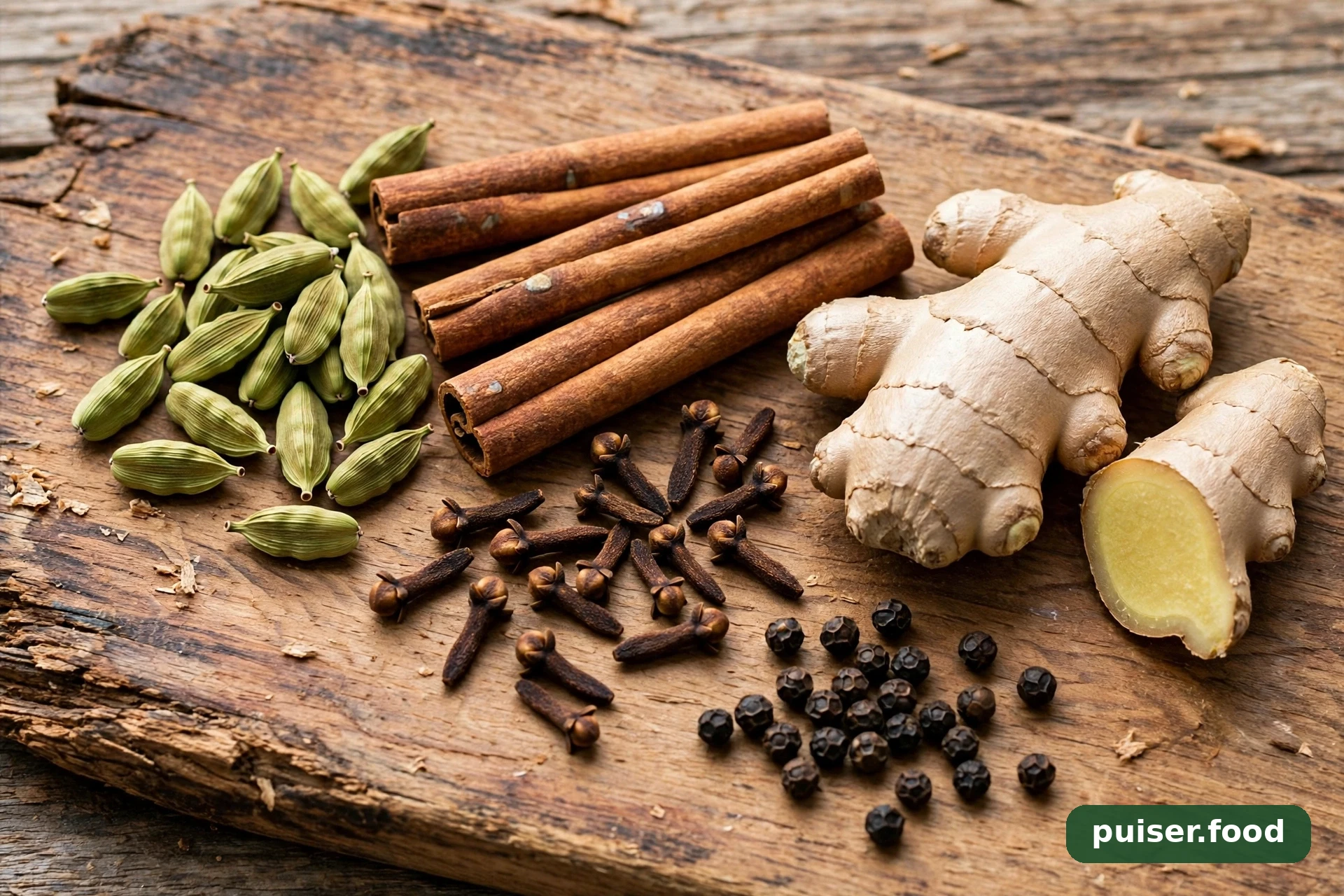
| Fresh ginger | 1/2 inch piece, crushed | Warmth and gentle heat; crush, do not grate fine |
| Green cardamom pods | 2, lightly crushed | Fragrance; the most delicate spice, added last |
| Cinnamon stick | 1 inch piece | Depth and warmth; a hard spice, added first |
| Whole cloves | 2 | Depth; a little goes far, do not add more |
| Black peppercorns | 2, crushed (optional) | Slow heat at the back of the throat |
| Sugar | 2 to 3 teaspoons, or to taste | Sweeten during the simmer; jaggery or honey also work |
Choose the tea with care. Assam or CTC granules are the right base because they are strong enough to stand up to milk and spices. A mild Darjeeling or a flavoured tea will disappear under the milk. Whole spices beat powdered masala: powder loses its aroma within weeks and makes the chai cloudy, while whole spices release flavour slowly and strain out cleanly.
Kitchen Equipment
Small saucepan or chai pot. A pouring lip helps, because you will strain straight from it. A one litre pot is the right size for two cups.
Mortar and pestle, or a rolling pin and a folded cloth. For crushing cardamom, cracking cinnamon and bruising ginger.
Fine strainer. To catch the tea leaves and spice pieces when you pour.
Measuring spoons and a cup measure. For the water, milk and tea, until the ratio becomes habit.
How to Make Masala Chai at Home: Step by Step
The steps below show how to make masala chai at home in about fifteen minutes. Read them once before you start, because the timing matters and the steps follow each other quickly.
- Crush the spices. Lightly crush the cardamom pods until the seeds show, crack the cinnamon stick into two or three pieces, crush the peppercorns, and bruise the ginger with the flat of a knife. Keep the pieces big enough to strain out easily.
- Simmer the hard spices. Put the water in the saucepan and add the cinnamon, cloves and peppercorns. Bring it to a boil over medium heat, then turn it down and simmer for about 3 minutes. Hard spices need the most time to release their flavour.
- Add the ginger. Add the crushed ginger and simmer for 1 more minute. Ginger releases faster than hard spices, and simmering it in water first matters: ginger acids can curdle milk if they meet it too early.
- Add cardamom, then tea. Add the crushed cardamom, then the tea leaves straight away. Simmer for 2 minutes only. Longer than that and the tannins turn the cup bitter, which no amount of milk or sugar will fix.
- Add the milk. Pour in the milk and raise the heat. Bring the chai to one gentle boil, let it rise, then pull the pan off the heat and let it settle. Do this twice. Boiling hard can scorch the milk.
- Sweeten and strain. Stir in the sugar while the chai is still hot, so it dissolves fully. Sweeten during the simmer, not after pouring, because sugar added to a poured cup never mixes as well. Strain into two cups and serve.

Why the Order Matters
The order is the heart of how to make masala chai at home well, and it is the part most recipes skip. Spices release flavour at different speeds, so they need different amounts of time in the water. Hard spices such as cinnamon, cloves and peppercorns are dense and woody, and need three or four minutes of simmering before they give anything up. Ginger is softer and releases faster, so a minute is enough. Cardamom is the most delicate of the five, and its fragrance escapes quickly into the steam. Add it too early and its scent is gone before the tea goes in. Add it last, just before the tea, and it is still there when you pour.
The tea has its own clock. Black tea releases its colour and body in the first minute or two, then starts releasing the tannins that taste bitter and drying. Two minutes of simmering is enough for a strong cup, and three minutes is the most you should allow. If your chai tastes bitter, the tea almost certainly simmered too long. The fix is a shorter simmer next time, not more sugar. Milk goes in after the tea has steeped, because milk dulls the extraction, and adding it earlier gives a weaker cup.
The Water to Milk Ratio
A reliable starting point is three parts water to two parts milk: one and a half cups of water to one cup of milk for two servings. The water extracts the spices and the tea, and the milk softens the result. Some families prefer equal parts water and milk, and some make chai with milk alone. Those are fair choices, but they change the cup. More milk makes a softer, creamier chai and a weaker spice note. Less milk makes a sharper, stronger cup. Start with three to two, and adjust from there.
The milk itself matters too. Whole milk gives the richest cup, because its fat carries the spice flavours and rounds off the edges of the tea. Two percent milk works and keeps the cup lighter. Skim milk tastes thin in chai, because there is not enough fat to carry the flavour. If you use plant milk, oat milk holds up best to heat, while almond milk can split if it boils hard.
Make-Ahead Masala Blend
A jar of dry masala is the shortcut for how to make masala chai at home every day without crushing spices each morning. Mix together crushed green cardamom, cinnamon, cloves and black pepper, and keep the mix in a small airtight jar away from the stove. Use about a quarter to half a teaspoon of the mix per two cups of chai. Grind the mix coarse, not fine, so it strains out easily. Fresh ginger still goes in separately, because dried ginger does not give the same warmth. Our guide on how to store whole spices covers the same rules for the rest of your spice shelf.
A dry blend keeps for about two to three months in a cool, dark cupboard, but its aroma fades with time. Make small batches rather than one big jar, and replace it when the smell weakens. If you use a ready masala chai blend from a shop, treat it the same way: the blend handles the spice balance, but the order of water, tea, milk and boil time is still yours to get right. Our masala chai blend is made the same way, with whole spices crushed coarse.

7 Expert Tips for a Better Cup
Start with five spices, not ten. Cardamom, ginger, cinnamon, cloves and pepper make a complete chai. More spices rarely improve the cup. Learn the five first, then add one extra at a time.
Crush, do not powder. Whole or coarsely crushed spices beat powdered masala. Powder loses aroma within weeks and makes the chai cloudy. Crush cardamom until the seeds show, crack the cinnamon, bruise the ginger.
Watch the tea clock. Two minutes of simmering is enough. Set a timer until the timing becomes habit. If the cup tastes bitter, the tea simmered too long.
Let it rise twice. When the milk goes in, bring the chai to a gentle boil, let it rise, pull it off the heat, and let it settle. Do it twice. The rising and settling pulls the flavours together.
Sweeten in the pan. Sugar, jaggery or honey dissolve properly only while the chai is hot and moving. Stir the sweetener in before you strain, not after you pour. Our jaggery vs white sugar guide compares the sweeteners.
Warm the cups. A cold cup drops the temperature of the chai the moment you pour. Rinse the cups with hot water first.
Write down your version. Once the method is steady, adjust to taste: more ginger on cold mornings, extra cardamom when you want fragrance, a smaller hand with cloves. Chai is personal, and the best cup is the one you can repeat.
Substitutions and Variations
Tea bags instead of loose leaf. Two tea bags work in place of two teaspoons of loose tea. Tear them open and tip the leaves in, or leave the bags in and lift them out before adding the milk. Loose leaf gives a stronger cup, but bags work on a busy morning.
No fresh ginger. Half a teaspoon of dried ginger powder works, but add it with the hard spices, because it needs more time. The warmth is flatter, so use it as a backup.
No cardamom. If you are out of cardamom, a pinch of nutmeg gives some of the fragrance. Do not replace cardamom with more cinnamon.
Vegan chai. Oat milk is the best plant milk for chai because it holds up to heat and tastes creamy. Soy milk works too. Almond milk can split if it boils hard, so keep the heat gentle. Coconut milk makes a rich cup but changes the flavour.
Less sweet or no sugar. Leave the sugar out entirely and the spices carry the cup. If you want sweetness without sugar, add honey after straining, not during the boil.
Stronger chai. For a kadak cup, use two and a half teaspoons of tea and let the milk rise three times instead of two.
Nutrition (Estimated)
The figures below are estimates for one cup made with whole milk and one and a half teaspoons of sugar. They change with the milk and the sweetener you use.
| Nutrient | Amount per cup |
|---|---|
| Calories | About 100 kcal |
| Protein | About 4 g |
| Carbohydrates | About 12 g |
| Fat | About 4 g |
| Fibre | 0 g |
| Sugar | About 12 g |
Serving Suggestions
Serve masala chai hot, in small glasses or cups, straight after straining. It is best with simple snacks: butter biscuits, rusk, mathri, or a slice of plain cake. In the morning it pairs well with parathas, and in the evening with pakoras or samosas. Once you know how to make masala chai at home, try it with turmeric milk on alternate days, so the two drinks do not get boring.

Storage and Food Safety
Masala chai is best drunk fresh, within an hour of making it. If you have leftover chai, let it cool, pour it into a clean bottle, and refrigerate it. It keeps for up to two days. Reheat it gently on the stove, never in a microwave at full power, because the milk can split.
The dry masala blend keeps for two to three months in an airtight jar in a cool, dark cupboard. Whole spices keep longer than ground ones, so store the blend as coarse pieces, not powder. Fresh ginger keeps in the fridge for two to three weeks. Milk should be refrigerated at or below 4 degrees and used within two to three days of opening. Never leave chai standing at room temperature for hours.
Common Mistakes to Avoid
Adding all the spices at once. The most common mistake is throwing every spice in together at the start. Hard spices need three minutes, ginger needs one, and cardamom goes in last.
Simmering the tea too long. Tea that simmers past three minutes releases tannins that taste bitter and drying. Two minutes is enough. Set a timer until the timing becomes habit.
Using weak tea. A mild tea disappears under milk and spices. Use strong Assam or CTC, and use enough of it.
Boiling the milk hard. A rolling boil can scorch the milk and give the chai a burnt taste. Bring it to one gentle boil, let it rise, and pull it off the heat.
Adding ginger to the milk. Ginger acids can curdle milk if they meet it too early. Simmer the ginger in water first.
Sweetening after pouring. Sugar added to a poured cup never mixes properly. Stir the sweetener in while the chai is still in the pan.
Frequently Asked Questions
How to make masala chai at home without a masala mix?
Crush five whole spices yourself: two cardamom pods, a one inch piece of cinnamon, two cloves, two peppercorns and a half inch piece of ginger. Simmer the hard spices first, add ginger, then cardamom and tea, then milk. You do not need a ready mix, and whole spices give a cleaner flavour than powder.
How long should I simmer the tea in masala chai?
Two minutes is enough, and three minutes is the most you should allow. Black tea releases its colour and body quickly, then starts releasing bitter tannins. If your chai tastes bitter, the tea almost certainly simmered too long. Shorten the simmer next time, and do not try to fix it with more sugar.
What is the best tea for masala chai?
Strong Assam or CTC black tea is the best choice, because milk dilutes the tea and weak leaves disappear. Use two teaspoons of loose tea for two cups, or two tea bags. A mild Darjeeling or flavoured tea will not stand up to the spices and milk, so save those for plain tea.
Why does my masala chai taste bitter?
Two reasons cover most bitter chai. The tea simmered too long, past three minutes, which pulls out bitter tannins. Or the water was too hot for too long before the milk went in. Fix it by simmering the tea for two minutes only, and adding the milk right after. More sugar hides the problem, it does not solve it.
Can I make masala chai with tea bags?
Yes. Two tea bags replace two teaspoons of loose tea for two cups. You can leave the bags in the pan and lift them out before adding the milk, or tear them open and tip the leaves in. Loose leaf gives a stronger cup, but bags are fine on a busy morning, and the spice order stays the same.
What is the right water to milk ratio for chai?
Three parts water to two parts milk is a reliable starting point: one and a half cups of water to one cup of milk for two servings. The water extracts the spices and tea, and the milk softens the result. More milk makes a softer, creamier chai, while less milk makes a sharper, stronger cup.
Can I make masala chai without milk?
Yes, but it will not taste like classic masala chai. Brew the spices and tea in water alone, and skip the milk step, for a spiced black tea. Oat milk is the best plant milk if you still want a creamy cup, because it holds up to heat. Almond milk can split if it boils hard.
How do I keep masala chai from curdling?
Simmer the ginger in water first, and add the milk only after the tea has steeped. Ginger acids can curdle milk if they meet it too early. Keep the boil gentle when the milk goes in, and do not boil the chai hard. If you use plant milk, oat milk is the least likely to split.
What is the best way to learn how to make masala chai at home?
Start with the five spice method in this recipe and make it the same way three times. Crush whole spices, add them in order, simmer the tea for two minutes, and let the milk rise twice. Write down the version you like, then change one thing at a time until the cup is yours.
How long does leftover masala chai keep?
Leftover chai keeps for up to two days in the fridge, in a clean bottle with the lid on. Reheat it gently on the stove and do not reheat it more than once, because the milk can split. Chai tastes best fresh, within an hour of making it, so make only what you will drink.
Conclusion
Now you know how to make masala chai at home the right way: five spices, the right order, two minutes for the tea, and one gentle boil with the milk. Make it the same way three times, write down the version you like, and the cup will be yours. Once it becomes habit, how to make masala chai at home takes about fifteen minutes from kettle to cup, and the cup is worth it.


