

If you want to know how to store whole spices so they stay fresh, the answer is simpler than most guides make it sound. A small airtight jar, a cool dark cupboard, and a label with the date will keep most whole spices full of flavour for two to four years. This guide covers the four things that kill spice flavour, the best containers and spots in an Indian kitchen, how long each spice lasts, and the mistakes that quietly waste good spices.
In this article
- Why whole spices stay fresh longer
- The four enemies of spice flavour
- How to store whole spices, step by step
- Choosing the right container
- Where to keep your spices
- How long each whole spice lasts
- Whole vs ground: the freshness gap
- Storing Indian whole spices
- Should you freeze or refrigerate spices?
- How to tell if a spice is past its best
- Mistakes that kill spice freshness
- Expert tips for fresher spices
- FAQs
- Conclusion
Why whole spices stay fresh longer
A whole spice protects itself. A cardamom pod, a cinnamon stick, a cumin seed or a whole nutmeg keeps its volatile oils locked behind an outer surface, and those oils are where the flavour lives. The moment a spice is ground, that surface is broken and the oils start to escape into the air. That is why a jar of whole cumin seeds can still smell strong after three years while ground cumin from the same harvest fades in months.
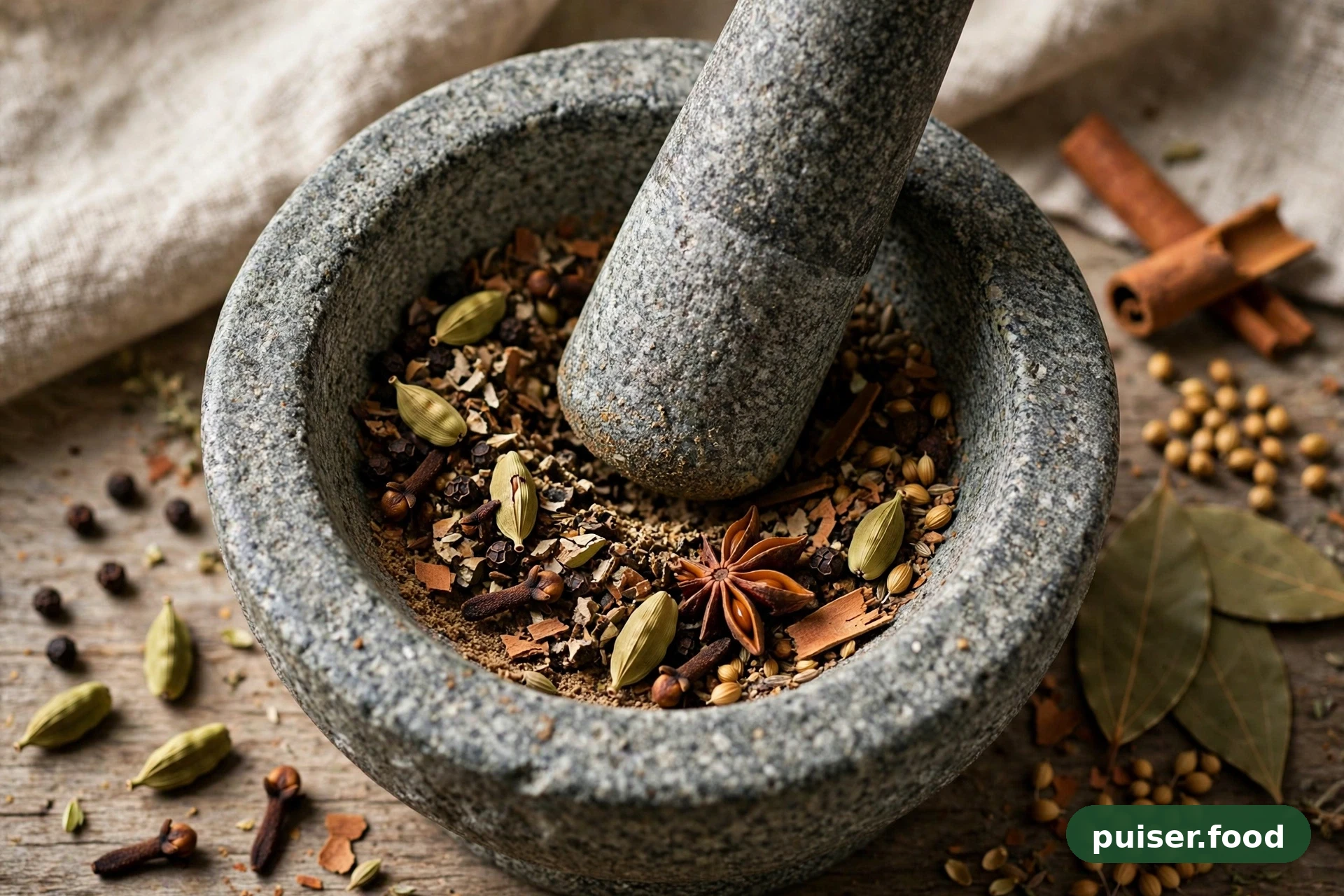
Buying whole is also a money decision. Whole spices cost less per use than small packets of ground spice, because you grind only what you need and the rest keeps. A small spice grinder or a stone mortar does the job in seconds, and freshly ground garam masala from whole spices tastes noticeably better than a packet that has sat open for a year. If you cook Indian food even twice a week, whole spices pay for themselves quickly.
The four enemies of spice flavour
Every storage rule comes down to four things: heat, light, air and moisture. Keep those four away from your spices and they will last. Let any one of them in, and flavour fades fast.
Heat
Heat speeds up the loss of volatile oils. A cupboard above the stove can reach 40 degrees or more while you cook, and spices kept there age months in weeks. Keep jars at least a metre from the cooker, oven, microwave and kettle.
Light
Sunlight bleaches colour and breaks down flavour compounds. Turmeric loses its deep gold, red chilli fades to dull orange, and green cardamom turns pale. A closed cupboard beats a sunny open rack every time, even if the rack looks better in photos.
Air
Oxygen slowly oxidises the oils in spices. A jar that is opened often, left half open, or sealed with a loose lid lets flavour drift away. Tight lids and small jars matter more than fancy containers.
Moisture
Moisture is the only one of the four that is also a safety problem. A damp spice cakes, clumps and can grow mould, and mouldy spices should be thrown away. Never sprinkle spice directly from the jar over a steaming pot, because the steam goes straight into the jar.
How to store whole spices, step by step
The simplest answer to how to store whole spices well is a small airtight glass jar in a dark cupboard, labelled with the date you bought it. Start by moving spices out of the plastic packets they came in, because thin packets let air in and tear easily. Fill jars only three quarters full so you can shake them, and wipe the rim before closing so the seal sits flat.
Label every jar with the spice name and the month you bought it. Whole spices look alike once they are in jars, and a date label stops you guessing a year later. Keep the jars you use most at the front of the cupboard and the rare ones at the back. Once a year, open each jar, smell it, and throw out anything that smells of nothing. That yearly check takes ten minutes and keeps the whole collection honest.
Choosing the right container
Glass is the first choice when you are learning how to store whole spices at home. Glass does not absorb smells, it seals well with a screw lid, and you can see the colour of the spice without opening the jar. Amber or dark glass is best because it blocks light, but clear glass inside a dark cupboard works just as well.
Metal tins with tight lids are a good second choice, especially for strong spices like cloves or star anise, because they block light completely. Ceramic jars with rubber-sealed lids look good and work well too. Plastic is the weakest option. It absorbs the smell of strong spices over time, so a jar that once held cloves will pass that smell to the next spice, and thin plastic lets air through slowly. Cardboard boxes, paper bags and thin zip-lock bags are not storage at all. Use them only to carry spices home.
| Container | Seal | Smell transfer | Light protection | Best for |
|---|---|---|---|---|
| Glass jar, screw lid | Excellent | None | Good if amber, fair if clear | Everyday whole spices |
| Metal tin, tight lid | Very good | None | Excellent | Cloves, star anise, strong spices |
| Ceramic jar, rubber seal | Very good | None | Excellent | Spices kept on the counter |
| Plastic container | Varies | Absorbs smells | Poor | Short-term use only |
| Paper bag or thin packet | Poor | High | Poor | Carrying home, not storage |
Where to keep your spices
The best spot in most Indian kitchens is a dark interior cupboard on a wall away from the stove, or a dedicated spice drawer. A drawer is often the most practical setup of all, because it is dark, cool and easy to reach, and jars lie flat where you can read the labels. A pantry shelf away from the cooker works well too, as long as it does not get afternoon sun through a window.
The worst spot is the cabinet directly above the stove. It feels convenient, but the heat and steam that rise during cooking are exactly what degrades spices fastest. The shelf next to the sink is nearly as bad, because splashes and steam add moisture. Open racks in sunlight look good in photos and fade spices in weeks. The ideal temperature is roughly 10 to 21 degrees, which is a normal cool cupboard in most Indian homes outside the hottest months.
| Location | Rating | Why |
|---|---|---|
| Dark cupboard away from stove | Best | Cool, dark, dry, easy to reach |
| Dedicated spice drawer | Best | Dark and cool, labels easy to read |
| Pantry shelf, no sun | Good | Cool and dark if away from heat |
| Open rack in sunlight | Poor | Light bleaches colour and flavour |
| Cabinet above the stove | Worst | Heat and steam age spices fast |
| Next to the sink | Worst | Splashes and steam add moisture |
| Fridge | Poor | Humidity causes clumping |
| Freezer, airtight | Good for long term | Best for spices used rarely |

How long each whole spice lasts
The table below shows how long each spice keeps when you know how to store whole spices the right way. These are peak-flavour windows from Texas A and M AgriLife Extension, one of the most consistent university sources for home storage guidance. Whole spices last three to four years, ground spices two to four years, and dried leafy herbs one to three years. The dates are about flavour, not safety. The USDA notes that spices used past their printed dates are typically safe unless moisture or mould has got in.
| Spice | Whole shelf life | Ground shelf life | Freshness test |
|---|---|---|---|
| Black peppercorns | 3 to 4 years | 6 months | Grind a few, strong bite |
| Cumin seeds | 3 to 4 years | 6 months | Toast seeds, earthy aroma |
| Coriander seeds | 3 to 4 years | 6 months | Crush, citrusy warm smell |
| Cinnamon sticks | 3 to 4 years | 6 to 12 months | Snap a stick, strong warm scent |
| Green cardamom | 2 to 3 years | 2 to 3 months | Crush a pod, strong floral scent |
| Cloves | 3 to 4 years | 6 months | Squeeze, oil comes out |
| Whole nutmeg | 3 to 4 years | 6 months | Grate, strong warm oil smell |
| Mustard seeds | 3 to 4 years | 6 months | Heat in oil, seeds pop |
| Star anise | 2 to 3 years | 6 months | Warm in hand, sweet liquorice smell |
| Bay leaves | 1 to 2 years | 6 months | Crush, strong herbal smell |
Whole vs ground: the freshness gap
Whole spices win on every measure except convenience. They last years longer, they taste stronger when freshly ground, and they cost less per use. Ground spices win only on speed, because you can tip them straight into a pot. The practical middle path is to buy whole for the spices you use less than once a month, and to grind small batches every week or two for the ones you use daily.
A small electric grinder or a mortar and pestle turns whole peppercorns, cumin or coriander into ground spice in under a minute. Grind only what you need for the week, keep the ground portion in a small jar, and leave the rest whole. That one habit gives you the flavour of fresh grinding without adding work to every meal.
| Factor | Whole spices | Ground spices |
|---|---|---|
| Peak flavour life | 2 to 4 years | 6 to 12 months |
| Flavour when used | Strong, freshly released oils | Fades steadily after opening |
| Cost per use | Lower, less waste | Higher, more thrown away |
| Convenience | Needs grinding | Ready to use |
| Best for | Tadka, garam masala, slow cooking | Quick everyday cooking |

Storing Indian whole spices
An Indian kitchen uses more whole spices than most, so a little system helps. Keep a garam masala set together: green cardamom, cinnamon, cloves, black peppercorns, bay leaves, cumin and coriander. These are the spices you reach for most, so they deserve the front of the cupboard and the smallest jars, because small jars mean less air sitting above the spice.
Tadka spices like mustard seeds, cumin seeds and dried red chillies go stale fastest when kept near heat, which is exactly where people keep them, next to the stove for tadka. Move them to the same dark cupboard and bring out only what you need. Saffron deserves special care. Keep it in a tiny airtight glass jar, away from light, and use it within a year for the best colour. Turmeric is usually bought ground, so keep the packet sealed tight and away from light, or read our guide to organic turmeric vs regular turmeric before your next purchase.
| Spice | Container | Spot | Watch out for |
|---|---|---|---|
| Green cardamom | Small glass jar | Dark cupboard | Loses floral scent first |
| Cinnamon sticks | Glass jar | Dark cupboard | Absorbs nearby smells |
| Cumin seeds | Glass jar | Dark cupboard | Stale if kept near stove |
| Mustard seeds | Glass jar | Dark cupboard | Won’t pop if old or damp |
| Dried red chillies | Glass jar | Dark cupboard | Colour fades in light |
| Saffron | Tiny airtight glass jar | Dark cupboard | Light kills colour fast |
Should you freeze or refrigerate spices?
Freezing is a useful extra once you know how to store whole spices at room temperature. Whole spices you use rarely, or a large pack you bought in bulk, keep well in the freezer in an airtight container for a year or more. Use small portions in separate bags or jars so you only open what you need, and let the jar reach room temperature before opening it, so condensation does not form inside.
The fridge is a different story. Most spices do not need refrigeration, and the humidity inside a fridge can cause clumping and moisture damage. The exception is a spice you keep in a hot, humid kitchen with no cool cupboard at all. In that case, an airtight jar in the fridge beats a warm shelf, but let the jar warm up before you open it. For most homes, a dark cupboard is better than either.
How to tell if a spice is past its best
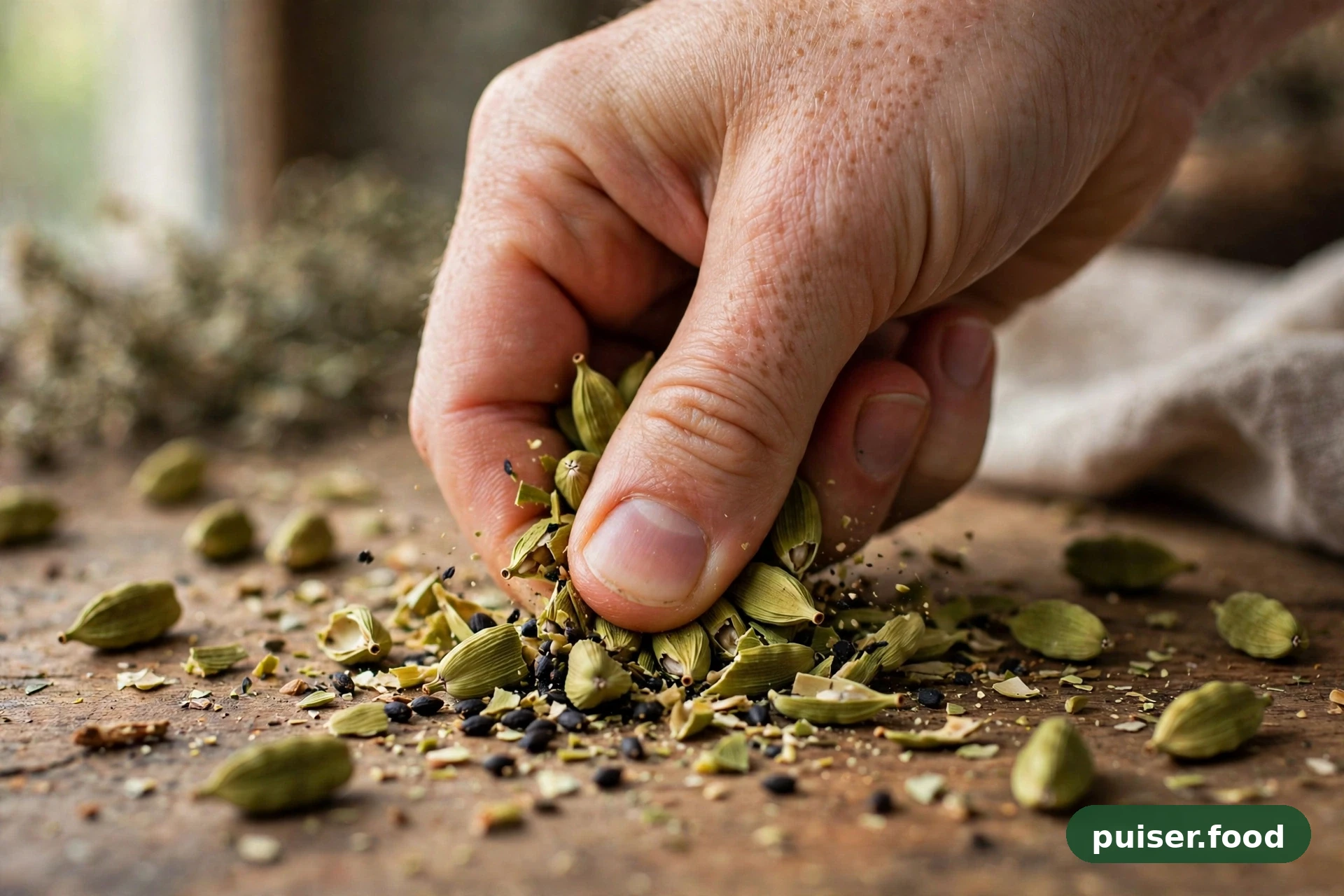
Your nose is the best test. Crush a little of the spice between your fingers or warm it in a dry pan for a few seconds. A fresh spice gives a strong smell immediately. An old spice smells faint, dusty or like nothing at all. Colour is the second test. Bright green cardamom that has turned pale, red chilli that has gone brick brown, or turmeric that looks washed out have all lost flavour.
Texture tells you about moisture. Whole spices should feel dry and hard. If they feel soft, sticky or clumped, moisture has got in and they should go. Any sign of mould, webbing or an off sour smell means the jar goes in the bin, no matter how expensive the spice was. Taste is the last check. Toast a few cumin seeds or grind a little pepper. If the flavour is flat, the spice is done, even if the date on the packet says otherwise.
Mistakes that kill spice freshness
The most common mistake in how to store whole spices is keeping the jars above the stove, where heat and steam age them in weeks. The second is sprinkling spice straight from the jar over a steaming pot, which lets steam into the jar every time you cook. The third is buying large packs of a spice you use twice a year, then wondering why it tastes of nothing. Buy small amounts of rare spices and larger amounts only of the ones you use weekly.
Other mistakes are easy to fix. Leaving jars open on the counter while you cook lets in air and light. Storing spices in the packets they came in lets air through the folds. Mixing old and new spice in the same jar means the old portion drags the fresh one down. And forgetting to label jars means you keep spices for years because you cannot remember when you bought them. A date label and a yearly smell test prevent all of it.
Expert tips for fresher spices
Buy whole spices from a shop with fast turnover, because a spice that sat in a warehouse for a year is already old when you buy it. Grind in small batches, enough for a week or two, and keep the ground portion in a separate small jar. Toast whole spices in a dry pan for thirty seconds before grinding, which wakes up the oils and tells you at once whether the spice is still fresh.
Keep a small working jar and a larger storage jar for the spices you use most. The working jar lives in the cupboard you reach for daily, and the storage jar stays sealed in a cooler spot. Write the purchase date on every jar with a marker or a sticker. When you open a new pack, finish the old jar first instead of topping it up, so nothing sits at the bottom for years. And if you make your own garam masala, grind it fresh each month rather than in one big batch. A little effort here is the difference between a flat curry and one that smells like it should. That rotation is the last step in how to store whole spices so nothing sits at the bottom of a jar for years.
FAQs
How long do whole spices last?
Most whole spices keep their peak flavour for two to four years when stored in airtight jars in a cool dark cupboard. Cardamom and star anise are shorter, around two to three years, while cumin, cinnamon, pepper and cloves reach three to four years. These are flavour windows, not safety dates.
Do whole spices go bad or just lose flavour?
Whole spices rarely become unsafe. They lose flavour as their volatile oils evaporate, so old spices taste flat rather than harmful. The exception is moisture or mould. If a spice smells musty, looks mouldy or has clumped from damp, throw it away rather than using it.
Should I keep spices in the fridge?
Usually not. The fridge adds humidity, which can make spices clump and lose flavour. A cool dark cupboard is better for most homes. The fridge only helps if your kitchen has no cool cupboard at all, and then only in a truly airtight jar that you let warm up before opening.
Can I freeze whole spices?
Yes, freezing works well for whole spices you use rarely or bought in bulk. Use airtight containers or small sealed bags, and take out only what you need. Let the jar reach room temperature before opening it, so condensation does not form inside and dampen the spice.
Is it better to buy whole or ground spices?
Whole is better for anything you use less than once a month, because whole spices keep their flavour for years while ground spices fade in months. Ground is fine for spices you use daily and finish quickly. Buy whole for garam masala spices and grind small batches as you need them.
How do I know if a spice is too old to use?
Crush a little between your fingers or warm it in a dry pan. A fresh spice smells strong at once. An old one smells faint, dusty or like nothing. Faded colour is another sign. If it smells of nothing and tastes flat, it is past its best, whatever the packet date says.
How to store whole spices I buy in bulk?
Divide a bulk pack into small airtight glass jars and keep one working jar in the cupboard. Store the rest in a cool dark place, or in the freezer in sealed bags. Label every jar with the spice name and the purchase date, and use the oldest jar first so nothing sits for years.
Do I need to wash whole spices before storing?
No, do not wash whole spices before storing them. Water adds moisture, which is the one thing that can make stored spices unsafe. If a spice looks dusty, wipe it with a dry cloth or pick out any visible dirt. Wash spices only just before cooking, and dry them well first.
Why do my spices lose smell so fast?
The usual causes are heat, light and air. Jars kept above the stove, on a sunny rack or with loose lids lose their volatile oils quickly. Ground spices fade faster than whole ones. Move jars to a dark cupboard away from heat, use tight lids, and buy whole spices and grind them fresh.
Can I store spices in plastic containers?
You can for a short time, but plastic is a poor choice for long storage. It absorbs the smell of strong spices and lets air through slowly, so flavours mix and fade. Glass jars with screw lids or metal tins with tight lids keep spices fresh far longer and cost little more.
Conclusion
Once you know how to store whole spices, a small jar can carry a kitchen for years. Keep them whole, keep them in airtight glass, keep them cool and dark, and check them once a year with your nose. That is the whole method. Your garam masala will taste fresher, your tadka will smell stronger, and you will throw away far fewer spices. If you cook with turmeric often, our guide to organic turmeric vs regular turmeric and our masala chai recipe are good next reads, and our guide to eating organic on a budget shows how to buy good spices without overspending.


