

Introduction
Sattu benefits start with a simple fact: this is the cheapest complete protein in an Indian kitchen. Sattu, roasted Bengal gram flour, has fed Bihar, Jharkhand and eastern Uttar Pradesh for more than 2,000 years, and it needs no cooking at all. Stir it into water with salt and lemon and you have a drink with 20 g of protein per 100 g, a very low glycaemic index and a cooling effect that suits Indian summers. This guide covers the sattu benefits that matter, the nutrition, how to make the drink, litti, paratha and cheela, and the mistakes that put people off.
In this article
- The short answer
- What sattu actually is
- Sattu benefits in numbers
- 10 sattu benefits worth knowing
- Blood sugar: what the numbers do and do not prove
- Weight and fullness
- How to use sattu every day
- Five everyday sattu recipes
- Why sattu is a summer food
- Who should be careful
- Buying and storing sattu
- 5 expert tips
- Common mistakes to avoid
- Frequently asked questions
- Conclusion
The Short Answer
Sattu is worth adding to your kitchen if you want cheap protein without cooking. Per 100 g it carries 20 to 22 g of protein, 7.6 to 9 g of fibre and 5 to 9 mg of iron, with a glycaemic index of about 30 to 40, one of the lowest of any Indian food. It is naturally gluten free, it mixes into a drink in one minute, and it works in litti, paratha, cheela and porridge. The honest limit is the taste: sattu is earthy and grainy, and a badly made drink puts people off for years. Made well, with salt, lemon and roasted cumin, it is refreshing and filling, and that is where sattu benefits show up first, in the everyday glass rather than in a health claim.
What Sattu Actually Is
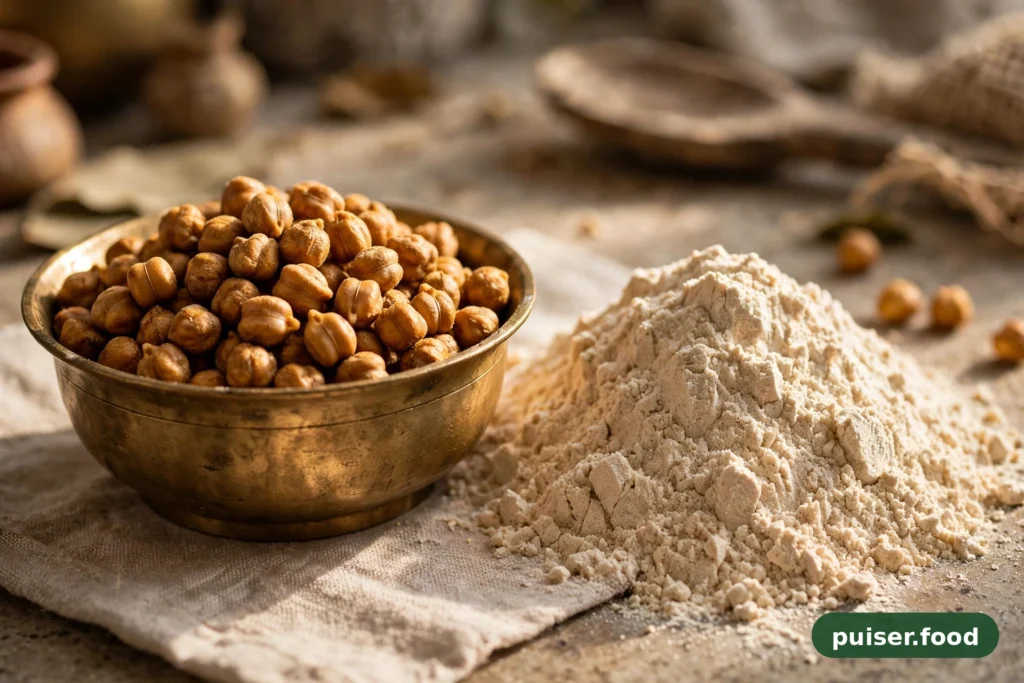
Sattu is roasted gram flour, most commonly made from black chickpeas, Bengal gram, though barley, wheat and mixed pulse versions also exist. The dry roasting is what makes it different from besan, which is raw gram flour. Roasting reduces antinutrients, improves digestibility, concentrates nutrients and extends shelf life without a single preservative. The result is a pale brown flour with a nutty, earthy smell and a texture that thickens quickly in water.
Sattu has been eaten in Bihar and eastern Uttar Pradesh for more than 2,000 years, and it is a staple of Bihari, Jharkhandi and eastern UP kitchens. In Bihar it fills litti, the roasted whole wheat ball served with chokha, and in Uttar Pradesh it fills parathas. In Bengal, the roasted gram version has been part of both everyday cooking and traditional medicine for centuries. In Rajasthan, a barley based sattu has kept farmers going through desert heat for generations. It is often called the poor man’s protein, because it is one of the cheapest sources of protein in India, and it needs no fridge, no cooking and no equipment beyond a glass and a spoon.
Sattu is naturally gluten free, so it suits people who avoid gluten. One caution belongs here: sattu is often ground in shared facilities, so if you cook for someone with coeliac disease, buy a pack that says gluten free on the label. For everyone else, the flour is simply a roasted pulse, closer to a ready to eat food than to a raw ingredient. It is a food that earns its place for convenience and price first, and the sattu benefits follow from the protein and fibre in every glass.
Sattu Benefits in Numbers
The table below compares sattu with whole wheat atta and milled white rice, per 100 g, using the Indian Food Composition Tables 2017 from the National Institute of Nutrition and NIN figures for roasted Bengal gram. The gap that matters most is protein. Sattu carries 20 to 22 g of protein per 100 g, against 11.8 g in whole wheat atta and 6.8 g in white rice. That is nearly double the protein of wheat flour. Iron is the second gap: 5 to 9 mg against 0.7 mg in white rice. Fibre is 7.6 to 9 g, and the glycaemic index of about 30 to 40 is one of the lowest of any Indian staple.
| Nutrient (per 100 g) | Sattu (roasted gram) | Whole wheat atta | White rice (milled) |
|---|---|---|---|
| Energy | About 380 kcal | 340 kcal | 345 kcal |
| Protein | 20 to 22 g | 11.8 g | 6.8 g |
| Carbohydrate | 60 to 65 g | 72 g | 78 g |
| Fibre | 7.6 to 9 g | 11.2 g | 0.2 g |
| Fat | About 5 g | 1.9 g | 0.6 g |
| Iron | 5 to 9 mg | 5.1 mg | 0.7 mg |
| Calcium | 57 to 150 mg* | 31 mg | 7.5 mg |
| Magnesium | 135 mg | 128 mg | 21 mg |
| Phosphorus | About 330 mg | 298 mg | 103 mg |
| Folate | 172 mcg | 36 mcg | 4 mcg |
Figures per the Indian Food Composition Tables 2017, ICMR National Institute of Nutrition, Hyderabad, and NIN Nutritive Value of Indian Foods. *Calcium figures vary by gram variety and roast; IFCT 2017 gives the lower figure and some brands report the higher one.
10 Sattu Benefits Worth Knowing
The ten sattu benefits below are the ones with real nutrition behind them. None of them needs a miracle claim. They follow from the protein, fibre, iron and low GI in the table above, and from how the flour is actually used in Indian homes.
1. Protein, 20 to 22 g per 100 g
Sattu carries 20 to 22 g of plant protein per 100 g, nearly double whole wheat atta and more than three times white rice. A typical serving of two tablespoons, about 30 g, gives about 6 g of protein for only 115 calories, which is why sattu is called the poor man’s protein. It is one of the cheapest protein sources in India, and it needs no cooking, no fridge and no soaking. For vegetarians, for students and for anyone who wants protein without meat or supplements, a glass of sattu is the simplest option in the kitchen.
2. Very low glycaemic index
Sattu has a glycaemic index of about 30 to 40, one of the lowest of any Indian food, against about 72 for white rice and about 70 for whole wheat atta. That means glucose enters the blood very slowly after a sattu drink, with no sharp spike and no crash afterwards. The fibre slows digestion, and the protein adds a further steadying effect. That is why sattu is often recommended for people watching blood sugar. It does not treat diabetes, and the blood sugar section below covers the limits honestly.
3. Weight and fullness
With 20 to 22 g of protein and 7.6 to 9 g of fibre per 100 g, sattu keeps you full for hours on a small serving. Protein is the most satiating nutrient, and fibre adds bulk that slows stomach emptying, so a glass of sattu at 11 in the morning carries you to lunch without snacking. That is the mechanism behind the sattu benefits for weight, and it is the only honest weight claim for any food. Sattu carries about 380 kcal per 100 g, so a large serving still adds calories, and weight loss comes from the whole diet.
4. Gut health and resistant starch
Sattu contains resistant starch, the kind of carbohydrate that passes through the small intestine undigested and arrives in the colon, where it feeds beneficial bacteria. That makes sattu genuinely prebiotic, not just a high fibre food. The bacteria that feed on resistant starch produce short chain fatty acids, which reduce gut inflammation, lower colonic pH and strengthen the gut lining. This is why traditional medicine describes sattu as cooling to the gut: the mechanism checks out, and it is fibre science with a long history behind it.
5. Iron for energy
Sattu carries 5 to 9 mg of iron per 100 g, a meaningful share of the daily need, and that is one reason it is a traditional food for nursing mothers and for adolescents in Bihar and eastern UP. Iron carries oxygen in the blood, and low iron shows up as tiredness, weakness and pale skin. Plant iron absorbs less well than iron from meat, so add lemon juice to the drink, which improves absorption. Our amla benefits guide explains why vitamin C helps iron absorption. Sattu will not treat anaemia on its own, but as a daily drink it adds a useful share of iron.
6. Cooling and hydration
Sattu is a natural coolant, and the savoury drink with salt, lemon and water is one of the best summer drinks in India. It replaces fluids and electrolytes lost in the heat, and the protein and fibre slow the emptying of the stomach, so the hydration lasts longer than plain water. In Bihar and Jharkhand, a glass of sattu in the afternoon is the daily defence against heat and dehydration, and it costs a few rupees. Add a pinch of black salt and roasted cumin, and the drink also settles the stomach.
7. Heart health
Sattu supports heart health through fibre, potassium and a clean fat profile. It has no cholesterol at all, and its fat is mostly polyunsaturated and monounsaturated, the kinds linked with lower LDL cholesterol and a better LDL to HDL ratio. The soluble fibre helps the body use cholesterol to make bile, which can lower LDL over time, and magnesium and potassium help regulate blood pressure. A low cholesterol food that also carries protein and fibre is a useful part of a heart friendly diet.
8. Skin and hair
Sattu provides zinc at about 3.8 mg per 100 g, folate at 172 mcg and protein at 20 to 22 g, the three nutrients that support skin repair and hair growth. Zinc is needed for skin healing and for hair follicle function, folate supports cell renewal, and protein provides the building blocks for hair itself. These are supportive effects, not treatments, and they work as part of a varied diet. A daily glass of sattu will not fix hair fall on its own, but it covers nutrients that many Indian diets fall short of.
9. Cheap protein, no cooking needed
A glass of sattu costs about 20 rupees, against far more for a protein shake or a supplement, and it needs no cooking, no blender and no fridge. That is one of the most practical sattu benefits: a protein food that works in a hostel room, on a train, in a field or in an office, with only a glass and a spoon. The flour keeps for months in a dry jar, so it is always ready. For students, travellers and workers who eat out most days, sattu is the easiest protein habit to keep.
10. Bone support
Sattu provides calcium, magnesium at 135 mg and phosphorus at about 330 mg per 100 g, minerals that work together for bone health. Magnesium is the standout, since it helps the body use calcium properly, and phosphorus is the mineral that builds bone mineral itself. Sattu will not replace dairy or leafy greens for calcium, but as a daily drink it adds a useful share of the minerals bones need, especially for children and older adults who drink it every day.
Blood Sugar: What the Numbers Do and Do Not Prove
Sattu has a glycaemic index of about 30 to 40, which puts it in the very low GI category, lower than whole wheat atta at about 70, white rice at about 72 and oats at about 55. The gap comes from fibre and protein together: fibre slows digestion, protein slows gastric emptying, and the roasted gram starch digests slowly. A glass of sattu drink releases glucose gradually, with no sharp spike and no crash, which is why it is often recommended for people watching blood sugar.
The honest limit is that GI figures vary by study and by the gram used, so 30 to 40 is a range rather than a promise. A sweet sattu drink made with a lot of jaggery still carries plenty of sugar, and the meal around the drink matters as much as the drink itself. Use the savoury version with salt and lemon for blood sugar, keep the serving to two or three tablespoons, and check your own response if you manage diabetes. That steady response is one of the most practical sattu benefits, and the flour is a sensible choice for blood sugar, not a treatment for it.
Weight and Fullness
Sattu can support weight management because its protein and fibre keep you full for longer, so a smaller portion feels like enough. A glass of sattu at 11 in the morning, about 115 calories for a 30 g serving, carries you to lunch without snacking, where a biscuit or a sweet tea would leave you hungry again in an hour. That is the mechanism behind the sattu benefits for weight, and it is the only honest weight claim for any food.
What sattu does not do is burn fat or cause weight loss on its own. It carries about 380 kcal per 100 g, and a large serving with jaggery and milk still adds calories. Portion size and the rest of the diet matter more than the flour. If you drink sattu to manage weight, keep the serving to two or three tablespoons in water, not milk, and skip the jaggery.
How to Use Sattu Every Day
Using sattu is simple, and the drink is the place to start. For the savoury drink, mix two to three tablespoons of sattu, about 30 g, into a glass of cool water, add a pinch of salt, a pinch of black salt, half a lemon squeezed in, and half a teaspoon of roasted cumin powder. Stir well and drink it fresh. For the sweet version, use milk or water with a teaspoon of jaggery and a pinch of cardamom. Start with the savoury drink, because it is the traditional one, and it is better for blood sugar than the sweet version.
The two rules are water first and stir well. Sattu thickens fast, so add the flour to the water a spoon at a time and stir as you go, or it clumps. Use cool water, not hot, because hot water makes it lumpy. A glass in the morning or at 11 am is the classic time, and a second glass in a hot afternoon works as a coolant. Our organic chana dal is the same Bengal gram that sattu is made from, roasted and ground at home it becomes sattu.
| Use | Amount of sattu | How to make it | When to have it |
|---|---|---|---|
| Savoury drink | 2 to 3 tbsp, about 30 g | Water, salt, lemon, roasted cumin | Morning or hot afternoon |
| Sweet drink | 2 to 3 tbsp, about 30 g | Milk or water, jaggery, cardamom | Breakfast or after a workout |
| Litti stuffing | 1 cup for 4 littis | Mustard oil, ajwain, kalonji, lemon, pickle masala | Lunch or dinner |
| Paratha stuffing | Half cup for 2 parathas | Onion, green chilli, coriander, spices | Breakfast or lunch |
| Cheela | Half cup | Water, onion, tomato, green chilli, thin batter | Breakfast or evening snack |

Five Everyday Sattu Recipes
The five uses below cover the whole range of sattu, from a one minute drink to a full meal. Start with the drink, then try the cheela, and save litti for a weekend, because litti takes time and a hot oven or a charcoal fire.
| Recipe | Time | Meal | Why it works |
|---|---|---|---|
| Savoury sattu drink | 2 minutes | Morning or afternoon | No cooking, cooling, filling |
| Sweet sattu drink | 2 minutes | Breakfast | Quick protein, gentle energy |
| Litti chokha | 45 minutes | Lunch or dinner | Classic Bihari meal, complete protein with wheat |
| Sattu paratha | 20 minutes | Breakfast or lunch | Filling, packs well, good with curd |
| Sattu cheela | 10 minutes | Breakfast or snack | Thin, crisp, high protein pancake |
1. Savoury sattu drink
Mix two to three tablespoons of sattu into a glass of cool water, a spoon at a time, stirring as you go. Add a pinch of salt, a pinch of black salt, half a lemon and half a teaspoon of roasted cumin powder. Add chopped onion and green chilli if you like it the Bihari way. Drink it fresh, because it thickens as it sits.
2. Sweet sattu drink
Mix two to three tablespoons of sattu into a glass of milk or cool water, add a teaspoon of jaggery and a pinch of cardamom, and stir well. This is the breakfast version, and it suits children and anyone who wants a quick protein drink after a workout. Keep the jaggery to a teaspoon, because more only adds sugar.
3. Litti chokha
Mix sattu with mustard oil, ajwain, kalonji, lemon juice, chopped pickle and spices for the stuffing. Fill whole wheat dough balls, seal them, and roast on charcoal or in a hot oven until crisp and brown. Serve with chokha, roasted brinjal and tomato mashed with onion, garlic and mustard oil. The wheat and gram together give a complete protein, which is why litti is a full meal.
4. Sattu paratha
Mix sattu with chopped onion, green chilli, coriander, ajwain and spices for the stuffing. Fill whole wheat dough, roll gently, and cook on a tawa with a little ghee. Serve hot with curd and pickle. The paratha packs well for lunch, and it stays filling for hours.
5. Sattu cheela
Mix half a cup of sattu with water into a thin batter, add chopped onion, tomato, green chilli and coriander, and rest for five minutes. Pour a ladle on a hot greased tawa, spread thin, and cook until crisp at the edges. Serve with green chutney. It is the fastest cooked sattu dish, and it works as breakfast or an evening snack.

Why Sattu Is a Summer Food
Sattu is a summer food in the plainest sense: it is the drink India reaches for when the heat rises. The savoury drink replaces fluids and electrolytes lost in sweat, and the protein and fibre slow the emptying of the stomach, so the hydration lasts longer than plain water. Ayurveda calls sattu cooling, and the traditional use agrees: in Bihar and Jharkhand, a glass of sattu in the afternoon is the daily defence against heat, dehydration and sunstroke.
Summer is also when sattu is most useful as a meal. When the heat kills appetite, a glass of sattu gives protein, fibre and fluids without cooking and without a heavy meal. Keep a jar in the kitchen through the hot months, and make the drink fresh each time, because it thickens as it sits. A summer routine of one glass a day, savoury with salt and lemon, is enough to get the sattu benefits without turning it into a project.
Who Should Be Careful
Sattu is safe for most people in normal amounts, and the cautions are narrow. The main one is gas and bloating. Sattu is high in fibre and protein, and a large serving on an empty stomach can cause gas, especially for people new to it. Start with one glass a day, two tablespoons, and increase slowly. The second caution is chickpea allergy: anyone allergic to chickpeas or other legumes should avoid sattu.
The third caution is for people with kidney disease. Sattu is high in potassium and phosphorus, and people with kidney conditions are often asked to limit both, so they should ask their doctor before making sattu a daily habit. The fourth caution is protein balance: sattu protein is not complete on its own, because gram is low in the amino acid methionine. Pair it with grains, as litti and paratha already do, and the combination covers the full amino acid range. None of these is a reason to avoid sattu, only a reason to drink it in normal portions.
Buying and Storing Sattu
Buy sattu from a brand that says roasted Bengal gram on the label, and check that the ingredient list has one item: roasted gram. The flour should smell nutty and fresh, not sour or stale, and it should be pale brown, not grey. Avoid packs with added sugar or flavouring, because plain sattu is the versatile one. You can also make it at home: dry roast kala chana in a heavy kadhai until it smells nutty and the skin loosens, cool it, rub off the skins, and grind it fine. Our budget guide shows how a food like sattu keeps the weekly shop cheap without losing nutrition.
Sattu keeps well because it is dry and roasted. Store it in an airtight jar in a cool dark cupboard, and it lasts three to four months. Keep the jar dry, because moisture is the only thing that spoils it. Buy in small packs if you drink it rarely, and in larger packs if the family drinks it daily.

5 Expert Tips
Add sattu to water a spoon at a time and stir as you go, because it clumps if you dump it in all at once. Use cool water, not hot, because hot water makes it lumpy. Add lemon juice to the savoury drink, because vitamin C helps the body absorb the iron. Start with two tablespoons a day and increase slowly, because a large serving on an empty stomach causes gas. And pair sattu with grains, as litti and paratha already do, because the combination gives a complete protein that sattu alone does not provide.
Common Mistakes to Avoid
The biggest mistake with sattu is making the drink badly the first time. Too much flour, hot water and no salt or lemon gives a thick, lumpy, bland glass that puts people off for years. The fix is two tablespoons, cool water, salt, lemon and roasted cumin. The second mistake is drinking too much at once, which causes gas and bloating. Start small. The third is buying sweetened or flavoured sattu, which adds sugar and takes away the versatility of plain flour.
Other mistakes are easy to fix. Letting the drink sit makes it thicken, so drink it fresh. Storing the jar damp spoils the flour, so keep it dry and sealed. And expecting sattu to build muscle on its own is a misunderstanding. It provides protein, but muscle comes from protein plus exercise, not from a drink alone.
Frequently Asked Questions
What are the main sattu benefits?
The main sattu benefits are protein, blood sugar control and cooling. Sattu carries 20 to 22 g of protein per 100 g, with a very low glycaemic index of about 30 to 40, and 7.6 to 9 g of fibre. It is naturally gluten free, it mixes into a drink in one minute with no cooking, and it is one of the cheapest protein sources in India.
Is sattu good for diabetes?
Sattu is a reasonable choice for people watching blood sugar, because its glycaemic index of about 30 to 40 is one of the lowest of any Indian food, and its fibre and protein slow digestion. Use the savoury version with salt and lemon, not the sweet version with jaggery. It does not treat diabetes, and anyone managing diabetes should fit it into their carbohydrate plan.
Can I drink sattu every day?
Yes, sattu can be drunk daily, and many families in Bihar and eastern UP have done so for generations. One glass a day, two to three tablespoons, is a sensible daily amount. Rotate it with other protein foods rather than relying on it alone, because sattu protein is not complete without grains. Start with one glass a day and increase slowly.
Is sattu good for weight loss?
Sattu can help indirectly, because the protein and fibre keep you full for longer, so a smaller portion feels like enough. A 30 g serving has only about 115 calories with 6 g of protein. It carries about 380 kcal per 100 g, so a large serving with jaggery still adds calories. Weight loss still comes from the whole diet and activity, not from one drink.
How do I make sattu drink without lumps?
Add sattu to cool water a spoon at a time and stir as you go, instead of dumping it in all at once. Use cool water, not hot, because hot water makes it lumpy. Stir well, add salt, lemon and roasted cumin, and drink it fresh, because it thickens as it sits.
Is sattu gluten free?
Yes, sattu is naturally gluten free. If you cook for someone with coeliac disease, buy a pack labelled gluten free, because sattu is often ground in shared facilities where wheat is also processed. For most people avoiding gluten, ordinary sattu is fine.
What is the difference between sattu and besan?
Sattu is roasted gram flour and besan is raw gram flour, and the roasting is the whole difference. Roasting reduces antinutrients, improves digestibility, gives a nutty flavour and extends shelf life, so sattu can be eaten without cooking. Besan must be cooked. Sattu is for drinks, litti and cheela, while besan is for pakora, kadhi and sweets.
Is sattu good for summer?
Yes, sattu is one of the best summer drinks in India. The savoury drink with salt, lemon and water replaces fluids and electrolytes lost in the heat, and the protein and fibre slow the emptying of the stomach, so the hydration lasts longer than plain water. A glass in a hot afternoon is the traditional defence against heat and dehydration.
Can children drink sattu?
Yes, children can drink sattu from the time they eat family food. The sweet version with milk and a little jaggery suits children well, and the protein and iron support growth. Start with a small glass, two tablespoons, and keep the rest of the diet balanced with dal, vegetables and fruit.
How do I store sattu?
Keep sattu in an airtight jar in a cool, dark cupboard, and it lasts three to four months. Keep the jar dry, because moisture is the only thing that spoils it. Buy in small packs if you drink it rarely, and check that the flour smells nutty and fresh, not sour or stale.
Conclusion
Sattu benefits come down to a better glass of a familiar drink: 20 g of protein per 100 g, a very low glycaemic index, and a cooling summer food that costs a few rupees and needs no cooking. Start with the savoury drink, two tablespoons in cool water with salt, lemon and roasted cumin, and try litti or cheela on a weekend. The habit is small, the drink stays familiar, and the nutrition improves without a lecture.


