

Introduction
Brown rice vs white rice which is better is the question almost every Indian family asks when it tries to eat healthier, and the honest answer is smaller than the wellness posts claim. Brown rice wins on fibre and minerals. White rice wins on digestion, texture and some dishes. The gap between them is real but modest, and portion size matters more than rice colour. This guide compares them properly, with the numbers stated on the same basis, so you can decide for your own kitchen.
In this article
- The same grain, different processing
- Brown rice vs white rice nutrition
- Glycaemic index and blood sugar
- Where brown rice wins
- Where white rice wins
- How to cook brown rice right
- Arsenic: the one brown-rice worry
- The verdict, person by person
- 5 expert tips
- Common mistakes to avoid
- Frequently asked questions
- Conclusion
The Same Grain, Different Processing
Brown rice and white rice come from the same grain. The difference is what happens to it after harvest. Brown rice keeps its bran layer and its germ, the outer coatings that carry most of the grain’s fibre, magnesium, manganese and B vitamins. White rice is milled to remove the bran and germ, leaving only the starchy endosperm. That milling is why white rice cooks faster, digests more easily and keeps longer, and it is also why it loses most of the fibre and minerals.
That single fact explains almost everything else in this article. Brown rice is a whole grain; white rice is a refined one. The question of brown rice vs white rice which is better is really a question about whether the whole grain’s advantages matter enough, in your meals, to outweigh its slower cooking and chewier texture. For some people they do. For others, they do not, and that is a reasonable answer too.

Brown Rice vs White Rice Nutrition
The table below uses USDA FoodData Central values for long-grain rice, cooked without salt, per 100 grams. The per-cup figures matter too, because a cup of cooked brown rice weighs 202 grams while a cup of cooked white rice weighs 158 grams, because the grains absorb different amounts of water. Comparing per cup without saying so is one of the commonest tricks in rice articles, so both bases are shown here.
| Nutrient | Brown rice (per 100 g cooked) | White rice (per 100 g cooked) | Brown (1 cup, 202 g) | White (1 cup, 158 g) |
|---|---|---|---|---|
| Calories | 123 kcal | 130 kcal | 248 kcal | 205 kcal |
| Protein | 2.7 g | 2.7 g | 5.5 g | 4.3 g |
| Dietary fibre | 1.6 g | 0.4 g | 3.2 g | 0.6 g |
| Magnesium | 39 mg | 12 mg | 79 mg | 19 mg |
| Phosphorus | 103 mg | 43 mg | 208 mg | 68 mg |
| Manganese | 0.97 mg | 0.47 mg | 1.97 mg | 0.75 mg |
| Iron | 0.56 mg | 1.20 mg* | 1.13 mg | 1.90 mg* |
| Folate | 4 mcg | 58 mcg* | 8 mcg | 92 mcg* |
*Enriched white rice. White rice is usually fortified with iron and folic acid after milling, which is why it beats brown rice on those two nutrients. Unenriched white rice has only about 0.2 milligrams of iron and 3 micrograms of folate per 100 grams.
Read the table in the right direction. Per 100 grams, the two rices have almost the same calories, 123 against 130, so brown rice is not a low-calorie food. That is the first surprise in brown rice vs white rice which is better: the winner is not the lower-calorie rice, because there barely is one. The real differences are fibre (four times as much), magnesium (about three times as much), phosphorus and manganese. Brown rice also wins on B vitamins that are not added back by fortification, like thiamine. White rice wins on iron and folate, but only because it is enriched; that is a genuine advantage of the modern food supply, and it is worth stating plainly rather than pretending white rice has nothing to offer.
Glycaemic Index and Blood Sugar
The glycaemic index (GI) is where the two rices are closest, and where most articles exaggerate. Harvard’s table lists white rice at 73 and brown rice at 68, each with a range of about plus or minus 4, so the ranges overlap. Other published tables give wider spreads, with brown rice anywhere from 50 to 68 and white rice from 64 to 73, depending on variety and cooking method. Brown basmati is gentler than ordinary brown rice, at roughly 50 to 58. The honest summary is that brown rice is a little lower, but not dramatically so, and the difference is smaller than the fibre difference.
What matters more than the GI number is the glycaemic load, the GI multiplied by the amount of carbohydrate in the portion. A small portion of white rice with dal, vegetables and curd can have a lower blood sugar impact than a large portion of brown rice eaten alone. That is why the question brown rice vs white rice which is better has no single answer: the rest of the plate and the size of the portion change the outcome more than the rice colour does. People with diabetes should discuss staple changes with their doctor or dietitian rather than deciding from a blog, and should not treat either rice as a treatment.
Where Brown Rice Wins
Brown rice wins on fibre, and fibre is the nutrient that does the most work in this comparison. Four times the fibre per 100 grams means slower digestion, steadier energy and longer fullness. It wins on magnesium, a mineral involved in muscle function, blood pressure regulation and bone health, at about three times the level of white rice. It wins on manganese, phosphorus and the B vitamins that milling removes. And it wins on the simple fact of being a whole grain: the bran and germ carry plant compounds, including gamma-oryzanol and phenolic acids, that refined rice has lost. On fibre and minerals alone, brown rice vs white rice which is better has a clear answer.
For a family trying to eat more whole grains, brown rice is the easiest step after whole wheat atta. It needs no new recipe, just a longer cook. It also pairs naturally with the rest of a healthy Indian plate: dal for protein, vegetables for vitamins, curd for calcium. Our guide on unpolished dal vs polished dal makes the same whole-grain argument for dal, and the two swaps together are worth more than either alone.
Where White Rice Wins
White rice wins on digestion. Without the bran, it is easier on the stomach, which is why it is the rice of choice when someone is ill, recovering, or has a sensitive gut. It wins on speed: 15 minutes against 40 to 50 for brown rice, which matters on a busy evening. It wins on texture for biryani and pulao, where separate, fragrant grains are the whole point. Brown rice makes a heavier, chewier biryani that most families do not prefer. It wins on keeping quality, since the oils in the bran that make brown rice go rancid are gone. And, as the table shows, enriched white rice wins on iron and folate. So on digestion, speed and texture, brown rice vs white rice which is better flips the other way.
None of this makes white rice unhealthy. It is a refined grain, and in the context of a balanced Indian meal with dal, vegetables, curd and a sensible portion, it is a perfectly reasonable staple. The problem is not white rice itself but a plate that is mostly white rice with little else on it.
How to Cook Brown Rice Right
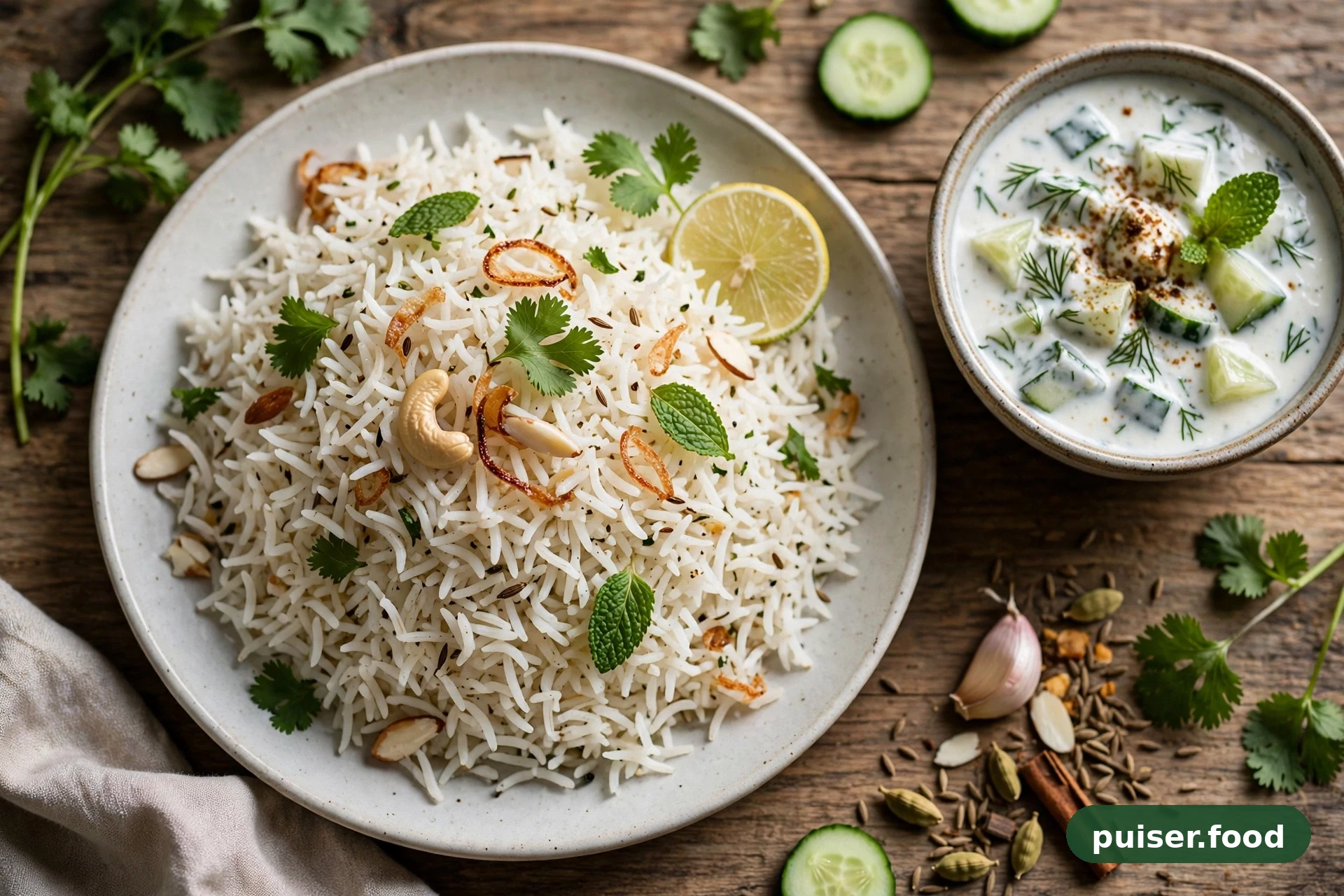
Most people who dislike brown rice have eaten it badly cooked. The bran needs time and water, and the usual white-rice method gives hard, chewy grains. Soak brown rice for 20 to 30 minutes first. Then use about 2 cups of water per cup of rice, bring to a boil, cover, turn the heat down and simmer for 40 to 50 minutes, until the water is absorbed. Rest it covered for 10 minutes, then fluff with a fork. In a pressure cooker, the same soaked rice needs 4 to 5 whistles.
| Step | Brown rice | White rice |
|---|---|---|
| Soak first | 20 to 30 min | No soak needed |
| Water per 1 cup rice | About 2 cups | About 1.5 cups |
| Simmer time | 40 to 50 min | 15 to 20 min |
| Rest after cooking | 10 min, covered | 10 min, covered |
Our organic brown rice is the grain this guide is written around. Brown basmati is the compromise worth knowing about. It cooks a little faster, tastes closer to white basmati, and has a lower glycaemic index than ordinary brown rice, at roughly 50 to 58. If your family refuses ordinary brown rice, brown basmati is the version most likely to win them over. And if you are still unsure, mix the two: half brown, half white, cooked together, for a few weeks. The family adjusts, and the fibre rises without a fight.

Arsenic: The One Brown-Rice Worry
Arsenic concentrates in the bran, so brown rice contains more of it than white rice. That is the one genuine nutritional disadvantage of brown rice, and it deserves a straight answer rather than a dismissal. The levels in Indian rice are generally low, and the risk from normal amounts is small, but there are two easy ways to reduce it further: rinse the rice well before cooking, and cook it in plenty of water, about 6 cups of water per cup of rice, then drain the excess, pasta-style. That method washes out a meaningful share of the arsenic, along with a little of the water-soluble vitamins.
Variety and variety of diet matter too. Eating brown rice every day in large amounts is different from eating it a few times a week alongside millets, wheat and other grains. Our foxtail millet benefits guide covers a grain that replaces rice entirely on some days, which is the simplest way to keep any single grain from dominating the diet.
The Verdict, Person by Person
There is no single winner, so here is the verdict by who is eating.
| Who you are | The better choice | Why |
|---|---|---|
| Generally healthy, cooking at home | Brown rice most days | More fibre, magnesium and whole-grain benefit, for the same calories |
| Managing blood sugar | Brown rice, small portions | Slightly lower GI, more fibre; but portion and the rest of the plate matter more |
| Trying to lose weight | Brown rice, measured portions | More filling per bite; but calories per 100 g are nearly the same, so measure |
| Sensitive stomach, or ill | White rice | Easier to digest, gentler, faster to cook |
| Cooking biryani or pulao | White basmati | Texture and fragrance are the point of the dish |
| Feeding young children | Either, with dal and vegetables | White rice digests more easily; brown adds fibre. Both work in a balanced meal |
| On a tight budget | Whichever you already buy | Brown rice costs more per kilo; the money is better spent on dal and vegetables |
If you take one line from this article, take this one: the gap between the two rices is smaller than the gap between a balanced plate and an unbalanced one. That question is worth asking, but the answer that changes your health is the plate: dal, vegetables, curd and a measured portion of rice, whichever rice it is.

5 Expert Tips
Soak brown rice. Twenty to thirty minutes in water before cooking, every time. It shortens the cook, improves the texture and reduces arsenic.
Rest the pot. Ten minutes covered, off the heat, after cooking. It is the difference between fluffy and wet, and it costs nothing.
Start with brown basmati. It is the closest brown rice comes to white basmati in taste and texture, and the easiest way to win over a sceptical family.
Measure the portion. A cup of cooked rice is about 150 to 200 grams. Serve it, do not heap it, and fill the rest of the plate with dal and vegetables.
Rotate your grains. Rice, wheat, millets and dal together beat any single grain eaten daily. Our guide on how to eat organic on a budget in India puts grain rotation at the centre of affordable healthy eating.
Common Mistakes to Avoid
Most brown rice failures come from cooking it like white rice. Get the cooking right, and the brown rice vs white rice which is better question answers itself at the table. It needs more water, more time and a soak, and skipping any of the three gives hard grains.
Cooking it like white rice. Fifteen minutes is not enough. Brown rice needs 40 to 50 minutes, or 4 to 5 whistles in a pressure cooker.
Skipping the soak. Unsoaked brown rice cooks unevenly and stays chewy in the middle. Soak for 20 to 30 minutes.
Skipping the rest. Opening the lid the moment the heat goes off gives a wet top layer. Rest it covered for 10 minutes.
Eating a bigger portion because it is healthier. Brown rice has nearly the same calories as white rice per 100 grams. A bigger portion cancels the benefit.
Switching the whole family overnight. A sudden change in fibre and texture puts people off. Mix half brown and half white for a few weeks.
Storing brown rice for months. The oils in the bran go rancid in heat. Buy small amounts, keep them sealed and cool, and use them within a few months.
Frequently Asked Questions
Brown rice vs white rice which is better for diabetes?
Brown rice vs white rice which is better for diabetes comes down to a small GI gap and a bigger fibre gap: brown rice is around 68 against 73 for white, and it has four times the fibre. Portion size and the rest of the plate matter more. People with diabetes should discuss staple changes with their doctor or dietitian.
Is brown rice really healthier than white rice?
Yes, modestly. Brown rice has four times the fibre, about three times the magnesium, and more phosphorus, manganese and B vitamins than white rice, for nearly the same calories. White rice wins on iron and folate, but only because it is enriched. The gap is real but smaller than wellness posts claim.
How many calories are in brown rice vs white rice?
Per 100 grams cooked, brown rice has 123 calories and white rice has 130 calories, nearly the same. Per cup the figures look different only because the cups weigh different amounts: a cup of cooked brown rice is 202 grams and 248 calories, while a cup of cooked white rice is 158 grams and 205 calories.
Why does brown rice take so long to cook?
The bran layer slows water absorption, so brown rice needs 40 to 50 minutes on the stove, against about 15 minutes for white rice. Soaking for 20 to 30 minutes first shortens the cook and improves the texture. In a pressure cooker, soaked brown rice needs 4 to 5 whistles, then rest the pot covered for 10 minutes.
Does brown rice have more arsenic than white rice?
Yes. Arsenic concentrates in the bran, so brown rice contains more of it than white rice. The levels in Indian rice are generally low. Rinse the rice well, soak it, and cook it in plenty of water, about 6 cups per cup of rice, then drain the excess to reduce the arsenic.
Can I eat white rice and still be healthy?
Yes. White rice is a refined grain, and in a balanced meal with dal, vegetables and curd it is a reasonable staple. The problem is a plate that is mostly white rice with little else on it. Brown rice is the better choice most days, but white rice has a place, especially for biryani and sensitive stomachs.
Which rice is better for weight loss?
Brown rice is slightly better, because its fibre keeps you full for longer on the same calories. But the calorie difference is tiny, 123 against 130 per 100 grams cooked, so portion control matters far more than the choice of rice. Measure the portion, fill half the plate with vegetables, and either rice will work.
Is brown basmati better than ordinary brown rice?
For most families, yes. Brown basmati cooks a little faster, tastes closer to white basmati, and has a lower glycaemic index, roughly 50 to 58, than ordinary brown rice. It costs more, but it is the version most likely to win over a family that refuses ordinary brown rice, which makes it the practical choice.
How should I store brown rice?
Keep it in an airtight container in a cool, dry place, away from the stove. The oils in the bran can turn rancid in heat, so buy small amounts and use them within a few months. In a hot kitchen, the fridge is a safe place for the packet. White rice keeps much longer, because the bran oils are gone.
Should children eat brown rice or white rice?
Either works in a balanced meal. White rice digests more easily, which suits younger children and sensitive stomachs. Brown rice adds fibre and minerals, which suits older children. Many families use white rice for young children and introduce brown rice gradually, mixed half and half at first.
Conclusion
Brown rice vs white rice which is better? Brown rice, most days, by a modest margin: more fibre, more magnesium, a steadier blood sugar rise, for nearly the same calories. But white rice is not the enemy: it digests easily, cooks fast, makes the best biryani, and enriched white rice carries iron and folate. The real win is the plate around the rice, and the portion on it. Try brown basmati this week, half and half at first, and see whether your family notices. Most do not, until you tell them.


