

Introduction
Ragi benefits begin with calcium. One hundred grams of raw ragi carries about 364 mg of calcium, more than any other common cereal in the Indian kitchen and about three times what whole wheat gives. Ragi, or finger millet, is the small red brown grain of Karnataka, Andhra Pradesh and Tamil Nadu, cooked as porridge, dosa, roti and mudde for centuries. This guide covers the calcium, the iron, the five everyday uses, and the limits, so the ragi benefits are clear without overclaiming. Nothing here treats a disease, and nothing here replaces a doctor. It is a guide to a grain that earns its place on the plate.
In this article
- The short answer
- What ragi actually is
- Ragi benefits in numbers
- Calcium: the number that matters
- Iron, blood sugar and staying full
- Five ways to eat ragi every day
- Buying and storing ragi flour
- 5 expert tips
- Common mistakes to avoid
- Frequently asked questions
- Conclusion
The Short Answer
The simplest summary of ragi benefits is that it is the most calcium rich cereal in the Indian kitchen, with about 364 mg of calcium, 11.2 g of fibre and 4.6 mg of iron per 100 g of raw grain. It is naturally gluten free, it keeps you full, and it fits five everyday dishes, from morning porridge to ragi dosa. The limits are real too: the calcium and iron are not fully absorbed, because phytates in the grain block some of them, and the grain is high in oxalates, so people with a kidney stone history should keep portions moderate. For most families, ragi is a strong addition to the weekly rotation rather than a daily replacement for everything else.
What Ragi Actually Is
Ragi is finger millet, Eleusine coracana, a small grain the colour of rust, grown across Karnataka, Andhra Pradesh, Tamil Nadu and parts of Africa. In Karnataka it is the grain of ragi mudde, the soft ball of cooked flour eaten with sambar. In Tamil Nadu it is keppai, cooked as koozh porridge. In Maharashtra it is nachni, made into bhakri. The grain is tiny and hard, and it is usually milled into flour, which is how most shops sell it. Whole ragi grain is also available, and it sprouts well, which matters for nutrition.
Ragi grows on dry land with little water and poor soil, which is why it survives in regions where rice and wheat struggle. It stores for years without spoiling, a trait that made it a famine grain in the past and a practical pantry grain now. The flour is reddish brown and fine, with an earthy taste that suits savoury dishes and sweet porridge alike. It has no gluten, so dough made from it behaves differently from wheat dough, and that difference shapes every recipe in this guide.
The grain carries polyphenols in its seed coat, the compounds that give it colour and some of its antioxidant activity. These are the same compounds that slow digestion and add bitterness when the flour is old. Fresh flour tastes earthy and mild. Old flour tastes bitter, and no recipe fixes that. Buy small packs and use them quickly, which is the single most useful habit with ragi.

Ragi Benefits in Numbers
The table below compares ragi with whole wheat atta and milled white rice, per 100 g of raw grain, using the Indian Food Composition Tables 2017 from the National Institute of Nutrition. Calcium is the headline: 364 mg in ragi, against 31 mg in whole wheat atta and 7.5 mg in milled white rice. Fibre is the second gap: 11.2 g, about the same as whole wheat and far above white rice. Protein is lower than wheat, at 7.2 g against 11.8 g, and like most cereals ragi protein is short of lysine, so dal on the plate completes it.
| Nutrient (per 100 g raw) | Ragi | Whole wheat atta | White rice (milled) |
|---|---|---|---|
| Energy | 321 kcal | 340 kcal | 345 kcal |
| Protein | 7.2 g | 11.8 g | 6.8 g |
| Fibre | 11.2 g | 11.2 g | 0.2 g |
| Calcium | 364 mg | 31 mg | 7.5 mg |
| Iron | 4.6 mg | 3.5 mg | 0.7 mg |
Figures are IFCT 2017 averages per 100 g of raw grain. Published calcium figures for ragi range from 344 to 364 mg by variety and sample, so the table uses the IFCT 2017 value of 364 mg. Cooked figures are lower per 100 g because flour absorbs water when cooked, so a cup of ragi porridge carries a share of these numbers rather than the full amount. The comparison still holds: no other common cereal comes close on calcium, and few match it on fibre.
Ragi also gives about 146 mg of magnesium and 443 mg of potassium per 100 g, with 2.5 mg of zinc and about 35 mcg of folate. These are supporting numbers rather than the reason to buy it. The reason to buy it is calcium plus fibre in a grain that costs little and cooks in minutes. Everything else is a bonus.
Calcium: The Number That Matters
This is the ragi benefits story in one number: 364 mg of calcium per 100 g of raw grain, the highest of any common cereal, and several times what whole wheat gives. The table below puts it next to the foods people usually think of for calcium, per 100 g, from the same IFCT 2017 tables. Milk gives 118 mg per 100 g, which is why a glass of milk still matters, and ragi gives about three times that per 100 g of grain. A 40 g portion of ragi flour, about what goes into one or two rotis, works out to roughly 146 mg of calcium before anything else goes in.
| Food (per 100 g) | Calcium |
|---|---|
| Ragi (raw grain) | 364 mg |
| Whole cow milk | 118 mg |
| Whole wheat atta | 31 mg |
| White rice (milled) | 7.5 mg |
Two honest points belong with this number. First, calcium in food is not the same as calcium absorbed. Phytates in ragi bind some of the calcium and iron, so the body takes in less than the table shows. Sprouting and fermenting cut the phytates and improve absorption, which is why ragi dosa batter and malted ragi porridge are better than plain flour mixed with water. Second, calcium alone does not build bone. Vitamin D, protein, magnesium and weight bearing movement all play a part, and ragi covers only one of them. Our organic milk guide covers the dairy side of the same question, and the two foods work well together rather than competing.
For growing children and older adults, the calcium is the clearest reason to keep ragi in the week. It is not a substitute for medical care for osteoporosis or any bone condition, and anyone with a diagnosis should follow their doctor rather than a food article. For a healthy family, a few ragi meals a week add a meaningful amount of calcium to the diet at a low cost.
Iron, Blood Sugar and Staying Full
The iron side of ragi benefits needs a partner. Ragi gives 4.6 mg of iron per 100 g, more than whole wheat and far more than white rice, but plant iron absorbs poorly on its own. Vitamin C changes that. A squeeze of lemon over ragi dosa, amla in the chutney, or tomato in the sambar lifts iron absorption from the same meal. The Indian Council of Medical Research dietary guidelines say the same: vitamin C foods eaten with the meal improve how much iron the body takes from plant foods. Our amla benefits guide covers one of the richest vitamin C foods in the Indian kitchen, and it pairs well with ragi for this reason.
A 2021 systematic review and meta analysis in Frontiers in Nutrition found that regular millet consumption raised haemoglobin in anaemic people and serum ferritin in the studies that measured it. That is encouraging, and it is not proof that ragi cures anaemia. Anaemia has many causes, and iron deficiency is only one of them. Ragi can be part of the diet that supports recovery, alongside medical care, and it should never replace a doctor visit or prescribed iron.
Blood sugar is the second part of this section. Ragi has a glycaemic index of about 54 to 68, which sits in the medium range, lower than white rice at about 72. The fibre slows digestion, and the polyphenols in the seed coat slow starch breakdown further. That makes ragi a reasonable choice for people watching blood sugar, as part of a balanced meal with dal and vegetables. It is not a diabetes treatment, and portion still matters. A large plate of ragi mudde with little else on it raises blood sugar like any large plate of starch.
Fullness is the third part. The 11.2 g of fibre per 100 g keeps you satisfied, and the grain digests slowly, so a ragi breakfast carries further into the morning than a white bread breakfast. That is useful for anyone who gets hungry an hour after eating. It is not a weight loss claim. Ragi carries about 321 kcal per 100 g raw, close to wheat, so the benefit is fullness rather than fewer calories.
Five Ways to Eat Ragi Every Day
The everyday side of ragi benefits is that the grain fits five dishes most Indian kitchens already make. None of them needs a new skill, and all of them use the same flour. Start with one, get it right, and add the next.
| Use | Form | How to make it work |
|---|---|---|
| Porridge and malt | Flour | Whisk into cold water first, then cook till thick; sweeten with jaggery |
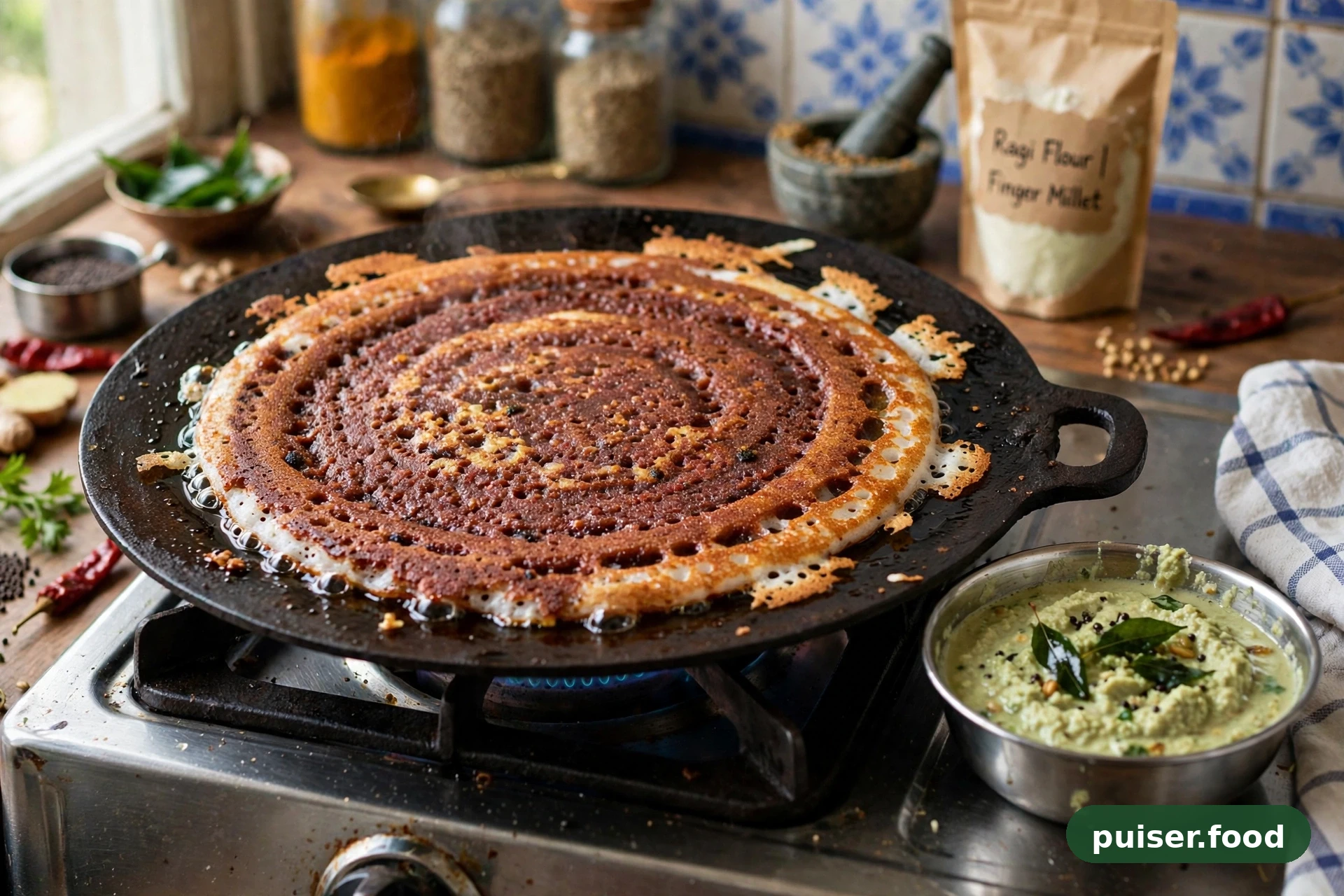
| Dosa and idli | Fermented batter | Soak grain or flour, grind, ferment overnight for soft dosas |
| Roti and bhakri | Flour | Knead with hot water, rest, pat by hand; blend with wheat at first |
| Mudde | Flour | Cook flour in boiling water, stir till thick, roll into balls |
| Baking | Flour | Blend with wheat flour; ragi alone gives a dense crumb |
Porridge is the easiest start. Whisk the flour into cold water before heating, or it clumps. Cook till thick, add milk and jaggery, and it is breakfast. Malted ragi porridge, made from sprouted grain, is the traditional weaning food in Karnataka, and sprouting raises the protein to about 8.5 g per 100 g and the iron to about 5.4 mg, while cutting phytic acid by up to about 40 percent in published studies. Dosa is the second step: fermenting the batter overnight improves mineral absorption and gives a crisp edge. Roti is the hardest of the five, because the dough has no gluten and tears when rolled. Knead with hot water, rest the dough, and pat the rotis by hand. Blend half ragi flour with half wheat flour at first, and shift the ratio as your hands learn the dough.
Mudde is the Karnataka classic: flour stirred into boiling water till it forms a soft ball, eaten with sambar. It takes practice to get the texture right, and the first attempts are usually too soft or too stiff. Baking is the most forgiving use, because the wheat flour in the blend carries the structure and the ragi adds colour and flavour. Our organic ragi flour is stone ground from the same grain this article describes, and our millets for daily diet guide covers the wider millet family.
Buying and Storing Ragi Flour
Buy ragi flour in small packs, 500 g or 1 kg, and use it within a few weeks. The flour turns bitter as it ages, because the fats in the seed coat oxidise, and no recipe fixes stale flour. Whole grain keeps for months in an airtight jar, so if you have a mixer grinder, buy the grain and mill what you need. Check the pack for stones and husk, and sieve the flour once before using it.
Store flour in an airtight container in a cool, dark cupboard, away from the stove and away from strong smells. In hot weather the fridge is better, because heat speeds up the bitterness. Smell the flour before using it: fresh ragi flour smells earthy and mild, stale flour smells sharp and sour. If it smells off, throw it out. Organic ragi flour costs more than regular, and the premium buys farming without synthetic pesticides and fertilisers. Check for a Jaivik Bharat mark or a named certifier if you pay the organic price.

5 Expert Tips
Ragi benefits depend on fresh flour and the right technique, so these five tips matter more than any single recipe. They are the habits that keep the rotis soft, the dosas crisp and the porridge smooth.
Whisk flour into cold water first. Ragi flour clumps the moment it meets hot water. Mix it into cold water to a smooth paste, then heat it, and the porridge stays lump free.
Knead roti dough with hot water. Hot water softens the starch and holds the dough together without gluten. Rest the dough for 15 minutes, pat the rotis by hand, and cook them on a hot tawa.
Ferment the batter. An overnight ferment improves mineral absorption and flavour in dosa and idli batter. Keep the batter in a warm place, and use it within two days.
Pair iron with vitamin C. Lemon, amla, tomato or a green chutney with the meal lifts iron absorption from the ragi. A plain ragi meal without any vitamin C wastes some of the iron.
Sprout the grain when you can. Soak whole ragi overnight, sprout it for a day, dry it and grind it. Sprouting raises protein and iron and cuts phytic acid, and the malt it makes is the traditional weaning food for a reason.

Common Mistakes to Avoid
Using stale flour. The most common mistake is cooking with flour that has sat open for months. It tastes bitter, and the dish fails whatever the recipe says. Buy small packs and smell the flour first.
Rolling ragi rotis like wheat rotis. Ragi dough has no gluten, so it tears when rolled. Pat the rotis by hand on a wet cloth or a greased surface, and blend with wheat flour until your hands learn the dough.
Adding flour straight to hot water. The flour clumps instantly and no amount of stirring fixes it. Whisk it into cold water first, then heat it.
Eating ragi alone for iron. The iron in ragi absorbs poorly without vitamin C. Add lemon, amla or tomato to the meal, or the iron mostly passes through.
Switching everything at once. Replacing every grain with ragi in one week can cause bloating, because the fibre jump is large. Start with two or three ragi meals a week and build up slowly.
Frequently Asked Questions
What are the main ragi benefits?
Ragi gives about 364 mg of calcium, 11.2 g of fibre and 4.6 mg of iron per 100 g of raw grain, the highest calcium of any common cereal. It is naturally gluten free, keeps you full, and fits five everyday dishes from porridge to dosa. Sprouting and fermenting improve how much of the minerals your body absorbs.
Is ragi good for bones?
Yes, it is one of the best food sources of calcium among Indian cereals, with about 364 mg per 100 g. Calcium alone does not build bone, and vitamin D, protein and movement matter too. Ragi helps as part of a balanced diet, and it is not a treatment for osteoporosis or any bone condition.
Can ragi help with anaemia?
It can help as part of the diet, because it gives 4.6 mg of iron per 100 g, and a 2021 review found millet consumption raised haemoglobin in anaemic people. Plant iron absorbs poorly, so pair ragi with vitamin C foods like lemon or amla. Anaemia has many causes, so see a doctor rather than relying on food alone.
Is ragi good for diabetes?
It is a reasonable choice, with a glycaemic index of about 54 to 68, lower than white rice, and fibre that slows digestion. It is not a diabetes treatment, and portion still matters. A large plate of ragi with little else on it raises blood sugar like any large plate of starch, so keep the meal balanced.
How do I make soft ragi rotis?
Knead the flour with hot water, rest the dough for 15 minutes, and pat the rotis by hand instead of rolling them, because ragi has no gluten. Cook on a hot tawa and brush with ghee. Blend half ragi flour with half wheat flour at first, and shift the ratio as your hands learn the dough.
Can I eat ragi every day?
Yes, many families in Karnataka eat ragi daily, as mudde, dosa or porridge. Rotate it with rice, wheat and other millets rather than eating one grain every day, because variety covers more nutrients. Start with two or three ragi meals a week and build up as your gut adjusts to the fibre.
Is ragi gluten free?
Yes, ragi is naturally gluten free. If you cook for someone with coeliac disease, buy a pack labelled gluten free, because grains are often milled in shared facilities where wheat is also processed. For most people avoiding gluten, ordinary ragi flour is fine.
Who should limit ragi?
People with a history of kidney stones should keep portions moderate, because ragi is high in oxalates. Anyone new to high fibre foods should introduce it slowly to avoid bloating. If you have a medical condition that affects mineral absorption or kidney function, ask your doctor before making ragi a daily habit.
How do I store ragi flour?
Keep it in an airtight container in a cool, dark cupboard, and use it within a few weeks, because the flour turns bitter as it ages. Whole grain keeps for months, so mill what you need if you have a grinder. Smell the flour before using it: fresh flour smells earthy, stale flour smells sharp.
Is ragi good for babies and children?
Yes, malted ragi porridge is a traditional weaning food in Karnataka, and sprouting raises its protein and iron. Cook it soft and plain for babies, and add milk and jaggery for older children. Ask your paediatrician before starting any new food, and introduce it slowly like any other weaning food.
Conclusion
Ragi benefits come down to calcium and fibre in a grain that costs little and cooks in minutes. Keep the flour fresh, whisk it into cold water, pair the iron with vitamin C, and start with porridge or dosa before attempting rotis. The grain has fed South Indian kitchens for centuries, and it earns its place in yours for the same reasons.


