
Introduction
Little millet benefits begin with a number that stops most rice eaters mid sentence. A 100 g serving of raw little millet carries 9.3 mg of iron, more than ten times the iron in milled white rice, and more than any of the other Siridhanya millets. The grain itself is tiny, mild and easy to cook, and it slides into rice, khichdi, upma and pongal without asking the cook to learn anything new. This guide covers the iron story, the nutrition, the blood sugar question, how to cook it, and the five dishes where it works best.
In this article
- The short answer
- What little millet actually is
- Little millet in numbers
- 10 reasons worth knowing
- Blood sugar: what the numbers do and do not prove
- Weight and fullness
- How to cook little millet
- Five everyday little millet dishes
- The iron story
- Who should be careful
- Buying and storing little millet
- 5 expert tips
- Common mistakes to avoid
- Frequently asked questions
- Conclusion
The Short Answer
Little millet is the easiest swap from white rice to a grain with real nutrition behind it. Per 100 g raw it carries 9.3 mg of iron, 7.6 g of fibre and 7.7 g of protein, with a glycaemic index of about 52 to 54 against white rice at about 73. It is naturally gluten free, cooks in 15 to 20 minutes, and suits rice, khichdi and pongal. The honest limit is the iron: it is non-heme iron from a plant, so the body absorbs only part of it, and the amount varies by variety, with field studies reporting 7 to 12 mg per 100 g. With vitamin C the iron counts for more, and that is where the little millet benefits show up first.
What Little Millet Actually Is
Little millet is the small, round grain from the grass Panicum sumatrense, grown in India for thousands of years. The name changes by language: kutki in Hindi, samai in Tamil, saame in Kannada and sama in Telugu. It is one of the five Siridhanya millets, the ancient grains Dr Khadar Vali brought back into public conversation, alongside foxtail, kodo, barnyard and browntop millet. The grain is small and grey-white, with a mild taste.
It grows on dry land with very little water, which is why it became a staple in Tamil Nadu, Karnataka, Andhra Pradesh and Madhya Pradesh. Buy it as whole grain. It cooks like rice, soft and slightly sticky with more water, separate and fluffy with less. The flavour is mild, less nutty than bajra and less sweet than foxtail millet. It pairs well with dal, sambar, rasam, curd and vegetables.
Little millet is naturally gluten free, so it suits people who avoid gluten. One caution: millets are often milled in shared facilities, so if you cook for someone with coeliac disease, buy a pack that says gluten free on the label. For everyone else, the grain is simply another cereal, closer to rice than to wheat in how it cooks. It earns its place for taste and ease first, and the nutrition follows from the iron, fibre and protein in every bowl.

Little Millet Benefits in Numbers
The table below compares little millet with milled white rice and foxtail millet, per 100 g of raw grain, using the Indian Food Composition Tables 2017. The gap that matters most is iron: 9.3 mg per 100 g, against 0.7 mg in white rice and 2.8 mg in foxtail millet. Protein is modest at 7.7 g, and fibre is a solid 7.6 g.
| Nutrient (per 100 g raw) | Little millet | White rice (milled) | Foxtail millet |
|---|---|---|---|
| Energy | 341 kcal | 345 kcal | 331 kcal |
| Protein | 7.7 g | 6.8 g | 12.3 g |
| Fibre | 7.6 g | 0.2 g | 8.0 g |
| Carbohydrate | 67.0 g | 78.2 g | 60.9 g |
| Fat | 4.7 g | 0.6 g | 4.3 g |
| Iron | 9.3 mg | 0.7 mg | 2.8 mg |
| Calcium | 17 mg | 7.5 mg | 31 mg |
| Glycaemic index | ~52-54 | ~73 | ~54 |
Figures per the Indian Food Composition Tables 2017 and BMJ Nutrition Prevention and Health 2024, supplementary table 2. Iron varies by cultivar; field studies report 7 to 12 mg per 100 g.
10 Little Millet Benefits Worth Knowing
The ten little millet benefits below are the ones with real nutrition behind them. They follow from the iron, fibre, protein and low glycaemic index in the table above.
1. The most iron of any Siridhanya millet
Little millet carries 9.3 mg of iron per 100 g, the highest of the five Siridhanya millets, and more than ten times the iron in milled white rice. Iron carries oxygen, and low iron is a common nutrient gap in Indian diets. The iron is non-heme, so the body absorbs only part of it, and vitamin C with the meal makes a genuine difference. This is the single most distinctive of the little millet benefits.
2. Steady blood sugar
Little millet has a glycaemic index of about 52 to 54, lower than white rice at about 73. The fibre slows digestion, so glucose enters the blood gradually instead of spiking after a meal. That makes it a sensible swap for people watching blood sugar. It does not treat diabetes, and anyone managing diabetes should fit it into their carbohydrate plan and check the effect.
3. Good fibre for a small grain
With 7.6 g of fibre per 100 g, little millet carries far more fibre than white rice at 0.2 g, and nearly as much as foxtail millet at 8.0 g. Fibre adds bulk, slows digestion and feeds the gut, and it is why a small bowl keeps you full.
4. Naturally gluten free
Little millet contains no gluten, which makes it suitable for people with coeliac disease and non coeliac gluten sensitivity. It is one of the few gluten free grains that improves on refined rice, with far more iron and fibre than white rice. Without gluten, little millet flour does not bind like wheat flour, so eat the grain whole, as rice or pongal, rather than as roti.
5. Light on the stomach
Little millet is one of the lightest millets to digest. The grain is small, it cooks soft, and it does not sit heavy after a meal. Start with two or three little millet meals a week if you are new to millets, and increase slowly. Drink enough water with the meal.
6. Keeps you full for hours
Little millet keeps you full because its fibre and protein slow stomach emptying, so a small bowl of khichdi holds hunger until the next meal. Little millet carries about the same calories as rice, 341 kcal per 100 g against 345 kcal, so the swap alone does not cut calories.
7. Heart health
Little millet supports heart health through fibre and magnesium. The soluble fibre binds bile acids in the gut, which can lower LDL cholesterol over time. Magnesium, which sources put at about 119 to 133 mg per 100 g, helps regulate blood pressure and heart rhythm.
8. Good for the soil and the farmer
Little millet grows on dry land with very little water and almost no fertiliser, which is why it survived for centuries in the poorest soils. Choosing it supports the farmers who grow it. Our millets for daily diet guide explains how to start with the whole family of millets, not just one.
9. Energy that lasts
Little millet is a slow energy grain. Its complex carbohydrates break down gradually, so energy releases steadily over hours instead of peaking and crashing the way refined grains do. Magnesium and B vitamins help convert food into usable energy.
10. Easy to cook, easy to swap
The most practical benefit is how little changes in the kitchen. Little millet cooks in the same pot, in about the same time as rice, and it takes the same tempering, the same dal and the same curd. A rice eater does not need new equipment or new recipes, only a new grain in an old recipe. That is why it is the easiest millet for a lifelong rice eater.
Blood Sugar: What the Numbers Do and Do Not Prove
Little millet has a glycaemic index of about 52 to 54, which puts it in the low GI category. White rice sits at about 73, white bread at about 75, and whole wheat at about 70. The gap comes from fibre: at 7.6 g per 100 g, little millet has far more fibre than white rice, so blood sugar rises more gently after a little millet meal. GI figures vary by study, so 52 to 54 is a guide rather than a promise, and the meal around the grain matters as much as the grain itself. That steady response is one of the most practical little millet benefits.
Weight and Fullness
Little millet can support weight management because its fibre and protein keep you full for longer, so a smaller portion feels like enough. A bowl of khichdi with dal and sabzi holds hunger for three to four hours. That is the mechanism behind the weight side of little millet benefits, and it is the only honest weight claim for any grain.
How to Cook Little Millet
Start by rinsing the grain well in two or three changes of water, then soak it for 30 minutes. Soaking softens the grain and reduces phytates, which can limit how much iron the body absorbs. Drain, then cook one part grain to two and a half parts water for a soft, rice-like texture, or one part to two parts water for pulao or upma, where you want the grains separate. Bring to a boil, simmer covered on low heat for 15 to 20 minutes, and rest for a few minutes before opening the lid.
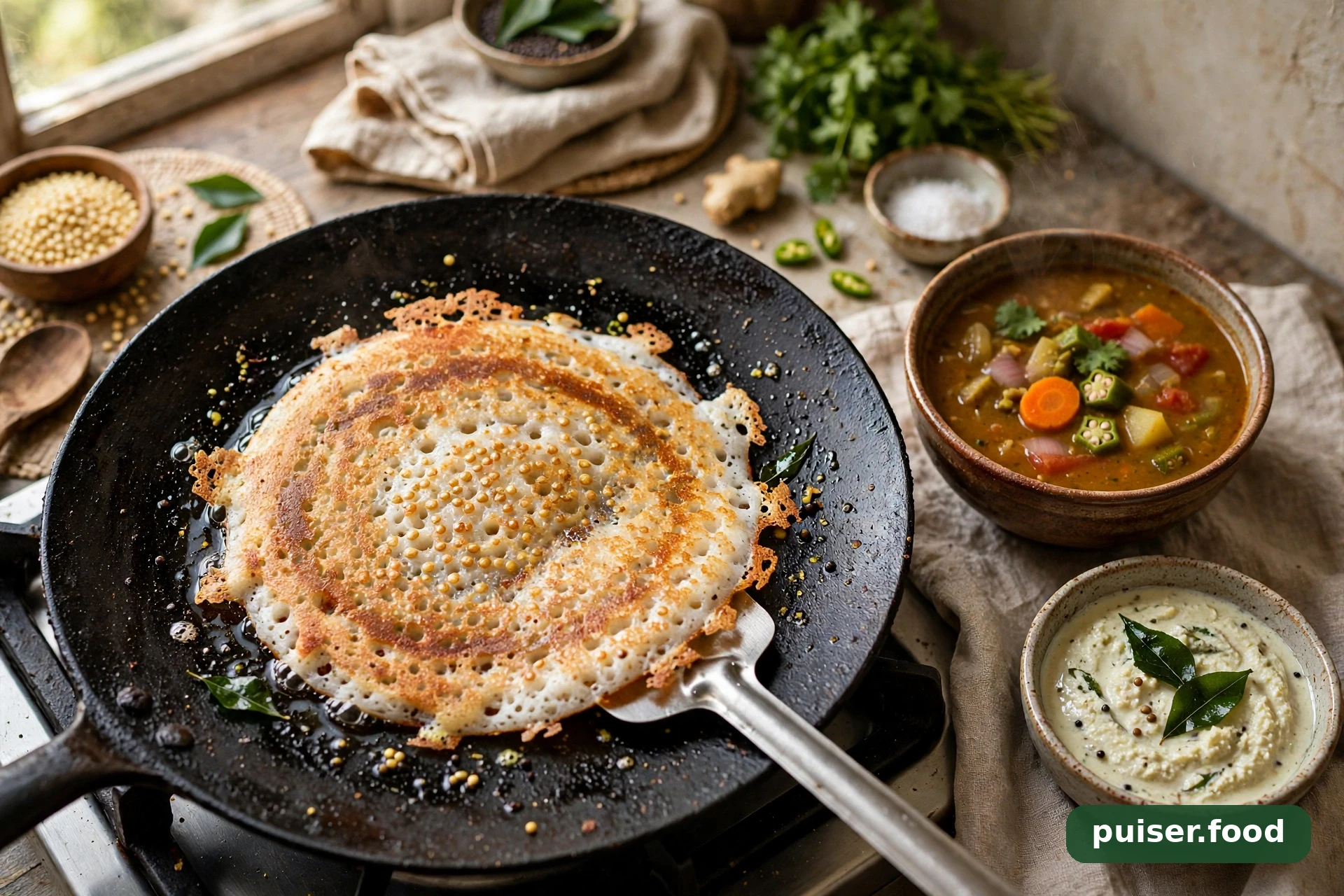
In a pressure cooker, use one part grain to two and a half parts water and cook for 2 whistles, then let the pressure release naturally. For dosa, soak little millet with urad dal in a 3 to 1 ratio for 6 hours, grind to a smooth batter, ferment overnight, and cook on a hot tawa like a regular dosa. For upma, dry roast the grain first, then cook it like rava upma with vegetables and a tempering of mustard seeds, urad dal, curry leaves and green chillies. The ratios above are the commonly recommended ranges, so adjust by a quarter cup next time if the texture is off.
Five Everyday Little Millet Dishes
These five dishes are the ones to start with.
| Dish | How little millet is used | Best with |
|---|---|---|
| Little millet rice | Cooked like rice, 1:2.5 water, rested a few minutes | Dal, sabzi, curd, pickle |
| Little millet khichdi | Cooked with moong dal, 1:3 water, soft and porridge-like | Curd, papad, ghee |
| Little millet upma | Dry roasted first, cooked like rava upma | Coconut chutney, sambar |
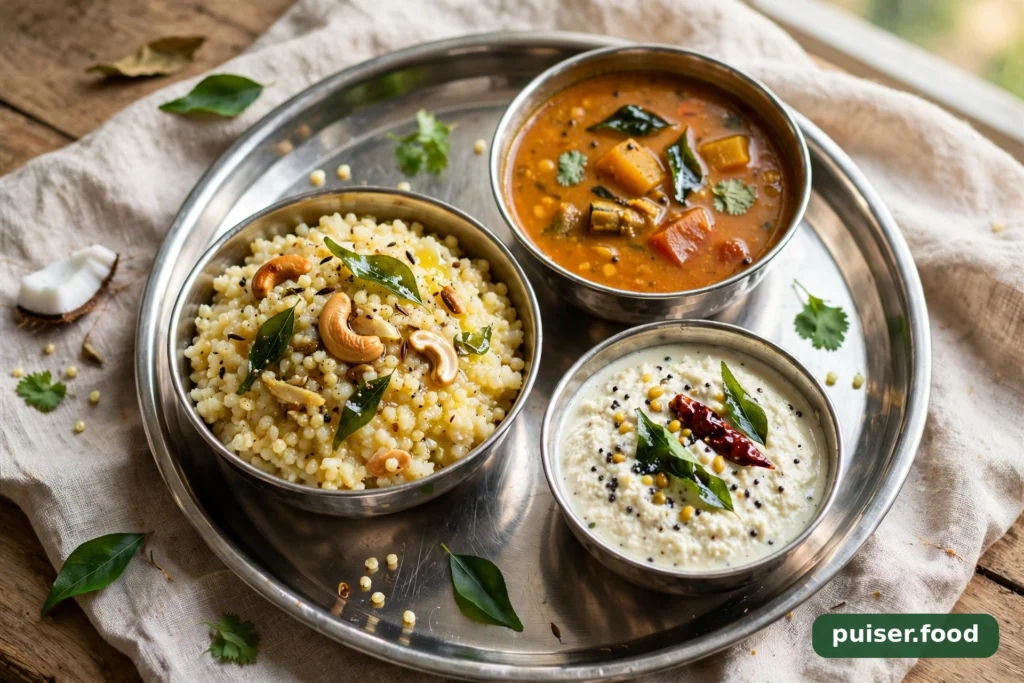
| Little millet pongal | Cooked soft with moong dal, tempered with ghee, pepper and cumin | Sambar, coconut chutney |
| Little millet dosa | Soaked with urad dal 3:1, ground and fermented | Sambar, chutney, podi |
The pongal is the best first dish, because it is forgiving. The dosa is the best test of whether the grain has earned its place, because a crisp little millet dosa with sambar tastes like a dosa, not like a health food. Our millets for daily diet guide covers the whole family, and our kodo millet benefits guide covers the closest cousin.

The Iron Story
Iron is the reason little millet stands out. At 9.3 mg per 100 g, little millet carries more iron than bajra at 8.0 mg, ragi at 4.6 mg, jowar at 4.1 mg and foxtail at 2.8 mg, and far more than white rice at 0.7 mg. For a rice eater, the little millet benefits start with this single number, because rice brings almost no iron to the plate.
| Grain | Iron per 100 g raw |
|---|---|
| Little millet | 9.3 mg |
| Bajra | 8.0 mg |
| Ragi | 4.6 mg |
| Jowar | 4.1 mg |
| Foxtail millet | 2.8 mg |
| White rice (milled) | 0.7 mg |
| Kodo millet | 0.5 mg |
Iron figures per the Indian Food Composition Tables 2017.
The iron in little millet is non-heme iron, the form found in plants, and the body absorbs it less well than the heme iron in meat. That is the honest limit on the iron story, and it is also why the meal around the grain matters. Vitamin C helps the body absorb non-heme iron, so a squeeze of lemon, a tomato sabzi, or a small bowl of amla chutney with the meal makes the iron count for more. Our amla benefits guide explains why amla is so rich in vitamin C. Tea and coffee have the opposite effect, so keep them for an hour after eating.
The iron figure itself varies by variety. The Indian Food Composition Tables 2017 give 9.3 mg per 100 g, and field studies of different cultivars report 7 to 12 mg, so the exact number depends on the variety. What does not change is the ranking: little millet sits at the top of the Siridhanya millets for iron. Little millet is not the grain for calcium: ragi carries about 364 mg per 100 g, against 17 mg here, and our ragi benefits guide covers it.
Who Should Be Careful
Little millet is a safe, ordinary grain for most people, but one caution belongs in any honest guide. Like other millets, it contains goitrogenic compounds that can interfere with iodine uptake when eaten in very large amounts, so people with thyroid conditions should eat moderate amounts, keep iodised salt in the diet, and ask a doctor.
A second, smaller point is the fibre. A sudden jump in fibre can cause bloating, so start with two or three little millet meals a week and increase slowly, and drink enough water with the meal.
Buying and Storing Little Millet
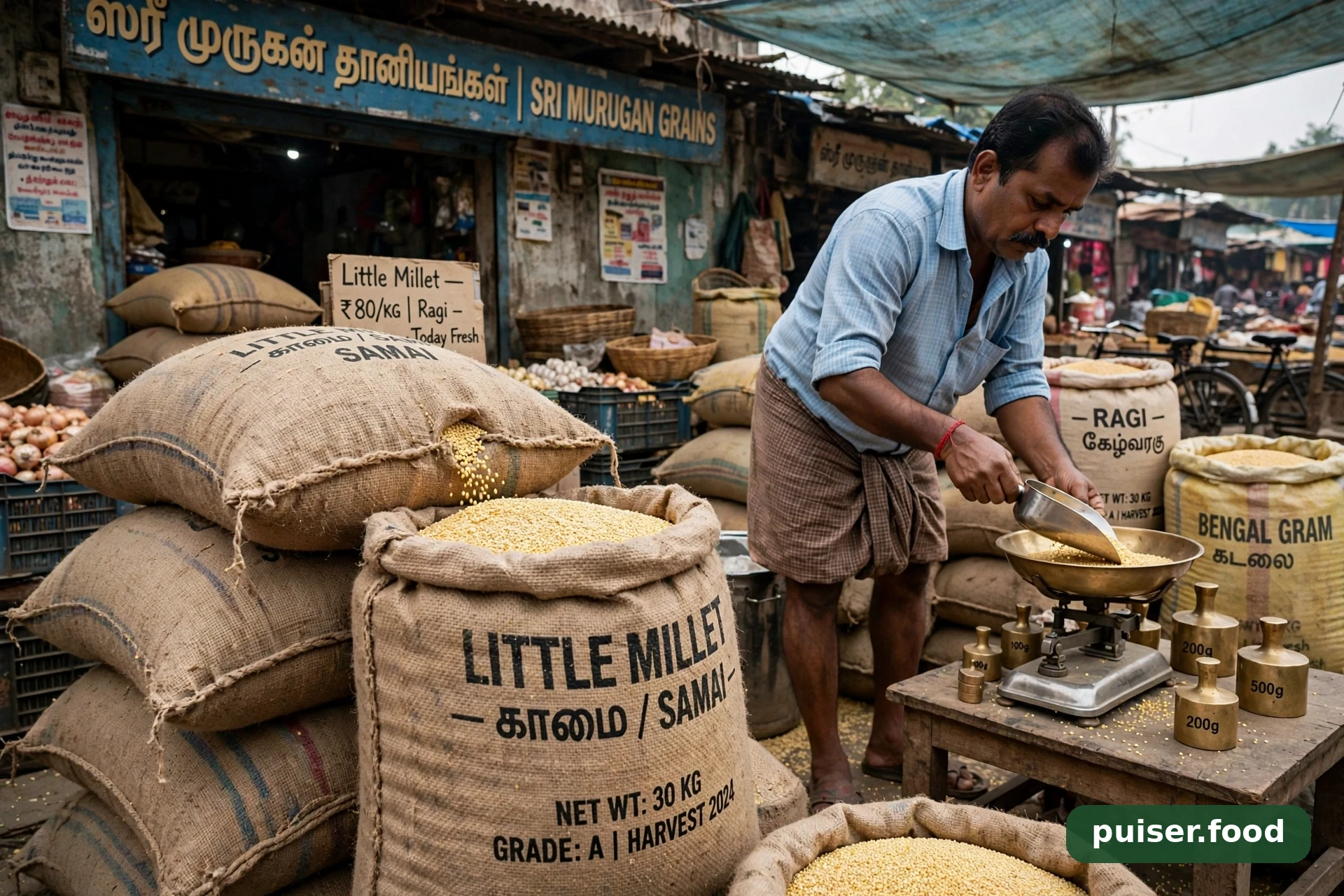
Buy whole little millet grain, not flour, and look for grain that is uniform in colour, dry to the touch and free of dust and stones. A 1 kg pack lasts a family about two weeks at three meals a week. Check the packing date. Organic little millet costs more than conventional, and the premium is worth it if you eat the grain often, because the bran carries the iron and fibre, and it is also the part most exposed to sprays. Our budget guide shows how to fit organic grains into a weekly shop.
| Form | Storage | Keeps for |
|---|---|---|
| Whole grain, airtight jar | Cool, dark cupboard | 6-8 months |
| Whole grain, open pack | Cool, dark cupboard | 2-3 months |
| Flour | Airtight jar, fridge if possible | A few weeks |
| Cooked little millet | Covered, in the fridge | 2 days |
5 Expert Tips
1. Soak for 30 minutes. Soaking cuts the cooking time and gives a softer, more even grain.
2. Do not skip the rest after cooking. The grain finishes steaming in its own heat.
3. Dry roast the grain before making upma or pulao. Roasting deepens the flavour and helps the grain hold its shape.
4. Cook little millet in the water you will eat it in. Draining the cooking water throws away soluble nutrients, so measure the water and let the grain absorb it.
5. Pair little millet with vitamin C. Plant iron absorbs poorly on its own, so lemon, tomato sabzi or amla chutney with the meal makes the iron count for more.
Common Mistakes to Avoid
1. Skipping the soak. Unsoaked little millet takes longer to cook and stays hard in the middle, so the dish is uneven. Soak it, even for 30 minutes.
2. Using too much water. Little millet at 1:3 water is khichdi, not rice, and at 1:2.5 it is rice. Measure the water instead of guessing, and adjust by a quarter cup next time.
3. Opening the lid while it rests. Lifting the lid lets the steam out and dries the top layer.
4. Eating it raw or undercooked. Raw millet contains lectins that proper cooking removes, so never taste the grain before it is fully cooked.
5. Buying flour instead of grain. Little millet flour is hard to use, goes stale fast and loses the texture that makes the grain good. Buy whole grain, and grind a small batch fresh when you need flour.
6. Eating one grain every day. Rotate little millet with rice, wheat and other millets rather than eating one grain at every meal.
Frequently Asked Questions
What are the main benefits of little millet?
The main benefits of little millet are iron, fibre and steady energy. A 100 g serving carries 9.3 mg of iron, the highest of the Siridhanya millets, with 7.6 g of fibre and a glycaemic index of about 52 to 54. It is gluten free, cooks in 15 to 20 minutes, and works as rice, khichdi, upma, pongal and dosa.
Is little millet good for diabetes?
Little millet is a reasonable swap for white rice, because its fibre slows digestion and its glycaemic index of about 52 to 54 is lower than white rice at about 73. That means a gentler rise in blood sugar. It does not treat diabetes, and portion still matters, so fit it into your carbohydrate plan and check the effect.
Can I eat little millet every day?
Yes, little millet can be part of a daily diet, and many families in south India have eaten it for generations. A varied diet is best, so rotate it with rice, wheat and other millets rather than eating one grain every day. Start with two or three little millet meals a week and increase slowly.
Is little millet good for weight loss?
Little millet can help indirectly, because the fibre and protein keep you full for longer, so a smaller portion feels like enough. It carries about the same calories as rice, 341 kcal per 100 g raw, so the swap alone does not cut calories. Weight loss still comes from the whole diet and activity, not from one grain.
How do I cook little millet like rice?
Rinse the grain, soak it for 30 minutes, then cook one part grain to two and a half parts water. Bring to a boil, simmer on low heat for 15 to 20 minutes, and rest for a few minutes. In a pressure cooker, use the same ratio and cook for 2 whistles, then let the pressure release naturally.
Is little millet gluten free?
Yes, little millet is naturally gluten free. If you cook for someone with coeliac disease, buy a pack labelled gluten free, because millets are often milled in shared facilities where wheat is also processed. For most people avoiding gluten, ordinary little millet is fine.
What is the difference between little millet and foxtail millet?
Little millet and foxtail millet are both Siridhanya millets, but they differ in nutrition and taste. Little millet has more iron, 9.3 mg per 100 g against 2.8 mg, while foxtail has more protein, about 12.3 g against 7.7 g. Little millet is smaller, milder and quicker to cook. Both cook the same way, and both are worth eating.
Does little millet affect thyroid?
Little millet contains goitrogenic compounds that can interfere with iodine uptake when eaten in very large amounts. People with thyroid conditions should eat moderate amounts, keep iodised salt in the diet, and ask their doctor. For most people, two or three little millet meals a week is well within a safe range.
Can I make dosa with little millet?
Yes, little millet dosa is one of the best uses of the grain. Soak little millet with urad dal in a 3 to 1 ratio for 6 hours, grind to a smooth batter, ferment overnight, and cook on a hot tawa like a regular dosa. Serve with sambar and chutney.
How do I store little millet?
Keep whole grain in an airtight jar in a cool, dark cupboard, and it lasts six to eight months. Flour keeps for a few weeks only, so buy it in small packs. Check for weevils in hot weather, and always rinse well before soaking and cooking. Discard any grain that smells musty or looks discoloured.
Conclusion
Little millet is the tiny grain with the biggest iron number in the millet family. It cooks like rice, it carries far more iron and fibre than white rice, and it has a lower glycaemic index. Start with pongal, and let it earn a regular place in your kitchen. The little millet benefits are real, but they are ordinary benefits, the kind that show up in a better lunch rather than in a miracle.


